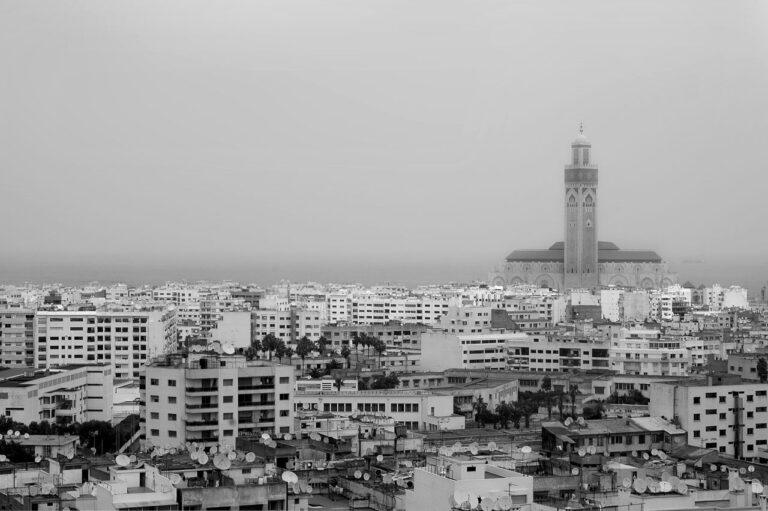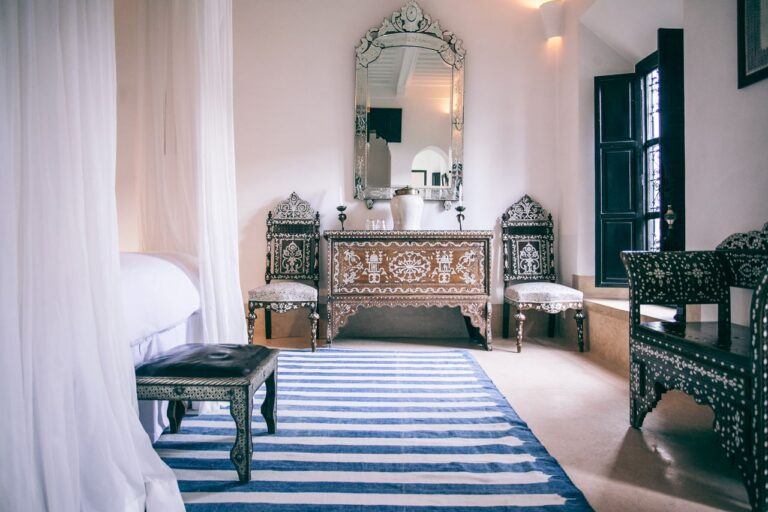
A tourist city and a pretty property do not automatically create a profitable rental.
In practice, results depend on the exact area, the price you pay, realistic occupancy, empty nights, management fees, cleaning, utilities, platform charges, repairs, taxes, building rules, and local operating requirements.
This guide helps you decide whether an Airbnb property in Morocco is a good investment for you, and then shows you how to buy, set up, and run one safely.
★ Morocco Airbnb Investment: Quick Answer
- Can foreigners buy Airbnb property in Morocco? Yes. Foreign buyers can generally purchase urban property through a notary. Routing and documenting the investment through official banking channels helps preserve repatriation rights, while missing records can create serious difficulties later. See how the documentation trail works.
- Is Airbnb legal in Morocco? The platform operates openly. However, regular short term rental activity may fall under Moroccan tourist accommodation rules, so local requirements should be confirmed before operating.
- Is it profitable? It can be. Net results depend on the purchase price, micro location, occupancy, seasonality, and operating costs. Data providers publish very different market averages, so evaluate the exact property rather than relying on one headline figure.
- Easiest property type for a first investment? A titled apartment in a building that allows short term rental. Riads earn more per night but cost more to renovate and run.
- Biggest mistake investors make? Trusting gross revenue projections and skipping title checks. For most foreign buyers, a clean titre foncier is the lower risk option, while melkia ownership needs much deeper legal, inheritance, boundary, and resale due diligence.
Is Airbnb Profitable in Morocco in 2026?

I’m Anis Chity, based in Marrakech. I’ve personally bought 4 properties in Morocco and created Buy Property Morocco to help foreign buyers avoid the mistakes I had to learn the hard way.
Along the way I have dealt with unreliable agents, notaries, tenants, and the gap between attractive gross numbers and what a property actually delivers.
For this reason, I always tell people to look at the numbers before they fall in love with a property.
Morocco’s short term rental market has grown strongly, but performance is not uniform across cities or even across streets.
Morocco Airbnb Numbers That Matter in 2026
Current analytics providers publish noticeably different estimates because they use different listing definitions, geographic boundaries, and measurement periods.
| Metric | Published 2026 Estimates | How to Use It |
|---|---|---|
| Morocco wide occupancy | AirROI reports about 29.8% across its ranked Moroccan markets | Use national figures only as a broad warning against assuming full year demand |
| Marrakesh occupancy | About 39.1% from AirROI and 62% from Airbtics | The wide gap shows why the provider, property set, and area must be checked |
| Marrakesh nightly rate | About $156 from AirROI, $137 from AirDNA, and 850 MAD from Airbtics | Compare only against similar properties in the same micro location |
| Marrakesh annual revenue | About $16,912 from AirROI, $12,400 from AirDNA, and 195,204 MAD from Airbtics | Treat every market number as an estimate, not a promise for one property |
Data note: Figures were checked in July 2026 using AirROI Morocco, AirROI Marrakesh, Airbtics Marrakech, and AirDNA Marrakesh. These are third party estimates, not official government statistics.
The gap between average and strong listings still comes down to pricing, photography, reviews, management quality, and guest experience, not just location.
Gross Revenue Is Not Profit
Many buyers see a nightly rate, multiply it by 30, and think that is their return.
In reality, you need to separate six numbers: nightly rate, occupancy, gross revenue, operating expenses, net operating profit, and the return on the total amount you invested, including purchase costs and renovation.
Do not rely on an agent’s projections, a seller’s spreadsheet, selected screenshots, or the property’s best month.
Instead, model at least three cases before you buy: a conservative case, an expected case, and a strong case.
If the deal only works in the strong case, it is not a safe investment.
Example Airbnb Profit Calculation in Morocco
These numbers are illustrative only.
This example uses a modest 2 bedroom apartment in Marrakech at 900 MAD per night during a quieter month.
The model assumes 15 occupied nights across 5 bookings, with an average stay of 3 nights.
It also assumes the owner absorbs the cleaning cost rather than charging it separately to the guest.
| Item | Amount (MAD) | Amount (approx. €) | Notes |
|---|---|---|---|
| 15 booked nights × 900 MAD | 13,500 MAD | ~€1,250 | Illustrative quieter month |
| Less: platform fees (3%) | −405 MAD | −€38 | The host fee can vary by platform and setup |
| Less: cleaning and laundry | −750 MAD | −€69 | 5 turnovers × 150 MAD |
| Less: utilities and internet | −600 MAD | −€56 | Air conditioning can push this higher |
| Less: syndic or building charges | −250 MAD | −€23 | Monthly allocation |
| Less: guest supplies | −300 MAD | −€28 | Toiletries, water, and small replacements |
| Less: property management fee (25%) | −3,274 MAD | −€303 | 25% of revenue after the platform fee |
| Less: maintenance reserve (5%) | −655 MAD | −€61 | Set aside for repairs and replacements |
| Less: insurance and accounting allocation | −250 MAD | −€23 | Monthly share of annual costs |
| Estimated net operating profit | 7,016 MAD | ~€650 | Before income tax, mortgage payments, and major capital repairs |
Calculation note: This is a transparent example created to show the cost structure. It is not a market average, valuation, or performance promise.
Notice that the result changes quickly when the number of bookings, cleaning arrangement, manager fee, or occupancy changes.
Therefore, rebuild the model using the exact property and your own operating plan.
Conservative, Expected, and Strong Annual Scenarios
The table below uses one hypothetical apartment with a total cash investment of 1,280,000 MAD.
That total includes a 1,050,000 MAD purchase price, estimated acquisition costs, furnishing, setup, and an initial reserve.
| Assumption | Conservative | Expected | Strong |
|---|---|---|---|
| Average nightly rate | 700 MAD | 850 MAD | 1,000 MAD |
| Occupied nights per year | 120 nights | 180 nights | 240 nights |
| Approximate occupancy | 33% | 49% | 66% |
| Annual gross revenue | 84,000 MAD | 153,000 MAD | 240,000 MAD |
| Estimated operating expenses | 37,800 MAD | 68,850 MAD | 108,000 MAD |
| Net operating income | 46,200 MAD | 84,150 MAD | 132,000 MAD |
| Total cash invested | 1,280,000 MAD | 1,280,000 MAD | 1,280,000 MAD |
| Estimated net yield | 3.6% | 6.6% | 10.3% |
Scenario note: The model assumes operating expenses equal 45% of gross revenue and excludes financing, income tax, appreciation, and major structural work. The conservative case should still make sense before you treat the property as an investment.
If the deal only works in the strong scenario, slow down and investigate the price, area, and expense assumptions again.
Already considering a property?
See the 14 Day Buyer Plan: $299 →
Get 14 days of personal buyer support, three private calls and WhatsApp support.
Get help reviewing up to three properties before you commit money.
Is Airbnb Legal in Morocco?
Airbnb operates openly in Morocco, and there is no national law banning short term rental platforms.
However, operating a property regularly as tourist accommodation may bring you under Moroccan tourist accommodation rules, and this should be verified locally before you start.
The Relevant Legal Framework
Morocco introduced Law 80-14 on tourist establishments, which defines categories of tourist accommodation and the conditions for operating them.
Decree 2.23.441 then formalised classification and authorization requirements for furnished tourist accommodation.
Under this framework, renting a furnished property to tourists for short stays can fall under the definition of meublé de tourisme (furnished tourist accommodation), which carries specific obligations.
What This Means in Practice
Enforcement varies by city, commune, and the scale of your operation.
Even so, the direction is clear: Morocco is formalising the short term rental sector, and operating without knowing these rules creates growing risk.
| Requirement | Details | Who It May Apply To |
|---|---|---|
| Tourist accommodation authorization | May be required for regular short term rental activity | Properties operated commercially |
| Guest registration | Hosts may need to record and report guest identity details | Accommodation providers, varies locally |
| Safety standards | Fire safety, emergency exits, basic security measures | Tourist accommodation properties |
| Insurance | Liability cover for guests is strongly recommended | All short term rental operators |
| Local authority approval | Some communes require notification or approval | Varies by commune |
| Tax registration | Declaring rental income to the DGI is required | All rental income earners |
Note that the platform operating in Morocco does not remove your responsibility to comply with tourist accommodation, tax, guest registration, safety, and building requirements.
If you are undeclared and a neighbour or local authority complains, you have little standing to defend your operation.
⚠ Practical Step: Before you list your property, ask a qualified Moroccan lawyer or an experienced local property manager to confirm the exact requirements for your city and property type.
The rules are not identical in Marrakech, Casablanca, Agadir, and Essaouira. Get local confirmation, not generic advice.
Official framework: Morocco’s Ministry of Tourism lists Law 80-14 and Decree 2-23-441 among the core texts governing tourist accommodation.
Airbnb Rules Foreign Owners Commonly Ask About
| Question | Practical Answer |
|---|---|
| Must I live in the property? | The official framework focuses on the accommodation activity rather than a simple owner residence test. Confirm the authorization and tax treatment for a secondary home before operating. |
| Is there a national annual night cap? | The official sources cited here do not present one simple nationwide 90 or 120 night cap for every property. Local, building, licensing, and platform rules can still limit operation. |
| Are minimum stays required by law? | Minimum stays are often a commercial choice. However, the property’s classification, local requirements, and platform settings should still be checked. |
| Can one person operate several listings? | Multiple listings can increase the chance that the activity is treated as an organised business, with stronger accounting, registration, and compliance duties. |
| Is a Moroccan company always required? | Not necessarily. The right structure depends on the number of properties, tax position, operating model, and professional advice. |
| Can the copropriété restrict short term rental? | Yes. Building rules, co-owner decisions, nuisance issues, and use restrictions can affect whether an apartment is suitable. |
| Are the rules identical in every city? | No. National law, local administration, building rules, and enforcement practice can produce different requirements. |
| Can I use a secondary home? | Potentially, provided the property, building, tax setup, guest reporting, safety requirements, and local authorization are compliant. |
Can Foreigners Buy and Operate Airbnb Property in Morocco?

Yes. Foreigners can buy property in Morocco, with one important condition.
Foreign buyers who want the investment covered by Morocco’s convertibility regime should transfer the purchase funds through official banking channels and retain the supporting bank records, including the relevant import documentation.
Missing or incomplete records can complicate the transfer of investment income or future sale proceeds. This is why the documentation trail should be organised before the purchase.
Exchange controls are governed by the Office des Changes under the Instruction Générale des Opérations de Change, so keep your bank records, tax declarations, and notarial deed from day one and confirm the current process with your bank and notary.
Exchange control note: The Office des Changes states that banks can transfer qualifying investment income when the foreign investment was financed in foreign currency and the required supporting documents are available.
Tax on Airbnb Income
Rental income in Morocco is generally subject to income tax (IR) and must be declared annually to the Direction Générale des Impôts.
The exact treatment depends on your situation, so confirm rates and deductions with a Moroccan accountant before you model your returns.
⚠ Common Mistake: Some foreigners run Airbnb income through a foreign account or cash and never declare it in Morocco.
This creates problems when you sell. The buyer’s notary will ask questions, and undeclared rental history complicates the sale and your ability to move money out.
Personal Ownership or a Moroccan Company?
Your accountant should answer this based on your personal tax situation, but these are the two structures foreigners typically compare.
Personal Ownership
- Simpler and cheaper to set up
- Income taxed under personal income tax (IR)
- Usually fine for one or two properties
SARL (Moroccan LLC)
- Can suit a growing portfolio
- Corporate tax, accounting, and possibly VAT obligations
- More complexity and running cost
Most foreign buyers starting with one or two properties use personal ownership, while investors planning three or more often discuss a SARL with a local tax adviser.
The Centre de l’Investissement Marrakech-Safi and the broader CRI network can explain the business registration process.
What Is Driving Short Term Rental Demand in Morocco?

Official Ministry figures show that Morocco welcomed 19.8 million visitors in 2025, while Visit Morocco continues to promote the country’s main tourism markets.
That growth feeds demand for short term accommodation, especially in Marrakech, the coast, and the northern cities.
Operating costs such as cleaning, staff, and utilities are also lower than in most European markets.
However, supply has grown quickly too, so demand alone does not guarantee your specific property will perform.
Seasonality You Must Model
Morocco is not a year round destination for every property type, so build seasonality into your projections.
| Season | Months | Demand Level | Notes |
|---|---|---|---|
| Peak | March to May, Oct to Nov | Very High | Best weather, European school holidays |
| High | December to February | High | Northern Europeans seeking winter sun |
| Medium | September, early June | Moderate | Shoulder season, good for digital nomads |
| Low | July and August | Lower | Very hot in Marrakech, many Europeans avoid it |
July and August in Marrakech regularly reach 38 to 42°C, while coastal properties in Agadir or Essaouira hold up better in summer.
As a starting point, use a conservative occupancy baseline for a new listing in its first year rather than the numbers an established, strongly reviewed listing achieves.
Best Moroccan Cities and Areas for Airbnb
Not every tourist city performs the same, and not every area within a city is equal.
Here is a practical comparison using estimated ranges. Confirm current local data before buying.
| City | Main Visitors | Nightly Rate (est. €) | Competition | Main Risk for a First Time Investor |
|---|---|---|---|---|
| Marrakech | International tourists, year round | €80 to €250 | Very high | Saturated medina, summer heat, must differentiate |
| Agadir | Beach tourists, strong summers | €50 to €120 | Medium | Seasonal swings, resort style competition |
| Casablanca | Business travellers, short stays | €45 to €90 | High | Lower rates, different guest profile than tourist cities |
| Essaouira | Boutique and coastal tourists | €60 to €140 | Medium | Smaller market, wind season affects some guests |
| Fez | Cultural tourists | €40 to €100 | Medium | Lower occupancy, medina logistics |
| Tangier | Growing European and domestic mix | €50 to €110 | Emerging | Younger market, more seasonal coastal areas |
| Chefchaouen | Short stay cultural tourists | €40 to €90 | Low to medium | Small market, fewer professional managers |
City data note: The nightly ranges are broad estimates based on third party analytics, publicly visible listings, and local observation. They should not replace a comparable analysis for the exact property type and neighbourhood.
Marrakech has the deepest demand, the strongest international brand, and the widest pool of experienced property managers. See the guide to the best Marrakech neighborhoods for Airbnb investment for a street level view.
Casablanca attracts shorter business stays, which needs a different strategy than a tourist facing riad. The best areas of Casablanca guide covers this in detail.
For the coast, compare the best areas to buy in Agadir before assuming every beach district performs equally.
Where Competition Is Heaviest and Where Gaps Remain
Central Marrakech medina, Gueliz, and Hivernage are crowded with listings, so quality and positioning matter enormously there.
By contrast, genuine gaps still exist in a few segments:
- Villas on Route de l’Ourika and in the Palmeraie: families and groups pay well for space and a pool, and check-in logistics are easier than the medina.
- Secondary towns such as Chefchaouen, Ouarzazate, and Taroudant: lower listing density and cheaper entry, though good managers are harder to find.
- Remote worker friendly apartments with fast internet and a workspace: a growing segment in Marrakech and Agadir that fills the quieter months.
- Medina riads that have solved arrival logistics: clear instructions, smart locks, and parking guidance consistently outperform prettier properties that ignore these problems.
How to Judge an Airbnb Micro Location
City demand does not prove that one apartment, riad, or villa will perform.
Use the following checks before comparing projected revenue.
| Factor | What to Verify |
|---|---|
| Main reason guests stay | Tourism, beach access, business, events, family visits, or remote work |
| Real walkability | Time the route to the actual demand driver rather than relying on the listing description |
| Taxi and vehicle access | Test drop-off access, luggage handling, road quality, and late arrivals |
| Parking | Confirm the nearest safe option, price, distance, and how easily guests can find it |
| Noise | Visit during the day, evening, and weekend before buying |
| Building policy | Read the règlement de copropriété and get the short term rental position in writing |
| Comparable supply | Study similar nearby properties, reviews, calendars, amenities, and pricing |
| Seasonal weakness | Model heat, wind, beach season, school holidays, and business demand separately |
| Local operations | Confirm that reliable cleaners, managers, technicians, and linen services cover the area |
| Backup and exit demand | Check whether the property also works as a long term rental and remains easy to resell |
Marrakech Medina and Guéliz attract different guests, while Hivernage and Izdihar have different pricing and walkability profiles.
Likewise, Palmeraie and Route de l’Ourika depend more on vehicle access and group demand than a central apartment.
In Tangier, Malabata should not be treated like the city centre, and Agadir Bay should not be modelled like inland Agadir.
Best Property Types for Airbnb Investors
The property type you choose affects your renovation budget, management complexity, and guest profile.
For full transparency, my own four purchases were apartments, not riads or villas, so my first hand experience is strongest there.
| Property Type | Best For | Advantages | Risks to Know |
|---|---|---|---|
| Apartment | First investment, budget entry | Easier to manage, clear address, lower renovation cost | More competition, lower rates, building rules may restrict rentals |
| Riad | Experienced buyers, premium positioning | Higher nightly rates, unique appeal, strong review potential | Medina logistics, renovation costs can run very high, no GPS address |
| Villa | Groups, families, high end market | Highest revenue potential, garden and pool demand | High purchase price, high maintenance, needs professional management |
| Studio | Testing the market cheaply | Low entry cost, easy to furnish | Limited revenue ceiling, hard to differentiate |
| Dar (traditional house) | Riad feel at lower cost | More affordable, traditional character | Often needs major renovation, title can be complex |
Apartments are the easiest starting point for foreign buyers who want to test the market before scaling.
Riads can command much higher nightly rates, but the medina buying process and renovation costs must be budgeted honestly.
Meanwhile, villas generate the strongest gross revenue but require the most capital and the most active management.
⚠ Check Building Rules on Apartments: Some apartment buildings and syndics in Marrakech and Casablanca restrict short term rentals.
Before buying an apartment, ask specifically whether the règlement de copropriété permits short term tourist rental. Get it in writing.
How Much Money Do You Need to Start?
The honest answer depends on the city and property type.
Here is a realistic budget frame for a small riad or apartment in Marrakech, using estimated ranges.
| Cost Item | Estimated Range (€) | Notes |
|---|---|---|
| Property purchase price | €80,000 to €250,000 | Medina riad or 2 bed apartment, asking prices vary widely |
| Notary and transfer fees | 6 to 7.5% of purchase price | Registration tax, notary fee, confirm the exact quote with your notary |
| Independent lawyer | €500 to €1,500 | Strongly recommended |
| Renovation and furnishing | €10,000 to €80,000 | Depends heavily on property condition |
| Professional photography | €250 to €500 | Do not skip this |
| Operating reserve (6 months) | €3,000 to €6,000 | For slow months and repairs |
| Property manager (annual) | 20 to 30% of revenue | Difficult to avoid if you live abroad |
As a rough guide, a functional Airbnb ready property in Marrakech often lands between €110,000 and €160,000 all in for a small riad needing moderate renovation.
In Chefchaouen or Fez, entry can be significantly cheaper, sometimes under €60,000 for a small property in good condition.
How to Evaluate an Airbnb Property Before Buying
This is the stage where most expensive mistakes are either caught or locked in.
Before paying any deposit, work through these checks.
1. Verify the Title First
Moroccan properties can be documented through different ownership systems, and those systems create very different levels of legal, financing, and resale risk.
| Title Type | Description | Risk Level | Recommendation |
|---|---|---|---|
| Titre Foncier | Registered land title held at the Conservation Foncière | Low | Usually the lower risk option for a foreign buyer |
| Melkia | Traditional unregistered title based on witness testimony | High | Requires deeper legal, inheritance, boundary, and resale review |
Your notary should verify the title at the Agence Nationale de la Conservation Foncière, du Cadastre et de la Cartographie (ANCFCC).
Ask for the extrait du titre foncier and check that there are no inscriptions such as liens, mortgages, or disputes on the title.
This check is usually straightforward, and skipping it can expose a buyer to mortgages, liens, ownership disputes, or restrictions recorded against the property.
2. Verify the Numbers, Not the Screenshots
Screenshots of Airbnb earnings are easy to edit.
Ask for access to the actual host account or Booking.com extranet, find the live listing, and read the reviews yourself.
Then rebuild the numbers with your own conservative occupancy and full expenses.
3. Check the Building, the Neighbours, and the Logistics
For apartments, confirm in writing that the copropriété allows short term rental.
For riads, visit at different times of day, talk to neighbours, and test the walk from the nearest parking with luggage in mind.
In addition, pay for an independent structural survey on medina properties, because damp walls and hidden defects are common.
4. Slow Down Before Any Deposit
In one of my own purchases, I paid a deposit casually while the seller was still abroad, and the deal only worked out because I was lucky.
Deals also collapsed on me when owners changed their minds or quietly removed items that were supposed to be included.
For this reason, put deposits through the notary with clear written terms, and get everything included in the sale listed in writing. The guide on property deposits in Morocco covers this step by step, and the full due diligence checklist ties it all together.
The Buy Property Morocco Airbnb Deal Test
Score each factor from 0 to 2 before treating a property as an Airbnb investment.
- 0 points: weak, unknown, or unsupported.
- 1 point: acceptable, but more investigation is needed.
- 2 points: strong and supported by documents, data, or independent checks.
| Factor | What Earns a Strong Score | Score |
|---|---|---|
| Clean registered title | Recent title check with no unexplained mortgage, seizure, dispute, or ownership mismatch | 0 to 2 |
| Building permission | Written confirmation that the building rules permit the intended short term use | 0 to 2 |
| Revenue evidence | Verifiable account history or conservative projections based on genuine comparables | 0 to 2 |
| Conservative net return | The deal remains viable after realistic expenses and a weaker occupancy scenario | 0 to 2 |
| Micro location | A clear guest demand driver, easy access, limited nuisance, and strong nearby comparables | 0 to 2 |
| Guest arrival | Simple check-in, clear address or directions, practical luggage access, and parking information | 0 to 2 |
| Local management | Reliable manager, cleaner, maintenance support, reporting, and references | 0 to 2 |
| Renovation risk | Independent survey, realistic quotes, permits checked, and an adequate contingency | 0 to 2 |
| Long term rental backup | The property can produce acceptable long term rent if short term demand disappoints | 0 to 2 |
| Resale demand | Clear ownership, normal access, sensible layout, and demand beyond Airbnb investors | 0 to 2 |
How to read the total:
0 to 8: High risk.
9 to 14: Needs deeper investigation.
15 to 17: Potentially viable.
18 to 20: Strong candidate, subject to professional legal, technical, tax, and financial checks.
This scorecard is a decision aid, not a valuation, inspection, legal opinion, or guarantee of rental performance.
🔍 What Most Websites Will Not Tell You
I have personally bought 4 properties in Marrakech and dealt with agents, notaries, tenants, and documents along the way. Here is what the polished guides leave out.
- The renovation quote from the seller’s contact is usually too low. Medina renovation costs have a way of doubling, so get three independent quotes before buying.
- Some riads are sold without proper surveys. Hidden structural problems, damp, and unauthorised extensions are common, so pay an independent engineer.
- Your property manager will make or break you. Interview several candidates and ask for listing links from current foreign owner clients.
- Medina streets have no usable GPS addresses. Detailed check-in instructions, and ideally someone meeting guests, affect satisfaction more than almost anything else.
- Sellers sometimes inflate Airbnb income figures. Ask for real account statements, never self made spreadsheets.
- Airbnb is not the only platform. Booking.com often drives more volume in Morocco, so a multi platform strategy is stronger than Airbnb alone.
Already considering a property?
See the 14 Day Buyer Plan: $299 →
Get 14 days of personal buyer support, three private calls and WhatsApp support.
Get help reviewing up to three properties before you commit money.
How to Start an Airbnb Business in Morocco: Step by Step
-
Choose your market and property type.
Decide on the city and whether you want a riad, apartment, villa, or dar. Each has different management needs, renovation costs, and guest profiles. -
Open a Moroccan bank account and transfer funds officially.
Use a reputable Moroccan bank and transfer your purchase funds to your Moroccan account via SWIFT wire. Get the Attestation d’Importation de Devises and keep it permanently. -
Find a property with a clean titre foncier.
For most foreign buyers, a registered titre foncier is the lower risk option. A melkia property needs deeper legal, inheritance, boundary, registration, and resale review. Your notary must confirm the title is clean before you sign anything. -
Use the notary and consider your own lawyer.
The notary handles the conveyancing but acts for both parties. An independent lawyer costing roughly €500 to €1,500 can review the contract from your side alone. -
Budget for renovation and furnishing honestly.
Most medina properties need work. Labour is affordable, but project management from abroad is hard, so budget for a local project manager if you are not on the ground. -
Set up the listing professionally.
Professional photography can improve how the listing competes, but the result still depends on the property and market. Write the description for international guests and be honest about the medina location and arrival process. -
Hire a local property manager.
Unless you live in Morocco, you need someone on the ground for check-ins, cleaning, maintenance, and guest communication. Expect 20 to 30 percent of gross rental income, and vet them carefully. -
Register for tax and declare income annually.
Open a fiscal file with the Direction Générale des Impôts and declare every year. A local accountant who handles foreign owners typically costs €200 to €500 per year.
Running the Airbnb Remotely From Abroad

Most foreign owners do not live in Morocco full time, and remote operation works if you set it up correctly from day one.
The Manager Is Your Most Important Hire
Ask for references specifically from other foreign, non resident owners, and verify their current listings and reviews yourself.
Require monthly income and expense reports, then compare them against your Airbnb and Booking.com payout records. Discrepancies are a red flag.
Visit the property when you can, because managers perform better when they know the owner shows up.
Technology That Reduces Dependence on One Person
Use a channel manager like Guesty or Lodgify to synchronise calendars across Airbnb, Booking.com, and VRBO.
Smart locks or a key box reduce check-in dependency, and automated messages handle confirmations, arrival instructions, and check-out reminders.
Amenities Guests Now Expect
Guest expectations have risen as competition increased, and missing the basics shows up in reviews immediately.
| Amenity | Why It Matters | Priority |
|---|---|---|
| Fast Wi-Fi with a backup router | Essential for remote workers and families, and outages cause bad reviews | Essential |
| Air conditioning and real winter heating | Marrakech summers are brutal and medina riads get cold in winter | Essential |
| Clear check-in instructions with photos | Finding a medina property is genuinely difficult for first time visitors | Essential |
| Quality bedding and towels | Mentioned in reviews more than almost any other detail | Essential |
| Washing machine and workspace | Longer stays and digital nomads expect both | High |
| Rooftop terrace and local welcome touches | Strong differentiators that lift rates and reviews in Marrakech | Advantage |
Pricing in Practice
- Start slightly below comparable listings to win your first reviews, then raise rates progressively once you have social proof.
- Charge more in peak months and around festivals and holidays, and accept softer pricing in the Marrakech summer.
- Use automated pricing tools with caution, because algorithms often undervalue quality properties in emerging markets. Review rates manually each month.
- Track Booking.com alongside Airbnb, since it often drives higher volume in Morocco and shows you real market pricing.
Guest Registration and Local Rules
Accommodation providers in Morocco may be required to record guest identity details for local authorities, and the process varies by city and property type.
A competent manager usually handles this where required, but confirm the exact local process with your manager or a lawyer before you start operating.
Handle passport data responsibly, and do not store it insecurely or share it unnecessarily.
⚠ Note: These rules are evolving as Morocco formalises its tourism sector. Always verify the current local requirements before listing your property.
Common Mistakes Foreigners Make With Airbnb in Morocco

These patterns keep coming up, and most are avoidable with basic care and the common Marrakech pitfalls in mind.
- Buying on emotion, not numbers. If the deal does not work after management fees, taxes, and renovation, it is a lifestyle purchase, not an investment.
- Trusting seller income screenshots. Verify the live listing, the reviews, and the real account statements before believing any figure.
- Skipping the copropriété check on apartments. Some buildings restrict or ban short term rentals, so confirm before you buy, not after.
- Projecting peak demand across twelve months. July and August in Marrakech are much slower than April or October, so build a realistic annual model.
- Buying a beautiful riad with impossible arrival logistics. Guests judge the whole experience, not just the courtyard.
- Ignoring management fees in the ROI model. Subtract management, cleaning, maintenance, utilities, tax, and platform fees. The net number is what matters.
- Not declaring rental income to the Moroccan tax authorities. This can create tax problems, complicate a future sale, and weaken the documentation supporting transfers.
- Losing the investment transfer records. The bank documents, notarial deed, and tax records are important evidence, so keep secure digital and physical copies.
For a broader list of warning signs, see the guide on how to avoid property scams in Morocco.
Frequently Asked Questions
Is Airbnb legal in Morocco, and do I need a licence?
Airbnb operates openly in Morocco with tens of thousands of listings, and there is no national ban on short term rental platforms.
However, regular tourist rental activity may require compliance with Law 80-14 and related rules on furnished tourist accommodation, so verify the local requirements with a lawyer or experienced manager before you list.
Is Airbnb profitable in Morocco?
It can be, but results depend heavily on city, purchase price, property type, management quality, and how realistic your model is.
Poorly located properties, hidden renovation costs, and ignored expenses are the usual reasons returns disappoint.
Can a foreigner buy and run an Airbnb property in Morocco?
Foreigners can generally buy urban property without Moroccan residency, but the ownership documents, building rules, operating requirements, banking trail, and tax setup must all be checked.
A Moroccan tax identification number may be required for declarations, so confirm the process with a local accountant.
Which city in Morocco is best for Airbnb?
Marrakech has the highest demand and the most support services for foreign owners, while Essaouira offers a smaller market at lower entry prices and Agadir performs well for beach tourism.
The best city is the one that matches your budget, risk tolerance, and how involved you want to be.
What type of property is best?
Apartments are the most straightforward entry point, riads earn higher nightly rates with harder logistics and bigger renovation budgets, and villas earn the most gross revenue but need the most capital and management.
How much money do I need?
A functional Airbnb ready property in Marrakech often requires €110,000 to €160,000 all in, while smaller cities like Chefchaouen or Fez can be entered for much less.
Always add purchase costs, renovation, furnishing, and a six month operating reserve to the headline price.
Can I run it remotely?
Yes. Foreign owners can manage from abroad when they have a reliable local manager and clear systems for bookings, reporting, maintenance, and guest communication.
What should I check before buying?
Verify the titre foncier at the ANCFCC, confirm building rules allow short term rental, verify seller income claims from real account data, survey the property, and only pay a deposit through the notary with written terms.
Do I need to declare Airbnb income in Morocco?
Rental income is generally subject to Moroccan declaration and tax requirements, and failing to declare can create tax problems and complicate the supporting documentation for future transfers.
Confirm your exact rates and deductions with a Moroccan accountant.
How long does the purchase take, and what tax applies when I sell?
From the preliminary contract to the final deed, a clean purchase typically takes around 60 to 90 days, though title issues can delay it.
On sale, capital gains tax applies to the profit, and the notary handles it at completion. Confirm the current rate and any exemptions with a Moroccan tax accountant before selling.
Sources and Methodology
This guide separates personal experience, official sources, and market estimates so you know how much weight to give each claim.
- Personal experience: I have personally bought 4 properties in Marrakech, navigated the notarial process, dealt with agents and an existing tenant, and lived the practical realities of being a foreign property owner in Morocco. I do not operate an Airbnb analytics service.
- Official legal and government sources: ANCFCC for land titles, the Direction Générale des Impôts (DGI) for tax, the Office des Changes for exchange controls, and Law 80-14 with Decree 2.23.441 for tourist accommodation.
- Tourism data: The Ministry of Tourism key figures for the 19.8 million visitors recorded in 2025, plus Visit Morocco (ONMT) for destination context.
- Market estimates: AirROI, Airbtics, and AirDNA. Their estimates differ because they use different periods, listing sets, and geographic boundaries.
- Public listing limitations: Publicly visible listings do not prove booked revenue, and analytics providers do not publish official government statistics.
- Illustrative financial examples: The monthly calculation, annual scenarios, and Deal Test are educational tools, not projections, valuations, or promises.
Market data and official guidance were checked in July 2026. Laws, tax rates, local procedures, and platform policies change. Always verify current requirements with qualified local professionals before making any property or business decision in Morocco.
Already considering a property?
See the 14 Day Buyer Plan: $299 →
Get 14 days of personal buyer support, three private calls and WhatsApp support.
Get help reviewing up to three properties before you commit money.
This article is for informational purposes only and does not constitute legal or financial advice. Always consult a qualified Moroccan notary, lawyer, and tax adviser before making any property purchase decision. Tax rates, regulations, and platform policies are subject to change.

Anis is the founder of Buy Property Morocco, a research-based resource created to help foreign buyers understand the real process of buying property in Morocco safely.
He focuses on the practical details most buyers only discover too late: title deed checks, notary steps, compromis de vente risks, transfer taxes, foreign banking rules, repatriating money after a sale, and avoiding common mistakes when dealing with agents or sellers.
Anis has personally bought 4 properties in Morocco and shares practical guidance based on real experience, not theory.
If you are seriously considering buying property in Morocco and want private guidance before you send money, pay a deposit, or sign anything, you can book a buyer safety call here: