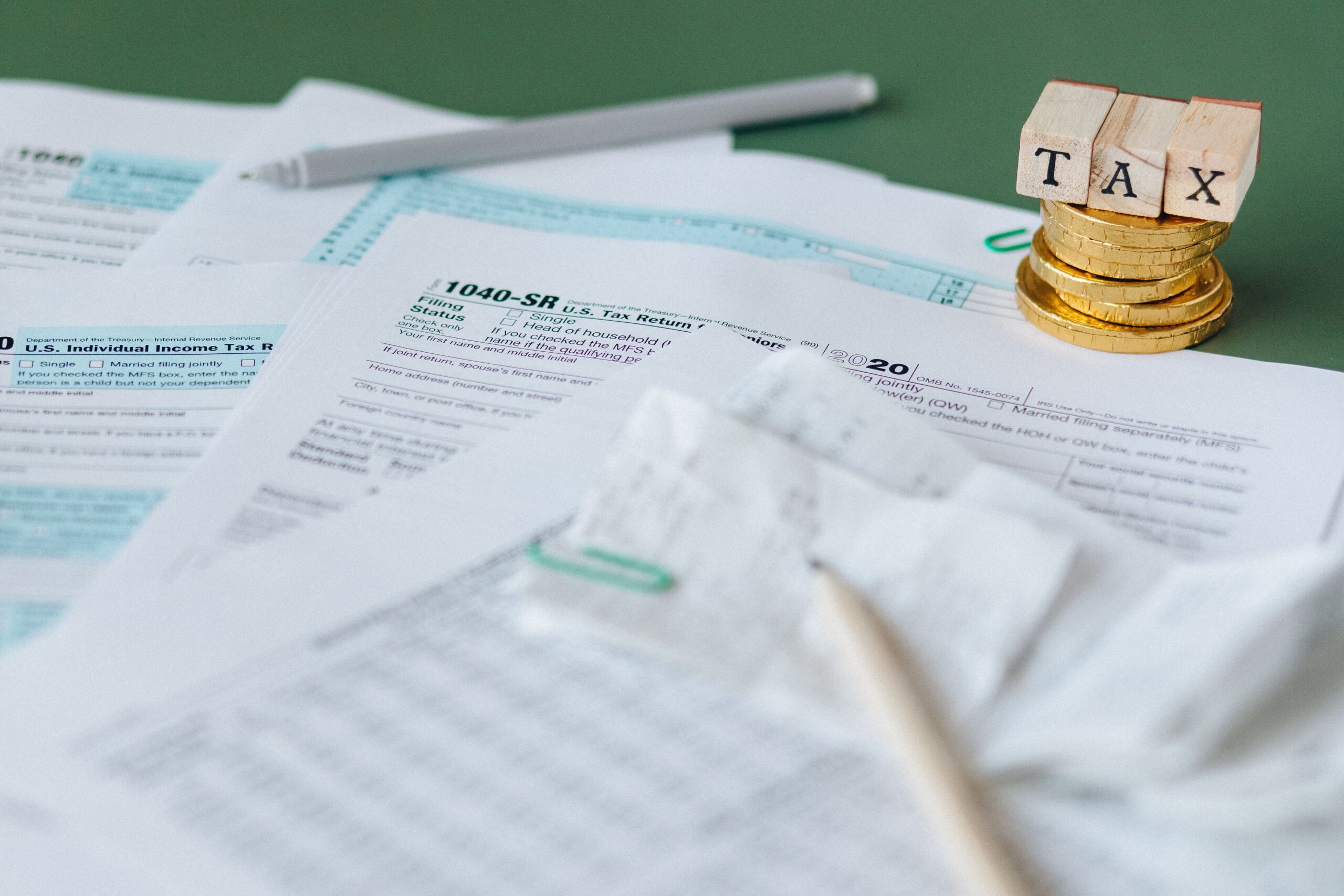
Foreign buyers in Morocco pay the same property transfer taxes as Moroccan buyers.
Nationality does not change the rates, so Morocco property transfer taxes for foreigners depend on the property and on the declared price.
However, the cost of completing a purchase is higher than most buyers expect.
Two charges are predictable, because both are set by law.
First, registration duty is normally 4% of the declared price for a constructed home.
Next, the land registry charges an ad valorem fee of 1.5% under the published ANCFCC tariff.
Therefore, plan for at least 5.5% of the declared price before any professional fee is added.
The rest of your bill is not a tax at all.
It is made up of the notary fee, the notary disbursements and any agency commission you agree.
Those amounts vary between files, so only a written itemised estimate from your appointed notary gives you a real total.
If you are a foreigner buying property in Morocco, the sections below show where each dirham goes.
Morocco property purchase costs at a glance
The table separates money paid to the State from money paid to professionals.
| Cost | What it is | Level |
|---|---|---|
| Registration duty | Tax collected for the State | 4% for a constructed home, other rates apply to land |
| Land registry charge | Charge paid to ANCFCC | 1.5% ad valorem plus small fixed charges |
| Notary fee | Professional fee for the notary | Regulated, and confirmed on your written estimate |
| Notary disbursements | Costs advanced for your file | Stamps, certificates and copies, listed line by line |
| Agency commission | Commercial fee, never a tax | Freely agreed, so put it in writing |
Why Foreigners Get Caught Off Guard by the Tax Side of Buying in Morocco
Morocco is genuinely open to foreign buyers.
In practice there is no general ban on foreigners owning property in the country.
However, agricultural land follows separate rules, so ask the notary to confirm the status of any plot.
The surprise is not the law, then, but the way the costs land.
In many Western markets, completion costs sit near 2% to 3% of the price.
In Morocco, duties and registry charges alone start above 5%.
As a result, buyers who budget only for the purchase price arrive at the notary short of cash.
What are the main Morocco property transfer taxes for foreigners?
Registration duty (droits d’enregistrement)
Registration duty is the largest tax on a purchase, and the tax authority collects it through the notary.
The official 2026 fiscal guide confirms a 4% rate in Morocco for constructed premises used for housing, commerce, a profession or administration.
On a home declared at 1,500,000 MAD, that duty is 60,000 MAD.
Bare land, or land carrying buildings that will be demolished, is taxed at 5% instead.
A reduced rate of 3% applies to the first sale of social housing bought from a developer working under an agreement with the State.
A traditional ownership title, known as a moulkia, is registered at 3%.
For a standard foreigner buying an apartment or a villa, the 4% rate is the usual starting point.
Deeds must also be registered within thirty days, because late registration triggers penalties.
The extra 2% on payments that cannot be traced
This charge is not automatic, so read the conditions carefully.
An additional registration duty of 2% can apply to a sale where the price exceeds 300,000 MAD.
It applies in two situations only.
- The deed does not state the payment method used and its references.
- The price is not settled by an accepted traceable method such as a crossed cheque, a bank transfer, an electronic payment or a set off.
Where part of the price is paid in cash and part by a traceable method, the extra 2% applies only to the cash part.
Therefore, paying through the bank and recording the references in the deed keeps you outside this surcharge.
Land registry charges at ANCFCC (conservation foncière)
This charge records your ownership on the land title held by ANCFCC.
Under the published ANCFCC tariff, registering a sale on a titled property carries an ad valorem charge of 1.5% of the declared value.
A small fixed charge per property and a minimum amount per file apply on top.
On a property declared at 1,500,000 MAD, the ad valorem part alone comes to 22,500 MAD.
Many older guides still quote 1%, which understates this charge.
It also pays to check the title deed yourself before any money moves.
VAT when you buy from a developer (TVA)
VAT works differently from registration duty, and it does not create one standard extra bill for every buyer.
If you are buying a new property from a developer, VAT (TVA in French) may already sit inside the advertised price.
The treatment depends on the operation, on the type of housing and on how the developer states the price.
Social housing follows its own regime, with specific conditions attached to the buyer.
Therefore, ask the developer in writing whether the quoted price includes all applicable taxes.
Then ask the notary to confirm the same point before you sign a reservation.
Buyers comparing the two routes can start with this guide to buying off plan property in Morocco.
Already considering a property?
See the 14 Day Buyer Plan: $299 →
Get 14 days of personal buyer support, three private calls and WhatsApp support.
Get help reviewing up to three properties before you commit money.

Notary Fees: What’s Included and What Isn’t
Notary fees in Morocco are officially regulated.
Even so, the amount on your file depends on the price, on the type of deed and on the work involved.
Avoid relying on a percentage you read online, because the office you appoint must quote its own figure.
VAT is added to the fee itself, so check the rate shown on your estimate.
Separately, the notary bills disbursements, which are real costs advanced for your file.
Certificates, copies, stamps, searches and translations all sit in that group.
Ask for one document that separates taxes, registry charges, the fee and the disbursements.
Many buyers also miss the fact that the notary represents the transaction, not one side of it.
The notary must act impartially, verify the title and handle registration for both parties.
As a result, you may still want your own lawyer to review the preliminary contract in your interest.
Buyers who want to follow every step in English can also look for an English speaking notary in Marrakech.
An illustrative cost example for a foreign buyer
The figures below are an illustration, not a quotation for your purchase.
They assume a titled resale apartment declared at 2,000,000 MAD and bought by a private individual.
They also assume that the price is paid by traceable means, so the extra 2% does not apply.
| Cost item | Calculation used | Illustrative amount (MAD) |
|---|---|---|
| Registration duty | 2,000,000 at 4% | 80,000 |
| Land registry charge | 2,000,000 at 1.5% plus fixed charges | 30,000 plus a small fixed amount |
| Subtotal set by law | 4% plus 1.5% | 110,000 |
| Notary fee and VAT | Quoted by the notary | To confirm in writing |
| Disbursements | Listed line by line | To confirm in writing |
| Agency commission | Freely agreed with the agency | To confirm in writing |
On this example the duties and registry charges reach 110,000 MAD, which is 5.5% of the declared price.
Your final total will sit above that figure once the fee, the disbursements and any commission are added.
If you buy a new build where TVA is included in the developer price, the breakdown shifts again.
How the money and the paperwork move in a Moroccan purchase
The order of the steps explains why the costs appear when they do.
From agreed price to registered title
Step 1. Confirm the property and the declared price
Check the title, the legal description and the price that will appear in the deed.
Step 2. Request the itemised notary estimate
Ask for taxes, registry charges, fees and disbursements to be listed separately.
Step 3. Transfer documented funds
Send your money through a Moroccan bank and keep every transfer certificate.
Step 4. Pay the price and the costs
Funds normally reach the notary by traceable means rather than the seller directly.
Step 5. Sign the final deed
The notary registers the deed with the tax authority and settles the duty.
Step 6. Complete ANCFCC registration
Your name is entered on the land title, which is the moment ownership is secured.
Because the notary settles the duty, the seller is normally paid only after the checks are complete.
Already considering a property?
See the 14 Day Buyer Plan: $299 →
Get 14 days of personal buyer support, three private calls and WhatsApp support.
Get help reviewing up to three properties before you commit money.
Morocco Property Transfer Taxes: What Changes for Foreigners Specifically
One question comes up constantly: do foreigners pay more than Moroccan nationals?
The direct answer is no, because the same rates apply to the same type of property.
Morocco doesn’t impose a surcharge on foreign buyers in the way some countries do.
Instead, the differences appear around money, exit and paperwork.
Currency and the convertible dirham account
If you fund the purchase from abroad, the money should reach Morocco through the Moroccan banking system.
Foreign currency is normally credited to a foreign currency account or to a convertible dirham account at an approved bank.
This is not a tax, yet weak paperwork here affects your ability to repatriate money later when you sell.
Under the rules applied by the Office des Changes, the right to transfer sale proceeds abroad follows the way the investment was originally financed.
Therefore, keep every bank certificate, transfer receipt and deed copy in one file.
Tax when you sell the property
Sellers pay income tax on the property profit at 20% of the net gain.
A minimum charge of 3% of the sale price applies even when there is no profit.
The official 2026 guide exempts a home used as a principal residence for at least five years before the sale.
Most owners of a holiday home or a rental property will not meet that condition.
As a result, plan your exit position before you buy rather than after you sign.
Registration is not optional
Some buyers ask whether they can delay registration to save the land registry charge.
That is a serious mistake in a system where the land title decides who owns what.
Without registration at the ANCFCC, your legal ownership is not fully protected.
Common Mistakes Foreigners Make With Property Taxes in Morocco

Agreeing to declare a price below the real one
Some sellers propose declaring less than the true price in order to reduce the duty.
This looks like a saving on the day, yet it creates three problems later.
- Your future taxable gain is measured from the declared purchase price, so a low figure inflates the profit on resale.
- The tax authorities (DGI) can review a declared value and open a correction procedure.
- A declared price that does not match your bank transfers weakens your position when you ask to move funds abroad.
Declare the real price, pay through the bank, and keep the evidence.
Assuming the agency commission is a fixed rate
Real estate agent fees in Morocco are a commercial matter rather than a tax.
No public tariff sets them, so the amount and the split between buyer and seller are negotiable.
Some agencies also expect a fee from both sides of the deal.
Always confirm in writing who pays the agency, how much, and at which stage.
Treating the preliminary contract as informal
The compromis de vente is the preliminary agreement that fixes the terms of the sale.
Any deposit at this stage should be held by the notary rather than handed to a seller or an agent.
Before signing, read our guides to the compromis de vente in Morocco and to property deposits for foreign buyers.
Forgetting the annual taxes that start after completion
These are not transfer taxes, yet they belong in your budget.
Taxe d’habitation is an annual tax based on an assessed rental value, charged in bands of 0%, 10%, 20% and 30%.
A home kept as a principal residence benefits from a 75% reduction of that rental value.
Taxe de services communaux uses the same rental value, at 10.5% inside urban areas and 6.5% in other zones covered by a development plan.
New construction used as a principal residence is exempt from the taxe d’habitation for five years.
However, that five year exemption does not apply to the taxe de services communaux.
Ask the seller for the latest notices and check whether any amount remains unpaid.
Morocco Property Transfer Taxes Compared to Other Popular Markets for Foreign Buyers
The table gives a rough sense of scale, because rules and rates differ in every market.
| Country | Main buyer charges, excluding professional fees |
|---|---|
| Morocco | 4% registration duty plus 1.5% land registry on a titled home |
| Spain | Transfer tax that varies by region, broadly 6% to 10% |
| Portugal | Transfer tax plus stamp duty, broadly 6% to 8% |
| France | Transfer duties on an older property, broadly 7% to 8% |
| Dubai | Transfer fee of about 4% |
| Turkey | Title deed fee of about 4% |
Morocco therefore sits broadly in line with southern European markets.
Figures outside Morocco are general market estimates, so confirm them locally before you compare.
Costs Summary: What to Budget as a Foreign Buyer
For a titled resale property bought by a private individual, budget for these items.
- Registration duty at 4% of the declared price for a constructed home.
- Land registry charges at 1.5% plus small fixed amounts.
- The notary fee, plus the VAT applied to that fee.
- Notary disbursements such as stamps, certificates and copies.
- Any agency commission you agree in writing.
- Your own lawyer, which is money well spent on a first purchase.
When I bought my own apartments in Marrakech, the notary bill was never one single figure.
I paid separate amounts for registration, for the land registry and for the notary’s own work.
That is why I now tell every buyer to ask for the lines in writing before committing.
Ask your bank early too, because financing transfer taxes through a mortgage is rarely available in Morocco.
Do Foreigners Need Fiscal Representation When Buying Property in Morocco?
This question comes up regularly because the term appears in Moroccan tax and legal documents.
For a standard private purchase, a foreign property buyer in Morocco does not usually need formal fiscal representation to complete the transaction.
The notary handles the duties, the registration charges and most of the administrative work at closing.
The term représentation fiscale is more commonly linked to business taxation, VAT obligations and foreign companies trading in Morocco.
However, the picture changes once you move beyond the purchase itself.
Renting the property, selling it and moving the proceeds abroad all create Moroccan filing duties.
Those steps are easier with a notary, accountant or tax adviser who works with owners living abroad.
Fiscal Representation in Morocco: At a Glance
- Most foreign buyers do not need a formal fiscal representative to complete a private purchase.
- The notary handles registration and the transfer tax steps at closing.
- Local tax advice becomes useful if you rent the property, sell it, or move proceeds abroad.
- Ask about the tax on property profits well before you list the property for sale.
- Formal representation is mainly a business and VAT arrangement.
Buyers who plan to hold the property inside a structure should also read about buying property in Morocco through a company.
What should a foreign buyer do before paying?
Morocco’s property transfer taxes for foreigners are significant, yet the two main charges are predictable.
The risk sits in weak preparation rather than in the tax itself.
Therefore, work through these steps before any money leaves your account.
- Ask your notary for a written itemised estimate covering duties, registry charges, fees and disbursements.
- Confirm which registration duty rate applies to that exact property.
- Check the title and the legal description before you agree any deposit.
- Agree the agency commission in writing, including who pays it.
- Send funds through a Moroccan bank and keep every certificate.
- Declare the real price in the deed and record the payment references.
- Ask what your annual taxes will be once the property is in your name.
Buyers who prepare properly close at a cost they expected, with a clean title they can sell later.
Already considering a property?
See the 14 Day Buyer Plan: $299 →
Get 14 days of personal buyer support, three private calls and WhatsApp support.
Get help reviewing up to three properties before you commit money.
FAQ
Tax rates and possible reductions
Do foreigners pay higher transfer taxes than Moroccan nationals?
No, because the rates depend on the property rather than on the nationality of the buyer.
The same registration duty and land registry charges apply to everyone buying the same type of home.
Is VAT charged on all property purchases in Morocco?
No, VAT mainly concerns new property sold by developers, and the treatment depends on the operation.
Resale homes sold by private owners attract registration duty instead.
Our guide to property purchases and capital gains tax in Morocco explains what happens when you sell.
Is there a tax exemption available for foreigners?
Reduced rates exist for categories such as social housing, with strict legal conditions attached.
Most buyers of a second home or an investment property will not qualify.
Check eligibility with your notary rather than assuming a reduced rate applies.
Payments and registration
When exactly do I pay the transfer taxes?
Payment happens around the signature of the final deed at the notary office.
The notary then registers the deed and pays the authorities directly.
What happens if part of the price is paid in cash?
An extra 2% of registration duty can apply to a sale above 300,000 MAD when the payment is not traceable.
Where the price is settled partly in cash, that extra duty applies only to the cash part.
Therefore, paying through the bank is both safer and usually cheaper.
What happens if I buy without properly registering the title?
Your ownership is not fully protected until the sale is recorded on the land title.
Always complete the ANCFCC registration through the notary.
Planning your purchase costs
Can I know my total buying cost in advance?
You can calculate the duty and the registry charge yourself from the declared price.
The fee, the disbursements and any commission come from the written estimate rather than from a general percentage.
Do I pay tax on the gain when I buy or only when I sell?
Tax on the profit arises on sale, not on purchase.
At purchase you pay registration duty, registry charges and professional fees.
Can I finance the transfer taxes through a Moroccan mortgage?
Usually not, because Moroccan mortgages are built around the purchase price.
Plan to cover the duties and the fees from your own funds on the day of signature.
Do I need a fiscal representative to buy property in Morocco?
In most private purchases, foreign buyers do not need a formal fiscal representative simply to buy.
The notary handles the duties and the registration process at closing.
However, ask a notary or tax adviser about extra support if you plan to rent the property, sell it, or move proceeds abroad.

Anis is the founder of Buy Property Morocco, a research-based resource created to help foreign buyers understand the real process of buying property in Morocco safely.
He focuses on the practical details most buyers only discover too late: title deed checks, notary steps, compromis de vente risks, transfer taxes, foreign banking rules, repatriating money after a sale, and avoiding common mistakes when dealing with agents or sellers.
Anis has personally bought 4 properties in Morocco and shares practical guidance based on real experience, not theory.
If you are seriously considering buying property in Morocco and want private guidance before you send money, pay a deposit, or sign anything, you can book a buyer safety call here: