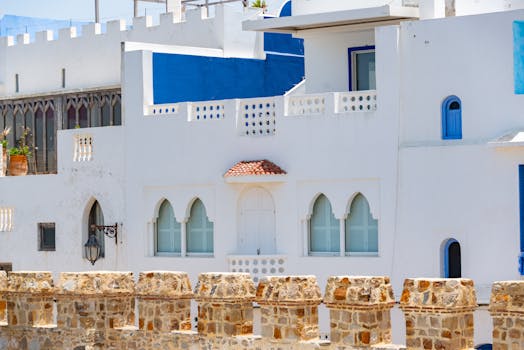
Buying a house in Morocco is legal, well-regulated, and genuinely accessible for foreign nationals when the right process is followed.
The notary system is solid, the land registry works, and the costs are predictable. The danger is not the legal framework itself. The danger is skipping the verification steps that most buyers only regret missing after the fact. This guide covers the full process, the real costs, what documents you need, what to check at the Conservation Foncière, and what has gone wrong for buyers who did not do their homework.
Buying a House in Morocco: The Short Answer
Foreigners can buy residential property in Morocco directly in their own name. No residency permit is required. No Moroccan partner or intermediary is needed. The purchase runs through a licensed notary who handles title verification, taxes, and registration with the land registry.
The main risks come down to four things: title fraud, undeclared heirs, hidden mortgages, and agricultural land sold through illegal workarounds. Every one of these is avoidable if you verify the Titre Foncier at the Conservation Foncière before paying a deposit and appoint your own notary from the start.
The safest route in a sentence: buy titled property only, use your own notary, pay only into the notary’s trust account, and register your incoming funds with the Office des Changes the day the money arrives in Morocco.
At a Glance: Buying a House in Morocco

- Foreigners can legally buy homes, apartments, riads, villas, and urban land in Morocco.
- Foreigners cannot buy agricultural land (terrain agricole), which is reserved for Moroccan citizens and Moroccan companies.
- Only buy property with a Titre Foncier (registered land title). Moulkia properties carry real legal risk for foreign buyers.
- Total buying costs run between 6% and 8% on top of the sale price, not including agency fees.
- Always pay through the notary’s official trust account. Never into a seller’s or agent’s personal account.
- Register your purchase with the Office des Changes through your Moroccan bank so you can legally send your money back abroad when you sell.
- Verify every detail at the Conservation Foncière (ANCFCC) before signing anything or paying any deposit.
Planning to buy in Marrakech?
Read the full guide to buying property in Marrakech as a foreigner before you pay a deposit. It covers Marrakech-specific risks, medina titles, and the neighborhoods where foreigners actually buy safely.
Can Foreigners Buy a House in Morocco?

Yes. Foreigners can buy apartments, villas, riads, urban houses, and urban building land in Morocco, in their own name, with no Moroccan co-owner required.
The legal framework under the Dahir of 1913 and subsequent Moroccan property law makes no distinction between Moroccan nationals and foreign nationals for urban residential property. Your nationality does not affect your right to own, sell, rent, or mortgage a property.
The one hard restriction is agricultural land (terrain agricole), which cannot be purchased by foreign nationals or foreign companies.
This rule has no exceptions and no legal workaround. Any arrangement where a Moroccan citizen holds agricultural land “on behalf of” a foreign buyer is illegal and almost always ends with the foreigner losing everything.
No residency permit is required to buy. A valid passport is sufficient to purchase and register a property title in your name. You do not need to live in Morocco, work in Morocco, or hold any kind of Moroccan visa.
Can Foreigners Buy Each Type of Property in Morocco?
| Property Type | Can Foreigners Buy? | Risk Level | What to Verify |
|---|---|---|---|
| Apartment | Yes | Low to medium | Titre Foncier, syndic certificate showing zero building debt, seller ID match |
| Villa | Yes | Low to medium | Titre Foncier, exact land boundaries confirmed by a licensed surveyor (géomètre) |
| Riad | Yes | High | Whether it has a Titre Foncier or only Moulkia, all heirs present and signed, medina boundary survey |
| Urban house | Yes | Medium | Titre Foncier, urban certificate confirming residential zoning, tax receipts, utility bills |
| Urban land | Yes | Medium | Titre Foncier, Note de Renseignements confirming land is not agricultural, permitted building use |
| Agricultural land | No | Illegal | Do not purchase. No workaround is legal. Any nominee arrangement will fail. |
What Types of Homes Can Foreigners Buy in Morocco?
Foreigners have access to almost every category of urban residential property in Morocco. The legal framework is open, but the property type changes the risks, the paperwork required, and where disputes typically arise.
Apartments
Apartments are the most common purchase for foreign buyers in cities like Casablanca, Rabat, Tangier, and Agadir. They are usually titled properties with clear individual ownership registered under a co-ownership regime. The risks are lower than with riads or medina houses, but you still need to request a syndic certificate confirming the building has no unpaid collective debts. Those debts become yours after the sale if you do not check in advance.
Villas
Villas are popular in coastal areas, golf resorts, and upscale neighborhoods in cities like Marrakech and Agadir. Most modern villas built since 2000 are fully titled with clean boundaries. Older villas sometimes sit on land with unclear edges or surface area discrepancies between the deed and the physical plot. A licensed surveyor (géomètre) should confirm the exact boundaries before you sign anything.
Riads
Riads are traditional courtyard houses inside the old medinas of cities like Marrakech, Fes, and Essaouira. They appeal to buyers looking for renovation projects, boutique guesthouses, or a very particular lifestyle. But this is also the category where foreigners lose the most money.
Many riads are still held under Moulkia instead of Titre Foncier. Shared walls, disputed boundaries, and multiple family heirs who never formally agreed to sell are common problems. Extra verification is not optional with riads. It is the minimum you need before considering a purchase.
Urban Houses
Standard urban houses (dar) in residential neighborhoods are open to foreign buyers and are usually titled. They sit inside planned residential zones regulated by the local commune. Always check the urban certificate (Note de Renseignements) to confirm the zoning is strictly residential and that no public development project is planned nearby that could affect the property.
Urban Land
Foreigners can legally buy urban land (terrain urbain) to build on, provided it is classified as constructible and not agricultural. The classification matters more than a seller’s assurances. Request the Note de Renseignements from the commune before any money changes hands. This document confirms what you are legally allowed to build, what setbacks apply, and whether any public utility easements cross the plot.
Agricultural Land (Restricted)
Agricultural land (terrain agricole) is the one category fully closed to foreign buyers. There are no exceptions and no legal workarounds. Never sign a side agreement with a Moroccan “friend” who holds the title nominally while you pay for the land. This arrangement is illegal under Moroccan law, courts have no sympathy for it, and the foreign buyer loses everything when it falls apart. It always falls apart.
How Buying a House in Morocco Actually Works
Morocco operates two parallel property registration systems, and you need to understand the difference before you look at a single listing.
Titled Property (Titre Foncier)
This is the safe option and the only one recommended for foreign buyers. Titre Foncier means the property has been registered at the Conservation Foncière, the national land registry run by the ANCFCC.
Every titled property carries a unique registration number. The title document lists the legal owner, the exact surface area, any mortgages or liens, and any legal disputes or restrictions on the property.
When you buy a titled property, the sale triggers a formal update of that title. Your name replaces the seller’s name in the national registry. Anyone who wants to know who owns the property can check the Conservation Foncière. This system makes fraud much harder and disputes much easier to resolve.
Always ask for the Titre Foncier number as the very first thing. If the seller or agent cannot provide one, that is your answer.
Moulkia (Traditional Ownership)
Moulkia, also spelled melkia, is a traditional form of property ownership based on a document drawn up and signed by adouls, who are Islamic notaries. Moulkia is legal under Moroccan law and is still widely used, particularly in old medinas.
The problem for foreign buyers is the exposure it creates. Because Moulkia is not registered in a national land registry, there is no single authoritative record of who owns what. Heirs, neighbors, or parties claiming historical rights can appear years after the sale. Proving ownership becomes a matter of producing historical adoul documents and testimony, which takes time, money, and patience in Moroccan courts.
Read the full comparison of Melkia vs Titre Foncier before you consider a non-titled property. As a foreign buyer, the practical rule is simple: buy titled property only. If you are seriously considering a Moulkia property, budget time and money for converting it to a proper Titre Foncier before you commit to the purchase price.
Step-by-Step Process for Buying a House in Morocco

- Ask for the Titre Foncier number immediately.
This is the first question to ask about any property. If the seller or agent cannot produce a Titre Foncier number, stop. Do not proceed. Do not pay anything.
- Request a fresh property certificate from the Conservation Foncière.
Have your notary pull a Certificat de Propriété dated within the last 30 days. This document shows the legal owner, the surface area, any active mortgages, and any registered disputes. Never accept a certificate handed to you by the seller.
- Check the zoning at the local commune.
Request the urban certificate (Note de Renseignements). This confirms the land classification is residential or constructible, not agricultural, and not subject to any expropriation or public development plan.
- Match the seller’s identity to the title.
The name and ID number on the seller’s national identity document must match the name registered on the Titre Foncier exactly. Any mismatch is a serious red flag.
- Sign a Compromis de Vente at a licensed notary.
This is the preliminary sale contract. Sign it at a notary’s office, never in a café, an agent’s office, or at the seller’s home. A properly drafted Compromis protects your deposit and locks in the agreed price and conditions.
- Pay the deposit (usually 10%) into the notary’s trust account.
The deposit goes to the notary. Never into the seller’s personal bank account and never in cash to anyone.
- Due diligence period.
The notary verifies the title, confirms there are no outstanding mortgages, checks tax payments, confirms there are no heirs who have not signed, and clears any syndic debts. This takes several weeks.
- Sign the final deed (Acte de Vente) at the notary.
Pay the balance by certified bank check drawn on your Moroccan account or by bank transfer from abroad that is registered with the Office des Changes.
- Register the new title in your name.
The notary submits the signed deed to the Conservation Foncière. Your name is registered as the new legal owner. The physical title update usually takes 2 to 6 months from the signing date.
Do you need residency to buy a house in Morocco?
No. Residency is not required to buy property in Morocco. A valid passport is enough to purchase and register a title in your own name. Property ownership can support a future residency application but does not grant it automatically.
Can you buy remotely with a power of attorney?
Yes. You can buy remotely using a power of attorney (procuration) legalized at the Moroccan consulate in your country. The document must name a trusted representative clearly and must list the specific powers granted for this particular purchase. Remote buyers are the most common target of property fraud in Morocco. If you are buying remotely, visit at least once before the final signature and verify your representative and notary independently.
How long does buying a house in Morocco take?
From signed offer to final deed, a standard titled purchase usually takes 6 to 10 weeks. Registration of the updated title at the Conservation Foncière adds another 2 to 6 months. Moulkia conversions, inheritance clearances, or mortgage releases can extend the timeline significantly beyond that.
Documents Needed to Buy a House in Morocco

Documents the buyer typically provides
- Valid passport (original and copy).
- A Moroccan bank account for fund transfers and notary payments.
- Proof of the incoming international transfer registered with the Office des Changes through your Moroccan bank.
- A power of attorney legalized at the Moroccan consulate if you cannot attend in person.
- Your tax identification number from your home country (some notaries require this).
Documents the seller and notary should produce

- Titre Foncier number and a fresh Certificat de Propriété from the Conservation Foncière (no older than 30 days).
- Seller’s national identity document matching the name on the title exactly.
- Latest utility bills (electricity, water) confirmed as paid.
- Tax receipts (taxe d’habitation, taxe de services communaux) for the last three years.
- Syndic certificate showing zero outstanding building debts (for apartments).
- Urban certificate (Note de Renseignements) from the commune confirming zoning.
- Proof any existing mortgage on the property will be cleared at closing.
- Death certificates and heirship certificates if the seller inherited the property.
- Building permit and usage permit if the property was recently constructed.
How Much Does It Cost to Buy a House in Morocco?

The sale price is only part of what you pay. On top of the agreed price, you need to budget for registration tax, land conservation fees, notary fees, stamps, and if you use one, an agency commission. Here is what these costs actually look like in practice.
| Cost | Rate | Paid to |
|---|---|---|
| Registration tax | 4% of purchase price | Tax authority (DGI) |
| Notary fees | 0.5% to 1% plus 20% VAT | Notary |
| Land conservation fee | 1.5% plus small fixed charges | Conservation Foncière |
| Stamps and certificates | A few hundred dirhams | State |
| Agency fee (if applicable) | Around 2.5% (negotiable) | Agent |
Real example: buying a 1,000,000 MAD property
Here is what the extra costs look like on a property priced at 1,000,000 MAD:
| Cost item | Approximate amount |
|---|---|
| Registration tax (4%) | 40,000 MAD |
| Land conservation fee (1.5%) | 15,000 MAD |
| Notary fees (approx. 1% plus VAT) | 12,000 MAD |
| Stamps and administrative fees | 500 to 1,000 MAD |
| Total without agency | around 67,000 to 68,000 MAD (about 6.7%) |
| Agency fee if applicable (2.5%) | 25,000 MAD |
| Total with agency | around 92,000 to 93,000 MAD (about 9%) |
The commonly quoted “6% to 8%” range holds without an agency. If you use an agent and pay their commission, budget closer to 9%. Agency fees in Morocco are negotiable, especially on higher value properties.
Taxes When Buying and Selling a House in Morocco

At the time of purchase
The main tax when buying is the registration tax (droits d’enregistrement), set at 4% of the declared purchase price. This goes directly to the national tax authority. It is paid through the notary at the time of signing the final deed.
Annual ownership taxes
Once you own the property, two recurring local taxes apply:
- Taxe d’habitation: a housing tax based on the rental value of the property.
- Taxe de services communaux: a municipal services tax calculated on the same rental value.
For most residential properties, both taxes together amount to a few hundred to a few thousand dirhams per year. They are modest compared to equivalent taxes in most European countries.
Capital gains tax when you sell (TPI)
When you sell, you pay a capital gains tax called TPI (Taxe sur les Profits Immobiliers). The standard rate is 20% of the declared profit, with a minimum floor of 3% of the total sale price even if you made no profit. You can be fully exempt from TPI if you have owned the property as your primary residence for more than six years continuously. Keep records of your acquisition price, renovation costs, and all official transactions as these reduce the taxable gain.
How to Verify Everything Safely
Verification is where deals are saved or lost. Here is a practical checklist covering everything a buyer should confirm before signing anything:
- Get the Titre Foncier number and pull the property certificate yourself. Have your own notary request a Certificat de Propriété directly from the Conservation Foncière (ANCFCC). Do not accept any document handed to you by the seller.
- Match the seller’s identity to the title holder. The full name and national ID number of the person selling must match the name registered on the Titre Foncier exactly. Any variation, even a spelling difference, needs to be explained and verified.
- Check for active mortgages. The Certificat de Propriété shows any registered mortgage or lien on the property. If a mortgage exists, it must be cleared and discharged before or at closing. Confirm this in writing with the lender.
- Verify heirs. If the seller inherited the property, every heir listed in the official succession documents must have signed the sale agreement. One unsigned heir can cancel the entire transaction years later.
- Check for a power of attorney being used. If someone is selling on behalf of the owner, verify that power of attorney at the consulate or notary that issued it. Some of the worst fraud cases involve forged or expired powers of attorney.
- Request utility bills and tax receipts. Ask for recent electricity and water bills and three years of tax receipts. Unpaid bills and tax arrears follow the property, not the seller.
- Get the syndic certificate for apartments. This document from the building association confirms zero outstanding collective debts. Any building maintenance debts or loans transfer to the new owner at closing.
- Confirm zoning at the commune. Request the Note de Renseignements. This confirms whether the land is residential, constructible, or agricultural. A seller saying land is “buildable” is not the same as an official document confirming it.
- Register your incoming funds with the Office des Changes. When you transfer money from abroad to pay for the property, register that transfer through your Moroccan bank. Keep the documentation. This is your legal proof that the purchase funds came from a foreign source, and it is the only thing that allows you to repatriate the sale proceeds legally when you sell later.
- Pay only into the notary’s official trust account. Never send money to an agent, seller, or anyone else. The notary trust account is the only safe destination for your deposit and your balance payment.
Biggest Mistakes Foreigners Make When Buying Property in Morocco

- Paying cash or transferring money directly to the seller or agent. This is the single fastest way to lose everything. No legal protection applies once the money leaves your control outside of the notary system.
- Relying on the agent’s paperwork without an independent notary check. Agents in Morocco are salespeople. Their job is to close the deal. They are not lawyers, they are not regulated like in Europe, and their commission depends on the transaction completing, not on you being safe.
- Buying Moulkia with the intention of “sorting it out later.” Most people never sort it out. The conversion process is slow, expensive, and sometimes impossible when multiple heirs are involved. Children of foreign buyers often inherit the same unresolved problem decades later.
- Skipping the Office des Changes registration when the money arrives. Without the paperwork proving your money entered Morocco legally as a foreign transfer, you cannot legally repatriate your sale proceeds when you eventually sell. You will be left holding dirhams you cannot take out.
- Using a general power of attorney signed abroad without proper verification. Forged and fraudulent powers of attorney are a documented problem in Moroccan property transactions. If someone is acting on behalf of the seller, verify that document independently through the consulate or the issuing notary.
- Not visiting the property in person before signing. Remote buyers are the preferred target for property fraud in Morocco. Visit at least once. Walk the property with someone independent of the seller and agent.
- Accepting verbal assurances about land classification. A seller saying the land is residential or buildable means nothing legally. Only the official Note de Renseignements from the commune confirms this. Agricultural land restrictions apply regardless of what a seller tells you.
Hidden Risks Nobody Tells You About

Fake Title Certificates
Fraudulent property certificates are easy to produce and hard to spot visually. The only safe approach is to have your own notary request the certificate directly from the Conservation Foncière. Never accept a certificate provided by the seller, the agent, or anyone with a financial interest in the deal closing.
Undeclared Heirs
Moroccan inheritance law creates wide circles of potential claimants. Siblings, children from earlier marriages, and cousins can all have legitimate rights on the same property. If even one heir with a legal share did not sign the sale agreement, the transaction can be challenged and canceled in court years after the purchase is complete. This is not rare. It happens regularly with medina properties.
Undeclared Mortgages
The seller may have an active mortgage from a Moroccan bank secured against the property. If that mortgage is not cleared at closing, it stays attached to the property after the title transfers to you. Always verify the mortgage situation through the Certificat de Propriété, and confirm in writing with the bank that it will be discharged before or at the moment of the final deed.
Agricultural Land Sold as Buildable
Some sellers present agricultural land as “buildable” or “constructible” with informal assurances about future zoning changes. Foreigners cannot own agricultural land in Morocco. The classification on the land registry is what matters, not the seller’s interpretation of future plans. Check the official land classification before proceeding and do not rely on promises about reclassification.
Off-Plan Developer Scams
Developers collect deposits for projects that are never completed or where construction stalls indefinitely. Before paying any deposit to a developer, verify that a real building permit (permis de construire) exists, check the developer’s record of past completed projects, and confirm the company is properly registered. A glossy brochure and a showroom are not evidence of financial solidity.
Double Agents
An agent presents themselves as working for the buyer while actually representing the seller and having a direct interest in the deal closing at the highest price. Their commission comes from the transaction completing. In Morocco, agents are not legally required to disclose conflicts of interest. The only party with a fiduciary duty in a Moroccan property transaction is the notary.
What I Have Seen Happen (Real Scenarios)

The Marrakech Riad That Was Canceled in Court
A French buyer paid 300,000 euros for a riad in Marrakech. The property had two sisters living abroad who had inherited a share but never signed the sale agreement. The purchase went through anyway because nobody checked the full heirship chain. Two years later, the sisters filed a case and the court canceled the deed. The buyer is still trying to recover his money through litigation in Marrakech. This situation was entirely preventable with a proper heirship check before the Compromis was signed.
The Essaouira Land Held by a Friend
A British couple bought agricultural land near Essaouira through an informal arrangement where a Moroccan acquaintance held the title on their behalf. The arrangement worked for several years until the acquaintance refused to transfer the title or return any money. The couple had no legal standing because the land was never legally theirs. Every dirham they paid was lost.
The Vanishing Agent
A Dutch buyer sent a 20% deposit to an agent’s personal account for a property in the Tangier area. The agent stopped responding. The supposed owner turned out not to exist as the person described. The money was gone. The buyer had no notary and no legal contract that could be enforced.
The Café Compromis
A Spanish buyer signed a preliminary sale contract in a café without a notary present. The seller later received a higher offer and refused to close the transaction. Without a notary-certified contract, the legal enforceability was weak. Recovering the deposit required three years of proceedings in a Moroccan court.
The Hidden Bank Mortgage
An American buyer was shown a title document by the seller suggesting the property was unencumbered. He did not request an independent certificate from the Conservation Foncière. The real title had an active bank mortgage on it. To take clear ownership, he had to pay the remaining bank debt on top of the purchase price he had already paid. The extra cost was significant and entirely avoidable.
These are not exceptional worst-case stories. Variations of each happen regularly across Marrakech, Tangier, Casablanca, and Agadir. If Marrakech is where you are looking, the city has a particularly high concentration of medina titles, unsigned heirs, and riad-specific risks that are worth understanding in detail before you view a single property.
What Most Websites Won’t Tell You About Buying Property in Morocco

Your Notary Matters More Than Your Agent
A careful notary catches missed mortgages, unsigned heirs, and zoning problems before the deal closes. A lazy notary misses them. Always appoint your own notary, independent of the seller. Never use the seller’s notary as your only legal representative. In Morocco, the notary is theoretically neutral, but choosing your own gives you an important layer of independent oversight.
Medina Properties Are Their Own World
Street addresses are sometimes ambiguous or informal. Two adjacent properties can have overlapping claims on the same wall, courtyard, roof terrace, or storage room. Never buy a medina house without a licensed surveyor (géomètre) physically measuring and confirming the exact boundaries of what you are buying.
Listed Prices Are Negotiable
Asking prices in Marrakech, Tangier, and Casablanca are typically 15% to 30% above realistic market value, sometimes more in tourist-heavy areas. Foreign buyers consistently overpay because they do not know the local market and do not negotiate firmly. Research comparable sales before making any offer.
The Notary You Meet Might Not Be the Right Kind
Titled property must go through a notaire, a civil law notary working within the French-model legal system. Some sellers direct buyers toward an adoul instead. An adoul is appropriate for Moulkia documents but has no role in the transfer of titled property. Always confirm you are working with a notaire for any titled purchase.
Repatriation of Funds Is Not Automatic
When you eventually sell and want to transfer the proceeds abroad, the bank will require documentation proving the original purchase funds were brought into Morocco legally as a foreign transfer. That documentation comes from the Office des Changes registration done when you first sent the money. If this step was skipped, expect serious difficulties when you try to move money out of Morocco.
Syndic and Building Debts Transfer to the New Owner
In apartment buildings, the co-ownership association (syndic) may have unpaid service charges, maintenance debts, or loans it took out for building improvements. These obligations transfer to whoever owns the apartment, not to the person who incurred them. Always obtain a syndic certificate showing zero outstanding debt before signing the final deed.
Agents Are Not Regulated Like in Europe
Many operate without a formal license and without any legal obligation to act in your interest. The only legally binding signature in a Moroccan property transaction is the notary’s. Everything else is informal. Buying a house in Morocco can be safe, straightforward, and rewarding when the right legal process is followed and every document is verified at the Conservation Foncière before any money moves.
My Practical Advice Before Buying a House in Morocco
After seeing many transactions in Morocco, the buyers who come out well are not necessarily the ones who spent the most on lawyers or the ones with the most experience in property. They are the ones who verified the basics properly before paying anything.
Before you commit to any property, run through this list yourself:
- Does the property have a Titre Foncier number? If not, do not proceed until you know exactly what the title situation is.
- Has your own notary pulled a fresh Certificat de Propriété directly from the Conservation Foncière? Not from the seller, not from the agent.
- Does the seller’s identity document match the name on the title exactly?
- Are there any mortgages on the property? If yes, are they being cleared at closing, and do you have written confirmation from the lender?
- Are all heirs accounted for and signed up if the property came through inheritance?
- Is the land classification officially confirmed as residential or constructible, not agricultural?
- Have you opened a Moroccan bank account and registered your incoming transfer with the Office des Changes?
- Is your deposit going to the notary’s trust account and nowhere else?
The safest buyer is not the one who trusts the most people in the process. It is the one who verifies the title, the seller, the notary, the land classification, the tax position, and the money transfer trail before a single dirham moves.
If you are buying in Marrakech, the checklist above is especially important. The medina has a higher concentration of Moulkia titles, shared-wall disputes, and unsigned heir situations than most other cities. Read the full guide to buying property in Marrakech as a foreigner before committing to any property there.
FAQ: Buying a House in Morocco
Is buying a house in Morocco safe?
Yes, when the process is followed correctly. The legal framework is solid, the notary system works, and titled property is reliably registered. The risk comes from skipping verification, trusting the wrong people, paying outside the notary system, or buying non-titled (Moulkia) property without understanding what that means. Buyers who verify the title, the seller identity, and the mortgage situation before signing are in a strong legal position.
Can foreigners buy a house in Morocco?
Yes. Foreigners can buy apartments, villas, riads, urban houses, and urban land in Morocco, directly in their own name, without a Moroccan co-owner or partner. The one restriction is agricultural land, which is reserved for Moroccan citizens and companies. No residency is required.
Can a foreigner buy a house in Morocco without residency?
Yes. No residency permit or carte de séjour is required. A valid passport is sufficient to purchase and register property in Morocco. Residency and property ownership are legally independent. You can own property in Morocco as a non-resident indefinitely.
How much does it cost to buy a house in Morocco?
On top of the agreed purchase price, budget for registration tax (4%), land conservation fee (1.5%), notary fees (0.5% to 1% plus 20% VAT), and minor stamp charges. Total extra costs without an agency run around 6% to 7%. If you use a real estate agent and pay their commission (around 2.5%), the total rises to around 9%. Always get a written cost breakdown from your notary before signing.
What taxes do you pay when buying a house in Morocco?
The main tax at purchase is the registration tax at 4% of the declared price, paid to the national tax authority. After purchase, annual taxes apply: taxe d’habitation and taxe de services communaux, both modest. When you sell, you pay TPI (capital gains tax) at around 20% of the profit, with a minimum floor of 3% of the sale price. Properties held as a primary residence for over six years are fully exempt from TPI.
What is the safest way to pay for a house in Morocco?
Transfer the funds to the notary’s official trust account. Never pay the seller or agent directly in cash or by bank transfer to a personal account. Bring the money from abroad as a documented international transfer and register it with the Office des Changes through your Moroccan bank on arrival. This protects both your purchase and your ability to repatriate funds when you eventually sell.
Can I buy a house in Morocco remotely?
Yes, using a power of attorney (procuration) legalized at the Moroccan consulate in your country. The document must name your representative clearly and specify exactly what they are authorized to do. Remote buying is legal but carries higher fraud risk. Try to visit at least once before the final deed is signed, verify your representative independently, and never transfer money without seeing the Conservation Foncière title certificate yourself.
What is the difference between Titre Foncier and Moulkia?
Titre Foncier is a formal land title registered in the national land registry (Conservation Foncière). It lists the legal owner, surface area, mortgages, and any disputes. It is the only type of title that gives a buyer reliable legal certainty in Morocco. Moulkia is a traditional form of ownership based on adoul (Islamic notary) documents, not registered in any national database. It is legal but carries more risk, particularly for foreign buyers, because competing claims from heirs or neighbors are harder to identify and harder to defeat in court. Buy Titre Foncier only unless you are fully prepared for the conversion process.
Can foreigners buy land in Morocco?
Foreigners can buy urban land (terrain urbain) that is officially classified as constructible. They cannot buy agricultural land (terrain agricole). The classification on the official land registry is what matters, not a seller’s verbal description of the land. Always verify the official classification through the commune’s Note de Renseignements before agreeing to any purchase of land.
Does buying a house in Morocco give you residency?
No. Property ownership alone does not grant residency or any automatic right to live in Morocco long-term. It can support a residency application by showing ties to the country and a reason to be present, but you still need to apply separately for a carte de séjour and demonstrate stable income or qualifying investment. Consult a Moroccan immigration lawyer if residency is a goal alongside your property purchase.
How do I verify ownership of a property in Morocco?
Ask for the Titre Foncier number. Have your own notary pull a fresh Certificat de Propriété from the Conservation Foncière (no older than 30 days). Match the name on the certificate exactly to the national identity document of the person selling. Do this before you pay any deposit or sign any contract.
Can I get a mortgage in Morocco as a foreigner?
Yes. Some Moroccan banks offer mortgages to foreigners, typically covering 50% to 70% of the purchase price. Rates are higher than in most European markets. The bank will require proof of income, often a life insurance policy, and may require that the property already has a Titre Foncier. The process takes longer than in Europe, so factor this into your timeline.
Do I need a residence permit to buy a house in Morocco?
No. A valid passport is sufficient. A residence permit (carte de séjour) is not required for property ownership in Morocco. You can purchase, register, and hold property as a non-resident foreign national without any Moroccan residency documentation.
Is Morocco a sensible place to move from the UK?
Morocco can be a sensible place to move from the UK if you want warmer weather, lower daily costs, and a different lifestyle, but it is not a decision to make only because property prices look cheaper.
You should check residency rules, healthcare, tax, banking, title safety, and whether you actually enjoy living in the area before buying a house.
Can a Nigerian buy a house in Morocco?
Yes, a Nigerian citizen can buy a house in Morocco, as long as the property is legally available to foreigners.
The rule is not based on Nigerian nationality.
It is based on the type of property you are buying.
Nigerians can buy titled urban property such as apartments, villas, riads, urban houses, and urban land in their own name.
The main restriction is agricultural land, which is generally not available to foreign buyers.
A Nigerian buyer should use their own notary, verify the Titre Foncier at the Conservation Foncière, transfer funds through official banking channels, and avoid paying money directly to agents or sellers.
Buying property in Morocco does not automatically give a Nigerian citizen residency, so immigration plans should be checked separately.
Can a Senegalese citizen buy a house in Morocco?
Yes, a Senegalese citizen can buy a house in Morocco, as long as the property is legally available to foreign buyers.
The rule is not based on Senegalese nationality.
It is based on the type of property and whether the title is clean.
Senegalese buyers can buy titled urban property such as apartments, villas, riads, urban houses, and urban land in their own name.
The main restriction is agricultural land, which is generally not available to foreign buyers.
A Senegalese buyer should verify the Titre Foncier at the Conservation Foncière, use their own notary, transfer funds through official banking channels, and avoid paying deposits directly to agents or sellers.
Buying property in Morocco does not automatically give a Senegalese citizen Moroccan residency, so immigration plans should be checked separately.
Can African foreigners buy property in Morocco?
Yes, African foreigners can generally buy property in Morocco, as long as they buy property that is legally open to foreign ownership.
This includes buyers from countries such as Nigeria, Senegal, Ghana, Côte d’Ivoire, Cameroon, Mali, Gabon, South Africa, Kenya, and other African countries.
The key issue is not the buyer’s African nationality.
The key issue is the property type, the title status, the land classification, and the payment route.
African buyers can usually buy titled urban property such as apartments, villas, riads, and urban houses.
They should be very careful with agricultural land, Moulkia property, unclear inheritance situations, off plan projects, and sellers who ask for cash or informal deposits.
The safest route is to buy property with a clear Titre Foncier, appoint your own notary, verify the title directly at the Conservation Foncière, and transfer funds through official banking channels.
Property ownership does not automatically give residency in Morocco, so any plan to move, work, or live long term in Morocco should be checked separately.
Anis is the founder of Buy Property Morocco, a research-based resource created to help foreign buyers understand the real process of buying property in Morocco safely.
He focuses on the practical details most buyers only discover too late: title deed checks, notary steps, compromis de vente risks, transfer taxes, foreign banking rules, repatriating money after a sale, and avoiding common mistakes when dealing with agents or sellers.
Anis has personally bought 4 properties in Morocco and shares practical guidance based on real experience, not theory.
If you are seriously considering buying property in Morocco and want private guidance before you send money, pay a deposit, or sign anything, you can book a buyer safety call here: