
- Foreigners can legally buy property in Morocco, but the risks are real and concentrated in a few key areas.
- Always verify the Titre Foncier (land registry title) before paying any deposit, no exceptions.
- Many properties in old medinas are sold informally and have no registered title, meaning you may never truly own them.
- You must use a Moroccan notary (notaire) for the transaction, but choosing the wrong one costs you dearly.
- Foreign funds used to buy property must enter Morocco through official banking channels to allow legal repatriation later.
- Buying costs run between 7% and 10% on top of the purchase price, plan for this from day one.
- Unofficial “reservation fees” paid in cash are the single most common way foreigners lose money and have no recourse.
Thinking about buying in Morocco?
Book a Private Call Before You Pay a Single DirhamGet straight answers about your specific situation, the area you’re targeting, and how to protect your money from day one.
Book Your Private Morocco Property Call →
No obligation. No sales pitch. Just real, local knowledge.
How Property Ownership Actually Works in Morocco
Morocco has a formal land registry system called the Conservation Foncière.
When a property is registered with this system, it receives a Titre Foncier, which is the official title document.
The Titre Foncier is the gold standard.
It confirms legal ownership, it lists any mortgages or encumbrances on the property, and it is the only document that gives you real legal protection as a buyer.
The problem is that a large proportion of properties in Morocco, especially older riads in medinas, rural land, and inherited family homes, are not formally registered.
Instead, they are sold using a document called a Moulkiya, which is a notarised record of traditional ownership.
A Moulkiya is not the same as a Titre Foncier.
It does not give you the same level of protection, and disputes over unregistered properties are common and can drag on for years in Moroccan courts.
Beyond the title, Morocco’s property purchase process involves several official steps and parties.
A Moroccan notary (notaire) is legally required to oversee and validate the transaction.
The notary is appointed by the Moroccan state and is supposed to be neutral, but in practice, many agents have preferred notaries they work with regularly.
Always consider appointing your own independent notary to review the transaction.
Source: Agence Nationale de la Conservation Foncière, du Cadastre et de la Cartographie (ANCFCC), the official Moroccan land registry authority.
The Step-by-Step Buying Process in Morocco (Real World, Not Theory)

Here is how a legitimate property purchase in Morocco should flow.
Any deal that skips or rushes through these steps is a deal to walk away from.
- Find the property and verify the asking price against comparable sales in the area, not just what the agent tells you.
- Request the Titre Foncier number from the seller. Verify it directly at the local Conservation Foncière office or through your own notary. Do not rely on a photocopy handed to you by the agent.
- Check for liens, mortgages, and co-ownership claims. Multiple heirs selling a property without full consent from all parties is one of the most common legal traps foreigners fall into.
- Negotiate and agree on the sale price in writing. Get a Compromis de Vente (preliminary sale agreement) drafted. This should be done by a notary, not handwritten on a piece of paper.
- Pay any deposit into a notary’s escrow account, never directly to an agent or seller in cash.
- Transfer your purchase funds from abroad through your Moroccan bank and ensure you receive an official Attestation d’Importation de Devises. You will need this to repatriate funds when you sell.
- Sign the final Acte de Vente (final deed of sale) in front of the notary, with both parties or their legally authorised representatives present.
- Register the transfer at the Conservation Foncière. This is what actually makes you the legal owner. Until this step is completed, you do not legally own the property.
The Biggest Mistakes Foreigners Make Buying Property in Morocco

I have seen the same mistakes happen over and over again.
They are not about being careless. Most people who get burned are smart and well-intentioned. The mistakes happen because Morocco operates differently from Europe, the US, or Australia.
| Mistake | Why It Happens | What It Costs You |
|---|---|---|
| Paying a cash “reservation fee” before any legal check | Agent says it is normal and urgent | Loss of deposit with zero legal recourse |
| Trusting the agent’s notary without independent verification | Agent says “my notary is fast and trustworthy” | Conflicts of interest, missed defects in the title |
| Buying an unregistered property (Moulkiya only) | Nobody explains the difference clearly | Years of legal disputes, unclear ownership |
| Signing documents in Arabic or French without translation | Feeling pressure to close quickly | Binding legal obligations you did not understand |
| Sending money abroad without banking documentation | Informal payment systems feel simpler | Cannot legally repatriate funds when selling |
| Not checking for multiple heirs or co-owners | One family member presents as sole owner | Other heirs can challenge or void the sale |
| Renovating before the deed is fully in your name | Excitement to get started | Spending money on a property you do not yet legally own |
Hidden Risks Nobody Tells You About
Fake or Altered Title Documents
This is more common than most people admit.
A seller or agent presents a doctored Titre Foncier number or a title that has already been used as collateral for a loan.
You only discover this after you have paid.
The only way to protect yourself is to verify the title number directly at the Conservation Foncière, not from a photocopy.
Properties with Disputed Inheritance
Moroccan inheritance law is governed by the Moudawwana (family code) and Islamic succession rules.
When an owner dies, multiple children, spouses, and relatives may have a legal share of the property.
It is entirely possible for one family member to sell you a property without the knowledge or consent of the other heirs.
Those other heirs can then legally challenge your ownership.
A full title search must confirm that all registered co-owners have signed off on the sale.
Source: ANCFCC Land Registry and Ministère de la Justice du Maroc.
Agent Commission Scams
In Morocco, there is no nationally regulated estate agency licensing body equivalent to RICS in the UK or NAR in the US.
Anyone can call themselves a property agent.
You may be paying 2.5% to 5% commission to someone who has no legal accountability.
Some agents work both sides of the deal, representing the buyer and the seller, without disclosing this.
Always ask an agent in writing who they represent and what their commission structure is.
The “Off Plan” Trap
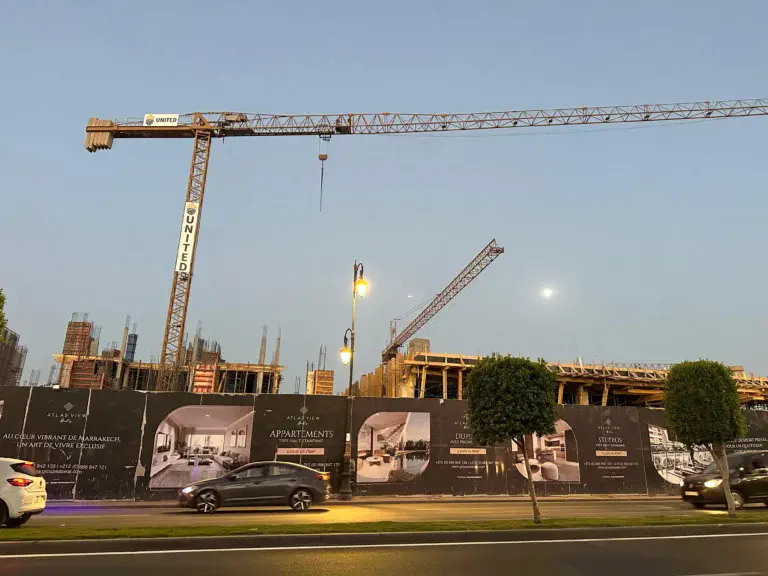
Off-plan developments in Morocco require very careful scrutiny.
The developer must hold a permis de construire (building permit) and ideally have a VEFA contract structure (Vente en l’État Futur d’Achèvement).
Without a proper VEFA contract, your deposit has very little legal protection if the developer fails to deliver.
Some developments in tourist areas have been sold and resold by different entities, leaving buyers trapped.
The Currency and Repatriation Trap
Morocco controls its currency, the Dirham (MAD).
You cannot freely take Dirhams out of Morocco.
If you bring your purchase money into Morocco through unofficial channels, or in cash, you will find yourself unable to legally take your money back out when you sell.
All foreign funds must enter through a recognised Moroccan bank, and you must receive and keep the Attestation d’Importation de Devises.
Treat this document like your passport.
Source: Office des Changes du Maroc, the official Moroccan foreign exchange regulatory authority.
Real Costs, Taxes, and Numbers

Budget between 7% and 10% of the purchase price in additional costs.
Here is a realistic breakdown.
| Cost Item | Approximate Rate | Notes |
|---|---|---|
| Registration Tax (Droits d’Enregistrement) | 4% of purchase price | Paid to the Moroccan tax authority |
| Land Registry Fee (Conservation Foncière) | 1% to 1.5% | For title transfer and registration |
| Notary Fees | 1% (regulated scale) | Set by Moroccan law, but administrative fees add to this |
| Legal/Lawyer Fees (recommended) | 1% to 2% | Not mandatory but strongly advised for foreigners |
| Agent Commission | 2% to 5% | Negotiable, confirm in writing who pays |
| Stamp Duties and Administrative Costs | 0.5% to 1% | Variable |
Source: Direction Générale des Impôts (DGI), Morocco.
Capital Gains Tax When You Sell
Morocco charges capital gains tax (Plus-Value Immobilière) at 20% of the gain, with a minimum floor of 3% of the sale price.
If the property has been your primary residence for over six years, you may be exempt.
If you are renting the property out, you will also be taxed on rental income.
Rental income is taxed at progressive rates under Moroccan income tax rules.
Speak to a Moroccan tax adviser, not just a property agent, before finalising any purchase.
Source: Direction Générale des Impôts (DGI).
How to Verify Everything Safely Before Paying
Here is your practical verification checklist before you commit a single dirham.
- Request the full Titre Foncier number and verify it at the local Conservation Foncière office in person or through a notary you appointed independently.
- Confirm that the person selling to you is the sole or all co-owners of the property, and that all co-owners have given written consent to sell.
- Check there are no outstanding mortgages, court orders, or liens registered against the property on the Titre Foncier.
- Verify the seller’s Moroccan national ID or foreign residency documents match the name on the title.
- Confirm the property has a valid permis d’habiter (certificate of occupancy) if it is a newer build.
- Ask for proof that all utility bills and taxe d’habitation (residence tax) are paid up to date. Unpaid debts can attach to the property.
- Confirm the property has no unresolved planning violations or municipal disputes.
- Engage a Moroccan lawyer (avocat) who is independent of the agent. Ask them to conduct full due diligence before you sign the Compromis de Vente.
- The agent pressures you to pay a “reservation fee” in cash before any legal check.
- You are told there is “another buyer ready to move” to rush your decision.
- The seller cannot or will not provide a Titre Foncier number.
- You are asked to sign documents in Arabic or French you have not had translated.
- The notary was chosen entirely by the agent with no explanation as to why.
- You are asked to send funds to a personal bank account rather than a notary’s escrow.
- The price is significantly below market value for the area with no clear explanation.
What I Have Actually Seen Happen
These are real scenarios from real buyers.
Names are not used, but the situations were very real.
The property was still for sale with a different agent.
There was no written agreement, no receipt traceable to a registered entity, and no legal recourse.
The 10,000 euros were gone.
The sale was legally challenged.
The buyer had to pay the siblings an additional settlement to resolve the dispute, costing them an extra 30,000 euros beyond the purchase price.
When she tried to repatriate the proceeds, the bank asked for her Attestation d’Importation de Devises.
She did not have one because the original funds never entered through official banking channels.
She could not legally take the money out of Morocco.
You have read enough to know the risks are real.
Talk to Someone Who Has Seen It All FirsthandOn a private call, we walk through your exact situation, your target area, and how to move forward without getting caught out.
Book Your Private Morocco Property Call →
Available for buyers at any stage, even if you are just beginning to explore.
What Most Property Websites Won’t Tell You
Most content about buying property in Morocco is written to attract buyers, not to protect them.
Here is the reality behind the marketing language.
Medina Riads Are Not Simple Investments
The romantic vision of restoring a riad in Fes or Marrakech is real, but so is the complexity.
Many riad properties sit on land with overlapping historical claims.
The old medinas contain properties that have been passed down through families for generations, often without formal registration.
Renovation costs in medinas are almost always higher than initial estimates because of structural surprises and limited access for materials.
If you are buying to rent, your business model needs to account for Moroccan tourism regulations and the cost of a local property manager you can actually trust.
The Notary Is Not Your Lawyer
Foreign buyers often assume the notary is protecting their interests.
The notary’s job is to verify the transaction is legally correct and collect taxes on behalf of the state.
The notary is not your advocate.
If there is a problem with the deal that is not technically illegal, the notary may not flag it.
Always hire a separate Moroccan lawyer for your own due diligence.
The cost is a fraction of what a dispute will cost you.
Negotiation Is Expected and Possible
Asking prices in Morocco, especially from agents catering to foreigners, are almost always negotiable.
A 10% to 20% reduction is often achievable on private sales.
If an agent tells you the price is fixed and there is no room to negotiate, that is a signal to push back or walk away.
The “Foreigner Premium” Is Real
In popular areas like Marrakech, Essaouira, Agadir, and Tangier, some sellers add a premium simply because they believe a foreign buyer has more money and less market knowledge.
Before you make any offer, research comparable sales in the neighborhood independently.
Talk to local expats who have already bought, not just agents trying to earn a commission.
Property Management Is Where Many Deals Go Wrong After Purchase
You have bought the property. Now you need someone to manage it.
Informal property management arrangements in Morocco are common and often problematic.
Money goes missing, maintenance is ignored, and tenants are left unmanaged.
If you are not based in Morocco full time, you need a professionally structured management agreement with a licensed property management entity, not a handshake deal with someone you met through your agent.
Building Permits Are Not Optional
Any renovation work beyond cosmetic changes requires a permis de construire (building permit) in Morocco.
Many foreign buyers are told by contractors that permits are not needed for small work.
Unpermitted work can cause problems when you come to sell, can result in fines, and can affect your ability to register the property’s value accurately for capital gains purposes.
Always start renovation with the correct permissions in place.
How to Find Trustworthy Professionals in Morocco

This is the question most buyers ask too late.
| Professional | How to Find a Trustworthy One | Red Flag |
|---|---|---|
| Moroccan Notary | Search the official Conseil National du Notariat directory. Choose your own, do not just accept the agent’s referral. | Notary recommended exclusively by the agent with no explanation |
| Moroccan Lawyer | Ask for referrals from your country’s embassy in Rabat. The Barreau du Maroc has a lawyer directory. | Lawyer who also works for the agent or seller |
| Property Agent | Look for agents affiliated with a professional body or international network. Ask for references from past foreign buyers specifically. | No physical office, cash only, avoids written agreements |
| Bank | Use a major Moroccan bank with international operations: CIH Bank, Bank of Africa (BMCE), or Attijariwafa Bank. Open a compte en devises (foreign currency account) for the purchase. | Being told you do not need a formal bank account |
| Tax Adviser | Look for a Moroccan expert comptable registered with the Ordre des Experts Comptables du Maroc. | Agent-recommended “accountant” with no formal credentials |
Frequently Asked Questions
Can a foreigner own property in Morocco outright?
Yes.
Foreigners can own property in Morocco with the same rights as Moroccan citizens, with the exception of agricultural land, which has restrictions.
You do not need residency to buy property, but you do need to follow the proper legal and financial process.
Is it safe to buy property in Morocco?
It can be, if you do it correctly.
The legal framework exists to protect buyers.
The risks come from shortcuts, informal arrangements, and a lack of independent professional advice.
Buyers who go through the proper process with independent legal support rarely have serious problems.
Do I need to be in Morocco to buy property?
You do not need to be physically present for the entire process, but you should visit before committing to any purchase.
If you cannot be present for the notary signing, you can grant a procuration (power of attorney) to a trusted representative in Morocco.
Make sure this document is properly notarised.
What is the safest area for foreigners to buy in Morocco?
Areas with high volumes of registered foreign transactions, such as Marrakech’s Palmeraie and Gueliz neighbourhoods, Agadir’s resort zones, and parts of Tangier, tend to have more established processes and more experienced professionals.
Medina properties in any city carry more complexity regardless of location.
Can I get a mortgage in Morocco as a foreigner?
Some Moroccan banks offer mortgages to non-resident foreigners, but the terms are not always favourable and the process is lengthy.
Most foreign buyers purchase with cash or fund the purchase from abroad.
If you want to explore a mortgage, speak to a Moroccan bank with an international division before you begin your property search.
You now know more than 90% of foreign buyers who arrive in Morocco without preparation.
Do Not Navigate This AloneOn a private one-to-one call, we cover your specific situation, your target property or area, the questions you need answered, and the steps to take before you sign or pay anything.
This is not a sales call. It is the conversation you should have before you do anything else.
Book Your Private Morocco Property Call Now →
Serious buyers only. Limited availability.
Key Sources: ANCFCC (Land Registry) | Office des Changes du Maroc | Direction Générale des Impôts | Conseil National du Notariat | Barreau du Maroc

Anis is the founder of Buy Property Morocco, a research-based resource created to help foreign buyers understand the real process of buying property in Morocco safely.
He focuses on the practical details most buyers only discover too late: title deed checks, notary steps, compromis de vente risks, transfer taxes, foreign banking rules, repatriating money after a sale, and avoiding common mistakes when dealing with agents or sellers.
Anis has personally bought 4 properties in Morocco and shares practical guidance based on real experience, not theory.
If you are seriously considering buying property in Morocco and want private guidance before you send money, pay a deposit, or sign anything, you can book a buyer safety call here: