Yes, foreigners can generally buy titled urban residential and commercial property in Morocco, without Moroccan residency and without a Moroccan partner.
However, buying property in Morocco as a foreigner still depends on the specific property and its land classification.
It also depends on the ownership record, the contract you sign and the route your money takes.
Each of those points should be confirmed by a Moroccan notary or a qualified Moroccan lawyer before you pay anything.
Agricultural and rural land also sits in a separate and more restricted category, and owning property does not give you Moroccan residency.
Quick answer: buying property in Morocco as a foreigner
- Foreigners can generally buy titled urban property, and a valid passport is normally enough to begin the process.
- Because a Titre Foncier is the strongest ownership record in Morocco, most foreign buyers should start there.
- Before any deposit, your own notary or lawyer should confirm the seller, the ownership record, the charges and the contract terms.
- Costs above the price include registration duties, land registry charges, notary fees and agency fees, so ask for a written estimate for your exact transaction.
- Purchase funds should reach Morocco through documented banking channels, since that record supports any later transfer of sale proceeds abroad.
- Ownership on its own grants no residency, while agricultural and rural land needs additional legal checks.
Written by Anis Chity.
I am Moroccan, I live in Morocco, and I am based in Marrakech.
I have personally bought four properties in Marrakech, so this guide follows the order I wish someone had explained to me.
Because this is buyer guidance rather than legal, tax, banking or technical advice, treat it as orientation.
Confirm your own situation with a Moroccan notary, a qualified lawyer or the relevant authority.
Updated September 2026.
Jump to a section
What Can Foreigners Buy in Morocco?
Foreign nationals can generally own urban residential and commercial property in Morocco in their own name.
For a titled urban property, the conventional route is to complete the sale through a Moroccan notary.
The transfer is then registered with the Conservation Foncière (ANCFCC), which is Morocco’s national land registry.
Land classification is where the picture changes, so treat rural and agricultural plots as a separate question from apartments and villas inside a city.
What is a Moroccan notary?
A Moroccan notary is a state authorised legal professional.
This professional prepares the sale deed, collects the transfer duties and files the transfer with the land registry.
The notary normally pulls the registered title and confirms the seller’s authority before funds are released.
However, a notary acts for the transaction rather than as your personal adviser, so many foreign buyers also appoint their own lawyer.
The role does not cover physical condition, construction compliance, boundaries on the ground or whether the price is fair.
Buying property in Morocco does not give you residency, citizenship or any long term right to stay.

The property type does not usually change your right to buy, although it changes the checks that matter.
| Property type | Open to foreign buyers? | Main checks |
|---|---|---|
| Titled apartment | Generally yes | Registered owner, charges, syndic arrears, planned building works |
| Titled villa | Generally yes | Registered owner, boundaries, access, construction compliance |
| Titled riad | Generally yes | Ownership record, co owners, structural condition, renovation budget |
| Melkia property | Possible, with deeper review | Ownership evidence, heirs, boundaries, registration route, financing and resale |
| Urban land | Generally yes | Classification, planning rules, legal access, utilities, title status |
| Rural or agricultural land | Restricted, so verify first | Land classification, whether a non agricultural attestation applies, legal advice |
| Off plan property | Generally yes | Developer identity, land ownership, permits, payment stages, refund terms |
| Commercial property | Generally yes | Title, existing leases, permitted use, tax treatment |
Is the Process Simple in Practice?
The law is open, although the process rewards patience and paperwork.
Most friction comes from a short and fairly predictable list.
- Ownership verification, especially on older, inherited or unregistered property
- Slow document collection, banking compliance checks and language barriers
- Pressure to reserve a property quickly with an informal payment
- Physical defects, planning issues, sitting tenants and registration delays
For the risk side of the picture, read my guide on whether buying property in Morocco is safe.
From my experience: I compared the numbers carefully before committing to anything.
That period shaped my thinking on whether renting or buying makes more sense long term.

Deals also fall apart more often than buyers expect.
Before one of my purchases completed, an owner changed her mind about selling.
On another property, the seller kept changing what was included until I walked away.
Until the ownership record, the seller’s authority, the deposit terms and the notary process are clear, nothing is final.
What About Rural and Agricultural Land?
Agricultural land is the most restricted category for foreign buyers in Morocco.
Setting up a Moroccan company does not automatically remove those restrictions either.
Before considering any plot, confirm the land classification, the title position, legal access and whether an attestation of non agricultural vocation applies to it.
That document is explained in my guide to the AVNA certificate in Morocco for foreign buyers.
For the safer urban route, see my guide on whether foreigners can buy urban land in Morocco.
Already considering a property?
See the 14 Day Buyer Plan: $299 →Get 14 days of personal buyer support, three private calls and WhatsApp support.
Get help reviewing up to three properties before you commit money.
Titre Foncier Compared With Melkia
Titre Foncier is the modern registered title issued through the ANCFCC system, and it provides the clearest evidence of registered ownership available in Morocco.
Melkia is a traditional ownership document that predates modern registration, and it remains legally recognised.
However, a Melkia property is not automatically invalid and it is not automatically a good buy either.
Its ownership evidence, boundaries, co owners, inheritance history, registration position, financing route and resale audience all need careful professional review before you commit.
| Comparison | Titre Foncier | Melkia |
|---|---|---|
| Registration | Registered in the land registry system | Traditional document, often not registered |
| Evidence of ownership | Recorded owner and charges can be checked directly | Ownership usually reconstructed from documents and history |
| Financing | Usually easier to mortgage | Usually harder to mortgage |
| Resale | Wider pool of future buyers | Narrower pool, and slower to sell |
| Main review needed | Current entries, charges and seller authority | Heirs, boundaries, consents and the route to registration |

Take independent legal advice before committing to a Melkia property, and read my comparison of Melkia and Titre Foncier for foreign buyers.
A Certificat de Propriété is a land registry document showing the currently registered owner and the charges recorded against the title.
Requesting a recent copy early is one of the most useful checks you can make.
My guide to the ANCFCC property certificate in Morocco explains how to request one.
What Title Verification Does Not Confirm
A clean ownership record answers some questions, although it deliberately leaves others open.
- Physical and structural condition of the building
- Whether what was built matches the approved plans
- Exact boundaries on the ground in every situation
- Legal and practical access in every situation
- Rental demand, rental profitability or permitted short stay use
- Whether the asking price reflects fair market value
My guide on verifying a title deed in Morocco before buying explains what to request and what to read.
Why Co Owners, Inheritance and Charges Matter
Moroccan inheritance often leaves a property owned jointly by several family members, sometimes living in different countries.
Every registered owner normally has to consent and sign, in person or through a valid power of attorney.
If one owner is unreachable, unwilling or poorly represented, the sale can stall for months.
Meanwhile, mortgages, seizures and oppositions recorded against the title should be resolved before you take ownership.
Agree in writing who settles any unpaid taxes, utility bills and syndic charges before completion.
Buyer warning: avoid paying a deposit before the ownership type, registered owner, co owners and recorded charges have been verified.
What Should You Verify Before Paying a Deposit?
A deposit is the moment when your position changes from browsing to committed, so it deserves more attention than the property photos.
Before any money leaves your account, you should be able to answer each of the questions below in writing.
- Who exactly receives the money, and in what capacity
- Why the payment is being made, and what it secures
- Which exact property it concerns, described as it appears in the ownership records
- Whether it is refundable, and under which conditions
- What happens if the legal checks fail
- The outcome if the technical checks reveal a problem
- Your position if financing is refused
- What happens if the seller withdraws
- Which deadlines apply to each side
- The documents that must be completed before the next payment
- Whether the written property details match the property you visited
Reservation forms, written offers, promises of sale and a compromis de vente can carry very different legal effects.
Therefore, ask your own notary or qualified lawyer to review the document before you sign it or fund it.
Read my guide to the compromis de vente in Morocco before you are bound by one.
| Question | Riskier route | Safer route |
|---|---|---|
| Where the money goes | Cash handed to an agent or seller | Payment handled through the notary as agreed in writing |
| Refund terms | Verbal promises with nothing recorded | Refund and forfeiture conditions written into the agreement |
| If the deal collapses | Recovery may be slow, costly or uncertain | Written terms and the notary record support your position |
Confirm the exact deposit arrangement with your notary before paying anything, and see my guide to property deposits in Morocco for foreigners.
What a guarantee deposit taught me: on one Marrakech purchase I paid around 1,000 euros as a guarantee.
We then waited about a month for the seller to return from abroad.
It worked out, although I would not treat a deposit that casually today.
Instead, I would tie it to written terms and handle it through the notary.
What if the Property Has a Tenant?
If the property is occupied, ask for the written lease, the current rent, the payment history, the deposit held and any dispute in progress.
Also confirm in writing whether vacant possession is promised, and when rent starts being paid to you.
What buying with a sitting tenant taught me: one of my purchases came with a rented shop.
The tenant did not want to redo the rental contract immediately.
At first I thought something was wrong.
Later his lawyer explained that the existing lease should stay as it was until registration was complete.
Only after the property passed into my name would the rent be paid to me.
Because outcomes depend on the specific contract and the applicable rules, take transaction specific legal advice whenever an occupied property is involved.
Legal Checks Compared With Technical Checks
Foreign buyers often assume the notary checks everything, which is where expensive surprises begin.
Legal work confirms who owns the property and what may be done with it, while technical work confirms what physically exists.
Neither one replaces the other.
Who verifies what
A notary’s legal work does not replace a physical inspection.
Equally, a technical inspection proves nothing about ownership.
Walk the property with the plans in hand, looking for unregistered extensions, surface differences, unclear access or undisclosed occupation.
My guide to property due diligence in Morocco sets out the wider list of checks.
Do not rely on the asking price or on verbal rental claims either.
In Marrakech, my guide to property valuation in Marrakech explains how to sense check a price.
How Do Foreigners Buy Property in Morocco Step by Step?
The sequence below keeps verification ahead of payment at every stage.
- Define the buying plan and the full budget, including purchase costs and a contingency rather than the price alone.
- Choose the property after comparing several options, because agents sometimes advertise the same property differently.
- Appoint your own notary or qualified lawyer, a stage covered in my guide to buying property in Morocco through a notary.
- Check the seller and the ownership record, confirming the registered owner, co owners, charges and the authority to sell.
- Check the physical property and its planning position, comparing what exists with the plans and the permitted use.
- Review the offer, the deposit terms and the contract before you are bound by any of them.
- Confirm the payment and foreign currency route with your bank and your notary in advance.
- Sign the final deed, which the notary reads before signature and files after the duties are collected.
- Complete registration and collect the final records, then keep the deed, receipts and banking evidence permanently.
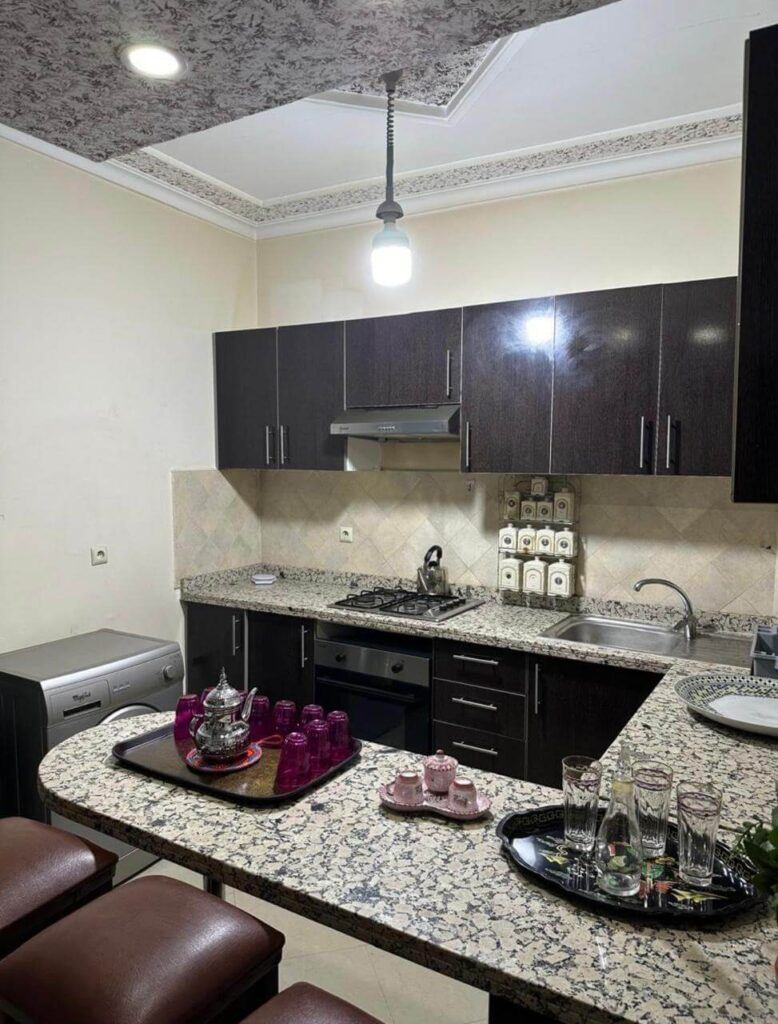
What one negotiation taught me: on a Marrakech purchase the asking price started around 85,000 euros.
It moved to around 75,000 euros, and we finally agreed at 70,000 euros.
Not every seller will move that far, although the first number is rarely the final number.
My guide on negotiating apartment prices in Morocco covers how to prepare that conversation.
How Long Does the Process Take?
There is no fixed completion timeline, so avoid agreeing a deadline that cannot absorb realistic delays.
Delays commonly come from the causes below.
- Missing or outdated seller documents
- Inheritance, co ownership or unresolved charges on the title
- Bank compliance checks on incoming funds
- Sitting tenants and disputed occupation
- Administrative and registration backlogs
What Documents Do Foreign Buyers Usually Need?
The exact paperwork depends on whether you buy personally, through a company, remotely or with a mortgage.
| Document | Why it matters |
|---|---|
| Valid passport | Identity verification at the bank and at the notary |
| Proof of the international transfer | Evidence that the funds came from abroad through official channels |
| Bank attestation for the incoming funds | Supports your foreign currency file with the bank and the notary |
| Preliminary agreement | Fixes price, conditions, deadlines and deposit terms before the final deed |
| Title reference or Melkia documents | Lets the notary examine the ownership record and its entries |
| Recent Certificat de Propriété | Shows the registered owner, co owners and recorded charges |
| Power of attorney for a remote purchase | Must be drafted and legalised for that specific transaction |
| Company documents for a corporate purchase | Needed where the buyer is a legal entity, with separate tax consequences |
What Are the Purchase Cost Categories?
The agreed price is rarely the full amount you will pay.
Rather than working from a single percentage, budget by category and ask your notary for a written estimate based on your exact transaction.
| Cost category | What to confirm before you commit |
|---|---|
| Registration duties | The rate applied to your property type under the current tax code |
| Land registry charges | The charges currently published for registering your transfer |
| Notary fees and tax on those fees | A written quotation separating fees, tax, duties and disbursements |
| Agency fee | The amount, who pays it, and when it becomes due |
| Bank and mortgage costs | Transfer charges, file fees, valuation, insurance and guarantee costs |
| Independent advice | Legal review, tax advice, translation and any technical inspection |
| Architect, engineer or surveyor | Whether your property or plot needs specialist verification |
| Immediate ownership costs | Repairs, furniture, utility connections, insurance and shared charges |
Published rates change with each finance law, so treat any figure you read online as a starting point rather than a quotation.
The land registry publishes an official tariff and service timing document, although you should still confirm what applies to your file.
For the tax side, see my guide to property transfer taxes for foreigners in Morocco.
For the professional fee side, see my guide on notary fees when buying property in Morocco.
The Payment Traceability Rule in Force Since July 2026
Before you pay: an additional registration duty of 2 percent applies to certain transfers of immovable property, and it took effect on 1 July 2026.
According to the Moroccan Ministry of Finance summary note on the 2026 finance law measures, it concerns transfers for consideration above 300,000 dirhams.
The additional duty can apply where the deed omits the payment methods and references used.
It may also apply where the price is not settled by an accepted payment method, or where the payment trail cannot be established.
Where only part of the price is settled in a way that triggers the duty, the 2 percent may apply to that part only.
Therefore, ask your notary which payment methods are accepted, which references must appear in the deed, and whether the additional duty could affect your transaction.
What Ongoing and Selling Costs Come Later?
Ownership carries annual local taxes on housing and municipal services, alongside syndic fees, utilities, insurance and maintenance.
Rental income is taxable in Morocco, and short stay rental rules continue to evolve, so verify the local requirements before relying on that income.
When you sell, a tax on the property gain normally applies.
Rates, minimum charges and any exemption should be confirmed with a Moroccan tax adviser or notary.
I cover that stage in my guide to Morocco property capital gains tax for foreigners.
Already considering a property?
See the 14 Day Buyer Plan: $299 →Get 14 days of personal buyer support, three private calls and WhatsApp support.
Get help reviewing up to three properties before you commit money.

How Should Foreign Buyers Transfer and Document Their Money?
Purchase funds should reach Morocco through official banking channels, documented as arriving from abroad.
What you do at this stage can affect whether sale proceeds can be transferred abroad years later.
What is a convertible dirham account?
A convertible dirham account is a Moroccan bank account funded from abroad in foreign currency.
Because the foreign origin of the money stays visible in the banking record, it can support a later transfer request.
Holding the account guarantees nothing on its own, so ask your bank whether it is relevant to your situation.
Morocco’s foreign investment framework generally allows a properly documented foreign currency investment to be transferred abroad again, subject to the applicable conditions.
Those conditions are set by the Office des Changes framework for foreign investment in Morocco.
However, the treatment follows the investment as it was actually funded and evidenced, so it does not cover money that arrived outside official channels.
No single document guarantees a future right to move all sale proceeds abroad, and rules can change.
Confirm the current position with your Moroccan bank, your notary and the Office des Changes before you send anything.
The record that protects you
- Your bank abroadIndependently confirm the receiving account details, then keep the transfer instruction and the SWIFT confirmation.
- Your Moroccan bankKeep the statements, the currency exchange records and any attestation issued for the incoming funds.
- Source of funds fileRetain evidence of where the money came from, since compliance questions can arrive late in the process.
- Payment through the notaryFollow the written payment instructions agreed in advance, and keep proof of every payment made.
- Your permanent recordsStore the deed, the receipts and the banking evidence together, because a future sale will rely on them.
In my experience, structuring payment through the notary rather than directly to the seller is the calmer route.
It also lets the notary complete the checks on charges and outstanding amounts before funds reach the seller.
My guide to the convertible dirham account for foreign buyers explains how the banking setup fits into the wider picture.
For the exit side, see my guide to repatriating money after selling property in Morocco.
Buyer warning: avoid sending money to Morocco through informal channels, cash couriers or undocumented routes.
Beyond the legal exposure, it weakens the proof of origin that supports any later transfer of funds abroad.
Mortgages, Remote Buying and Off Plan Property
Can Foreigners Get a Mortgage in Morocco?
Some foreign buyers do obtain financing in Morocco, although conditions for non residents are generally stricter and slower.
Banks typically assess income, employment, existing assets, country of residence and credit history.
Rates, deposit requirements, terms and approval conditions vary by bank and by profile.
Treat any figure quoted to you as unverified until a bank confirms it in writing.
Confirm current terms directly with Moroccan banks rather than with agents, and see my guide on whether foreigners can get a mortgage in Morocco.
Can You Buy Property in Morocco Remotely?
A properly prepared power of attorney may allow a remote purchase, provided it is approved for that specific transaction.
Depending on your country, it may also need legalisation or an apostille before it can be used.
Choose your own representative rather than someone introduced by the seller or the agent.
Video tours are not a substitute for an inspection, so arrange independent eyes on the property before you commit.
What Should You Check When Buying Off Plan?
Off plan purchases concentrate the risk in the developer and in the contract.
- Developer identity, track record and ownership or development rights over the land
- Planning permissions, approved plans and project documents
- Written specifications, payment stages and what each stage releases
- Completion risk, delay clauses, refund terms and any guarantees offered
- How and when the title is delivered, including parking and common areas
A brochure and a polished sales office prove nothing, so obtain independent legal review before paying any reservation amount.
See my guide to buying off plan property in Morocco for the fuller checklist.
How Should You Compare Locations?

City rankings and headline yields rarely survive contact with a specific property, so compare locations against your own plan instead.
- Intended use, whether that is living, retirement, long stay rental, short stay rental or resale
- Budget, and what that budget realistically buys in each area
- Transport, airport access, healthcare and daily services
- Climate through the whole year, not only in the season you visit
- Property supply, building quality and the cost of maintaining it
- Local rental rules, and the audience of tenants or guests you would depend on
- The resale audience, and how easily a future buyer could be found
- Your own lifestyle, and how often you would actually be there
Marrakech remains one of the most active markets for foreign buyers.
I cover the city in my guide to buying property in Marrakech as a foreigner.
Medina property follows different rules from modern districts, as explained in my guide on how to buy a riad in Marrakech.
For a wider comparison across the country, see my guide to the best place to buy property in Morocco.
How Do Foreign Buyers Find Properties?
Buyers find property through local agents, developers, portals and personal introductions.
My own first opportunities came through a local contact who knew the areas and the prices.
Even so, the source of a property does not replace independent verification.
My guide to working with a real estate agent in Marrakech as a foreign buyer explains how to manage that relationship.
Mistakes and Safer Alternatives
The costliest mistakes are paying before verification, relying on the wrong people, and misunderstanding the money route.
| Mistake | Why it is risky | Safer move |
|---|---|---|
| Paying a deposit directly to a seller or agent | Recovery may be slow, costly or uncertain | Agree a written route through the notary before paying |
| Relying on the agent for legal comfort | An agent is paid on the sale, not on your caution | Appoint your own notary or lawyer |
| Treating a Melkia property as straightforward | Heirs, boundaries and registration can complicate everything later | Commission a full legal review before any commitment |
| Skipping the co ownership and inheritance check | One owner who does not consent can block completion | Request a recent Certificat de Propriété and read every entry |
| Sending money through informal channels | Weakens the proof of origin behind any future transfer abroad | Use official banking channels and keep every record |
| Leaving payment details out of the deed | May trigger the additional registration duty in force since July 2026 | Ask the notary which references must appear in the deed |
| Budgeting only for the price | Duties, fees and immediate works can arrive together | Obtain an itemised written estimate and hold a contingency |
| Assuming a low price means a good deal | A discount is worth nothing if the ownership record is unclear | Complete the legal checks first, then judge the price |
My guide on how to avoid property scams in Morocco covers the situations foreign buyers meet most often.
Final Buyer Checklist
Use the three positions below to decide what to do next with a specific property.
- Ownership record checked by your own notary or lawyer
- Seller authority and co owner consents confirmed
- Contract, deposit terms and refund conditions in writing
- Written cost estimate received and budgeted
- Payment route agreed with your bank and notary
- A figure you were given cannot be supported by a document
- Boundaries, surface area or access remain unclear
- Planning status or permitted use is unconfirmed
- The occupation or lease position is still vague
- Your financing is not yet confirmed in writing
- Ownership cannot be evidenced to your adviser’s satisfaction
- You are pushed to pay outside the agreed written route
- Reasonable document requests are refused or delayed
- Pressure increases every time you ask a question
- The property described in the documents is not the one you saw
Above all, keep your money in your account until the checks are complete.
Frequently Asked Questions
Can foreigners buy property in Morocco?
Yes, foreign nationals can generally buy titled urban residential and commercial property in Morocco, subject to verification of the specific property and its land classification.
For the American perspective, see my guide on whether a US citizen can buy a house in Morocco.
Do foreign buyers need residency in Morocco?
No, residency is not normally required to purchase, and buying property does not itself grant residency, a visa or any immigration status.
If living in Morocco is part of your plan, treat immigration as a separate matter with qualified advice.
Can foreigners buy land in Morocco?
Urban land is generally open to foreign buyers, while agricultural land is restricted and needs verification before any offer.
Confirm the classification of the specific plot with a notary before you commit.
What is the difference between Titre Foncier and Melkia?
Titre Foncier is the modern registered title with a searchable ownership record, whereas Melkia is a traditional ownership document that is usually not registered.
Both can be bought, although a Melkia property requires deeper review of heirs, boundaries and the route to registration.
What should be checked before paying a deposit?
Check who receives the money, what it secures, whether it is refundable, which conditions permit a refund and which deadlines apply.
Then have the document reviewed by your own notary or lawyer before you sign or pay.
Is a Moroccan bank account required to buy?
A Moroccan account is not always a legal requirement, although it is usually the practical way to receive funds from abroad with clear documentation.
Ask your bank which account type suits your situation before transferring anything.
Can a foreign buyer purchase remotely?
Remote purchases are possible where a power of attorney is properly drafted, legalised and accepted for that specific transaction.
Arrange independent representation and an independent inspection rather than relying on the seller’s contacts.
Can foreigners buy riads in Marrakech?
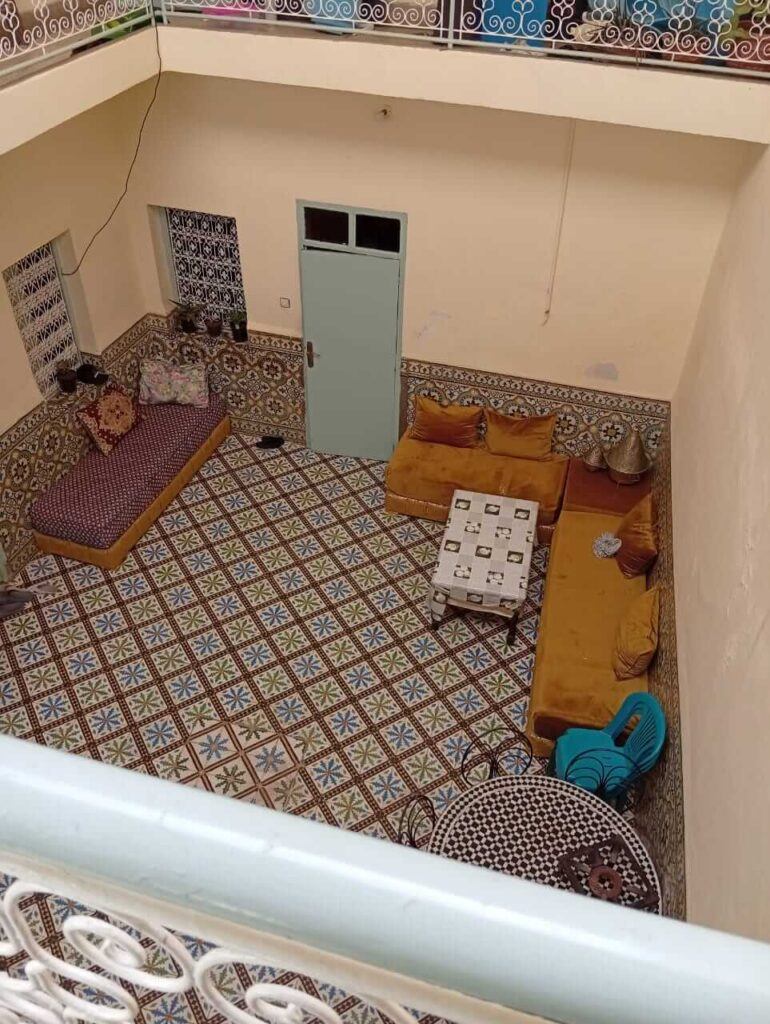
Yes, and many foreign buyers do, although medina riads often involve traditional ownership documents, multiple co owners and older structures.
I explain those issues in my guide to the legal risks of buying a riad in Marrakech.
Where to Verify Current Information
Check the current position at the source
Rules, rates and procedures change, so confirm anything decisive with the relevant authority or professional.
- ANCFCC for the land registry, registered ownership, property certificates and registration charges.
- Direction Générale des Impôts for registration duties, rental income tax and tax on a property gain.
- Office des Changes guidance on payment procedures and documents for how payments and supporting records should be handled.
- Your Moroccan bank for account requirements, accepted transfer routes and the documents it needs from you.
- A Moroccan notary or qualified lawyer for ownership, contracts and your legal position.
- The relevant municipality or urban authority for planning status, permissions and permitted use.
Already considering a property?
See the 14 Day Buyer Plan: $299 →Get 14 days of personal buyer support, three private calls and WhatsApp support.
Get help reviewing up to three properties before you commit money.
Referral disclosure: Buy Property Morocco may receive a referral fee if you choose to work with a professional or property partner introduced through this site. Any potential arrangement will be disclosed before you proceed, and you remain free to choose your own providers.
About this guide: it reflects my own experience buying four properties in Marrakech, together with the official sources listed above.
It is not legal, tax, banking, notarial, inspection or valuation advice, and it does not replace transaction specific professional due diligence.
Because rules, fees and procedures can change, confirm the current position before committing.
Speak with a Moroccan notary, a qualified lawyer or tax adviser, your bank, or the relevant authority. Last updated: September 2026.

Anis is the founder of Buy Property Morocco, a research-based resource created to help foreign buyers understand the real process of buying property in Morocco safely.
He focuses on the practical details most buyers only discover too late: title deed checks, notary steps, compromis de vente risks, transfer taxes, foreign banking rules, repatriating money after a sale, and avoiding common mistakes when dealing with agents or sellers.
Anis has personally bought 4 properties in Morocco and shares practical guidance based on real experience, not theory.
If you are seriously considering buying property in Morocco and want private guidance before you send money, pay a deposit, or sign anything, you can book a buyer safety call here: