Yes, foreigners can legally buy a riad in Marrakech, but the legal risks are real and they are mostly about title and consent, not nationality.
The biggest risks come from unclear ownership documents, the difference between a registered Titre Foncier and a traditional Melkia title, multiple heirs who must all agree to sell, pre-emption rights called chefaa, renovation limits inside the protected medina, informal agents with no duty to you, casual deposits, and missing proof of how your money entered Morocco.
In short, a riad can look perfect and still carry a title problem you cannot see in the photos.
So before you pay anything, you need to confirm who truly owns the property, whether every owner consents, and whether you are even allowed to renovate it the way you imagine.
I’m Anis Chity, based in Marrakech. I’ve personally bought 4 properties in Morocco and created Buy Property Morocco to help foreign buyers avoid the mistakes I had to learn the hard way.
Why Morocco’s Title System Trips Up Foreign Buyers
Morocco runs on two different title systems at the same time, and they do not follow the same rules.
The first is the Titre Foncier, a registered, modern land title that works much like what you would expect in France or Spain. It is traceable, recorded, and gives you solid legal protection as a buyer.
The second is Melkia, a traditional unregistered title based on Islamic inheritance custom. Many riads in the old medina still sit under this system. It is not illegal. However, it creates serious complications when you try to buy.
When I first started looking at property in Morocco, nobody walked me through this difference upfront. The listings looked great, and I leaned heavily on trust. Looking back, I nearly moved faster than I should have because I did not ask the right questions early enough.
For that reason, the rest of this guide focuses on the exact questions and checks that protect you.
Quick Risk Summary Before You Pay a Deposit
Use this table as a fast reference before you commit to anything.
| Risk | Why it matters | How to protect yourself |
|---|---|---|
| Melkia title | No central registry confirms who owns what. | Ask for a Titre Foncier or a clear conversion plan before paying. |
| Multiple heirs | The seller may own only part of the property. | Get a notary to trace every legal owner and confirm consent. |
| Chefaa (pre-emption) | Co-owners or neighbors may have a right to buy first. | Ask the notary to check and obtain waivers in writing. |
| Renovation limits | The medina is protected, so some work is restricted. | Confirm in writing what you can build before you buy. |
| Informal agents | They are paid to close, not to protect you. | Hire your own notary, separate from the agent and seller. |
| Casual deposit | Money paid early can be hard to recover. | Tie any deposit to documents and the notary. |
| No money records | You may struggle to take your money out when you sell. | Bring funds through official banking channels and keep every receipt. |
Already considering a property?
See the 14 Day Buyer Plan: $299 →
Get 14 days of personal buyer support, three private calls and WhatsApp support.
Get help reviewing up to three properties before you commit money.
The Biggest Legal Risk: Multiple Heirs on One Property
This is the issue that quietly ends more riad deals than anything else.
Under Moroccan inheritance custom, when an owner dies, ownership does not pass cleanly to one person. Instead, it can split among several heirs, including children, spouses, and siblings, sometimes across two or three generations.
So you may walk in to buy a riad, while the person selling it technically owns only part of it.
The rest might belong to a brother in Casablanca, two sisters in France, and a nephew nobody can easily reach.
In the medina, this is common rather than rare.
If you sign without full heir sign-off, your ownership can be challenged later. Family members have contested sales they say they never agreed to, even after the new owner finished renovating.
What you must do: insist on a full heir search, often called a notarial investigation. A qualified Moroccan notary can trace the ownership chain and name every legal claimant. This step is the foundation of your due diligence, and it should happen before any deposit or binding agreement.
Titre Foncier vs Melkia: What Foreign Buyers Need to Know

Let me make this concrete with a simple comparison.
| Point | Titre Foncier | Melkia |
|---|---|---|
| Registered? | Yes, with the land registry. | No central registry. |
| Proof of owner | Clear and traceable. | Based on old deeds and witnesses. |
| Risk level | Lower, though not zero. | Higher, needs deeper checks. |
| Common in medina? | Less common for old riads. | Very common for old riads. |
| Best for foreigners? | Usually the safer choice. | Only with full legal checks. |
A riad with a Titre Foncier is registered with the Conservation Foncière (Morocco’s land registry). You can verify ownership clearly, and transactions are recorded.
A riad sold under Melkia documentation relies on traditional deeds, notarial certificates, and community witnesses instead. As a result, no single registry confirms who owns what.
Many medina riads sit under Melkia simply because the old city predates the modern registry, and families never converted the title.
To be clear, Melkia is not automatically illegal. Still, it needs much deeper checks, which is why I usually point foreign buyers toward registered titles when possible.
Can you convert a Melkia property to a Titre Foncier? Yes. Should you do it before buying? Ideally yes, or at least start the process in parallel.
The conversion can take months, and it sometimes uncovers disputed boundaries or unresolved inheritance claims that were hidden before.
If a seller refuses to convert first, treat that as a warning sign worth pausing over.
For a deeper breakdown, see my guide on Melkia versus Titre Foncier for foreign buyers and how to verify a title deed before you buy. If a property is fully untitled, read about buying untitled property in Morocco first.
What Is Chefaa and Why Should You Ask About It?
Moroccan law recognises a right called droit de chefaa, which is a right of pre-emption.
In simple terms, a co-owner or sometimes a neighbor can claim the right to buy a property before an outside buyer does.
If that right exists and the relevant parties do not waive it, a completed sale can be challenged or undone.
This does not affect every property, so there is no need to panic about it.
Even so, you should ask your notary directly about pre-emption rights, co-owners, and any neighboring rights tied to the property.
Then, if chefaa applies, make sure waivers are obtained in writing before you move forward.
Do Not Treat the Compromis de Vente as a Reservation Form
In Morocco, the purchase usually starts with a preliminary agreement called a compromis de vente before the final deed.
This document is legally binding, not a casual hold.
If you sign it and then discover problems, walking away often means losing your deposit, which is commonly around 10% of the price.
Because of that, you should never sign it like a quick reservation.
Read it carefully, and have your own notary or lawyer review it first.
Above all, make sure it includes protective conditions, so you can exit cleanly if there are title problems, missing heir clearance, financing issues, permit refusals, or documents that do not check out.
Money Transfer and Repatriation: The Trap People Forget
Morocco does allow foreigners to buy property, and many people do it successfully. However, the currency rules can trap you if you ignore them.
The Import of Funds Requirement
When you buy property in Morocco as a foreign national, you are expected to bring your purchase funds in through official banking channels.
You then obtain an attestation d’importation de devises, which is proof that your money entered legally through the Moroccan banking system.
Why does this matter so much? Because when you sell later and want to send money home, you can usually only move out what you can prove you moved in.
Some foreign buyers have paid part of the price in cash, outside official channels, to avoid taxes or simplify the deal.
Years later, when they tried to sell and repatriate the proceeds, they could only legally move out a fraction of the money. The rest stayed stuck.
That is a heavy financial hit that buyers rarely think about while they are excited about the property.
The Convertible Dirham Account Rule
Once your funds arrive, they sit in a convertible dirham account.
From there, keep records of every transfer, every exchange receipt, and every bank statement linked to the purchase.
Treat that paperwork like gold, because when you sell it literally becomes your proof.
To go deeper, see my notes on the convertible dirham account and on repatriating money after you sell. For exact rules on your situation, confirm with your bank and the Office des Changes.
Marrakech Medina Renovation Risks
Encroachments and Shared Walls
Riads in the medina are built tight against each other, so walls are often shared.
Courtyards sometimes straddle lines that were never formally drawn.
In practice, a riad may legally own a space that neighbors treat as a shared corridor, or a roof terrace that another family has used for years and now claims a right to.
For that reason, your notary should map the real boundaries, not just the ones in the photos.
Heritage and Municipality Restrictions
Buying a riad is usually step one of a renovation project.
The medina of Marrakech is a UNESCO World Heritage Site, though, and that status comes with rules.
Certain changes need approval from the municipality and from heritage authorities.
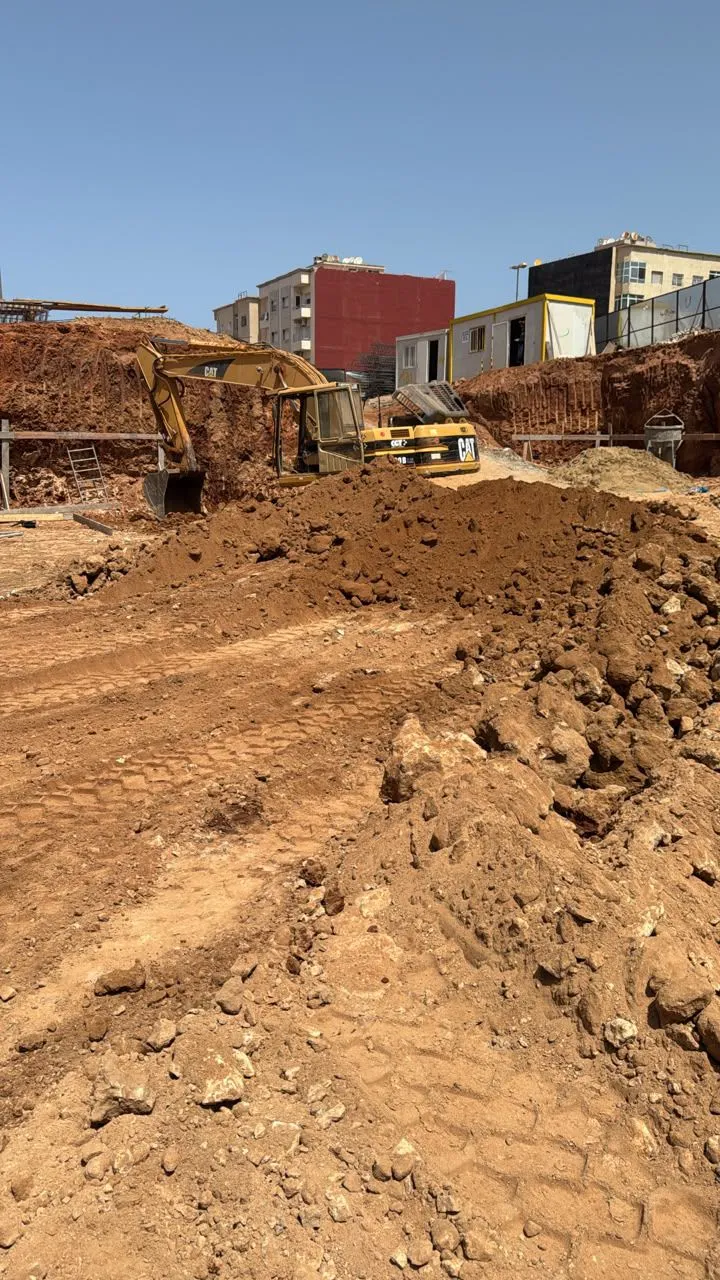
Knocking down a wall, adding a rooftop structure, or changing a façade can require permits that take months, and sometimes the answer is no.
Some buyers have started building without the right permits, received a stop-work order, paid a fine, and in some cases had to undo the work.
So before you buy, get written clarity on what you are allowed to do. Do not rely on what the seller or agent tells you verbally.
Why You Need Your Own Notary, Not Just the Agent’s Word
In Marrakech, many deals are brokered by informal intermediaries called simssars.
They know the medina well, and they can reach off-market properties, so they are sometimes useful.
Still, they have no legal duty to you as a buyer. They are paid by the deal, and their incentive is to close it.
On my own first purchase, I relied heavily on a local person I trusted, and I went to a notary he suggested.
It worked out, and the property transferred properly into my name. With hindsight, though, I was lucky, because I had not built in my own independent checks.
That is exactly why I now tell every foreign buyer to bring in their own notary, separate from the agent and the seller.
It costs money, and it is worth every dirham. If you want to understand agent dynamics first, read my guide to working with a real estate agent in Marrakech as a foreign buyer.
Red Flags That Should Make You Pause
Trust your instincts if you see any of these signs.
- The seller refuses to show clear title documents.
- The agent says all heirs agree but cannot show their signatures.
- You are pressured to pay cash or to move fast.
- You are asked to underdeclare the price in the contract.
- The property is Melkia and conversion is promised later with no real plan.
- A roof terrace is shown to you but does not appear in the documents.
- Renovation work was clearly done without permits.
- The seller wants you to sign before the notary has checked the file.
- The agent discourages you from getting your own legal advice.
Any one of these is a reason to slow down. Two or more together is a reason to walk away. You can read more in my guide to Marrakech property scams and pitfalls.
Before You Sign Anything: Riad Legal Checklist
Work through these checks before you pay a deposit or sign a binding agreement.
| Check | What to confirm |
|---|---|
| Titre Foncier number | A registered title number exists and matches the property. |
| Certificat de propriété | A recent ownership certificate from the registry. |
| Melkia documents | If Melkia, the full chain of deeds and a conversion plan. |
| Seller identity | The seller is who they claim to be. |
| Heir consent | Every legal owner agrees to the sale. |
| Powers of attorney | Any representative has valid, current authority. |
| Chefaa risk | No unresolved pre-emption rights. |
| Mortgages or charges | No loans or liens attached to the property. |
| Unpaid taxes | Local taxes are cleared before closing. |
| Utility connections | Water and electricity are formal, not shared informally. |
| Shared walls | Boundaries with neighbors are clear. |
| Roof terrace rights | The terrace belongs to the property in writing. |
| Renovation permits | Your planned work is allowed. |
| Municipality restrictions | Heritage rules are confirmed in writing. |
| Structural survey | An engineer checks the building before purchase. |
| Compromis conditions | Protective exit clauses are included. |
| Bank transfer records | Funds arrive through official channels with proof. |
If you pay a deposit before these checks, do it through your notary, with written terms. For more, see my notes on property deposits in Morocco for foreigners.
What This Actually Costs
Most articles stay vague about money, so here is a realistic picture.
Treat these as general estimates, and confirm the exact figures with your notary, since rates and fees can vary.
Notary fees: around 1% of the price, paid by the buyer.
Registration tax: roughly 4% of the declared value, paid to the government.
Agent commission: often around 2.5%, and usually negotiable.
Independent lawyer: commonly €1,500 to €3,000 for thorough due diligence on a medina property.
Title conversion (Melkia to Titre Foncier): budget around €2,000 to €5,000 and several months.
Translation and document costs: minor but real, often €500 to €1,000.
All in, plan for roughly 8% to 10% of the price in transaction costs on top of the price itself.
If anyone tells you it is closer to 5%, they are probably leaving something out. You can see a fuller breakdown in my guide to notary fees when buying property in Morocco.
Multilingual Mini Glossary
These terms come up often, so here is a quick reference.
| English | French | Arabic | Simple meaning |
|---|---|---|---|
| Land title | Titre Foncier | الرسم العقاري | Registered, traceable title. |
| Traditional title | Melkia | ملكية | Old, unregistered ownership. |
| Ownership certificate | Certificat de propriété | شهادة الملكية | Proof of the current owner. |
| Land registry | Conservation Foncière | المحافظة العقارية | Office that records titles. |
| Registry agency | ANCFCC | الوكالة الوطنية للمحافظة العقارية | National land registry body. |
| Pre-emption right | Droit de chefaa | حق الشفعة | Right to buy before an outsider. |
| Shared ownership | Indivision | الملكية على الشياع | Several owners hold one property. |
| Preliminary contract | Compromis de vente | عقد البيع الابتدائي | Binding agreement before the deed. |
| Notary | Notaire | الموثق | Official who handles the sale. |
| Power of attorney | Procuration | الوكالة | Authority to act for someone. |
Insider Tips Most Articles Skip
Work with a notary who knows foreign buyers. Not every notary handles international purchases often, and the currency rules for non-residents are something some manage weekly while others rarely touch. Ask directly how many foreign purchases they have completed in the past year.
Visit the property at different times. Noise, smells, water pressure, and neighbor tensions rarely show up in listings. Instead, they show up when you visit at 7am and again at 10pm.
Check for unpaid local taxes. Some owners carry years of unpaid taxes, and you may inherit that debt. So ask for tax clearance certificates as a condition of closing.
Ask about water and electricity. Some medina riads have informal or shared connections that must be formalised, which can cost more and delay your plans.
Get a structural survey. Medina buildings are old, and some have shifted foundations or walls that previous owners changed illegally. A survey before you buy is essential.
Common Mistakes Buyers Make

Buying on emotion and rushing the legal checks. The medina is beautiful, and the pressure to move fast is real. Even so, the checks take the time they take, and anyone pushing you to skip steps is not protecting you.
Relying only on the seller’s notary. Many deals use one notary without problems. Still, on a complex medina purchase, your own legal counsel is the only way to be sure someone is protecting your side.
Underestimating renovation costs and timelines. This is not purely a legal risk, yet overruns can force distressed decisions that create legal headaches. So go in with a realistic budget and a contingency.
Having no clear exit plan. Ask now how you will sell in five years and how you will move the money home, rather than after you own it.
Already considering a property?
See the 14 Day Buyer Plan: $299 →
Get 14 days of personal buyer support, three private calls and WhatsApp support.
Get help reviewing up to three properties before you commit money.
My Honest Take
I did eventually buy in Marrakech.
The deal worked out, and the property transferred properly into my name through the notary.
Looking back, though, I leaned heavily on trust on my first purchase, and that was a real risk.
I also handled my money through proper channels, and I learned that the buying costs reach well beyond the sale price.
That experience is exactly why I now tell foreign buyers to slow down, verify the title, confirm who really owns the property, and never rush a deposit.
The legal risks of buying a riad in Marrakech are real, but they are manageable when you keep the right people around you and refuse to be rushed.
The buyers who get hurt are usually the ones who cut corners or trust the wrong people because they want to move fast.
Do not be that buyer.
This article shares my own experience buying property in Morocco. It is general information, not legal, tax, or financial advice. Before you sign anything or pay a deposit, confirm your exact situation with a qualified Moroccan notary or lawyer, and with ANCFCC, the DGI, or the Office des Changes where relevant.
FAQ: What People Actually Ask About Buying a Riad in Marrakech
Can a foreigner legally buy a riad in Marrakech? Yes. Morocco allows foreign nationals to own property, with no limit on ownership share. The key requirement is bringing your purchase funds in through official banking channels.
Is it safe to buy a Melkia riad? It can be, but only with deeper legal checks. Because Melkia is unregistered, you need a notary to confirm ownership, heirs, and any conversion plan before you commit.
What is the biggest legal risk when buying a riad? Unclear inheritance title, where ownership is split among heirs who have not all agreed to sell. This causes more contested deals than anything else.
Can heirs challenge a riad sale? Yes. If a legal owner did not consent, they can contest the sale, sometimes years later. So full heir clearance must come before any binding agreement.
Should I sign a compromis de vente before due diligence? No. The compromis is binding, so do your checks first, and only sign with protective exit conditions in place.
What documents should I check before paying a deposit? At minimum, the title or Melkia documents, the ownership certificate, seller identity, heir consent, and any charges or unpaid taxes. The checklist above covers the full list.
Do I need my own notary or lawyer? Yes, you need a Moroccan professional. Moroccan property law is its own system, so a lawyer from home can advise on cross-border money matters, but the local work must be done in Morocco.
Can I renovate a riad in the Marrakech medina? Often yes, but with limits. The medina is protected, so some work needs permits from the municipality and heritage authorities. Confirm in writing before you buy.
Why do official bank transfers matter? Because when you sell, you can usually only move out money you can prove you brought in. So keep every receipt and statement.
What should make me walk away from a riad deal? Hidden title documents, unproven heir consent, pressure to pay cash, requests to underdeclare the price, or a seller who wants you to sign before the notary checks the file.

Anis is the founder of Buy Property Morocco, a research-based resource created to help foreign buyers understand the real process of buying property in Morocco safely.
He focuses on the practical details most buyers only discover too late: title deed checks, notary steps, compromis de vente risks, transfer taxes, foreign banking rules, repatriating money after a sale, and avoiding common mistakes when dealing with agents or sellers.
Anis has personally bought 4 properties in Morocco and shares practical guidance based on real experience, not theory.
If you are seriously considering buying property in Morocco and want private guidance before you send money, pay a deposit, or sign anything, you can book a buyer safety call here: