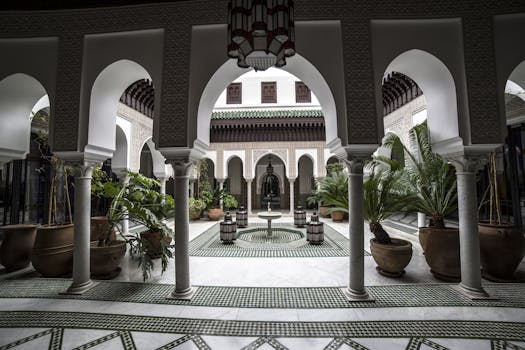
French couple I know spent fourteen months renovating a riad in the medina.
Beautiful place. Tiled courtyard, original cedar ceilings, rooftop terrace with a view over the old city. Six weeks before they planned to open it as a guesthouse, a neighbor filed a legal challenge claiming partial ownership of the terrace.
They hadn’t done anything dishonest. They had a notary. They had a signed contract. But they had made three specific mistakes early in the process, and those mistakes came back to hurt them badly.
Foreign buyer mistakes when buying a riad in Marrakech follow a very recognizable pattern. The people who get hurt are almost never careless or naive. They’re usually smart, organized, and genuinely excited about Morocco. They just didn’t know what they didn’t know.
This article covers what I’ve seen go wrong, what I personally got wrong the first time I looked at buying here, and what actually separates a clean purchase from a nightmare one.
At a Glance: The Biggest Foreign Buyer Mistakes When Buying a Riad in Marrakech
Most foreign buyers who run into serious problems weren’t being reckless. They moved a little too fast, trusted the wrong people, or skipped a step they didn’t know mattered. The table below summarizes the most common and costly mistakes, why they cause damage, and what a careful buyer does instead.
| Mistake | Why it matters | What to do instead |
|---|---|---|
| Paying a deposit before title checks | You may lose the deposit if ownership problems surface later | Confirm title status and complete basic ownership checks before paying anything |
| Buying Melkia without a full heir investigation | Absent heirs can challenge the sale years after completion | Require a notarized heir investigation before signing anything |
| Trusting agent reassurances too much | Agents earn their fee when the deal closes, not when you are protected | Hire an independent lawyer who works only for you |
| Skipping the structural survey | Hidden structural problems can cost far more than the survey itself | Commission an independent structural engineer before signing |
| Ignoring renovation permits | Unpermitted works can result in fines, stop orders, or forced demolition | Check what past works were approved and what future plans require |
| Assuming the riad can legally operate as a guesthouse | A riad without a current license cannot legally take paying guests | Request written proof of the current license and confirm it can transfer |
| Underestimating renovation costs | Access constraints and hidden problems in medina properties push costs up sharply | Budget 800 to 1,500 euros per square meter plus a 25% contingency |
| Using unofficial banking or cash payment | Unrecorded funds cannot be repatriated when you eventually sell | Transfer the full purchase price through official Moroccan banking channels |
| Buying in the wrong part of the medina | Access, resale appeal, and rental demand vary significantly street by street | Research specific streets rather than neighborhoods before committing |
| Not checking tax arrears, utilities, and old disputes | These issues can delay closing, complicate registration, or become your problem if they are not identified and settled before completion | Request tax clearance certificates and full utility records before signing |
Already considering a property?
See the 14 Day Buyer Plan: $299 →
Get 14 days of personal buyer support, three private calls and WhatsApp support.
Get help reviewing up to three properties before you commit money.
Why I’m writing this: I live in Marrakech and have personally bought property in Morocco. I’ve dealt with agents, notaries, title questions, transfer paperwork, and the kind of buyer mistakes that usually only become obvious after money has already moved. I have also seen how small mistakes around deposits, title documents, and agent pressure can turn a promising Marrakech property deal into a serious problem.
This guide is written from the buyer side, not the agent side.
Why Buying a Riad Is Not Like Buying Property Anywhere Else
Most foreign buyers arrive with a mental framework built from buying property in Europe, North America, or Australia.
Clean title. Surveyed boundaries. One seller. Notary signs off. Done.
Marrakech doesn’t work like that, especially in the medina.
The old city is a UNESCO World Heritage Site built over centuries with no formal planning grid. Walls are shared. Courtyards overlap. Underground water channels run beneath properties that nobody has mapped properly in decades.
On top of that, Morocco operates two completely separate systems of property ownership at the same time. One is modern and registered. The other is traditional, unregistered, and based on inheritance customs that go back generations.
Until you understand this, you can’t properly evaluate the risk of any specific property. And most real estate agents showing you around won’t explain it unless you ask directly.
Mistake #1: Trusting the Agent to Also Protect Your Interests
This is the most common foreign buyer mistake, and it’s completely understandable.
The agent is friendly. They speak your language. They know every alley in the medina. You feel comfortable with them, and that comfort makes you trust them more than you should.
Here’s the reality: the agent gets paid when the deal closes. Their income depends on completing the transaction, not on protecting you from a bad one.
I made this mistake myself on the first property I seriously considered. The agent assured me the ownership was clean and straightforward. He said the same thing about every property he showed me. It wasn’t until I hired an independent lawyer who actually reviewed the documents that we found a co-ownership clause that would have given another party the right to challenge any sale within ten years.
The agent wasn’t lying, exactly. He just hadn’t looked closely, and he had no real reason to.
This is one of the most consistent patterns I see when reading about Marrakech property scams and pitfalls. The problem is rarely outright fraud. It’s usually a combination of misplaced trust and nobody on your side doing the actual verification work.
What to do instead: Before you make any offer, hire your own legal representative. Not the seller’s notary. Not someone the agent recommends. Find an independent Moroccan lawyer or notary who works specifically with foreign buyers. Pay them to review the title documents before you commit to anything. That review typically costs between 500 and 1,500 euros. It is the single best money you will spend in this process.
Mistake #2: Not Understanding the Difference Between Titre Foncier and Melkia
Most foreign buyers have never heard these terms before they start looking at riads. By the time they close a deal, they should understand them better than almost anything else about the purchase.
Titre Foncier is Morocco’s registered land title system. A property with a Titre Foncier has been formally registered with the national land authority. Ownership is traceable, recorded, and legally clear. It’s not entirely risk-free, but it provides a proper foundation for a safe purchase. Foreign buyers should actively prefer registered title where possible, and any property without it deserves closer scrutiny before you proceed.
Melkia (sometimes written Moulkia) is a traditional ownership system rooted in Islamic law and local custom. Many medina properties still operate under Melkia deeds. Ownership under this system is established through notarial certificates, witness testimony, and inheritance documents rather than a central registry.
The problem with Melkia is not that it’s fraudulent. The problem is that it can hide complications that a Titre Foncier would reveal immediately. Split inheritance among multiple heirs. Disputed boundaries. Claims from neighbors based on long use of a shared space.
I’ve spoken to buyers who purchased a Melkia property, completed a full renovation, and only discovered years later that not all the heirs had signed off on the sale. In some inheritance disputes, absent heirs may still be able to challenge a sale long after a transaction appears complete.
For a thorough comparison, read about Melkia vs Titre Foncier in Morocco before you make any offer on a medina property. It’s also worth understanding what Titre Foncier means for Marrakech buyers specifically, since the practical implications in the medina context are different from newer parts of the city.
One document worth knowing: the ANCFCC property certificate is issued by Morocco’s national land registry authority and confirms the registered owner of a property at a given date. For registered titles, this is one of the most reliable ways to verify who actually owns what you’re being asked to buy. If you have the title number, or your notary can obtain it, ANCFCC documents can be requested or verified through official channels. But for a serious purchase, these checks should never replace a notary’s full title review.
What to do: Always ask upfront whether the property has a Titre Foncier or operates under Melkia. If it’s Melkia, that doesn’t mean you shouldn’t buy it. But it means you need a full heir investigation before you sign anything. And ideally, you want to begin the conversion process to Titre Foncier before or during the transaction.
Mistake #3: Falling in Love With the Property Before Finishing the Due Diligence
This one is emotional, not legal, but it causes legal problems.
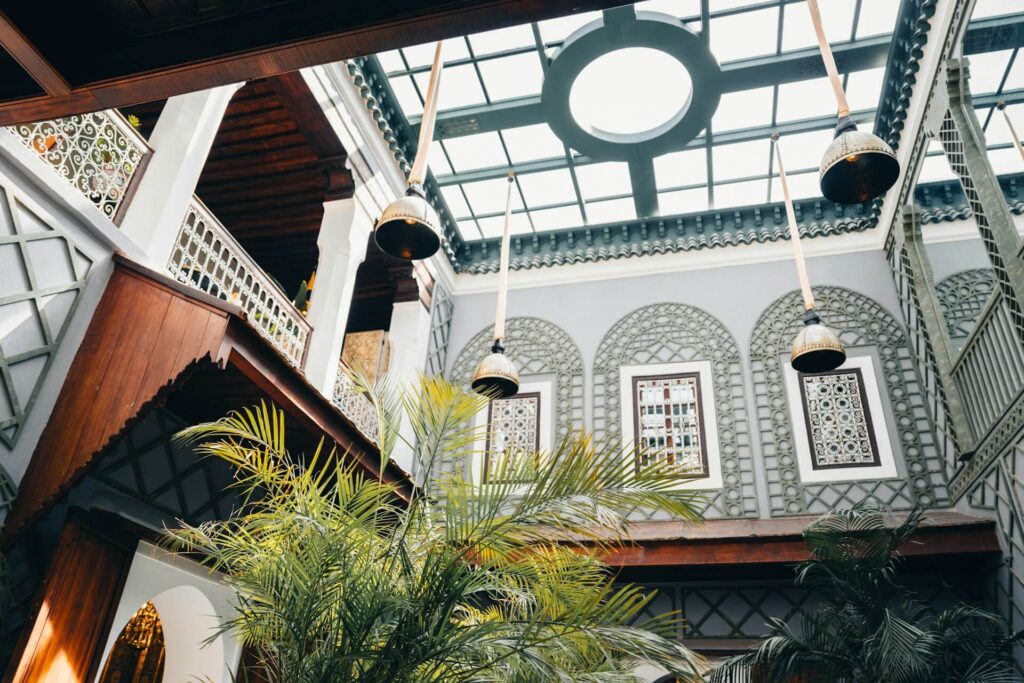
The medina is genuinely beautiful. You walk through a plain door in a narrow alley and suddenly you’re standing in a tiled courtyard with a fountain, orange trees, and afternoon light coming through the upper windows. It’s hard not to feel something.
That feeling is also dangerous.
When you’re emotionally attached to a property, you start making excuses for problems. You move faster than you should. You accept verbal reassurances instead of written documentation. You tell yourself that the title issue the lawyer flagged probably isn’t a big deal.
Every experienced buyer I know in Marrakech has a version of this story. The riad they almost bought before their head caught up with their heart.
The practical solution is to keep viewing properties until you’ve seen at least eight to ten. By the time you’ve seen that many, you’ve built a comparison framework. You know what good looks like. You know what overpriced looks like. You’re less likely to let one beautiful courtyard cloud your judgment about a messy title.
Mistake #4: Ignoring the Heir Problem Until It’s Too Late
This deserves its own section because it is, without question, the single biggest legal risk in medina property purchases.
Under Moroccan family law, when a property owner dies, the estate is divided among heirs according to specific rules. Children, spouses, and in some cases siblings all receive a share. This can go on for two or three generations without anyone formally updating the ownership record.
So the person sitting across from you at the negotiating table may genuinely believe they have the right to sell you the entire property. They may have lived in it for twenty years. They may have paid taxes on it. But legally, they might only own 40% of it.
The other 60% belongs to relatives scattered across Morocco, France, Belgium, and Canada.
This situation is more common than most buyers expect. Heirs may be living abroad and genuinely unaware of any sale. Some may have been excluded from the process by a family member acting in good faith, or simply acting in their own interest. Others may have been unreachable. Old family arrangements reached verbally, without legal documentation, carry no weight in court. A buyer should never rely on the seller’s assurance that “the family is in agreement.” That agreement must be signed and notarized.
If those relatives didn’t sign off on the sale, the transaction can be challenged. The fact that you paid in full doesn’t protect you. The fact that you had a notary doesn’t protect you. What protects you is a full heir investigation completed before you sign.
A qualified Moroccan notary can trace the ownership history and identify every legal claimant. This takes time, sometimes four to eight weeks. Any seller who resists this process or tries to rush past it is showing you a serious warning sign.
Mistake #5: Paying Outside Official Banking Channels
This mistake happens more often than people admit, and the consequences can be severe years later.
Sometimes sellers ask for part of the payment in cash, off the books. The stated price in the contract is lower than what you actually paid. The logic is usually about reducing transaction taxes, and the seller frames it as something everyone does.
Here’s what they don’t tell you.
When you eventually sell the property and try to move your money back out of Morocco, you can only repatriate funds that you can prove you imported through official channels. If you paid 220,000 euros but only 150,000 went through the bank, then 70,000 euros of your proceeds could be stuck in Morocco indefinitely.
Morocco requires foreign buyers to import purchase funds through licensed Moroccan banks and obtain an official document called an attestation d’importation de devises. This document is your proof that the money came in legally. Without it, getting your money back out when you sell becomes complicated at best and impossible at worst.
It is also worth opening a convertible dirham account through a Moroccan bank if you are purchasing as a non-resident. This type of account is designed for foreign buyers and makes the process of tracking imported funds considerably cleaner. Many buyers skip this step and regret it later when they try to document their original transfer at resale.
Always transfer the full purchase price through official banking channels. Keep every receipt, every exchange statement, and every bank document from the transaction. Store them somewhere you’ll be able to find them in ten years.
Mistake #6: Skipping the Structural Survey
Riads are old buildings. Some are remarkably well maintained. Many have had decades of piecemeal repairs done by people who weren’t engineers.
I’ve seen properties where load-bearing walls had been partially removed by previous owners to create larger rooms. I’ve seen foundations that had shifted and cracked in ways that weren’t visible from the courtyard. I’ve seen rooftop structures built without any permits that, under municipal rules, had to be removed.
A professional structural survey costs somewhere between 500 and 1,500 euros depending on the size of the property and who you hire. That is a very small number compared to discovering structural problems after you’ve signed.
More importantly, a structural survey gives you negotiating power. If the engineer finds issues, you can either renegotiate the price or walk away. Without the survey, you’re buying blind.
Mistake #7: Underestimating Renovation Costs by a Large Margin
Almost every foreign buyer I’ve spoken to underestimated their renovation budget. Not by a little. By a lot.
The medina creates specific complications that drive costs up and that buyers from outside Morocco rarely anticipate.
There are no roads wide enough for large vehicles. Materials come in by mule, motorbike, or human hands through narrow derbs. Deliveries take longer and require more coordination. Materials that would take one afternoon to offload in a European city can take two days to get into a medina property. Labor is more complicated to organize, and if you are managing the project from abroad, delays and cost overruns are almost inevitable without reliable local supervision.
Finding specialists for traditional craftsmanship costs more than you expect and takes longer to schedule. Zellige tiling, carved plasterwork, tadelakt finishes, cedar ceilings: these require craftsmen with specific skills, and good ones are in demand. Rushing them produces poor results. Waiting for them delays everything else.
And then there are the surprises inside the walls. Old wiring that needs to be completely replaced. Plumbing that hasn’t been touched in forty years. Water damage behind tiles that looked perfect from the outside. Rooftop waterproofing that has been failing silently for a decade. Humidity trapped inside thick traditional walls. These are not exceptional findings in medina properties. They are normal findings.
A rough rule that experienced buyers in Marrakech use: budget 800 to 1,500 euros per square meter for a full renovation, depending on the quality level you’re targeting. Then add a 25% contingency on top of that.
If the numbers don’t work at that budget, the deal doesn’t work.
Mistake #8: Not Checking What You’re Actually Allowed to Build
The medina of Marrakech is a UNESCO World Heritage Site.
That status is wonderful for the neighborhood’s character and its long-term value. But it comes with restrictions that catch a lot of foreign buyers completely off guard.
You cannot simply decide to add a rooftop pool, extend a terrace, or change the exterior appearance of the building without going through a permitting process involving both the municipality and heritage authorities.
Some changes get approved. Some take months and eventually get approved. Some are simply not allowed.
I’ve seen buyers who started construction without the right permits and ended up with stop-work orders, fines, and in one case a forced demolition of a rooftop structure they had already built.
What many buyers also fail to check is the history of past works. Unauthorized changes made by previous owners can create problems for the new owner even if those changes were completed long before the sale. If the property has additions, rooftop structures, internal layout changes, or new windows that weren’t there in the original plans, the prudent question is whether those works were ever approved. Your independent lawyer or notary can help you investigate the municipal records.
Before you make an offer on any riad you intend to renovate, get clarity in writing on what is and isn’t permitted. Talk to the municipality’s urban planning office. Your independent lawyer can help you navigate this, but you need to ask the question explicitly before you commit.
Mistake #9: Assuming a Riad Can Automatically Become a Guesthouse
This is a mistake that catches many buyers who are planning to run the property as an income investment.
A beautiful riad is not automatically a legal maison d’hôtes. The courtyard, the rooms, the terrace, the whole aesthetic package does not carry any legal right to host paying guests. That right comes from a separate licensing process, and the requirements are more involved than most buyers expect.
In Morocco, riads and maisons d’hôtes fall under formal tourist accommodation classification and exploitation procedures. That means buyers should verify the property’s current authorization status, classification, and operating permissions instead of assuming hospitality use is automatic. This applies whether the property has never operated as a guesthouse or has been running as one for years.
Foreign buyers often assume they can renovate and then start taking guests through a rental platform. What they actually need to have in place includes a formal tourism classification, commercial registration, compliance with fire and access safety requirements, the correct room count and configuration, approval of any works carried out during renovation, and in some cases a specific permit related to the type of accommodation being offered.
If the seller says the riad can be operated as a guesthouse, ask for written proof. Not a verbal assurance, not a promise to sort it out after completion. Written documentation of the current license, the classification level, when it was last renewed, and whether it applies to the property in its current configuration.
If the riad is already operating as a guesthouse, check whether the license is current and in good standing, whether it is held personally by the seller or by a company, and whether it can legally transfer with the property or needs to be reapplied for. Also check whether the physical configuration of the property still matches the approved plans. Renovations that changed room count, ceiling heights, or access arrangements can affect compliance even on an existing license.
For buyers planning to operate short-term lets, it’s worth reading about starting an Airbnb business in Morocco and understanding which neighborhoods in Marrakech perform best for Airbnb investment before you commit to a specific property.
Mistake #10: Paying a Deposit to the Agent or Seller Instead of the Notary
Foreign buyers are sometimes pressured to move quickly. Another buyer is coming. The seller is reconsidering. The agent says a small holding amount will secure the property while the paperwork catches up.
This is one of the most common pressure situations in Marrakech riad transactions, and it needs to be handled carefully.
A deposit paid to an agent or directly to a seller before basic due diligence is completed is a deposit paid with very limited protection. If ownership problems surface afterwards, recovering that money can be difficult. The seller may genuinely not be able to return it. The agent may claim it was passed on. The legal route to get it back is slow and uncertain.
The safest route is a formally structured deposit held by a notary, paid after at least a basic ownership check has been completed and documented in a properly drafted compromis de vente in Morocco. This document should specify what happens to the deposit if due diligence reveals problems and the buyer needs to withdraw.
Before any deposit is paid, a careful buyer should know who legally owns the property, whether there are heirs or co-owners whose consent is required, whether there are any registered charges or mortgages, and what the exit conditions are if the investigation turns up something serious. Reading about property deposit rules for foreigners in Morocco in detail is time well spent before you reach this stage.
Watch for these specific phrases. They are common and they are warning signs:
- “Someone else is coming to view tomorrow”
- “Just send a small amount to secure it for now”
- “We don’t need the notary involved yet, that comes later”
- “Cash is easier for everyone”
- “Everyone does it this way here”
None of these are reasons to move faster. They are reasons to slow down.
The Documents You Must See Before Paying Anything

One of the most practical things a foreign buyer can do is build a checklist of the documents they need to see before committing to any payment. The table below covers the key ones, what they’re called in French or Arabic, who typically reviews them, and what a missing or problematic document should tell you.
For a deeper look at the verification process, see the guides on how to verify the title deed before buying and the property title deed check for foreigners in Morocco.
| Document | French or Arabic term | Who checks it | What it proves | Red flag |
|---|---|---|---|---|
| Registered title deed | Titre Foncier | Your notary or independent lawyer | Ownership is formally registered with the national land registry | Seller cannot produce it or says registration is “in progress” |
| Property certificate from the land registry | Certificat de Propriété (ANCFCC) | Your notary, obtained from the ANCFCC | Current registered owner as of the certificate date, plus any charges or mortgages | Certificate shows a different owner, charges not disclosed by seller, or cannot be obtained |
| Traditional ownership file | Melkia or Moulkia | Specialist notary with experience in traditional title | Establishes chain of traditional ownership, must include all heirs | Incomplete heir documentation, missing death certificates, seller reluctant to open the file |
| Seller identity documents | Carte Nationale d’Identité or passport | Your notary | The person signing is who they say they are | Identity cannot be verified, or the signatory is acting through informal power of attorney |
| Heir documents where applicable | acte d’hérédité (exact documents required should be confirmed with your notary) | Your notary, with specialist advice on inheritance law | All legal heirs have been identified and all have signed or formally waived their rights | Not all heirs located, verbal family agreement used as substitute, seller resistant to the process |
| Preliminary sale agreement | Compromis de vente | Your independent lawyer before you sign | Agreed terms, deposit conditions, and buyer protection clauses are properly written | No clause covering what happens if due diligence reveals problems |
| Building permit | Permis de construire | Your lawyer, cross-referenced with municipal records | Any significant structural work or additions were approved | No permits exist for visible additions, seller says small works don’t need permits |
| Habitation or compliance certificate | Certificat de conformité or permis d’habiter | Your notary or lawyer | The property meets basic standards for legal occupation | Not always available for older medina properties, but absence increases other risks |
| Guesthouse license if sold as income property | Autorisation de maison d’hôtes or classification touristique | Your lawyer, confirmed with the relevant ministry | The property is legally classified and authorized to operate as paid accommodation | License expired, held by a company that is not being transferred, or does not exist at all |
| Tax clearance | Attestation de situation fiscale | Your notary as a condition of closing | No outstanding local or national tax arrears attached to the property | Seller delays providing it, or certificate shows arrears they expect you to absorb |
| Utility records | factures d’eau et d’électricité | You, directly with the service providers | Connections are formal, regular, and in the seller’s name | Informal shared connections, unpaid bills, or accounts in another person’s name |
Riad Area Risk Matrix: Marrakech Medina Buyer Checks
The medina is not a uniform market. Risk, resale appeal, rental demand, and access conditions vary considerably between neighborhoods, and even more so between individual streets within those neighborhoods. The table below is a starting framework, not a definitive verdict on any area. The actual risk of any specific property depends on its exact address, access width, title condition, building state, and the specific resale or rental market you’re targeting.
| Area | Why buyers like it | Common risk | What to check before buying |
|---|---|---|---|
| Dar El Bacha | Prestigious address, strong rental demand, proximity to key attractions | Higher prices reflect prestige, not always condition or title clarity | Title type, access width for renovation materials, permit history on visible additions |
| Mouassine | One of the medina’s most established riad markets, good access, known to international buyers | Premium pricing and properties that have changed hands multiple times, sometimes with accumulated permit issues | Full renovation history, any rooftop additions, current license status if sold as operational guesthouse |
| Riad Laarouss | Quieter residential feel, well-located relative to the main circuits, some good value still available | Mixed title landscape, some properties with unresolved traditional ownership | Title type from the outset, heir documentation if Melkia, structural condition of older sections |
| Bab Doukkala | Less saturated with tourist traffic, relatively good access via larger streets nearby | Lower density of established riad market means thinner resale liquidity | Realistic rental yield data for the specific sub-area, title condition, access for guest luggage |
| Mellah | Historically significant, close to the Bahia Palace area, some interesting properties at lower prices | More complex title situations in some parts, structural condition of older buildings | Thorough structural survey is essential, full title verification, local legal advice specific to this area |
| Kasbah | Proximity to the Saadian Tombs, slightly easier vehicle access in some streets | Less established rental market compared to northern medina zones | Rental demand evidence for the specific street, title clarity, guest access practicality |
| Deep derbs away from main access points | Lower prices, authentic character, sometimes the most visually striking properties | Renovation logistics can be extreme. Material delivery by handcart only. Resale market is narrower. Guest access for luggage can deter bookings. | Physically measure derb access width. Ask suppliers for their delivery assessment. Verify that guest logistics are workable before falling in love with the property. |
Questions to Ask Before You Even Visit the Riad
Visiting a riad without knowing its basic status wastes time and creates emotional attachment before the facts are established. The questions below can be put to the agent or seller before you book a flight or arrange a viewing. Any reluctance to answer them clearly is itself useful information.
- Does the property have Titre Foncier or is it held under Melkia?
- Is there a recent Certificat de Propriété from the ANCFCC?
- Who is the legal seller, and are there co-owners or heirs whose consent is required?
- Are there any registered mortgages, charges, or active disputes on the property?
- Has any rooftop work, terrace extension, or structural change been added in recent years?
- Were those renovations done with the required permits?
- If the property is sold as an income business, is there a current and valid guesthouse license?
- Where will any deposit be held, and by whom?
- Can my independent notary or lawyer review documents before I sign anything?
- Can I bring a structural engineer for an inspection before the offer is formalized?
- Are there any outstanding tax arrears or unpaid utility bills?
- Is the access to the property practical for renovation material delivery and for guest luggage?
These are not aggressive questions. A seller with a clean property should be able to answer most of them quickly. The ones they cannot answer are the ones that most need your attention.
What the Whole Process Actually Costs: Real Numbers
Most listings show the property price and nothing else. Here’s what you actually need to budget beyond that number.
Registration tax: 4% of the declared purchase value, paid to the Moroccan government. This is non-negotiable.
Notary fees: Roughly 1% of the purchase price. For more detail, see the full breakdown of notary fees when buying property in Morocco.
Agent commission: Usually 2.5%, sometimes negotiable on higher-value properties.
Independent lawyer for property due diligence in Morocco: Between 1,000 and 3,000 euros for a thorough review on a medina property.
Heir investigation and title conversion (if needed): Variable. Budget 2,000 to 5,000 euros and three to six months of time.
Structural survey: 500 to 1,500 euros.
Bank transfer fees and currency exchange costs: These add up. Get quotes from multiple providers before you transfer large sums. Also review the full picture of Morocco property transfer taxes so there are no surprises at closing.
Total transaction costs typically run between 8% and 11% of the purchase price. If your budget is tight and you haven’t factored this in, your numbers don’t work the way you think they do.
The Insider Things Most Buyers Never Think to Check
Municipal tax arrears. Some properties have years of unpaid local taxes attached to them. These issues can delay closing, complicate registration, or become your problem if they are not identified and settled before completion. Ask for a full tax clearance certificate as a condition of closing.
Utility connections. Some medina riads have informal shared electricity or water connections that are technically irregular. Formalizing these costs money and takes time. Find out before you buy, not after.
The right of first refusal. Moroccan law includes a concept called droit de chefaa, which can give neighbors or co-owners the legal right to purchase the property before you do. If this right exists and wasn’t properly waived, your purchase can be challenged. Your notary should check for this. Some don’t unless you ask.
Local noise and smell patterns. Visit the property at different times of day and on different days of the week. What feels peaceful on a Tuesday afternoon can feel very different at 5am on a Friday when the nearby mosque amplifies sound through narrow stone alleys.
Who actually manages the building works. If you’re not based in Marrakech, you need someone on the ground managing your renovation contractor. Remote management of medina construction projects almost always leads to delays, cost overruns, and quality problems.
A Quick Comparison: What Smooth Deals Look Like vs. Problematic Ones
| Situation | Green Flag | Red Flag |
|---|---|---|
| Title type | Titre Foncier already registered | Melkia with no plans to convert |
| Seller | Single owner or all heirs clearly identified | Vague about who else has a claim |
| Permits | Clean municipal records, past and present | Unauthorized additions already built |
| Timeline | Seller comfortable with due diligence | Pressure to close quickly |
| Payment | Full amount through official banking | Requests for partial cash payment |
| Renovation history | Permitted works with receipts | “We did it ourselves, no permits needed” |
Already considering a property?
See the 14 Day Buyer Plan: $299 →
Get 14 days of personal buyer support, three private calls and WhatsApp support.
Get help reviewing up to three properties before you commit money.
My Honest Conclusion
None of these mistakes are unique to Marrakech. But the specific shape they take here, the title system, the inheritance law, the heritage restrictions, the banking rules, is different from what most foreign buyers have dealt with before.
The people who buy successfully in Marrakech aren’t necessarily more experienced than the ones who run into problems. They’re just more willing to slow down, hire the right people, and ask the uncomfortable questions before they sign.
Morocco is a genuinely excellent place to invest in property. Marrakech specifically has shown remarkable resilience as a market. The medina, for all its complications, offers something rare, real character and a depth of history you simply cannot find in newly built developments.
If you want to understand the full legal picture before you start visiting properties, the detailed guide to the legal risks of buying a riad in Marrakech covers the regulatory and title landscape in more depth. And if you want to start the process correctly from the beginning, the step-by-step guide on how to buy a riad in Marrakech covers the process from first search to notary completion.
Go in with your eyes open. Hire people who are specifically working for you. Do not let excitement replace due diligence.
The beautiful courtyard will still be there after the heir investigation is complete.
FAQ: What Foreign Buyers Ask Most Often
Can a foreigner own 100% of a riad in Morocco?
Yes. Morocco places no restrictions on foreign ownership percentages. You can own it outright. The key requirement is importing your purchase funds through official Moroccan banking channels and maintaining proper documentation of that transfer.
Is it safe to buy a riad in Marrakech right now?
Yes, with proper due diligence. The legal framework exists to protect buyers. The risk comes from skipping steps, not from the market itself.
What is the biggest mistake foreigners make when buying a riad in Marrakech?
The most damaging single mistake is paying a deposit or signing a compromis de vente before the title has been verified and, where applicable, before a full heir investigation has been completed. Once money has changed hands, recovering it if problems emerge is slow and uncertain. The second most common mistake is relying on the selling agent as a source of due diligence. They are not working for you.
Should I buy a riad with Melkia?
You can, but Melkia properties require more careful due diligence than registered title. A full heir investigation is essential. Ideally, the conversion to Titre Foncier should be started before or during the transaction. The comparison between Melkia and Titre Foncier covers the practical differences in detail.
Can I pay a deposit before the title check is complete?
It is strongly inadvisable. A deposit paid before the title has been verified and before the heir situation has been confirmed gives you very limited protection. If problems surface later, recovering a deposit from a seller or agent can be very difficult. Any deposit should follow, not precede, basic ownership verification.
Can every riad in Marrakech become a guesthouse?
No. A riad requires a valid guesthouse license to legally operate as paid accommodation. The licensing process involves tourism classification, safety compliance, commercial registration, and in some cases approval of renovation works. A beautiful property without a current license is not automatically one that can obtain one. Always verify before you buy.
How do I check if a riad has clean title?
Start by asking whether the property has a Titre Foncier. If so, request an ANCFCC Certificat de Propriété, which shows the registered owner and any charges as of the certificate date. For Melkia properties, a full heir investigation through a qualified notary is required. If you have the title number, ANCFCC documents can be requested through official channels, but this should never replace a full notary review for a serious purchase.
What documents should I ask for before signing?
The core documents are the title proof (Titre Foncier or the full Melkia file), the ANCFCC Certificat de Propriété, the seller’s identity documents, heir documentation where applicable, a building permit history, tax clearance, and utility records. For properties sold as income businesses, add the guesthouse license. The documents table earlier in this article covers each one in detail.
Is buying a riad in the Marrakech medina risky?
It carries specific risks that are different from buying property in a modern development. Title complexity, heir claims, heritage restrictions, and access constraints are the main ones. None of these risks are unmanageable with proper preparation and the right advisors. The risk comes from entering the process without understanding these factors, not from the medina itself.
How much should I budget for renovation surprises?
A contingency of 25% on top of your renovation budget is a reasonable starting position for a medina property. Older riads regularly produce unexpected findings once walls are opened, including failed plumbing, structural issues, water damage, and old electrical systems that need complete replacement. Some buyers have found their contingency consumed entirely on a single unexpected finding.
Do I need my own notary or lawyer?
You need an independent legal representative who works for you specifically. The seller’s notary handles the transaction but is not your advocate. Buying through a notary in Morocco is a structured process, but the notary’s duty is to the transaction, not to you personally. An independent lawyer reviewing documents before you sign is not a luxury in a medina purchase. It is the baseline protection that every buyer should have.
Can I buy a riad in Marrakech remotely?
You can complete many steps remotely, and power of attorney allows your lawyer to represent you at signing. However, I would strongly recommend being physically present at least once during the due diligence process. There are things you notice in person that photographs and video calls cannot convey: access width, noise levels, neighbor dynamics, and the actual condition of materials. Buyers who purchase entirely remotely without a site visit carry additional risk, particularly when it comes to renovation planning and realistic budget setting. If visiting is genuinely impossible, invest more heavily in local advisors and a trusted local project manager from the outset.
How do I find a trustworthy independent lawyer in Marrakech?
Ask your country’s embassy in Rabat for a recommended list of lawyers who handle real estate transactions for foreign nationals. Avoid using any lawyer that your selling agent recommends directly. You can also learn more about how to avoid property scams in Morocco and what professional advice looks like in practice.
What is the minimum realistic budget for a riad purchase and renovation in the medina?
For a small riad with a basic renovation, you’re realistically looking at 150,000 to 250,000 euros all in, including purchase price, transaction costs, and renovation. For anything larger or higher end, budget 400,000 euros and above. Anyone quoting you numbers significantly below these ranges for a complete riad in the central medina is either describing something in very poor condition or leaving out substantial costs.
How long does a riad purchase take from offer to completion?
For a clean Titre Foncier property, around two to three months. For a property requiring heir investigation or title conversion, plan for six months or more. Anyone promising faster than this on a complex medina property is cutting corners somewhere.

Anis is the founder of Buy Property Morocco, a research-based resource created to help foreign buyers understand the real process of buying property in Morocco safely.
He focuses on the practical details most buyers only discover too late: title deed checks, notary steps, compromis de vente risks, transfer taxes, foreign banking rules, repatriating money after a sale, and avoiding common mistakes when dealing with agents or sellers.
Anis has personally bought 4 properties in Morocco and shares practical guidance based on real experience, not theory.
If you are seriously considering buying property in Morocco and want private guidance before you send money, pay a deposit, or sign anything, you can book a buyer safety call here: