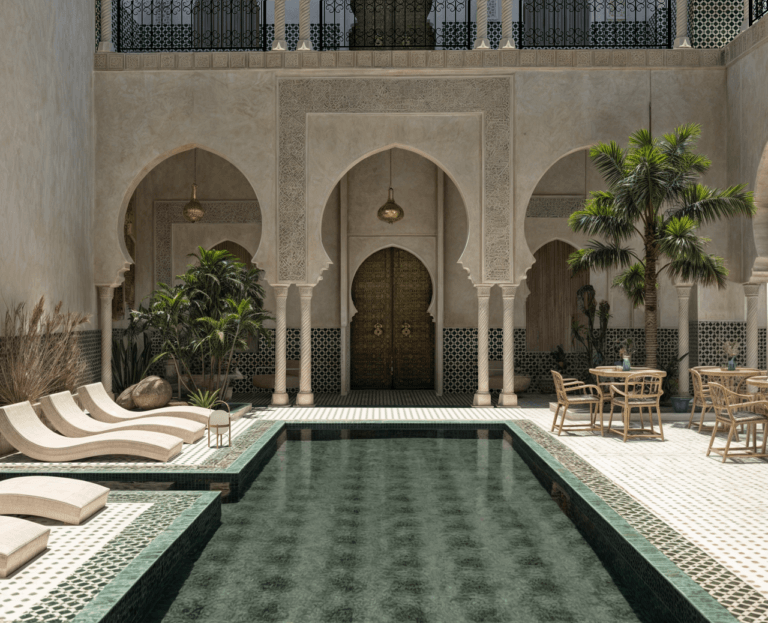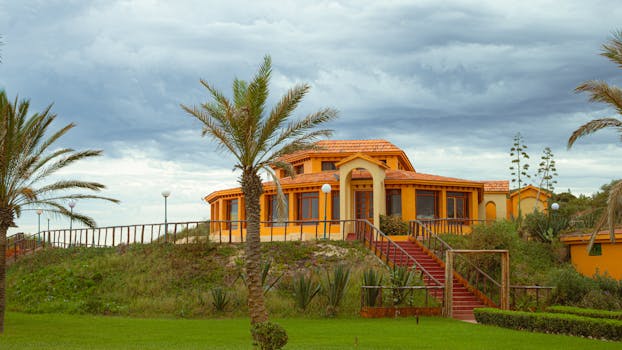

But most foreign buyers lose their deposit, get locked into bad contracts, or end up owning nothing, because they skipped two steps that locals never skip.
This guide covers what those steps are, what real deals look like, and exactly what you need to do to buy safely, even without an agent.
Morocco Property for Foreigners: At a Glance

- Foreigners can legally buy property in Morocco with full ownership rights, including non-residents.
- Property prices start around 150,000 MAD (≈ €14,000) for rural or small-town homes, and 400,000 MAD (≈ €37,000) upward in cities like Marrakech.
- By-owner listings are common but carry the highest risk of title fraud, unclear ownership, and verbal-only agreements.
- The Titre Foncier (registered title deed) is the only title you should accept, ever. Anything else is risky.
- Funds must enter Morocco through an official bank transfer (attestation de transfert) so you can legally repatriate money later.
- A notaire (notary) is legally required for all property transactions. This is non-negotiable.
- Total purchase costs add 6 to 10% on top of the agreed price, in taxes, notary fees, and registration.
How the Morocco Property Market Actually Works for Foreigners
Morocco operates a dual property market.
On one side you have formal, registered properties with a Titre Foncier, registered at the Agence Nationale de la Conservation Foncière (ANCFCC).
On the other side you have informal or melkia properties, which are traditionally owned, often passed through families, and not always registered with the state.
Foreigners can buy both types legally, but only the Titre Foncier gives you clean, internationally recognized ownership.
“By owner” sales (called vente directe or de particulier à particulier) are very common in Morocco.
Owners prefer them because they avoid the 2.5 to 3% agency commission.
Buyers prefer them because prices can be 10 to 20% lower than agent-listed properties.
The problem is that without an experienced local to guide you, you are entirely on your own in a legal system that operates mostly in Arabic and French.
What “Cheap” Actually Means in Morocco

| Location Type | Property Type | Approx. Price Range (MAD) | Approx. Price Range (EUR) |
|---|---|---|---|
| Rural / Small town | Riad shell, farmhouse | 150,000 – 350,000 | €14,000 – €32,000 |
| Mid-size city (Fez, Meknes, Beni Mellal) | Apartment, small house | 350,000 – 700,000 | €32,000 – €65,000 |
| Marrakech medina | Riad (needs work) | 600,000 – 2,000,000 | €56,000 – €185,000 |
| Marrakech new town (Guéliz, Hivernage) | Apartment | 700,000 – 2,500,000 | €65,000 – €230,000 |
| Agadir / Coastal | Apartment, villa | 500,000 – 2,000,000 | €46,000 – €185,000 |
Exchange rates fluctuate. Use the XE Currency Converter for live MAD to EUR or GBP conversions.
Step-by-Step: How to Buy Property in Morocco as a Foreigner

This is the actual process, not a simplified version of it.
- 1 Find the listing. Check Avito.ma, Mubawab.ma, or Facebook groups for private seller listings. Avito in particular is where real Moroccans list their own properties without agents.
- 2 Verify the seller is the legal owner. Ask for the Titre Foncier number immediately. Cross-check it at the ANCFCC office or via a local lawyer before visiting the property.
- 3 Visit in person, or hire a trusted local representative. Photos lie. Videos lie. Do not send money to anyone you have not met.
- 4 Negotiate and agree on price. All negotiations happen in MAD. Verbal agreements are not binding in Morocco, but get everything in writing anyway.
- 5 Sign a preliminary contract (compromis de vente). This is typically drafted by a notaire or lawyer, and involves a 10% deposit. Never sign a hand-written seller contract without legal review.
- 6 Open a Moroccan bank account (or use a CIH, Attijari, or BMCE account). Transfer your funds from abroad via official bank wire. Keep your attestation de transfert, which is your proof of foreign funds coming in.
- 7 The notaire runs title checks. This takes 4 to 8 weeks normally. They check for liens, co-owners, inheritance disputes, and encumbrances.
- 8 Sign the final deed (acte de vente) before the notaire. Both parties sign. The notaire registers the transfer with ANCFCC. You are now the legal owner.
- 9 Receive your updated Titre Foncier with your name. This can take 2 to 6 months after signing. Keep all originals. Make certified copies.
Biggest Mistakes Foreigners Make When Buying in Morocco
1. Trusting a Verbal Agreement
In many countries, a handshake means something.
In Moroccan property law, it means nothing.
If it is not written, stamped, and notarized, it does not exist legally.
2. Paying a Deposit Before Title Verification
Sellers sometimes ask for a 5 to 10% deposit to “hold” the property before any legal checks.
Once that money is gone, getting it back through Moroccan courts can take years.
Never pay anything without a notaire-reviewed compromis de vente first.
3. Assuming the Seller Owns the Whole Property
Inheritance law in Morocco means a property can have 6, 10, or even 20 co-owners across a family.
One person may show you the property and claim sole ownership.
The others can legally block or void the sale later.
4. Using an Unregistered Agent
Anyone can call themselves a property agent in Morocco.
There is no official licensing system the way there is in the UK, France, or the US.
An agent who approaches you in the medina or online is not necessarily qualified or trustworthy.
5. Sending Money Without Proper Documentation
If you transfer funds to a private individual without an official bank paper trail, you cannot legally repatriate those funds if you sell later.
Morocco’s Office des Changes regulates all foreign currency movement strictly.
Without the attestation de transfert, you are trapped.
Hidden Risks Nobody Warns You About Important
Real Costs: What You Actually Pay Beyond the Sale Price
Budget between 6% and 10% on top of the purchase price for the following:
| Cost Item | Rate / Amount | Notes |
|---|---|---|
| Registration tax (Droits d’enregistrement) | 4% of purchase price | Paid to Moroccan tax authority (DGI) |
| Notary fees | 1 – 1.5% of purchase price | Regulated, not negotiable |
| Land registry fee (Conservation foncière) | 1% of purchase price | Paid to ANCFCC |
| Stamp duty (Timbre fiscal) | ~200 – 500 MAD flat | Very small, fixed amount |
| Legal / lawyer fees (optional but strongly advised) | 3,000 – 15,000 MAD | Varies by complexity |
| Agent commission (if applicable) | 2.5 – 3% of purchase price | Usually paid by seller, but sometimes negotiated |
| Bank transfer / currency exchange costs | 0.5 – 2% depending on provider | Use a specialist like Wise or your bank’s international wire |
There is no capital gains tax for non-residents selling within 8 years of purchase, but after that, a 20% rate applies.
Check the latest tax rules with the Direction Générale des Impôts (DGI) or a local tax advisor, as these can change.
What I’ve Seen Happen: Real Scenarios Trust Section

These are not hypotheticals. These are situations I have seen, or helped buyers get out of, over the years.
The seller spoke good English, seemed professional, sent photos and a copy of a title deed.
The buyer paid a 10% deposit via PayPal to “secure the property while paperwork was arranged.
The seller stopped responding two weeks later.
The title deed was a photocopy with the names changed.
PayPal disputes do not apply to “goods and services” sent internationally under these conditions.
85,000 MAD (≈ €7,800) gone.
The seller had one copy of a family document showing him as the owner.
The notaire they used was not thorough enough with the title search.
Six months after signing, two of the seller’s cousins appeared, claiming legal co-ownership under Moroccan inheritance law.
The case went to court.
The couple could not sell, rent, or renovate while litigation was ongoing.
It was resolved after 14 months, but they paid an additional 60,000 MAD to the co-owners to settle.
He found a private seller listing for 180,000 MAD for 800 square meters.
The seller said it was “constructible” (buildable).
The paperwork showed it as zone agricole (agricultural zone).
Foreigners cannot own agricultural land in Morocco. The buyer found out only after the compromis de vente was signed.
He spent 18,000 MAD on a lawyer getting out of it.
Similar units were listed by agents for 780,000 to 820,000 MAD.
She hired a local lawyer for 8,000 MAD.
The lawyer checked the Titre Foncier, confirmed single ownership, verified no outstanding loans or liens on the property, and reviewed the compromis de vente before she signed.
She transferred funds via official bank wire, kept her attestation de transfert.
The whole process took 11 weeks. She now owns the apartment cleanly and legally.
The 8,000 MAD for the lawyer saved her from a potential 130,000+ MAD mistake.
How to Verify Everything Safely Before You Sign Anything
Step 1: Confirm the Titre Foncier
Get the exact Titre Foncier number from the seller.
Go to the nearest ANCFCC office (Conservation Foncière), or ask your notaire to request a renseignement hypothécaire, which is an official extract showing ownership and any registered charges.
This costs a small administrative fee and takes a day or two.
Step 2: Verify the Seller’s Identity Against the Title
The name on the Titre Foncier must exactly match the name on the seller’s national ID or passport.
If it does not, stop immediately and get a lawyer involved before going any further.
Step 3: Check for Liens and Mortgages
The renseignement hypothécaire shows any mortgages, liens, or legal actions registered against the property.
Do not buy a property with an unresolved mortgage without your lawyer negotiating a specific discharge clause in the sale deed.
Step 4: Check the Urbanisme Certificate
If you plan to renovate or build, obtain a certificat de conformité or consult the local Agence Urbaine.
This confirms what you are legally allowed to do with the property.
Building rules in Morocco’s medinas in particular are very strict and enforced inconsistently.
Step 5: Use a Reputable Notaire
The Chambre des Notaires du Maroc lists registered notaires by region.
Do not let the seller choose the notaire for you.
In Morocco, you have the right to use your own notaire or have a second notaire review the deed.
🔍 What Most Websites Won’t Tell You About Morocco Private Sales
The real price is almost never the listed price. Private sellers in Morocco often list 15 to 25% above what they will actually accept. Negotiating is not rude, it is expected.
Many sellers cannot produce the Titre Foncier quickly. This is often a sign that it is tied up in an inheritance or has a mortgage on it. A good seller who is serious about selling can produce their Titre Foncier within 24 to 48 hours.
The notaire works for the transaction, not for you. Moroccan notaires are legally required to be neutral. They do not specifically protect the buyer. Hire your own independent lawyer to review everything the notaire prepares.
Bank accounts for foreigners in Morocco take time. Some banks require you to be physically present for 2 to 5 working days. Start the account-opening process early, well before you are ready to transfer funds.
The “good price” in a tourist city may not be good at all. In Marrakech especially, many foreigners overpay by 20 to 40% because they compare to European prices, not to what Moroccans actually pay for the same type of property.
Private Facebook groups are where real deals are. Search for groups like “Immobilier Maroc Particuliers” or city-specific ones. These are much more active than most English-language listing sites.
Renovation costs are routinely underestimated. A cheap riad at 200,000 MAD may need 500,000 MAD in work. Always get a local builder to do a structural assessment before signing anything.
Where to Find Legitimate Cheap Property for Sale by Owner in Morocco
| Platform | Type | Best For |
|---|---|---|
| Avito.ma | Classifieds (private + agent) | Widest selection, many private listings, filter by “particulier” |
| Mubawab.ma | Real estate portal | Good for price comparisons and new builds |
| Facebook Groups (Immobilier Maroc Particuliers, etc.) | Social / private sellers | Raw private deals, off-market listings, direct contact with owners |
| Local notaires | Professional referral | Off-market deals, motivated sellers, legally clean transactions |
| Word of mouth / local networks | Informal | Best prices, but hardest to access without local contacts |
Quick Pre-Purchase Checklist for Foreign Buyers
- ✅ Titre Foncier number confirmed and verified at ANCFCC
- ✅ Seller’s ID matches the name on the Titre Foncier
- ✅ Renseignement hypothécaire obtained (no hidden liens or mortgages)
- ✅ Property is not classified as agricultural land
- ✅ All co-owners (if any) identified and in agreement to sell
- ✅ Compromis de vente reviewed by your own lawyer or independent notaire
- ✅ Funds transferred via official bank wire from abroad
- ✅ Attestation de transfert from your Moroccan bank kept on file
- ✅ Final acte de vente signed before a registered notaire
- ✅ Updated Titre Foncier in your name received from ANCFCC
This guide is for informational purposes only and does not constitute legal or financial advice. Property law and tax rules in Morocco can change. Always consult a qualified Moroccan notaire or licensed lawyer before making any purchase decision.

Anis is the founder of Buy Property Morocco, a research-based resource created to help foreign buyers understand the real process of buying property in Morocco safely.
He focuses on the practical details most buyers only discover too late: title deed checks, notary steps, compromis de vente risks, transfer taxes, foreign banking rules, repatriating money after a sale, and avoiding common mistakes when dealing with agents or sellers.
Anis has personally bought 4 properties in Morocco and shares practical guidance based on real experience, not theory.
If you are seriously considering buying property in Morocco and want private guidance before you send money, pay a deposit, or sign anything, you can book a buyer safety call here: