
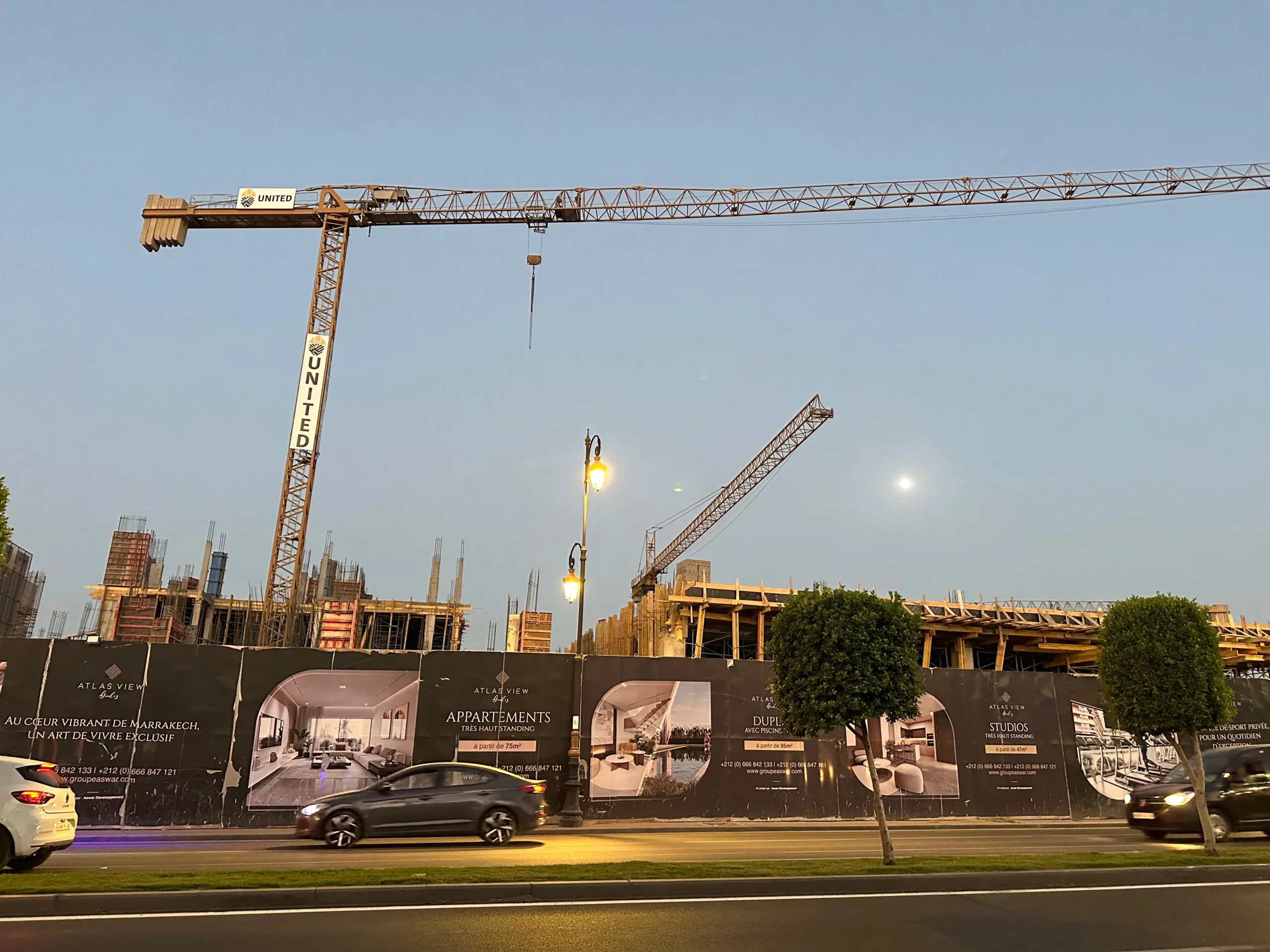
Property due diligence in Morocco means checking who owns the property, whether the seller can legally sell it, what is registered against it, and whether the building, contract, costs and payment trail are in order.
For a foreign buyer, these checks belong before you pay a deposit or sign a compromis de vente, not after.
Some of them you can start yourself, simply by asking for documents and comparing them with what you see on the ground.
Others need a notary, a lawyer, a surveyor, an engineer, your bank, or the relevant public authority.
The goal is simple: know exactly what you are buying and who you are paying before any money moves.
Already considering a property?
Get 14 days of personal buyer support, three private calls, WhatsApp support and help reviewing up to three properties before you commit money.
What Does Property Due Diligence in Morocco Involve?

Foreigners can generally buy residential property in Moroccan towns and cities, although agricultural land is subject to specific restrictions.
Being allowed to buy, however, is only the starting point.
Due diligence is about proving that this particular property, this seller and this deal are what they appear to be.
I am Anis Chity, the founder of Buy Property Morocco, and I have personally bought four properties in Morocco while based in Marrakech.
My first purchase worked out, yet I relied heavily on trust, which is exactly why I now encourage buyers to follow a clear sequence of checks.
No single document can tell you that a sale is safe, so the work is split between several people.
| Check | Who can usually help |
|---|---|
| Seller identity and authority to sell | Notary, plus your own lawyer if heirs, companies or powers of attorney are involved |
| Registered owner and registered rights | A recent ANCFCC property certificate, reviewed by the notary |
| Boundaries and surface area | A qualified surveyor (ingénieur géomètre topographe) |
| Permits and planning status | The local commune, the Agence Urbaine, or an architect |
| Building condition | An architect or structural engineer |
| Tenants, occupants and building charges | Notary or lawyer, plus the syndic (building management) for apartments |
| Payment trail and currency documents | Your Moroccan bank and the notary |
When Should Each Check Happen?
Timing matters as much as the checks themselves, because your leverage drops once money has moved.
- Before you make an offerAsk for the title number or ownership documents, the seller’s identity, and basic facts about tenants, charges and permits.
- Before any deposit or compromisHave the notary check ownership and seller authority, complete essential property checks, and agree written conditions and refund terms.
- Between the compromis and the final deedFinish any outstanding survey, permit, condition, tenant and cost checks only if the agreement clearly protects you if they reveal a problem.
- Just before signing the final deedAsk the notary to check the register again and confirm how the price, taxes and any charges will be handled.
- After signingFollow the registration until a new certificate shows your name.
Step 1: Who Is Selling, and Can They Actually Sell?
Start by matching the seller’s identity documents with the name on the ownership documents.
If the property has several owners, every owner normally needs to agree to the sale.
Where the property was inherited, the notary should review the inheritance documents to establish who the heirs are and whether they all consent.
If a company is selling, ask for its registration documents and proof that the person signing has authority to act for it.
When someone signs under a power of attorney, the notary should confirm that it is valid, authentic, and specific enough to cover this sale.
From My Experience
In my first successful purchase, the owner lived in America, so his brother opened the property for me and we waited for the owner to return before completing with the notary.
A relative with the keys is not the same as a person with the legal right to sell.
Step 2: What Does the Registered Title Show?
Many urban properties in Morocco have a Titre Foncier, which is a title recorded in the land register kept by the ANCFCC, the national land registry agency.
For a titled property, the key document is the certificat de propriété, an official extract from that register.
ANCFCC describes it as showing the legal and material situation of the property at the time of the request.
It can be requested through the ANCFCC online certificate service using the title number.
Our guide to the ANCFCC property certificate explains how to read it.
What the certificate can show
- It shows who is registered as the owner when it is issued.
- It describes the property as recorded in the register.
- It lists registered entries such as mortgages, seizures or other recorded rights.
What it does not replace
- Planning checks, because it does not prove that every structure was built with the right permits.
- Physical checks, because it says nothing about damp, cracks or the real boundaries on site.
- Occupancy checks, because it will not tell you who lives in or rents the property.
- Tax and charge checks, because unpaid local taxes or syndic charges may not appear on it.
- Contract checks, because the terms of your deal are set in the agreement, not the register.
It also reflects the register only on its date, so the notary should check it again close to signing.
Never rely on a photo or photocopy of a title sent by an agent or seller.
For a detailed walkthrough, see how to verify a title deed before buying.
What Changes If the Property Has Melkia Documents or Is Being Registered?
Some properties, especially older houses, medina properties and rural plots, are held under Melkia rather than a registered title.
A Melkia is a traditional ownership deed, usually drawn up by adouls (traditional notaries), that relies on witness testimony and a chain of documents rather than an entry in the land register.
Verification is harder here, since there is no single register extract showing the current owner and every registered right.
A lawyer or experienced notary will usually need to examine the chain of documents, the heirs, the boundaries, and whether anyone else claims the land.
Our comparison of Melkia and Titre Foncier explains the practical differences.
A property can also be partway through registration, which normally means there is a registration file rather than a finished title.
During that process third parties may be able to object, so ask your notary or lawyer to check the file’s status at the local land registry office.
If either situation applies, read the guide to buying untitled property in Morocco first.
Step 3: Does the Physical Property Match the Paperwork?
Next, compare what is registered with what actually exists on the ground.
Boundaries and surface
The registered surface can differ from the real one, so a surveyor can check the boundaries and measurements against the title plan.
This matters most for villas, riads, land, and houses with extensions.
Permits and planning
Ask the seller for the building permit and the habitation permit or certificate of conformity where these apply.
Then check the planning status with the commune or Agence Urbaine, especially if you plan to renovate or extend.
Land outside urban areas may be agricultural, and foreign buyers usually face specific rules there, including the AVNA certificate procedure.
Hypothetical example
Imagine a house where the title and permit cover two floors, but a third floor was added without approval.
It may look finished and normal, yet that extra floor could create problems with regularisation, insurance, resale or future works.
That is why the permits should cover every structure you are paying for, not only the original building.
Building condition
Older buildings, riads and medina houses can hide problems with damp, structure, roofs, plumbing and wiring.
An architect or engineer can inspect the property and tell you what repairs may cost before you commit.
Apartments and shared buildings
For an apartment, ask the syndic for the monthly charges, any unpaid charges, and any major works already voted or planned.
Tenants and occupants
Find out whether anyone lives in or rents the property, and ask for any written lease.
A lease can affect when you can use the property, how much rent you receive, and whether you can change the terms.
From My Experience
My first Marrakech purchase included a shop already rented for about €400 per month.
The tenant’s lawyer explained that the existing lease would continue until the property was registered in my name.
The lesson is to read the lease and understand how rent transfers before you buy, and to ask a lawyer about the tenant’s rights under that specific contract.
Step 4: What Should the Contract and Deposit Terms Say?
Most resale purchases involve a preliminary agreement, often called a compromis de vente, before the final deed.
Our guide to the compromis de vente for foreign buyers covers it in depth.
Before signing, make sure the agreement clearly states:
- The exact property, including the title number or reference documents.
- The agreed price and how it will be paid.
- What is included, such as furniture, appliances, parking or storage.
- The conditions that must be met before completion.
- The deadline for signing the final deed.
- Who holds the deposit, and when it is refunded or kept.
Written inclusions matter, because one seller I dealt with began removing items such as the television from the deal, and it eventually collapsed.
For deposits, the safer approach is to pay through the notary or against clear written terms, rather than handing money informally to an agent or seller.
From My Experience
I once paid a guarantee deposit of around €1,000 while a seller was abroad, and thank God it worked out, but today I would not treat a deposit that casually.
Read more about how foreign buyers can protect a property deposit in Morocco before you transfer anything.
If you are buying off plan
Off plan sales, known as VEFA (vente en l’état futur d’achèvement), are governed by Law 44-00 as amended by Law 107-12.
That framework provides for formal contracts and a financial guarantee, but you should not assume every protection applies automatically to your purchase.
Ask the notary which contract you are actually signing, what guarantee is attached to it, and what happens to your money if the project is delayed.
A simple reservation form paid by cheque may not give you the same position as a properly drafted contract.
Also check the developer’s building permit, the land title for the project, and the promised delivery terms.
The guide to buying off plan property in Morocco goes further.
Already considering a property?
Get 14 days of personal buyer support, three private calls, WhatsApp support and help reviewing up to three properties before you commit money.
Step 5: What Will It Cost, and How Should You Pay?

The purchase price is never the full cost of buying.
When I bought, I paid several separate costs at the notary, including registration costs, land registry costs, and the notary’s own fee.
Rates depend on the property type, the price and your situation, so ask the notary for a written estimate before you sign anything.
| Cost item | What to confirm in writing |
|---|---|
| Registration duty | The rate for your property type, and whether the way you pay could add an extra duty |
| Land registry fees | The fees for registering the sale, plus any mortgage if you are borrowing |
| Notary fees and VAT | A written estimate from your notary |
| Agency fee | Who pays it, how much it is, and when it is due |
| Professional checks | Quotes from any surveyor, engineer or lawyer you instruct |
| Seller’s taxes and arrears | Which taxes and charges the notary will check or settle, and what confirmation you will receive before paying |
For typical figures, see our guide to notary fees for foreign buyers, then confirm them with your notary.
Official tax rules are published by the Direction Générale des Impôts, and a notary or tax adviser can explain how they apply to you.
Why the payment trail matters
A safer structure is usually to pay through the notary with a traceable payment, rather than paying the seller directly.
Before you pay, ask the notary which taxes, registered rights, building charges and other liabilities will be checked or settled before the seller receives the money.
Get that confirmation in writing, because the notary route is an important protection but not an automatic guarantee that nothing is outstanding.
The 2026 extra registration duty
Traceable payment also matters for tax, because the 2026 Finance Law added an extra 2% registration duty in Article 133-III of the General Tax Code.
It covers deeds drawn up from 1 July 2026 for paid transfers of property priced above 300,000 dirhams.
In broad terms, it can apply when the deed does not state how the price was paid, or when the price was not paid by an accepted traceable method.
Those methods include crossed non endorsable cheques, bills of exchange, bank cards, bank transfers, electronic payment and offsetting.
Where only part of the price is paid in cash, the extra duty is reported to apply only to that cash portion.
Ask your notary how the latest DGI guidance treats any cash deposited through a bank and which payment references must appear in the deed.
Do not assume that every cash deposit or advance is treated the same way.
Instead, ask your notary how your deposit and each payment will be recorded in the deed, and whether the extra duty could apply to your deal.
Our guide to property transfer taxes for foreigners explains the wider tax picture.
Money coming from abroad
If you are bringing money from abroad, transfer it through official banking channels and keep every document your Moroccan bank issues about the transfer.
Under Morocco’s exchange rules, the ability to transfer sale proceeds out later generally depends on the purchase having been funded in foreign currency through those channels, and on the right paperwork.
Those records can matter if you later want to repatriate money after selling property in Morocco.
Some buyers also use a convertible dirham account, so ask your bank which route suits your situation.
Confirm the current rules with your bank and the Office des Changes, because they can change and depend on your residency.
Step 6: What Should You Confirm After Signing the Final Deed?

Signing the final deed is not quite the end.
The sale then needs to be registered so that you appear as the owner in the land register.
Ask the notary how long registration should take for your property, and follow up if it goes quiet.
Once it is done, request a new certificat de propriété showing your name.
Keep the deed, payment proofs, bank transfer documents and tax receipts together, because you may need them when you sell.
If there is a tenant, confirm in writing the date from which rent should be paid to you.
How Should You Deal With Agents, Notaries and Lawyers?

An agent can help you find a property, but you should not assume that they are licensed, insured, or acting in your interest.
Before relying on a real estate agent, check who they are, who pays them, and whether they really have the owner’s instructions.
The notary drafts the authentic deed and handles registration, but acts impartially rather than as your personal adviser.
You can learn more about buying property in Morocco through a notary.
Instructing your own lawyer is not always required, yet it is often worth it when heirs, Melkia, tenants, companies or disputes are involved.
Red flags to take seriously
- Someone asks you to send money before you have seen verified ownership documents.
- You are told another buyer will take the property unless you decide today.
- The person selling is not the registered owner and cannot show valid authority.
- Payment is requested in cash or to a personal account unrelated to the notary.
Our guide on how to avoid property scams in Morocco covers these patterns in more depth.
Your Property Due Diligence Checklist
Use this list before you pay a deposit or sign a purchase agreement.
| Check | Evidence to ask for |
|---|---|
| Seller identity | ID documents matching the ownership documents |
| Authority to sell | Consent of all owners or heirs, company authority, or a valid power of attorney |
| Registered ownership and rights | A recent certificat de propriété reviewed by the notary |
| Melkia or registration in progress | Chain of documents and registration file status checked by a professional |
| Boundaries and surface | Surveyor’s check against the title plan |
| Permits and planning | Building permit, habitation permit or conformity certificate, and planning status |
| Condition | Inspection by an architect or engineer where needed |
| Syndic and charges | Statement of charges and any planned works |
| Tenants or occupants | Written lease, rent amount and transfer arrangements |
| Contract terms | Written price, inclusions, conditions, deadline and refund terms |
| Deposit | Payment through the notary or with clear written proof |
| Costs | Written estimate of taxes, fees and agency fee |
| Payment trail | Traceable payments recorded in the deed, and bank transfer documents |
| After completion | New certificat de propriété in your name |
Frequently Asked Questions About Property Due Diligence in Morocco
What is property due diligence in Morocco?
It is the process of checking the seller, the ownership, the registered rights, the physical property, the contract, the costs and the payment trail before you commit.
For foreign buyers, the key checks should be done before paying a deposit or signing a purchase agreement.
Does a certificat de propriété prove the property is safe to buy?
No, it shows the registered position of the property when it is issued.
You still need to check permits, condition, occupancy, charges and the contract before you commit.
Can foreigners buy property in Morocco?
Foreigners can generally buy residential property in urban areas, while agricultural land has specific restrictions.
Anyone considering land outside urban areas should check the rules for agricultural land before making any commitment.
Is a notary enough, or do I also need a lawyer?
The notary handles the authentic deed and registration but acts impartially.
Many buyers also instruct their own lawyer when the seller’s authority, heirs, Melkia documents, tenants or disputes make the deal more complex.
Should I pay a deposit before the checks are done?
It is safer to wait until ownership and the seller’s authority have been checked.
When you do pay, use a traceable method through the notary or against clear written terms covering refunds and deadlines.
Can paying part of the price in cash cost me more?
For deeds from 1 July 2026, an extra 2% registration duty can apply to properties above 300,000 dirhams when payment is not recorded or not traceable.
How it applies depends on how each payment was made and recorded, so ask your notary before paying anything in cash.
How long does due diligence take in Morocco?
It depends on the property, the documents available and how quickly each professional can respond.
A titled apartment with complete paperwork is usually quicker to check than a Melkia property or an inherited house.
Is it safe to buy property in Morocco as a foreigner?
Many foreigners buy successfully, but safety depends on the checks you complete and who you pay.
Verifying ownership, the seller’s authority and the payment route before money moves reduces the most common risks.
Already considering a property?
Get 14 days of personal buyer support, three private calls, WhatsApp support and help reviewing up to three properties before you commit money.

Anis is the founder of Buy Property Morocco, a research-based resource created to help foreign buyers understand the real process of buying property in Morocco safely.
He focuses on the practical details most buyers only discover too late: title deed checks, notary steps, compromis de vente risks, transfer taxes, foreign banking rules, repatriating money after a sale, and avoiding common mistakes when dealing with agents or sellers.
Anis has personally bought 4 properties in Morocco and shares practical guidance based on real experience, not theory.
If you are seriously considering buying property in Morocco and want private guidance before you send money, pay a deposit, or sign anything, you can book a buyer safety call here:




awesome information thanks
this is exactly what I needed
You are welcome, brother.