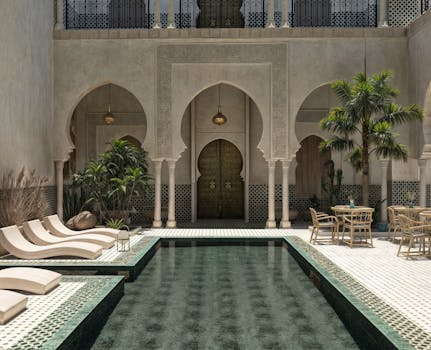
I almost wired €180,000 to the wrong person.
Not a scammer. A real seller. But the property had three co-owners, two of them living in France, and the one in Marrakech had been signing documents as if he owned the whole thing. My notary caught it at the last minute. That single detail could have cost me everything.
That is the kind of thing nobody tells you before you start searching for a riad for sale in Marrakech.
I bought my riad in the medina in 2019. Before closing, I had looked at over 40 properties across three trips. I lost one deal because I was too slow. I pulled out of another because the structural survey terrified me. And I made more small mistakes than I care to count.
This guide covers everything I wish I had read before I started. Whether you want to buy a riad in Marrakech as a foreigner for personal use, as a guesthouse, or as a rental investment, what follows is the honest version of how this process actually works.
At a Glance: Buying a Riad in Marrakech
| Can foreigners buy? | Yes, with full ownership rights. No nationality restrictions. |
| Safest title type | Titre Foncier. Melkia is legal but more complex for foreign buyers. |
| Biggest legal risk | Co-ownership issues. Multiple heirs must all sign. |
| Typical deposit | 10% of the purchase price. |
| Who holds the deposit? | The notary, in escrow. Never pay directly to an agent or seller. |
| Typical timeline | 2 to 4 months from accepted offer to completed sale. |
| Extra costs to budget | Buyer closing costs often run around 6% to 8% before agency fees. Agency fees, renovation costs, and legal checks can add more. |
| Renovation warning | Budget €500 to €1,200 per sqm. Always add a 20 to 30% contingency. |
| Best areas for quiet living | Mouassine, Bab Doukkala, Dar El Bacha. |
| Best riad type for rental | 5 or more bedrooms, good location, professional management. |
| Main mistake to avoid | Paying a deposit before the notary has verified the title. |
What You Need to Know Before You Even Start Looking
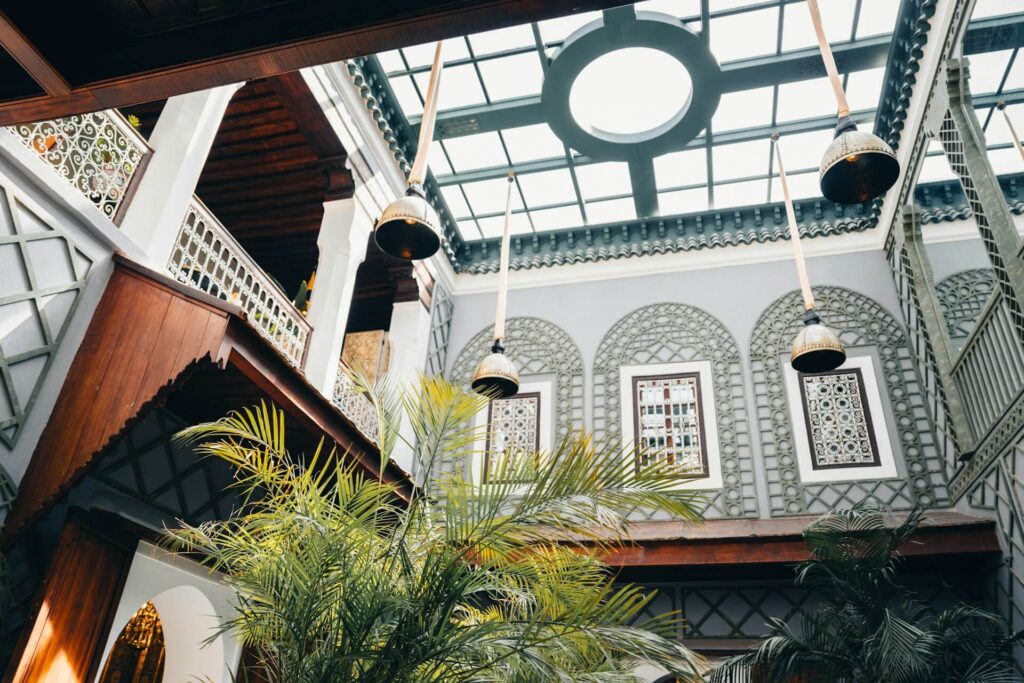
A Riad Is Not Just a Pretty Courtyard
People fall in love with the aesthetic and forget they are buying a building in a 1,000-year-old city.
The medina of Marrakech is a UNESCO World Heritage Site. That designation comes with strict rules about what you can and cannot change on the outside of a property. You can gut the interior completely and redesign it however you want. Touch the exterior facade, though, and you will have a serious problem with the local authorities.
Riads are also built differently from anything you have probably owned before. The structure turns inward. All the rooms face a central courtyard. There are usually no windows on the street-facing walls. This means that if the roof terrace leaks, every floor below it is at risk. Water damage in riads is not a small issue. It is the issue.
Can Foreigners Buy a Riad in Marrakech?
Yes, completely legally.
Morocco allows foreigners to purchase property with full ownership rights. There is no restriction on nationality. The process is largely the same whether you are French, British, American, or from anywhere else.
The safest route for most foreign buyers is a riad with a clean Titre Foncier, which is the official land registry title. Melkia riads can be more complicated to buy, harder to mortgage, and slower to resell. They are not impossible to purchase, but you need to go in with your eyes open and a good notary beside you.
Foreign buyers should always use a notary. The deposit should go into the notary escrow account, not to the agent or seller directly. And money should enter Morocco through official banking channels, which gives you the documentation you need to repatriate your proceeds if you ever sell.
The one rule that matters most: if you bring foreign currency into Morocco to buy the property, you must do so through the official banking system. You need a document called an attestation de transfert de fonds from your Moroccan bank. This proves the money came in legally. Without it, you cannot legally take your money back out of Morocco if you ever sell. Many buyers skip this step because it feels bureaucratic. Years later, they cannot repatriate their sale proceeds. Do not skip this step.
Rules for Buying a Riad in Marrakech
The basic rules for buying a riad in Marrakech are simple on paper, but they need to be followed in the right order. A foreign buyer can buy a riad, own it in their own name, rent it out if the legal requirements are respected, and sell it later. The danger is not the right to buy. The danger is buying the wrong title, paying the wrong person, or trusting a seller before the notary has checked the file.
If I was buying again today, these are the rules I would follow without exception:
- Confirm the title type before getting emotionally attached to the riad
- Ask whether the property is Titre Foncier or Melkia
- Ask who the legal owners are, not only who is showing the property
- Make sure every heir and every owner is identified before any deposit is paid
- Use your own notary, not only the seller’s notary
- Pay the deposit only into the notary escrow account
- Transfer foreign funds through the official banking system
- Get the fund transfer certificate from your Moroccan bank
- Get a structural survey before signing if renovation is involved
- Check whether the riad can legally operate as a guesthouse if rental income is part of the plan
The rule I trust most is the boring one: no clean title check, no deposit. Marrakech has beautiful riads, but beauty does not protect your money. Paperwork does.
How Much Does a Riad in Marrakech Cost in 2026?
Prices vary heavily by location, size, title status, access, renovation quality, and whether the riad has guesthouse potential. The ranges below are a rough guide based on what I have seen in the market and what buyers I know have paid since 2019. Individual properties can sit well above or below these figures.
| Riad type | Typical buyer | Rough price range | Main risk |
|---|---|---|---|
| Small, unrenovated, difficult access | DIY renovator, long-term project buyer | €80,000 to €160,000 | Renovation budget can easily double the total cost |
| Small, renovated, 2 to 3 bedrooms | Personal residence, occasional rental | €150,000 to €280,000 | Too small for strong rental yield, location may be secondary |
| Mid size, partially renovated, 3 to 4 bedrooms | Lifestyle buyer with some rental ambition | €200,000 to €400,000 | Update costs and Melkia title complications |
| Large guesthouse-style, 5 to 7 bedrooms | Maison d’hôtes operator, serious investor | €400,000 to €750,000 | Licensing, management complexity, high operating costs |
| Luxury boutique riad, prime location | High-end investor, premium rental or residence | €750,000 to €2,000,000+ | Premium price leaves less margin; management expectations are high |
| Riad with serious structural problems | Experienced renovator only | Listed cheap; total cost unpredictable | Structural costs can exceed the purchase price by a wide margin |
For context: my own riad was mid-range. I paid €265,000 for a property needing partial renovation. The renovation cost me €85,000. Total in, including all fees, was approximately €390,000.
How Much Does It Cost to Purchase a Riad in Marrakech?
When people ask how much it costs to purchase a riad in Marrakech, they are usually thinking only about the asking price. That is not how I would calculate it. I would calculate the purchase price, closing costs, agency commission if there is one, renovation budget, furniture, licensing work if needed, and a safety reserve.
A riad advertised at €250,000 can easily become a €350,000 to €450,000 project once you add legal fees, taxes, repairs, furnishings, roof work, plumbing, electricity, and the small surprises that every old medina building seems to keep hidden.
| Cost item | What to expect | My advice |
|---|---|---|
| Purchase price | Depends on size, area, title, condition, and access | Never judge price without seeing the title and the structure |
| Closing costs | Often around 6% to 8% before agency fees | Ask the notary for a written breakdown before you sign |
| Agency commission | Can be meaningful and should be clarified early | Get in writing who pays it and how much it is |
| Renovation and furnishing | Can exceed the buyer’s first estimate by a lot | Add a serious reserve before you commit |
| Operating setup | Needed if you want rental income or a guesthouse | Budget for staff, photos, systems, permits, linen, and management |
The mistake is asking, “What is the cheapest riad I can buy?” The better question is, “What is the full cost of owning this riad safely after the notary, renovation, furniture, taxes, and setup?” That second question keeps you out of trouble.
Best Areas to Buy a Riad in Marrakech
Not all parts of the medina are equal. This took me three visits to understand properly. The medina is divided into neighborhoods called derbs. Some are calm, residential, and full of local families. Others are noisy, touristy, and impossible to sleep in during peak season.
| Area | Best for | Buyer profile | Main risk |
|---|---|---|---|
| Mouassine | Quiet residential life with good access | Personal use, lifestyle buyer | Prices have risen sharply; fewer bargains now |
| Dar El Bacha | Authentic character, calmer streets | Residence or boutique rental | Narrow access for renovation deliveries |
| Riad Laarous | Upscale residential, quiet | High-end buyer, premium rental | Premium pricing, limited stock |
| Bab Doukkala | Best balance of authenticity and quiet | Personal use, occasional rental | Slightly further walk to key monuments |
| Kasbah | Access to southern medina, local feel | Value-seeking buyer | Some areas are noisy; proximity to tanneries |
| Riad Zitoun | Central, close to Bahia Palace | Short-term rental, guesthouse | Can be noisy; heavy tourist foot traffic |
| Bahia Palace area / Derb Dabachi | Strong short-term rental demand | Airbnb investor, guesthouse operator | Busier streets; weekend noise |
| Mellah | Best value in the medina right now | Budget-conscious or early-stage buyer | Some streets have drainage and smell issues |
| Zaouia El Abassia | Local residential, less touristy | Long-term resident, not primarily a rental play | Weaker rental demand than central areas |
| Outer medina / hard-to-access derbs | Cheapest entry price | Experienced buyer only | Access problems hurt renovation, resale, and rental demand significantly |
| Jemaa el-Fna surroundings | Photos only | Not recommended for personal use | Sounds like a construction site combined with a festival 8 months a year |
For a personal residence, look at the northern medina around Bab Doukkala or the area near the Mouassine mosque. Quieter, more authentic, still walkable to everything.
For a guesthouse or rental, proximity to restaurants and key monuments matters more. Areas within ten minutes walk of the Bahia Palace tend to perform well for short-term rentals. You can read more about the best neighborhoods in Marrakech for Airbnb investment if this is your main driver.
Before making any offer, walk the neighborhood at night. Walk it on a Friday. Walk it during the call to prayer. What feels charming at 10am on a Tuesday can feel very different at midnight on a Saturday.
How to Know What a Riad or Building in Marrakech Is Worth
Valuing a riad in Marrakech is not like valuing a normal apartment. Two riads can be the same size on paper and be worth completely different amounts because one has clean access, a dry roof, a clear Titre Foncier, and a calm derb, while the other has heirs abroad, poor drainage, weak water pressure, and a roof that needs major work.
If someone asks how much a building, riad, or property in a specific Marrakech area is worth, I would not answer from the neighborhood name alone. I would first look at the exact street, access, title, surface area, room count, roof condition, renovation quality, rental permission, and whether cars can get close enough for works and luggage.
These are the things I check before trusting any valuation:
- Is it Titre Foncier or Melkia?
- How many legal owners are there?
- Is the riad renovated, partially renovated, or hiding old problems under fresh paint?
- Can materials reach the door without a logistical headache?
- Is the roof terrace dry after rain?
- Is the area quiet enough for living or only good for tourism?
- Is there real rental demand nearby or only nice photos?
- Are similar riads actually selling at that price or only being advertised at that price?
Online listings show asking prices. They do not show the real deal price, the seller’s motivation, or the cost waiting behind the walls. In Marrakech, the value of a riad is not just the building. It is the title, the access, the silence, the roof, the neighborhood, and the amount of trouble you are buying with it.
How to Judge a Riad Area if You Do Not Know the Name
Sometimes buyers hear an area name from an agent and have no idea whether it is good, average, or risky. I do not judge an area from the name alone. I walk it. I check it in the morning, at night, on Friday, and during busy visitor hours. Then I ask local people who are not involved in the sale.
If the derb is dark, smells bad, has standing water, feels unsafe at night, or is too difficult for luggage and renovation materials, I do not care how charming the riad looks inside. The area will affect your daily life, your rental reviews, and your resale value.
Step by Step: How to Buy a Riad in Marrakech
Step 1: Choose Your Area First
Before you look at a single property, decide what the riad needs to do for you. Personal home. Occasional rental. Full guesthouse business. Each goal points to a different area and a different price band. Get that clear before you start viewing.
Step 2: Set a Realistic Budget
The price of a riad in Marrakech varies enormously. A small riad needing renovation in a less central location might cost you €120,000 to €200,000. A mid-size riad with four bedrooms and a good location typically runs €250,000 to €500,000. Larger, fully renovated riads with five or more bedrooms in prime spots regularly sell for €600,000 to over €1 million.
Those numbers tell only half the story. If you are buying a riad that needs renovation, budget separately for the works. Renovation costs in Marrakech run roughly €500 to €1,200 per square meter depending on the quality of finishes you want. A riad of 200 square meters needing full renovation could easily cost you €150,000 to €200,000 on top of the purchase price.
Also budget for:
- Buyer closing costs when buying property in Morocco: often around 6% to 8% before agency fees, including registration duties, land registry costs, notary fees, and related expenses
- Agency commission: typically 2.5 to 5%, often paid by the seller but sometimes split
- Registration taxes: around 4% of the declared value
- Bank transfer fees if you are sending money from abroad
I budgeted €30,000 for extras on top of my purchase. The real number ended up being €47,000. Plan for more than you think.
Step 3: Shortlist Properties and Check Access in Person
Do not shortlist a riad you have not walked to from multiple directions. Some medina properties look perfect online and turn out to be at the end of a passage so narrow that a loaded donkey cart cannot pass. That matters a great deal if you need renovation materials delivered, or if guests are arriving with suitcases.
Walk the neighborhood at different times of day and on different days. Noise, smell, and foot traffic vary significantly.
Step 4: Confirm the Title Type Before You Fall in Love
Ask upfront whether the property has a Titre Foncier or a Melkia. This shapes everything that follows. If the agent cannot answer this clearly, that is itself a warning sign.
Step 5: Ask Who Owns the Property
Get a full list of legal owners confirmed by a notary before you proceed. The co-ownership issue I mentioned at the start of this article is extremely common with older properties. Moroccan inheritance law often results in a single property being owned jointly by multiple family members, sometimes spread across several countries. Every single co-owner must sign the sale documents.
Step 6: Appoint Your Own Notary
You can use the seller’s notary, but I recommend appointing your own separately. The cost is similar and you will have someone on your side checking every document. You can read more about buying property in Morocco through a notary to understand what is involved.
Step 7: Get a Recent Certificat de Propriété
The notary should obtain a current Certificat de Propriété from the ANCFCC (the national land registry authority) before any deposit changes hands. This document confirms the current legal owner, any mortgages, liens, or charges on the property, and whether the title is clean.
Step 8: Get a Structural Survey
This is the step most buyers skip. Do not skip it. Hire an independent structural engineer before you sign anything. This costs around €500 to €1,500 depending on the size of the property. It is the best money you will spend.
Step 9: Make Your Offer Carefully
Negotiation is completely normal. Offering 10 to 20% below asking price is not rude. Walking away and coming back is a legitimate tactic. Sellers often say no three times before they say yes. That said, do not be aggressive or dismissive. The medina is a small world. Word travels.
Step 10: Pay Your Deposit Only to Notary Escrow
Once an offer is accepted, you sign a preliminary contract called a compromis de vente. You pay a deposit, typically 10% of the purchase price, into the notary’s escrow account. Do not pay anything directly to the seller before the notary escrow is set up. Ever. You can read more about paying a property deposit in Morocco as a foreigner to understand the process and your protections.
Step 11: Complete Title Checks
The notary conducts all the legal checks. This typically takes four to twelve weeks. Do not pressure the notary to rush. This is the step that protects you.
Step 12: Transfer Funds Officially
Transfer all funds through the official banking system and get your attestation de transfert de fonds. The rules governing how foreign investment funds enter Morocco are overseen by the Office des Changes. This document is essential for repatriating money after selling property in Morocco if you ever sell. It cannot be obtained retroactively.
Step 13: Sign the Acte de Vente
You sign the final deed of sale and pay the balance. Being present for this in Marrakech is strongly recommended if you possibly can, even if you have granted power of attorney.
Step 14: Register the Transfer
The notary registers the transfer with the ANCFCC. Keep all documents, including the original acte de vente, the Certificat de Propriété, and all fund transfer records, somewhere safe. You will need them all for future resale and repatriation.
Titre Foncier vs Melkia: The Legal Issue That Can Make or Break the Deal
This is where buying a riad in Marrakech gets complicated and where most mistakes happen.
The Titre Foncier is the official land registry title issued by the ANCFCC. For most foreign buyers, a riad with a clean Titre Foncier is the safest option. The ownership is clearly registered. The boundaries are defined. Checks are straightforward. Resale is simpler.
The Melkia is a traditional Islamic ownership document. It is legal and legitimate under Moroccan law. But it can involve shared traditional ownership, unclear boundaries, multiple family heirs who may not all be reachable, and a future titling process that can take one to three years. A cheap Melkia riad can become expensive quickly if the title is unclear or the conversion process runs into disputes.
You can learn more about the practical differences in our full guide on Melkia vs Titre Foncier for foreign buyers.
The process of converting a Melkia to a Titre Foncier is called immatriculation. It involves publishing public notices for anyone who might contest the ownership, which takes time and can surface unexpected claims. Doable, but factor it into your timeline and budget before you make an offer.
For most foreign buyers, title clarity matters more than finding the cheapest riad. A €95,000 Melkia riad that takes three years to resolve is rarely the bargain it looks like on paper.
Always verify the title type before making an offer. You can find out more about how to verify the title deed before buying property in Morocco.
What the Notary Must Check Before You Pay a Deposit
For a safe titled riad purchase, the notary is the professional used to authenticate the deed, hold funds in escrow, verify the ownership documents, and register the transfer with the land registry.
Before a single dirham of your deposit moves, your notary should have confirmed all of the following:
- The Titre Foncier number or Melkia document
- A recent Certificat de Propriété from the ANCFCC
- The identity of the seller
- That the seller has full legal ownership and authority to sell
- All heirs and co-owners, and whether all are willing and available to sign
- Any existing mortgages on the property
- Any liens, seizures, or charges registered against the title
- Outstanding tax issues
- Any power of attorney being used by the seller
- Whether the property can be transferred cleanly and promptly
- That your deposit will be held in the notary escrow account, not passed to anyone else
The deposit should not go to the agent. The deposit should not go directly to the seller. Do not pay in cash. Do not sign anything you do not understand. If the other side is pushing you to move faster than the notary can verify, take that as a serious warning sign.
Can You Buy a Riad in Morocco if One Heir Refuses to Sign?
If one out of seven heirs refuses to sign, you should assume the sale cannot safely move forward until that problem is solved. In Morocco, a riad owned by several heirs is not sold properly just because six people agree and one person is difficult. Every legal owner with a share must be dealt with correctly.
This is one of the most important rules on buying a riad in Marrakech. One missing signature can destroy a deal. One angry heir can create a court problem. One family member living in France, Spain, Belgium, or Canada can delay the transaction for months if their power of attorney is not prepared correctly.
I would never pay a deposit on a riad where one heir refuses to sell unless my notary had explained the exact legal route in writing. Not verbally. Not through the agent. In writing.
Here is the practical reality:
- If all heirs agree, the sale can usually move forward once identities and powers are verified
- If one heir is abroad but agrees, they may need a valid power of attorney
- If one heir refuses, the seller cannot simply ignore that person
- If one heir is missing or unreachable, the process can become slow and legal
- If the agent says, “Do not worry, the family will fix it later,” I would walk away until the notary confirms it
My rule is simple. A riad with seven heirs needs seven clean answers. If even one answer is missing, the deal is not ready.
Already considering a property?
See the 14 Day Buyer Plan: $299 →
Get 14 days of personal buyer support, three private calls and WhatsApp support.
Get help reviewing up to three properties before you commit money.
Buying and Restoring a Riad in Marrakech
Buying and restoring a riad in Marrakech can be beautiful, but it is not a casual project. The first time I looked at old riads, I underestimated how much the roof, damp, plumbing, electricity, and access could change the real cost. The courtyard gets your attention. The structure decides your budget.
A restoration project only makes sense if the purchase price leaves enough room for the work. A cheap riad with a bad roof, old wiring, poor water pressure, unclear title, and difficult access is not cheap. It is a project waiting to test your patience and your bank account.
Before buying a riad to restore, I would check these things in this order:
- Title and owners first
- Roof and water damage second
- Structure and cracks third
- Access for materials fourth
- Real contractor quotes fifth
- Permits and heritage limits sixth
- Furniture, design, and decoration last
Most foreign buyers do the opposite. They start with zellige, lighting, and Instagram photos. That is how budgets explode. Start with the boring checks. Then make it beautiful.
How Much Does It Cost to Renovate a Riad in Marrakech?
Renovation costs are the number where most buyers get into trouble. The purchase price is visible. The renovation cost is not, until you are already in it.
| Scope of work | Rough cost range | Notes |
|---|---|---|
| Cosmetic refresh (paint, minor repairs, furnishing update) | €10,000 to €40,000 | Assumes structure and systems are sound |
| Plumbing and electrical update | €15,000 to €50,000 | Old medina wiring is often dangerously outdated |
| Roof terrace waterproofing | €5,000 to €20,000 | Non-negotiable if terrace is in poor condition |
| Bathroom and kitchen renovation | €8,000 to €25,000 per room | Varies a lot by finish quality |
| Full structural renovation | €500 to €1,200 per sqm | 200 sqm riad can cost €100,000 to €240,000 |
| Traditional zellige, tadelakt, cedar, and artisan work | €20,000 to €80,000+ | Skilled artisans take time; quality varies widely |
| Architect or engineer fees | 5 to 10% of total build cost | Worth every dirham; do not skip this |
| Permit delays and carrying costs | Unpredictable; allow 6 to 18 months | UNESCO heritage rules add complexity |
| Contingency | 20 to 30% on top of all estimates | Always. Without exception. |
A beautiful courtyard can hide an expensive roof, rising damp, crumbling pisé behind fresh tadelakt, or plumbing that would frighten a plumber. A structural survey before signing saves you from the worst of this.
Renovation red flags to check before you make an offer:
- Fresh paint that might be hiding damp
- Cracks or soft patches on the roof terrace
- Weak water pressure on upper floors
- Poor drainage in the courtyard or ground floor
- Rooftop additions that look informal or recently built without permits
- No access for materials without dismantling part of the structure
- No written contractor quote, only verbal estimates from the agent
- No engineer or architect involvement in any previous renovation
- Seller refuses to allow an inspection before you sign
Can You Rent Out a Riad on Airbnb or Run a Maison d’Hôtes?
The short answer is yes, but the requirements depend on what you actually want to do with the property.
There are meaningful differences between personal use with occasional rental, informal Airbnb-style letting, and running a registered maison d’hôtes business. These are not the same thing legally or operationally.
For occasional personal rental, some small riad owners operate informally, but that does not mean it is risk free or compliant. If rental income is part of your plan, verify the current requirements before you buy.
If you want to run a proper maison d’hôtes with more than five rooms, you will need to register with the regional tourism office. This involves fire safety checks, a health and hygiene inspection, and formal tourism classification. The process is manageable but takes time and needs professional guidance.
A few things buyers often overlook:
- A tourism classification license is linked to the operator, not always to the property. A riad advertised as a licensed guesthouse may not transfer that status to you as the new owner. Verify this with the notary before you buy.
- Guest registration is a legal requirement in Morocco. All guests must be registered with local authorities, regardless of how informal the rental arrangement is.
- A tourist tax applies to paid accommodation. Understand how this works before you price your rentals.
- A 3-bedroom riad used occasionally is a very different operation from a 6-bedroom riad running as a business. The compliance requirements scale significantly.
Do not take the seller’s word for the license status of any property. Ask the notary to confirm exactly what permits and classifications exist, what they cover, and whether they transfer to the buyer. If you are buying primarily for rental income, verify the legal requirements with the notary, a local lawyer, and the relevant tourism authority before completing the purchase.
How to Run or Self Manage a Riad in Marrakech
Running a riad in Marrakech is not passive income. Even a small riad needs cleaning, guest messages, check ins, repairs, linen, breakfast planning, maintenance, accounting, and someone who can solve problems fast. If a guest has no hot water at midnight, they do not care that you live in London or Paris.
You can self manage a riad if you live in Marrakech, speak enough French or Darija to deal with staff and suppliers, and have time to be involved. If you live abroad, self management is possible only if you have a trusted local person who acts like an owner when you are not there.
For a riad used as a rental, I would plan for:
- A reliable housekeeper
- A local person for guest arrivals
- A handyman who answers the phone
- A plumber and electrician you trust
- Clear guest registration process
- Proper tax and rental compliance advice
- Professional photos and clear house rules
- Regular roof and damp checks
The biggest mistake is thinking a manager solves everything. A good manager helps. A bad manager can quietly destroy your reviews, your income, and your property. If rental income matters, interview the manager as seriously as you would interview a business partner.
Can You Self Manage a Riad From Abroad?
You can, but I would be careful. Self managing from abroad usually means you are still dependent on people on the ground. If you do not have a reliable cleaner, key holder, repair person, and local emergency contact, you are not really managing the riad. You are hoping nothing goes wrong.
For most foreign owners, the best setup is not full self management and not blind delegation. It is supervised management. You have a local operator handling daily work, but you still review bookings, expenses, repairs, guest feedback, and monthly numbers yourself.
Is Buying a Riad in Marrakech a Good Investment?
Honest answer: it depends entirely on what you want from it.
| Model | Best for | Potential upside | Hidden costs | Risk level |
|---|---|---|---|---|
| Personal use only | Lifestyle, cultural connection | Capital appreciation, personal enjoyment | Maintenance, management from abroad | Low to medium |
| Occasional Airbnb | Offsetting costs, part-time income | Covers carrying costs in good years | Platform fees, cleaning, compliance risk | Medium |
| Full short-term rental | Investor with local management partner | Strong gross yields in good seasons | Management 20 to 25%, repairs, vacancy, taxes | Medium to high |
| Maison d’hôtes business | Operator who will be present or has trusted local partner | Highest revenue potential | Staff, insurance, licensing, compliance, guest registration | High; requires real operational commitment |
| Renovation flip | Experienced renovator only | Margin possible on the right deal | Renovation overruns, time, title issues, selling costs | High |
As a lifestyle investment, a riad can be extraordinary value. There is nowhere quite like waking up in your own courtyard with mint tea and morning light filtering through the zellige tiles.
As a pure financial investment, the returns are more complicated. Gross yield is not the same as net profit. Operating costs are real. Managing a property from abroad without a trustworthy local partner is genuinely difficult.
Riads that perform well financially tend to have five or more bedrooms, a strong online presence, professional management, and a clear identity. A beautifully decorated but anonymously managed three-bedroom riad will struggle to cover its costs consistently.
If you are buying primarily for rental income, model your numbers conservatively. Assume 60% occupancy for the first two years. Assume a management fee of 20 to 25% of revenue. Assume repair costs and seasonal variation. See if it still makes sense with those numbers.
Owning a Riad in Marrakech After Purchase
Owning a riad in Marrakech is different from owning a modern apartment in Gueliz. A riad needs more attention. The roof matters. Water matters. Staff matters. The street matters. The neighbors matter. The derb matters. You are not only buying private walls. You are buying into a living medina.
After purchase, the first year should be about learning the building. Watch how it behaves after rain. Check where damp appears. Learn which tradespeople are honest. Understand the noise patterns. See how the neighborhood feels in Ramadan, summer, winter, and peak tourism season.
These are the things I would track as an owner:
- Roof waterproofing and drainage
- Water pressure and hot water systems
- Electrical safety
- Bathroom humidity
- Court yard drainage
- Neighbor issues
- Cleaning quality
- Guest reviews if rented
- Annual maintenance budget
- All notary, title, tax, and bank documents
A riad rewards attention. If you ignore small problems, they become expensive. If you maintain it properly, it can be one of the most special properties you will ever own.
The Biggest Mistakes Buyers Make When Buying a Riad in Marrakech

Falling in Love on the First Trip
The medina is intoxicating. The light, the smell of spices, the sound of the fountains. It messes with your judgment.
I watched a couple on my first buying trip offer the full asking price on the second riad they visited. They had been in Marrakech for 36 hours. Two years later I learned they had spent an additional €90,000 fixing problems a survey would have caught.
Give yourself at least two separate trips before making a serious offer. The second trip, when the novelty has worn off a little, you see things much more clearly.
Underestimating Renovation Costs
Cheap riads for sale in Marrakech are cheap for a reason. Usually that reason is structural damage, an impossibly difficult location for deliveries, or a legal title that is a mess.
A riad listed at €95,000 sounds like an amazing deal until you realize the renovation will cost €220,000 and take three years. Before you get excited about any property needing work, speak to at least two local contractors about realistic costs. Not estimates from agents who want to make the deal work. Actual builders who will give you real numbers.
Not Having a Local Bank Account Before You Start
You need a Moroccan bank account to receive the fund transfer document I mentioned earlier. Opening one as a non-resident is possible but takes time. Start this process before you need it. Attijariwafa Bank and CIH Bank both have experience handling non-resident foreign buyer accounts. Bring your passport, proof of address from your home country, and be prepared for some paperwork.
Ignoring the Rental License Question
If you plan to rent your riad out, even occasionally on Airbnb, some form of registration or license is required by the local authorities. Some small riad owners operate informally, but that does not mean it is risk free or compliant. If rental income is part of your plan, verify the current requirements before you buy. If you are buying specifically to run as a guesthouse with more than five rooms, you will need to register as a maison d’hôtes. Factor this into your planning early. The rules do get enforced, and compliance requirements are increasing.
Questions to Ask Before You Make an Offer on a Riad
Screenshot this. Use it before you speak to any agent, sign anything, or transfer any money.
- Is this property Titre Foncier or Melkia?
- Who exactly are the legal owners?
- Are all heirs or co-owners identified and willing to sign?
- Can I see a recent Certificat de Propriété from the ANCFCC?
- Are there any mortgages, liens, seizures, or charges on the title?
- Can the notary verify the title before I pay any deposit?
- Will my deposit go directly into notary escrow?
- Can an independent engineer inspect the property before I sign the compromis?
- Is the roof waterproofed? When was it last done?
- Are there signs of damp or drainage problems?
- Can I see recent water and electricity bills?
- Is furniture included? If so, is there a written inventory?
- Has any renovation work been done without permits?
- Is the riad currently licensed as a maison d’hôtes?
- Does that license transfer to the buyer, or is it linked to the current operator?
- How should I transfer purchase funds from abroad to comply with Office des Changes rules?
Red Flags When Buying a Riad in the Marrakech Medina
These are the things that should slow you down or stop you entirely. For a fuller picture of common Marrakech property scams and pitfalls for foreigners, it is worth reading before you start viewing.
- Seller is pushing for a cash payment or wants to skip the notary
- Agent is asking for the deposit to be paid to them directly
- No recent title document is available or the agent becomes vague when you ask
- Multiple heirs are mentioned but not all are present or contactable
- Seller says the title situation is being sorted and you can proceed now anyway
- Cheap Melkia riad with vague promises that conversion will be straightforward
- Fresh paint that looks recent and is covering walls that feel soft or damp
- Bad access; you cannot get building materials to the property without serious difficulty
- Noisy street at night or during weekends when you visit at other times
- Sewage smell or standing water in the derb
- Rooftop additions that look informal and may not have planning permission
- Seller refuses to allow a structural engineer inspection before signing
- Furniture or fixtures in photos are not listed anywhere in writing
- Riad is advertised as a running guesthouse but the license status is vague or unverifiable
Insider Tips Most Articles Miss
The Best Riads Are Never Listed Online
Seriously. The best properties in the medina change hands quietly. Owners do not want their neighbors knowing the price. Strangers walking through is something they want to avoid.
The way to access these deals is through a trusted local fixer or a well-connected notary. Spend time in Marrakech. Drink coffee at the right places. Tell people you are looking. Deals come through relationships here more than through any website.
Negotiate Everything, But Respect the Culture
Negotiation is completely normal and expected. Offering 10 to 20% below asking price is not rude. Walking away and coming back is a legitimate tactic. Sellers often say no three times before they say yes.
That said, do not be aggressive or dismissive. The medina is a small world. Word travels. If you are known as a difficult or disrespectful buyer, doors close.
January and February Are the Best Months to Buy
Most foreign buyers visit Marrakech in spring or autumn. The best time to buy, in my experience, is January and February. Prices soften slightly. Sellers who have been waiting since autumn are more motivated. Negotiating leverage shifts in your favor.
The As-Seen Problem With Furniture
Many riads are sold with furniture included. This sounds great until you realize the furniture includes twenty-year-old mattresses, broken lanterns, and a kitchen that has not been updated since 2003.
If furniture is included in the price, have a clear written inventory of exactly what stays. Sellers sometimes remove valuable items between signing and handover. Get it in writing.
Check the Water Pressure Before You Sign
This is so basic that almost nobody does it. Water pressure in parts of the old medina is notoriously poor. Turn on every tap. Flush every toilet. Run the shower on the highest floor at the same time as a tap on the ground floor. You want to know this before you buy, not after.
Medina Riad vs. Palmeraie Villa: Which Makes More Sense?
Some buyers ask me whether they should consider a villa in the Palmeraie or a property in Gueliz instead of a medina riad. Here is the honest comparison.
A medina riad gives you authenticity, character, and strong short-term rental demand from travelers who want the real Marrakech experience. The trade-off is access difficulty, older infrastructure, and more complex legal titles.
A Palmeraie villa gives you more space, modern infrastructure, easier car access, and a pool that does not require creative engineering to install. The trade-off is that it feels less special. Most high-end travelers who want to rent in Marrakech want a riad, not a villa in a gated compound.
For personal use split with occasional rental, the Palmeraie can make sense. For a serious guesthouse business, the medina wins almost every time.
How to Sell a Riad in Morocco
Selling a riad in Morocco is much easier when your paperwork was clean from the day you bought. The buyers who struggle to sell are usually the ones who bought without full documents, skipped fund transfer records, ignored heirs, or never fixed old title problems.
If you want to sell your riad in Morocco, prepare the file before you speak to buyers. A serious buyer will want to see the title type, ownership proof, renovation history, permits if relevant, tax position, furniture inventory, and whether the property has any rental or guesthouse status.
Before listing, I would prepare:
- Acte de vente
- Titre Foncier or full Melkia file
- Recent Certificat de Propriété if titled
- Proof of paid taxes where relevant
- Utility bills
- Renovation invoices if available
- Furniture inventory if furniture is included
- Rental income records if the riad is being sold as an investment
- Office des Changes and bank transfer documents from your original purchase
The last point matters a lot for foreign owners. If you brought money into Morocco through the official banking system, keep that proof. When you sell and want to repatriate money, those records are not a small detail. They are the paper trail that protects your exit.
My advice is to sell the riad as a clean file, not just a beautiful house. Buyers pay more confidently when the documents are organized and the title story is simple.
Frequently Asked Questions
Can foreigners buy a riad in Marrakech?
Yes. Morocco allows foreigners to purchase property with full ownership rights and no nationality restrictions. The process is the same whether you are French, British, American, or from anywhere else. The key requirement is that purchase funds enter Morocco through the official banking system.
How much does a riad in Marrakech cost?
Prices range from around €80,000 for a small unrenovated property in a difficult location to well over €1 million for a large luxury riad in a prime medina position. The total investment, including renovation and fees, is usually significantly higher than the purchase price alone.
Is it better to buy a renovated riad or one to renovate?
It depends on your skills, budget, and timeline. A renovated riad gives you certainty on cost and timing. A riad to renovate gives you control over the result but requires experienced contractors, a realistic budget, and patience. Never assume renovation will be cheap or fast in the medina.
What is the best area to buy a riad in Marrakech?
For quiet residential living, Mouassine, Dar El Bacha, and Bab Doukkala are consistently good choices. For short-term rental demand, the Bahia Palace area and Derb Dabachi tend to perform well. Avoid anything immediately around Jemaa el-Fna if peace and quiet matters to you at all.
Can I buy a Melkia riad as a foreigner?
Yes, it is possible. But you should go in understanding the complications: potential co-ownership issues, harder mortgage access, more complex resale, and a titling conversion process that can take one to three years. For most foreign buyers, a riad with a clean Titre Foncier is the safer starting point.
Do I need a notary to buy a riad in Marrakech?
For a safe titled riad purchase, the notary is the professional used to authenticate the deed, hold funds in escrow, verify all ownership documents, and register the transfer. You should appoint your own notary rather than relying solely on the seller’s. Foreign buyers who skip this step take on significant risks that a notary is specifically there to prevent.
How much is the deposit when buying a riad in Morocco?
Typically 10% of the purchase price, paid into the notary’s escrow account when you sign the compromis de vente. Never pay this directly to the agent or the seller.
Can I rent my riad on Airbnb in Marrakech?
Some riad owners do rent informally, but operating without proper registration carries real compliance risk. Officially, some form of registration is required for paid accommodation. For a larger or commercial operation, registration with the tourism authorities is important and is increasingly enforced. Verify the current requirements with a local lawyer before buying for rental income.
Do I need a license to run a maison d’hôtes in Marrakech?
Yes, for a commercial guesthouse operation, particularly with more than five rooms. The process involves fire safety checks, a health inspection, and registration with the regional tourism office. Verify the requirements with a local lawyer and the relevant authority before you commit to this business model.
How much does it cost to renovate a riad in Marrakech?
Roughly €500 to €1,200 per square meter for a full renovation, depending on finish quality. Always add a 20 to 30% contingency. A 200 square meter riad needing full renovation could realistically cost €150,000 to €250,000 in works alone, before fees, furnishing, or delays.
How long does it take to buy a riad in Marrakech?
From accepted offer to completed sale, typically two to four months. If there are title issues to resolve, it can take considerably longer. Do not create artificial urgency around the legal checks.
Can I buy a riad remotely with power of attorney?
Yes. You can grant a procuration to a local lawyer or notary to sign on your behalf. That said, being present for the final signing is strongly recommended if you possibly can manage it.
What should I check before buying a riad in the medina?
Title type, ownership structure including all heirs, Certificat de Propriété, structural condition, roof waterproofing, water pressure, access for materials, noise levels at different times, drainage, any unpermitted works, and the rental license status if applicable.
Is buying a riad in Marrakech a good investment?
As a lifestyle investment, it can be exceptional. As a pure financial investment, returns depend heavily on size, location, management quality, and how conservatively you modeled your costs. A well-run five-bedroom riad in a central location with professional management can generate meaningful income. A small, remotely managed property will struggle to cover its costs in most years.
Can I get a mortgage to buy a riad in Marrakech as a foreigner?
Yes, it is possible. Moroccan banks do lend to non-residents. However, you will typically need a significant deposit of 40 to 50%, you will pay higher interest rates than a Moroccan resident would, and the property must have a clean Titre Foncier. Many foreign buyers find it easier to finance the purchase from abroad and transfer the funds in officially.
What happens if the seller backs out after I pay the deposit?
A properly drafted compromis de vente may include a penalty clause requiring the seller to return double the deposit if they back out without valid reason. Make sure your notary explains this clause before you sign.
What is the best website to find a riad for sale in Marrakech?
Large property portals can help you understand asking prices, but the best riads in Marrakech are often found through trusted local agents, notaries, and private networks. Do not rely only on online listings. Always verify the title, ownership, access, renovation condition, and deposit route before making an offer.
What are the rules on buying a riad in Marrakech?
The main rules are simple: verify the title, identify every legal owner, use a notary, pay the deposit only into notary escrow, transfer funds through official banking channels, and get a structural check before signing if renovation is involved. The safest riad for most foreign buyers is one with a clean Titre Foncier and no heir or ownership dispute.
Can I purchase a riad in Morocco if one out of seven heirs refuses to sign?
Not safely until that issue is resolved. If a riad has seven heirs, every heir with a legal share must be handled correctly. Six signatures do not automatically solve the problem if the seventh heir refuses. Do not pay a deposit until your notary confirms in writing that the ownership issue can be solved.
What happens if one heir refuses to sell a riad in Morocco?
The sale can become delayed, blocked, or pushed into a legal process depending on the title situation and family structure. This is exactly why the notary must identify all owners and heirs before any money moves. A seller saying “the family will sort it out” is not enough.
How much does it cost to purchase a riad in Marrakech?
The purchase price can range from around €80,000 for a small difficult property to over €1 million for a large luxury riad. But the real cost includes closing costs, agency fees if applicable, renovation, furniture, permits, and reserves. A riad advertised at one price can easily become a much larger total project.
What percentage of riads in Marrakech are sold to foreign buyers?
I would be careful with anyone who gives a clean percentage. There is no reliable public figure that clearly shows what percentage of Marrakech riads are sold to foreign buyers. What is clear from the market is that foreign buyers are very active in the medina, especially French, British, American, Belgian, Spanish, and other European buyers looking for lifestyle homes, guesthouses, and rental properties.
How do I know what a riad or building in a Marrakech area is worth?
Do not value it from the area name alone. Check the title, exact derb, access, structure, roof, water pressure, renovation quality, room count, rental potential, noise, and comparable local asking prices. The same area can have excellent riads and bad deals on the same street.
Can I run a riad myself in Marrakech?
Yes, but only if you have the time, local contacts, and ability to deal with guests, cleaners, repairs, suppliers, and authorities. If you live abroad, you will still need people on the ground. A riad cannot be managed only from a laptop when something breaks at night.
Can I self manage a riad in Marrakech from abroad?
You can supervise it from abroad, but you should not depend only on remote control. You need a reliable cleaner, key holder, handyman, plumber, electrician, and emergency contact in Marrakech. Otherwise, one small issue can turn into a bad review or an expensive repair.
How do I sell my riad in Morocco?
Prepare the file before listing. You need the title documents, proof of ownership, tax and utility records, renovation history, furniture inventory if included, rental records if relevant, and your original fund transfer documents if you are a foreign owner. A clean file makes the riad easier to sell and helps buyers trust the deal.
Is riad the same as ryad?
Yes. Riad is the more common spelling in English property searches, but some people write ryad. In Marrakech, both usually refer to the same type of traditional courtyard house inside or around the medina.
Final Thoughts
Buying a riad in Marrakech is one of the most rewarding things I have done. It is also one of the most complicated property purchases I can imagine.
The mistakes are expensive. The rewards, when you get it right, are genuinely life-changing.
Go in with your eyes open. Take your time. Hire good people. Get your own notary. Have the property surveyed before you sign. Transfer your money through official channels. Keep every document.
Do not let the beauty of a courtyard at golden hour override your common sense.
The right riad is out there. Just make sure the paperwork is as beautiful as the tiles.
Before you move forward, make sure you have checked the title, deposit route, renovation risks, and money transfer documents carefully.

Anis is the founder of Buy Property Morocco, a research-based resource created to help foreign buyers understand the real process of buying property in Morocco safely.
He focuses on the practical details most buyers only discover too late: title deed checks, notary steps, compromis de vente risks, transfer taxes, foreign banking rules, repatriating money after a sale, and avoiding common mistakes when dealing with agents or sellers.
Anis has personally bought 4 properties in Morocco and shares practical guidance based on real experience, not theory.
If you are seriously considering buying property in Morocco and want private guidance before you send money, pay a deposit, or sign anything, you can book a buyer safety call here: