Yes, you can legally buy untitled property in Morocco as a foreigner. But most foreign buyers who do it alone lose money, or nearly do.
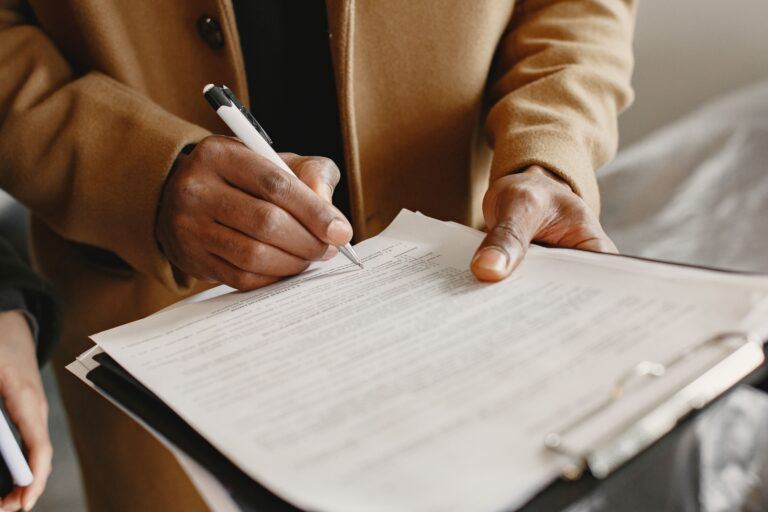
The biggest mistake I see is people signing a compromis de vente (preliminary contract) before anyone has verified what title actually exists. By then, the deposit is gone and the problems are just beginning.
This guide covers what I’ve personally seen happen in the Moroccan property market, step by step, with no sugarcoating.
🏡 Buying Untitled Property in Morocco: At a Glance
- Untitled (non-titled or “Melkia”) property is common in Morocco, especially in rural areas and older medinas.
- Foreigners can legally purchase it, but the risks are significantly higher than buying titled (registered) property.
- There is no central registry entry for untitled land, which means ownership disputes are frequent and hard to resolve.
- A notaire (public notary) is legally required for any property transaction in Morocco, not optional.
- Converting untitled property to a titled foncier (land registry) certificate is possible, but takes time, costs money, and can be blocked by third-party claims.
- You should never pay a deposit before a lawyer or notaire has checked the full ownership chain.
- Buyer protection in Morocco is weaker than in Western countries. Due diligence is entirely your responsibility.
Planning to buy property in Marrakech as a foreigner?
I help foreigners navigate this market safely, from verifying title status to finding honest agents and managing the notaire process. If you are looking at a property and are not sure whether it is safe to proceed, talk to me before you sign anything.
→ Get Expert Guidance on Buying in Marrakech
No obligation. Real advice based on real deals.
How Property Title Works in Morocco (Simple Explanation)

Morocco has two main categories of property ownership.
| Type | What It Means | Risk Level for Foreigners |
|---|---|---|
| Titled (Foncier) | Registered with the Agence Nationale de la Conservation Foncière (ANCFCC). Ownership is guaranteed by the state. | Lower risk |
| Untitled (Melkia) | Ownership is established through customary or Islamic law. No land registry certificate exists. Proved by witness testimony and traditional documents. | Higher risk |
In areas like the Marrakech Medina, the Palmeraie, and rural regions around Taroudant or Essaouira, a huge percentage of properties are untitled. This does not automatically make them fraudulent or unsellable. But it does mean the usual safeguards that foreign buyers expect simply do not exist.
Untitled land in Morocco is governed partly by customary law and partly by the Moudawwana (family law code), which affects inheritance, co-ownership, and the right to sell. Multiple heirs may technically own a share of a property without even knowing it.
Step-by-Step Process for Buying Untitled Property in Morocco

This is how it actually works when done correctly, not the glossy version.
Biggest Mistakes Foreigners Make When Buying Untitled Property in Morocco
1. Trusting the agent to handle everything
In Morocco, real estate agents are not heavily regulated. Anyone can call themselves an agent. The agent’s job is to close the deal and earn their commission. They are not your legal protector and they do not verify title. I have seen buyers hand over 30,000 euros based on an agent’s word that “the paperwork is clean.” It was not.
2. Signing a compromis before due diligence
Sellers and agents often create urgency. “Another buyer is interested.” “The price goes up next week.” “Just sign to reserve it.” Do not sign any contract until your lawyer has finished checking ownership. Once you sign and pay the deposit, getting it back is very difficult, sometimes impossible.
3. Not understanding what they are buying
Some buyers purchase what they think is a full property but is actually a share. In Moroccan inheritance law, multiple siblings may own fractions of a property. You might buy one heir’s share without the others agreeing, which makes the property legally impossible to fully own or sell.
4. Paying cash outside the banking system
Some sellers request part of the payment in cash, “under the table.” This is common. It is also illegal in Morocco and strips you of your foreign currency repatriation rights under Bank Al-Maghrib regulations. If you ever sell and want to take your money home, you need proof that it came in through the banking system.
5. Skipping independent legal advice
Morocco’s notaires are state officers and they are not your advocate. They facilitate the transaction. They do not search for hidden claims on untitled land the way a lawyer would. Always hire your own independent avocat.
6. Assuming EU or US property law applies
Moroccan property law is a blend of French civil law and Islamic legal tradition. Concepts that protect you in France or the UK, such as clear land registry entries or mandatory disclosure rules, do not always have direct equivalents here. The system rewards people who do their own research.
Hidden Risks Nobody Tells You About
Fake or forged adoul documents
Adoul records (the traditional notarial documents proving ownership) can be forged. I have personally seen cases where the seller produced documents that looked entirely legitimate but had been falsified. Your lawyer must verify originals with the adoul registry and cross-reference with local court records, not just accept photocopies.
The disappeared co-heir problem
A property may have been passed down through three generations without being formally registered. The person selling you the property may have 4 or 5 siblings or cousins who also have legal claims. Some of those heirs may be living abroad, unreachable, or unwilling to sell. Without their consent, the sale is legally contestable and you could end up with a property nobody can prove you fully own.
Encroachment and boundary disputes
Untitled land rarely has precise surveyed boundaries. A neighbour may have built on “your” land years ago. There may be a shared wall or access road with disputed ownership. These disputes can take years to resolve through the Moroccan court system.
Agricultural land classified as “non-constructible”
Some untitled plots near cities are sold with the suggestion that they can be built on. In reality, Moroccan land-use planning (Plan d’Aménagement) may classify the land as agricultural or protected. Getting a building permit may be impossible. Confirm zoning status at the local agence urbaine before buying any plot.
Agent double-representation
The same agent is often representing both buyer and seller. This is normal in Morocco. But it means the agent has a financial incentive to close the deal regardless of problems. If they are earning 2.5% from the seller, they are not working in your interest.
Costs, Taxes, and Real Numbers
These are the realistic costs on a typical property purchase in Morocco. Figures are approximate and based on 2024 and 2025 deals.
| Cost Item | Typical Amount | Notes |
|---|---|---|
| Droits d’enregistrement (registration tax) | 4% of purchase price | Payable on signing the acte de vente. Sometimes negotiated between buyer and seller. |
| Taxe notariale (notaire fees) | 0.5% to 1% of purchase price | Regulated by the state. Non-negotiable. |
| Conservation foncière (land registry fee) | 1% to 1.5% of purchase price | Applies when converting to or registering a titre foncier. |
| Timbre fiscal (stamp duty) | ~200 to 1,000 MAD flat | Small fixed administrative cost. |
| Avocat (independent lawyer) fees | 5,000 to 20,000 MAD | Varies by complexity and city. Non-negotiable for safety. |
| Agent commission | 2% to 3% of purchase price | Usually paid by the seller. Confirm in writing who pays. |
| Immatriculation process (titling untitled land) | 3,000 to 15,000 MAD | Depends on plot size, location, and any disputes during the notice period. |
| Total buyer transaction cost (estimate) | 6% to 8% of purchase price | Budget conservatively. Hidden costs appear in complex cases. |
How to Verify Everything Safely Before You Sign
Title and ownership verification checklist
- Ask the seller for all documents: titre foncier (if titled), adoul acts, inheritance documents, and tax payment history.
- Visit the ANCFCC office (Conservation Foncière) for the property’s region. Anyone can request a certificate of non-immatriculation to confirm whether land is registered or not. This costs a small administrative fee.
- Check with the local commune and commune rurale for any claims, rights of way, or state ownership interests on the land.
- Ask your lawyer to search for any litigation (pending court cases) involving the property at the Tribunal de Première Instance.
- Verify whether any mortgage (hypothèque) or lien is attached to the property through the ANCFCC.
- If heirs are involved, obtain written consent from all identified heirs. Your lawyer should draft a formal document signed before a notaire.
- Check zoning classification at the local agence urbaine (urban planning agency) to confirm what can be built on the land.
Choosing the right professionals
- Notaire: Must be state-registered. Find them through the Chambre des Notaires du Maroc.
- Avocat (lawyer): Verify registration with the local Bar Association (Barreau). Ask specifically about their experience with property transactions for foreign buyers.
- Surveyor (géomètre-expert): For any land with boundary uncertainties, a licensed surveyor is essential. Find licensed surveyors through the Ordre des Géomètres-Experts du Maroc.
What I’ve Seen Happen: Real Scenarios
These are real situations. Names are not included, but every scenario below is based on something that actually happened.
A British buyer put down a 15,000-euro deposit on a riad in the Marrakech Medina. The seller turned out to be one of six heirs. The other five refused to sign. The sale could not complete. The contract had no conditions suspensives for title verification. The deposit was gone. The court case ran for two years.
A French couple bought a plot of agricultural land outside Marrakech. The agent told them it could be built on “with the right connections.” It was classified as non-constructible under the Plan d’Aménagement. The couple applied for a building permit three times. All three were refused. The land is now unsellable at the price they paid. The agent has long since moved on.
An American buyer purchased an untitled property through a compromis signed in front of a notaire. Eighteen months later, a distant cousin of the seller appeared with adoul documents showing they co-owned a 20% share. The buyer had to negotiate a settlement and pay additional money just to secure what they thought they already owned.
A German couple spent 3 extra months doing due diligence on a Palmeraie villa. Their lawyer found two unregistered heirs who had not signed. They made their offer conditional on full heir sign-off and title conversion. The seller obtained the signatures. The property was registered before completion. Two years later, they sold it at a healthy profit with zero legal complications.
Thinking about buying in Marrakech?
Whether you are at the browsing stage or about to sign a compromis, it costs nothing to get an honest second opinion. I have helped buyers navigate untitled properties, identify genuine deals, and avoid costly mistakes in this market.
→ Read the Full Guide: Buying Property in Marrakech as a Foreigner
Real guidance, real market knowledge, no sales pitch.
What Most Websites Won’t Tell You
The adoul system is powerful but opaque
Adoul are Islamic notaries appointed under Moroccan law. Their records are the backbone of untitled property ownership. But those records are kept locally, are not centralised, and can be difficult to access without contacts or local knowledge. A good local lawyer knows which adoul office to visit and how to request the right records. If your lawyer has never dealt with adoul records before, they are the wrong lawyer for this job.
The real estate market in Marrakech runs on relationships
In Marrakech especially, many of the best properties never appear on listing websites. They are sold through local networks, word of mouth, and personal introductions. If you are only browsing Rightmove or international portals, you are seeing a fraction of what is available, often the properties that have struggled to sell through local channels.
Untitled does not mean cheap
A common misunderstanding is that untitled property should cost significantly less. In some cases it does. But in areas like the Marrakech Medina, untitled properties can command very high prices simply because of location and charm. The price reflects the market, not the legal safety. You are taking on extra risk for something that is not necessarily discounted.
The immatriculation process can be blocked
If you apply to have your untitled property formally registered during the official notice period (typically 2 months), anyone who believes they have a claim can file an opposition. This pauses the entire registration process. Oppositions can come from neighbours, relatives, or even the state if there is any boundary question. A single opposition can delay your registration by years. This is a real risk on older medina properties and agricultural plots.
Moroccan courts move slowly
If you end up in a property dispute in Morocco, expect years not months. The judicial system is backlogged. Property cases regularly take 3 to 7 years to resolve. This is not a criticism, it is a reality you need to factor in. The best protection is preventing the dispute from arising in the first place.
Currency repatriation matters more than buyers think
Morocco has capital controls. Foreigners can repatriate the proceeds of a property sale, but only on the amount that was originally brought in through official banking channels and documented correctly. If you brought in 200,000 euros but only documented 150,000 correctly, you can only take out 150,000 when you sell. Every transfer must be documented from day one. Work with a Moroccan bank to set this up correctly at the start of the process. Bank Al-Maghrib’s foreign exchange regulations cover this in detail.
Verbal agreements mean nothing
In the souks and medinas, deals are often discussed verbally and sealed with a handshake. In property, that culture can work against you. Sellers sometimes claim verbal agreements were made, or that certain fixtures, furniture, or rights were included in the sale. If it is not in the written compromis, signed before a notaire, it does not legally exist. Every single term must be written down.
Quick Reference: Untitled vs Titled Property for Foreign Buyers
| Factor | Titled Property | Untitled Property |
|---|---|---|
| Ownership certainty | State guaranteed | Based on documents and witnesses |
| Risk of hidden claims | Low | Moderate to high |
| Speed of verification | Fast (ANCFCC check) | Slow (multiple offices, court searches) |
| Mortgage availability | Yes (Moroccan banks lend) | Difficult or impossible until titled |
| Resale to other foreigners | Straightforward | Can be difficult without converting title first |
| Recommended for first-time buyers? | Yes | Only with strong legal support |
Ready to Buy Property in Marrakech?
Do not go into this market without someone who knows it from the inside.
Whether you are buying a riad in the Medina, a villa in the Palmeraie, or a plot outside the city, the difference between a great deal and a disaster often comes down to one thing: who you work with.
I help foreigners buy property in Marrakech safely, including untitled properties where the risks are highest.

Anis is the founder of Buy Property Morocco, a research-based resource created to help foreign buyers understand the real process of buying property in Morocco safely.
He focuses on the practical details most buyers only discover too late: title deed checks, notary steps, compromis de vente risks, transfer taxes, foreign banking rules, repatriating money after a sale, and avoiding common mistakes when dealing with agents or sellers.
Anis has personally bought 4 properties in Morocco and shares practical guidance based on real experience, not theory.
If you are seriously considering buying property in Morocco and want private guidance before you send money, pay a deposit, or sign anything, you can book a buyer safety call here: