Yes, foreigners can buy land in Marrakech and build a villa on it.
But most people who run into serious problems are not naïve. They are smart, cautious buyers who simply did not know what questions to ask before trusting an agent, signing a document, or sending a deposit.
This guide covers what actually happens on the ground, what the law says, and what I have seen go wrong in real deals, including which areas to look at, what land really costs, how zoning works, and what your full build budget should look like.
By the end, you should know how to separate a beautiful villa plot from a legal or financial trap.
At a Glance: Buying Land to Build a Villa in Marrakech
- Foreigners can legally buy land in Morocco, but only certain land types are safe to build on. Agricultural land (terres agricoles) comes with serious restrictions that many buyers discover too late.
- The title deed system in Morocco is called the Titre Foncier. Only land with a clean, registered Titre Foncier is considered safe for purchase by a foreign buyer.
- You must use a Moroccan notaire (notary) to complete the purchase. The notary is a public official, not your personal lawyer. You can and often should hire a separate independent lawyer.
- Funds must enter Morocco through official banking channels. This is a legal requirement under Moroccan foreign exchange law, overseen by the Office des Changes. Doing it incorrectly will block your ability to repatriate money if you ever sell.
- Construction requires a valid permis de construire (building permit). Without it, your villa cannot be legally connected to utilities and cannot be sold later.
- Real estate agents in Morocco are not always licensed or regulated the way they are in Europe or North America. Anyone can call themselves an agent.
- Budget between 7% and 10% of the purchase price for taxes, notary fees, registration, and related costs on top of the land price, then budget separately for architect, construction, pool, utilities, and landscaping.
Already considering a property?
See the 14 Day Buyer Plan: $299 →
Get 14 days of personal buyer support, three private calls and WhatsApp support.
Get help reviewing up to three properties before you commit money.
Who This Guide Is For

- Foreign buyers who want to buy land in Marrakech and build a private villa.
- Investors comparing villa land in Palmeraie, Route de l’Ourika, Route de Fès, Targa, or golf areas.
- Buyers who are worried about agricultural land, VNA, zoning, deposits, or title problems.
- Anyone who wants to understand the full project cost before speaking to agents.
Best Areas to Buy Land to Build a Villa in Marrakech
The area you choose affects not just the lifestyle but the legal risk, the zoning rules, the utility access, and the likely price.
Here is a practical breakdown of the main zones where foreign buyers look for villa land around Marrakech.
| Area | Best For | Buyer Profile | Main Risk | What to Verify Before Paying a Deposit |
|---|---|---|---|---|
| Palmeraie | Prestige, established villa community, palm grove setting | High-budget buyers wanting a proven villa zone with established services | Strict environmental and zoning protections, lower density than buyers expect, some parcels with unclear servitudes or access | Exact zone classification, permitted footprint (COS/CES), access road status, palm tree protection rules on the specific parcel |
| Route de l’Ourika | Larger plots, Atlas mountain views, more space per dirham | Buyers wanting a larger estate feel at a lower price per square meter | Agricultural land classification on some parcels, VNA/AVNA requirements, utility connections can be expensive or absent, distance from the city | Whether the land is urban or agricultural, VNA status, water and electricity availability, road access is registered not just factual |
| Route de Fès | Residential villa development, good road access, closer to the city | Buyers wanting a villa within reasonable distance of central Marrakech | Price pressure from development activity, some plots in fragmented ownership | Titre Foncier status, zoning classification, subdivision authorization if buying inside a lotissement |
| Route de Ouarzazate | Space, lower prices further out, palm and olive tree landscapes | Buyers with a lower land budget or wanting a very private estate | Longer distance from the city, some land is agricultural or unzoned, utilities can require significant investment | Zoning, VNA if agricultural, utility access, road condition and legal access registration |
| Route de Tahanaout / Route d’Amizmiz | Rural feel, quieter roads, potential for larger plots at lower prices | Buyers willing to be further from the city for more land | Higher proportion of agricultural land, more complex utility and access situations, fewer established villa communities | Land classification, VNA/AVNA status, proximity to utilities, access road registration on Titre Foncier |
| Targa | Residential feel, urban, closer to amenities and the city | Buyers wanting a more urban villa location with less complexity | Higher price per square meter, less land available, plots are generally smaller | Zoning rules for the specific parcel, permitted floors and footprint, building permit feasibility for the planned villa |
| Agdal / Hivernage | Central urban location, prestige address, proximity to restaurants and hotels | Buyers who want a city villa rather than a country estate | Very high price per square meter, limited plot availability, strict urban rules, little space for large gardens or pools | Whether a private villa with pool is actually permitted under the specific zoning for the parcel |
| Golf Areas (Amelkis, Al Maaden, Samanah, etc.) | Gated communities, golf course settings, managed infrastructure | Buyers wanting a turnkey secured environment with existing infrastructure | Developer resale prices are high, HOA-type fees may apply, restrictions on what you can build within the development rules | Developer reputation, title transfer process within the development, any ongoing fees, resale rules within the golf community |
No area is automatically safe or automatically problematic. The same route can have one plot that is straightforward and another fifty meters away that has a title problem, an agricultural classification, or a utility gap that will cost you significantly.
Verify the specific parcel, not just the general area.
How Much Does Land Cost in Marrakech for a Villa?
Prices vary heavily depending on exact location, title status, road access, zoning, utility connections, and whether the land is inside an approved subdivision.
Any agent who gives you a flat price-per-square-meter for a broad area without those details is giving you a number that may have no connection to what you will actually pay or what the land is actually worth.
With that said, here is a general orientation for foreign buyers doing early budget planning.
| Area | Typical Price Level | Why Prices Vary | Hidden Cost or Risk |
|---|---|---|---|
| Palmeraie | Very high | Prestige, proximity to city, established villa zone, scarcity of clean titled plots | Lower permitted density than buyers expect, environmental restrictions, some shared access situations |
| Agdal / Hivernage | Very high | Central urban location, high demand, very limited supply | Small plot sizes may limit villa scale and pool placement |
| Golf Communities | High to very high | Managed infrastructure, security, golf views | Developer premium on top of land value, community restrictions on construction |
| Targa | High | Urban location, residential zoning, good access | Price per square meter is higher, less land per budget |
| Route de Fès | Mid-range to high | Good road access, active development zone, proximity to city | Prices rising with demand, important to verify subdivision authorization |
| Route de l’Ourika | Variable | Large range from urban fringe plots to rural agricultural land | Lower prices often signal agricultural land, VNA risk, or utility gaps |
| Route de Ouarzazate | Mid-range to lower further out | Varies significantly with distance from city, title status, utilities | Agricultural classification risk, utility connection costs can be significant |
| Route de Tahanaout / Amizmiz | Lower further out | More rural, further from city, less developed infrastructure | Higher proportion of agricultural land, complex access situations, utility costs |
Price warning: In Marrakech, asking prices for land are routinely set above realistic transaction values. Negotiation is expected and often significant. A foreign buyer who accepts the first price may pay considerably more than local buyers or well-advised foreign buyers pay for equivalent plots. Verify the title and the zoning first, then negotiate on price, not the other way around.
How Buying Land in Morocco Works for Foreigners
Morocco allows foreign nationals to purchase property, including land.
There is no law that blocks you simply because you hold a foreign passport.
But the process is not plug-and-play. There are several layers that trip buyers up.
For a full overview of the legal framework, see this guide on whether foreigners can buy urban land in Morocco.
The Land Types You Need to Understand
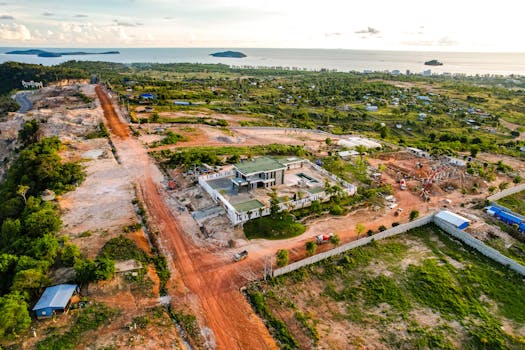
Not all land around Marrakech is buildable.
The most common issue I see is buyers falling in love with a piece of land on the outskirts of Marrakech, only to discover it is classified as agricultural land.
Agricultural land in Morocco cannot legally be converted to residential use without a formal authorization. This process is not guaranteed, and it can take years. Many buyers have been told by agents that it is just a formality. It is not.
Buildable land within or adjacent to Marrakech’s urban perimeter is classified differently and is covered by a local urban plan called the Plan d’Aménagement. Before any purchase, you need to confirm that the land you are buying falls within a zone that permits residential construction.
Your notaire can verify this. So can the local urban planning authority, the Agence Urbaine de Marrakech.
The Title Deed System
Morocco uses a land registration system managed by the Agence Nationale de la Conservation Foncière, du Cadastre et de la Cartographie (ANCFCC).
Land that has been officially registered has a Titre Foncier, which is a unique number identifying the parcel and its legal owner.
Some land in and around Marrakech is still unregistered, sometimes referred to as Melkia land. Buying unregistered land as a foreigner carries significant legal risk. Title disputes in Morocco can take many years to resolve in court.
Always insist on a registered Titre Foncier. If the seller cannot produce one, do not proceed without getting independent legal advice first. You can read more about the difference between Melkia and Titre Foncier and what it means for foreign buyers.
VNA and AVNA: What Foreign Buyers Must Know
If you are looking at land outside the urban perimeter of Marrakech, you will almost certainly encounter the terms VNA and AVNA.
Understanding them before you pay any deposit could save you from a serious and expensive mistake.
What VNA and AVNA Mean
VNA stands for Vocation Non Agricole, which means the land has been given a non-agricultural classification, confirming it is no longer legally considered farmland.
AVNA stands for Attestation de Vocation Non Agricole, which is the official certificate issued by the relevant authorities confirming that status.
Without this certificate, land that is classified as agricultural cannot legally be built on for residential purposes.
Why Agents Often Minimize This Risk
Agricultural land is cheaper than land with a clean urban or residential classification.
An agent selling agricultural land near Marrakech at an attractive price per square meter may tell you that the VNA is almost done, that it is a formality, or that many villas nearby were built on similar land.
None of those statements are a guarantee.
The AVNA process involves multiple authorities and is not automatic. It can take years. It can be refused. A verbal promise from a seller or agent is not a substitute for the certificate itself.
I have seen buyers pay deposits on land where the VNA process was described as nearly complete. Three years later, the land was still unbuilt. The buyer had lost both the use of their money and significant time.
Read more about the AVNA certificate in Morocco for foreign buyers before committing to any rural or peri-urban plot.
What to Do if VNA is Required
If the plot you want requires a VNA or AVNA, and the certificate does not already exist, you have two safe options.
First, do not pay a deposit until the certificate exists and has been verified by your lawyer.
Second, if you decide to proceed with a preliminary contract before the certificate is issued, make sure the compromis de vente includes a clearly written condition (clause suspensive) that makes the full sale conditional on the AVNA being officially issued. If the certificate is not granted, the deposit should be fully refundable.
Learn more about how the compromis de vente works for foreign buyers in Morocco and what protective conditions to include.
Marrakech Villa Zoning Explained
A registered Titre Foncier does not automatically mean you can build the villa you are imagining.
Zoning determines what you are allowed to build, how big, how tall, how far from the boundary, and in some cases, whether certain features like pools or guesthouses are permitted at all.
Many foreign buyers discover zoning restrictions after they have already paid for the land.
How Zoning Works in Marrakech

The urban plan (Plan d’Aménagement) divides Marrakech and its surrounding areas into different zones. Each zone has its own set of rules covering what can be built.
The exact meaning of each zoning label can vary depending on the applicable urban plan, so treat these as orientation terms only and verify the specific parcel in writing.
Common zone types you may hear about in Marrakech include:
- Zone Villa / ZV: Residential zones intended for individual villas. Rules on density, height, and setbacks apply.
- SD1 / SD2: Individual housing zones with specific density and setback rules. SD1 typically allows slightly higher density than SD2.
- GH1 / GH2: General housing zones, often permitting attached or semi-detached housing. Less common for luxury villa projects.
- SA1 / SA2 / SA3: Agricultural zones with varying levels of restriction on construction. SA zones may permit very limited rural structures but generally do not permit residential villas without a VNA.
- D zones: Sometimes used for protected or restricted areas. Always verify what a D zone designation means for the specific parcel.
Key Zoning Terms to Know
- COS (Coefficient d’Occupation du Sol): The ratio of total built floor area to the total plot size. A COS of 0.25 on a 2,000 sqm plot means you can build a maximum of 500 sqm of total floor space across all floors.
- CES (Coefficient d’Emprise au Sol): The ratio of the ground floor footprint to the total plot size. Controls how much of the land surface the building can cover at ground level.
- Emprise au sol: The actual ground footprint of the building.
- Recul / Setbacks: Minimum distances the building must be from the plot boundaries, the road, or other structures. These can significantly reduce the usable building area on smaller plots.
- R+1 / R+2: Refers to the number of floors permitted above ground level. R+1 means ground floor plus one upper floor.
- Note de Renseignement Urbanistique: An official written summary from the urban planning authority confirming exactly what zoning rules apply to a specific parcel. This document is essential before any purchase.
Important: The exact rules depend on the specific parcel and must always be confirmed with the Agence Urbaine de Marrakech, the commune, your notaire, and a licensed Moroccan architect before you sign anything or pay any deposit. Do not rely on what an agent or seller tells you about what can be built. Get it in writing from the official authority.
What Can You Actually Build on the Land?
This is the question buyers should ask before choosing a plot, not after buying it.
The answer depends on the zoning, the permit rules, the plot size, the utility connections, and the specific approvals in place. Here are the most common buyer questions with honest answers.
- Can I build a private villa? Yes, on land that is correctly zoned for residential use, with a clean Titre Foncier, and once a building permit has been issued.
- Can I build a villa with a pool? Generally yes, subject to the available ground footprint after applying setback and CES rules. On smaller or irregularly shaped plots, a pool may not fit within the permitted area. Ask your architect to confirm this on the specific plot before you buy.
- Can I add a guesthouse or pavilion? It depends on the zoning rules for the parcel and whether the total construction stays within the allowed COS. Some zones permit ancillary structures and some do not.
- Can I build multiple villas? This is generally subject to subdivision rules and may require a lotissement authorization. It is not a straightforward process and requires its own planning approval.
- Can I use the villa for short-term rental? Moroccan law does not prohibit this, but rental activity has tax implications. You should declare rental income and verify the applicable rules with a Moroccan tax adviser or accountant.
- Can I add a basement? Some zones permit basement construction and some do not. Confirm with the Agence Urbaine de Marrakech for the specific parcel.
- Can I connect water, electricity, and sewage? Within the urban perimeter, connections to the RADEEMA network are generally possible. Outside it, you may need a borehole (puits), a generator or solar system, and a septic solution. These add cost and complexity. Confirm utility availability before buying.
- Can I start building immediately after buying? No. You must obtain a permis de construire before any construction begins. Building without a permit is illegal, and an unpermitted villa cannot be connected to utilities and will face serious problems if you try to sell it later.
The most important advice here: Speak to a licensed Moroccan architect before you buy the plot, not after. An architect can look at the specific parcel, check the zoning rules, and tell you whether your planned villa is feasible before you commit any money.
Questions to Ask Before Visiting Any Land Plot
Ask these questions before you visit any plot, not during or after.
- Does the land have a registered Titre Foncier? What is the Titre Foncier number?
- Is it Melkia or registered titled land?
- Is it classified as urban, agricultural, or non-agricultural?
- Is VNA or AVNA required, and if so, has the certificate already been issued?
- Is the land inside an approved subdivision (lotissement autorisé)?
- Is the land viabilisé (already connected to utilities)?
- Is there a legal, registered road access to the parcel?
- Are water and electricity connections available at or near the plot boundary?
- Is sewage available or will a septic solution be required?
- What zoning code applies to this specific parcel?
- What is the permitted footprint (COS / CES) and how many floors are allowed?
- Can I obtain a note de renseignement urbanistique before paying any deposit?
- Will any deposit be held by the notaire rather than paid directly to the agent or seller?
- Can my architect confirm the project is feasible before I sign a preliminary contract?
If an agent cannot or will not answer these questions clearly, that is important information about how the deal is being presented to you.
Step-by-Step: How the Land Purchase Process Works
- Identify the land and verify the Titre Foncier number. Ask the seller or agent for the Titre Foncier number. You or your lawyer can then verify it directly with the ANCFCC. Read more about how to verify a title deed before buying property in Morocco.
- Get the note de renseignement urbanistique. Confirm the land is zoned for residential construction and understand exactly what can be built. Your notaire or a local architect can assist.
- Have your architect confirm project feasibility. Before paying anything, verify that the villa you want to build can actually be built on this specific parcel within the zoning rules.
- Negotiate the price and terms. In Morocco, negotiation is expected. Prices are often listed above market value.
- Sign a preliminary contract (compromis de vente). This is where most deposits are paid. Read this document carefully before signing. It should include conditions covering title verification, zoning confirmation, and if applicable, VNA certification.
- Complete due diligence. Your notaire will conduct a title search, verify there are no liens or encumbrances on the property, and confirm ownership. Your independent lawyer should review all documents.
- Transfer funds through official banking channels. Your bank in Morocco will issue an Attestation d’Importation de Devises confirming the funds were imported legally. Keep this document permanently. You will need it to repatriate proceeds if you sell. Read more about using a convertible dirham account to buy property in Morocco.
- Sign the final deed of sale (acte de vente) before the notaire. The notaire registers the transfer with the ANCFCC and updates the Titre Foncier in your name.
- Apply for your building permit (permis de construire). Done through the municipality, typically with plans from a licensed Moroccan architect. Do not begin construction before this permit is in hand.
Biggest Mistakes Foreigners Make When Buying Land in Marrakech

Warning: These are not rare edge cases. These are the mistakes I see repeatedly.
- Paying a deposit before verifying the title. Deposits paid before title verification are at serious risk if a problem is discovered afterward.
- Trusting an agent who says the land is buildable without checking the urban plan. Agents are paid on commission. Always verify independently.
- Assuming VNA is a formality. It is not. If VNA has not been issued, do not pay a deposit without a clearly written refund condition in the compromis de vente.
- Not getting a note de renseignement urbanistique before buying. Zoning may allow far less than you expected to build.
- Using only the seller’s notaire without independent legal representation. The notaire is neutral. They do not represent you.
- Transferring money informally. Sending money to a friend, an agent, or anyone other than through your Moroccan bank account is illegal under Moroccan foreign exchange law and will cause serious problems later.
- Buying agricultural land based on a promise of future reclassification. This promise is very often not delivered.
- Not checking for shared ownership (indivision). Some parcels are owned by multiple family members. Even if one person is selling, all co-owners must consent.
- Not asking an architect to confirm feasibility before buying. The villa you imagined may not fit within the permitted COS, CES, setbacks, and height limits for that parcel.
Real Costs and Taxes When Buying Land in Morocco
| Cost Item | Approximate Amount | Notes |
|---|---|---|
| Registration Tax (Droits d’Enregistrement) | Around 4% of sale price | Verify current rate with your notaire before signing |
| Conservation Foncière (title registration) | Around 1% to 1.5% | Paid to the ANCFCC for updating the Titre Foncier |
| Notaire Fees | Around 1% to 1.5% | Regulated by law but verify in advance |
| Stamp Duty (Timbre Fiscal) | Small fixed amounts | Varies by document type |
| Independent Lawyer (optional but recommended) | Negotiated, often fixed fee | Not legally required but highly advisable for foreign buyers |
| Architect Fees (for building permit) | Typically a percentage of construction cost | A licensed Moroccan architect is required by law for the permit application |
| Total Acquisition Costs (estimate) | 7% to 10% of purchase price | Always confirm current rates with your notaire before committing |
Tax rules in Morocco can change. Always verify exact rates with a qualified notaire or tax adviser before you sign anything or transfer funds. For a detailed breakdown, see this guide on property transfer taxes in Morocco for foreigners.
Full Project Budget: Land, Build, Pool, and Utilities
Most foreign buyers budget for the land and the villa construction. They forget about permits, architect fees, utility connections, access roads, boundary walls, landscaping, and the delays that add cost to every project.
Here is a realistic full-project budget framework. These are categories, not fixed amounts. Costs depend on plot size, construction quality, location, and site conditions. Verify all estimates with local professionals before committing.
| Budget Item | Notes |
|---|---|
| Land purchase price | Varies heavily by area, title status, zoning, utilities |
| Acquisition costs (taxes, notaire, ANCFCC, registration) | Estimate 7% to 10% on top of the land price |
| Independent lawyer | Fixed or hourly fee, confirm before engaging |
| Topographic survey and soil study | May be required before building permit application depending on zone and site |
| Licensed Moroccan architect fees | Required by law. Typically calculated as a percentage of construction cost. Confirm scope and fee structure before signing |
| Building permit (permis de construire) | Municipal fees vary. Factor in time: the permit process can take several months to over a year |
| Project manager / site supervision | Important for foreign buyers who are not on-site. Reduces the risk of construction problems and budget overruns |
| Construction cost (villa structure and finish) | Costs per square meter vary significantly depending on finish level. Get at least three quotes from licensed builders. For a detailed look at villa construction costs, see this guide on the cost to build a villa in Marrakech |
| Swimming pool | A significant cost depending on size, type, and equipment. Verify the pool fits within the permitted CES and setbacks before finalizing the design |
| Garden and landscaping | Often underestimated, particularly for larger plots |
| Boundary walls and gate | Required for privacy and security on most villa plots. Cost depends on perimeter length and finish |
| Water connection or borehole | Within the urban perimeter, RADEEMA connection is standard. Outside it, a borehole may be required and involves its own cost and legal authorization process |
| Electricity connection | Standard within the urban perimeter. For remote plots, the distance from the nearest power line can make this expensive |
| Sewage / septic solution | Outside municipal network areas, a septic tank or fosse septique is required. Confirm what is permitted under local rules |
| Access road improvements | Some plots have factual road access but no paved road. Improving this adds cost and may require negotiations with neighboring landowners |
| Contingency (minimum 15% to 20%) | Construction in Morocco, as in any country, regularly encounters unforeseen costs. Budget for them in advance rather than being surprised by them during the project |
Budget warning: Foreign buyers regularly underestimate the total project cost by focusing only on the land price and a rough construction figure. The items in this table, taken together, can add 30% to 50% to what buyers initially think the project will cost. Build your full budget before you buy the land, not after.
Hidden Risks Nobody Tells You About
Easements and Shared Access Rights
Some land parcels in Marrakech’s palmery and rural fringes have access issues.
The road leading to the plot may cross another person’s private land. If there is no registered right of way (servitude de passage) on the Titre Foncier, you could end up with land you cannot access without your neighbor’s permission.
Always confirm that access to the land is legally secured before buying.
The Palmery Zone
The Palmeraie area around Marrakech is subject to specific zoning and environmental protections.
Construction density rules and setback requirements are stricter here than in standard urban zones.
What you can build, how big, and how close to the boundaries is regulated. Some buyers have purchased land in the Palmeraie expecting to build a large villa and discovered the permitted construction footprint is much smaller than they assumed.
Always check the specific zone regulations for the exact parcel before negotiating a price.
Water and Utility Connections
Land outside the city perimeter may not have direct access to municipal water, electricity, or sewage networks.
Connecting to these networks can be expensive and sometimes is not possible without the land first being incorporated into the urban area.
Ask specifically about utility connections before committing to any land purchase outside central Marrakech.
Already considering a property?
See the 14 Day Buyer Plan: $299 →
Get 14 days of personal buyer support, three private calls and WhatsApp support.
Get help reviewing up to three properties before you commit money.
What I Have Seen Happen in Real Deals
The Deposit That Could Not Be Recovered
A European buyer paid a 10% deposit on a parcel near the Palmeraie after a quick site visit.
The agent had assured him the land was buildable and the title was clean.
Two months later, when his independent lawyer checked the Titre Foncier, it showed a court-registered mortgage in favor of a local lender. The seller had borrowed against the land.
The sale collapsed. Recovering the deposit took over a year of negotiations and a partial loss.
The Agricultural Land Trap
A buyer from the UK fell in love with a large plot on the edge of the city.
The price per square meter seemed reasonable because it was classified as agricultural land.
The agent said the reclassification was nearly done. That was three years ago.
The land cannot be built on. The buyer still owns it but cannot use it for what they intended.
The Zoning Surprise
A couple from France purchased a plot on Route de l’Ourika with a clean title and inside the urban perimeter.
They had not requested a note de renseignement urbanistique before signing.
When they engaged their architect, they learned the zone had a COS of 0.15, which meant they could only build 300 sqm of total floor space on their 2,000 sqm plot.
They had planned a 500 sqm villa. They either had to reduce the project significantly or sell the land and start again.
Using the Seller’s Notaire
A French couple trusted the selling agent’s recommended notaire.
The notaire was not corrupt, but he worked mostly with the seller’s side. When a question arose about a shared access road, the notaire explained it was not his role to intervene.
The couple had no independent adviser and signed anyway. The access issue became a dispute after they completed the purchase.
Hiring your own independent lawyer in Morocco costs a few hundred to a few thousand euros depending on complexity. It is almost always worth it.
How to Verify Everything Safely
Title Verification
The Titre Foncier number can be checked directly with the ANCFCC.
Your notaire can do this officially as part of the due diligence process.
What you are looking for: confirmed ownership in the seller’s name, no registered liens, mortgages, or court orders on the title, and correct parcel boundaries matching what you were shown.
For a step-by-step explanation of what to check and how, see this guide on what the Titre Foncier means for foreign buyers in Marrakech.
Urban Zoning Verification
The Agence Urbaine de Marrakech holds the official urban plan maps.
You or your architect can request a note de renseignement urbanistique, which is an official written summary of what is permitted on a specific parcel.
This document is essential before committing to any land purchase you intend to build on.
Banking and Currency Rules
Morocco has strict foreign exchange controls.
All funds used to purchase property must enter Morocco through a regulated bank and be declared correctly.
The Office des Changes oversees these rules. Your Moroccan bank will handle the formalities when you transfer funds for the purchase, and they will issue the attestation you need to document the legal import of funds.
Verify the current rules with your bank and the notaire before initiating any transfer.
| Document | Why It Matters | Who Provides It |
|---|---|---|
| Titre Foncier | Confirms legal ownership and registered status of the land | ANCFCC, verified by your notaire |
| Note de Renseignement Urbanistique | Confirms what can be built on the land legally | Agence Urbaine de Marrakech |
| AVNA Certificate (if applicable) | Confirms land has non-agricultural status, required before a building permit can be issued on rural parcels | Relevant Moroccan authorities, verify the current issuing body with your notaire |
| Compromis de Vente | Preliminary sale agreement, governs deposit terms and conditions | Drafted by notaire, reviewed by your lawyer |
| Attestation d’Importation de Devises | Proof funds entered Morocco legally. Required to repatriate money on future sale | Your Moroccan bank |
| Acte de Vente | Final deed of sale transferring ownership | Signed before notaire, registered with ANCFCC |
| Permis de Construire | Legal authorization to build. Without it you cannot connect utilities or sell legally later | Municipal authority, applied for with licensed architect |
Local Terms Glossary for Foreign Buyers
You will encounter these terms in listings, agent messages, legal documents, and conversations. Here is a simple reference.
| Term | Language | What It Means for You |
|---|---|---|
| Terrain titré | French | Titled land, meaning it has a registered Titre Foncier. The minimum you should accept as a foreign buyer. |
| Titre Foncier | French | The official registered land title number issued and held by the ANCFCC. Confirms legal ownership and boundaries. |
| Melkia | Arabic / Moroccan legal term | Unregistered customary land. Not formally registered in the ANCFCC system. Carries significant legal risk for foreign buyers. |
| Lotissement autorisé | French | An authorized subdivision. Land divided and sold in plots with official planning approval. Generally safer than buying raw unsubdivided land. |
| Terrain viabilisé | French | Serviced land, meaning it already has water, electricity, and road access connected or available at the boundary. |
| Zone villa | French | A zoning designation for areas where individual residential villas are permitted. |
| VNA (Vocation Non Agricole) | French | A non-agricultural land classification. Confirms the land is no longer treated as farmland. |
| AVNA (Attestation de Vocation Non Agricole) | French | The official certificate confirming the VNA classification has been granted. Without this, a building permit cannot be issued on rural land. |
| Permis de construire | French | Building permit. Required before any construction begins. Applied for through the municipality with plans from a licensed architect. |
| Note de renseignement urbanistique | French | Official document from the urban planning authority confirming the zoning rules for a specific parcel. Essential before buying. |
| بقعة فيلا | Arabic (Darija) | Villa plot. A land parcel designated or used for villa construction. |
| أرض لبناء فيلا | Arabic | Land to build a villa. The common phrasing used in Moroccan Arabic for this type of purchase. |
| رخصة البناء | Arabic | Building permit (permis de construire) in Arabic. The document authorizing construction to begin. |
| المحافظة العقارية | Arabic | The land registry (Conservation Foncière), the branch of the ANCFCC that registers property titles and transfers. |
What Most Websites Will Not Tell You
Agents Are Not Regulated the Way You Expect
In Morocco, there is no mandatory national licensing system that prevents someone from operating as a real estate agent without qualifications or professional accountability.
Some agents are serious, experienced professionals who add real value and know the market well.
Others are opportunists who learned the business by walking buyers around properties and collecting commissions.
You cannot tell them apart from a business card or a slick website.
The way you protect yourself is not by trying to judge the agent. It is by verifying everything the agent tells you independently, through the notaire, the urban agency, and your own lawyer. Read more about common Marrakech property scams and pitfalls for foreigners.
The Notaire Is Neutral, Not Your Advocate
This surprises many buyers from countries where lawyers represent them in property transactions.
In Morocco, the notaire is a public official. They ensure the transaction is legal and properly documented. They do not advocate for either side.
If there is a problem that is not explicitly illegal but is still harmful to your interests, the notaire may not flag it as their role.
This is why independent legal representation matters, especially for foreign buyers who do not know the local market, the local legal culture, or the Darija-French-Arabic mix in which many documents and conversations happen.
Negotiation Is Expected and Significant
Land prices in Marrakech, particularly in sought-after zones like the Palmeraie, Route de l’Ourika, or Route de Fès, are often listed significantly above what serious buyers actually pay.
The asking price is a starting position, not a fixed number.
Foreign buyers who accept the first price are sometimes paying 20% to 40% more than a local buyer with equivalent negotiating knowledge would pay for the same parcel.
Do not let urgency, agent pressure, or the fear of losing the plot push you into overpaying. Good land in Marrakech is not as rare as agents sometimes suggest.
Not All Undivided Title Situations Are Obvious
Some parcels that appear to be owned by one person are actually in indivision, meaning they are co-owned by multiple family members following an inheritance.
In Morocco, one co-owner cannot sell the land without the agreement of all co-owners.
If the selling party does not have clear authority to sell on behalf of all co-owners, the sale can be challenged in court later, even after you have paid and registered the title.
Your notaire should check for this. Ask them directly about it before the compromis de vente is signed.
The Building Permit Process Takes Time
Foreign buyers sometimes buy land expecting to start construction quickly.
The permis de construire process in Marrakech involves submitting architectural plans through a licensed Moroccan architect, getting approval from the municipality and in some cases from other authorities depending on zone.
The timeline can range from a few months to over a year, depending on the zone, the complexity of the project, and whether the plans comply with all local regulations on first submission.
Factor this into your project planning before you buy.
Common Mistakes vs. Their Consequences
| Mistake | Likely Consequence |
|---|---|
| Paying a deposit before title verification | Risk of losing the deposit if a title problem is discovered afterward |
| Buying agricultural land expecting easy reclassification | Land may be unbuildable for years or permanently |
| Not getting VNA/AVNA in writing before signing | Construction may be blocked even after purchase is complete |
| Not requesting a note de renseignement urbanistique | Zoning rules may prevent the villa size or features you planned |
| Transferring purchase funds informally | Cannot legally repatriate money on future sale. Potential legal issues with Moroccan authorities |
| Using seller’s notaire without independent representation | Nobody protecting your specific interests in the transaction |
| Not checking utility availability before buying | Connection costs may be far higher than expected, or connections may not be possible |
| Not verifying co-ownership or indivision status | Sale may be legally challenged by other co-owners after completion |
| Not securing legal access to the parcel | Access disputes with neighbors after purchase |
| Not involving an architect before buying | The planned villa may not be feasible within the permitted zoning parameters for that specific plot |
Frequently Asked Questions
Can foreigners buy land to build a villa in Marrakech?
Yes. Foreign nationals can legally purchase land in Morocco, including in Marrakech, and build a villa on it. The process requires a licensed notaire, official fund transfers through Moroccan banking channels, and a valid building permit before construction begins.
Can foreigners buy agricultural land near Marrakech?
Technically yes, but it is strongly inadvisable without understanding the restrictions first. Agricultural land in Morocco cannot be built on for residential purposes without an AVNA certificate confirming non-agricultural status. This process is not guaranteed and can take years. Many buyers have been left with land they cannot build on.
What is VNA or AVNA in Morocco?
VNA stands for Vocation Non Agricole, which is a non-agricultural land classification. AVNA is the official certificate confirming that classification. Without the AVNA, a building permit cannot be issued on land classified as agricultural. If the certificate does not already exist, do not pay a deposit without a legally binding refund condition in the preliminary contract.
What is the safest type of land to buy in Marrakech?
The safest land is registered (Titre Foncier), inside the urban perimeter, correctly zoned for residential villa construction, already serviced with utilities, with no encumbrances or co-ownership disputes, and ideally within an authorized subdivision (lotissement autorisé).
How much does land cost in Marrakech for a villa?
Prices vary significantly depending on location, title status, zoning, utilities, and access. Prime zones like the Palmeraie, Hivernage, and established golf communities sit at the higher end. Further out on routes such as Ourika or Ouarzazate, prices are lower but the risks around agricultural classification and utilities are higher. Always get a note de renseignement urbanistique and a title verification before making any price decisions.
What documents should I check before buying land in Marrakech?
At minimum: the Titre Foncier (verified with the ANCFCC), the note de renseignement urbanistique (confirming zoning and what can be built), the AVNA certificate if the land is rural, and confirmation of utility availability. Review all documents with your independent lawyer before signing anything.
Do I need a building permit to build a villa in Morocco?
Yes. A permis de construire is required by law before any construction begins in Morocco. A licensed Moroccan architect must prepare and submit the plans. Building without a permit is illegal, and a villa built without one cannot be legally connected to utilities and will face serious problems if you try to sell.
Can I build a villa on Melkia land?
This carries serious legal risk and is strongly inadvisable for foreign buyers. Melkia land is not formally registered in the Moroccan land registry. Title disputes on unregistered land can take years and are very difficult to resolve, especially from abroad.
Should I pay a deposit before the notaire checks the title?
No. Never pay a deposit before the Titre Foncier has been verified and the zoning confirmed. A deposit paid before due diligence is a deposit at risk.
What are the best areas to buy land for a villa in Marrakech?
It depends on your budget and priorities. The Palmeraie is prestigious but has stricter density rules. Route de Fès and Targa are more urban and straightforward. Route de l’Ourika offers more space and Atlas views but carries more agricultural land risk. Golf communities offer security and infrastructure but at a premium price. The best area is the one where the specific parcel has a clean title, correct zoning, confirmed utilities, and a building permit feasibility that matches your project.
Can I rent out the villa after building it?
In many cases, a villa can be rented short-term, but you should verify the local rules, tax obligations, and any registration or authorization requirements before relying on rental income. Speak with a Moroccan accountant or local adviser before advertising the property.
Should I hire an architect before buying the land?
Yes. Always involve a licensed Moroccan architect before committing to a purchase. They can review the zoning rules, confirm whether your planned villa is feasible within the permitted COS, CES, setbacks, and height limits, and estimate construction costs specific to that plot. Discovering the project is not feasible after buying the land is an expensive lesson.
Final Checklist Before You Buy Land in Marrakech
- Confirm the land has a registered Titre Foncier with no liens, mortgages, or legal disputes.
- Confirm the land is zoned for residential construction by obtaining a note de renseignement urbanistique from the Agence Urbaine de Marrakech.
- If the land is rural or peri-urban, confirm the AVNA certificate exists and has been issued before paying any deposit.
- If the land is near or in the Palmeraie, check the specific construction density rules for that zone.
- Confirm there are no co-ownership or indivision issues affecting the seller’s right to sell.
- Confirm legal access to the parcel is registered on the Titre Foncier or secured by a formal agreement.
- Engage a licensed Moroccan architect to confirm the villa you plan to build is feasible on this specific parcel before buying.
- Hire an independent Moroccan lawyer or advocate who represents only your interests.
- Do not pay any deposit until the title has been verified, the zoning confirmed, and the VNA situation is resolved.
- Include protective conditions in the compromis de vente covering title, zoning, and permit requirements.
- Transfer all funds through your Moroccan bank account and keep the attestation d’importation de devises permanently.
- Build a full project budget covering land, acquisition costs, architect, permit, construction, pool, garden, boundary walls, utilities, and contingency before committing to any purchase.
Important: Laws, tax rates, zoning rules, and banking regulations in Morocco can and do change. Every point in this article should be verified with a qualified Moroccan notaire, lawyer, or official authority before you commit to any purchase or payment. This article is informational only and does not constitute legal or financial advice.
Already considering a property?
See the 14 Day Buyer Plan: $299 →
Get 14 days of personal buyer support, three private calls and WhatsApp support.
Get help reviewing up to three properties before you commit money.

Anis is the founder of Buy Property Morocco, a research-based resource created to help foreign buyers understand the real process of buying property in Morocco safely.
He focuses on the practical details most buyers only discover too late: title deed checks, notary steps, compromis de vente risks, transfer taxes, foreign banking rules, repatriating money after a sale, and avoiding common mistakes when dealing with agents or sellers.
Anis has personally bought 4 properties in Morocco and shares practical guidance based on real experience, not theory.
If you are seriously considering buying property in Morocco and want private guidance before you send money, pay a deposit, or sign anything, you can book a buyer safety call here: