
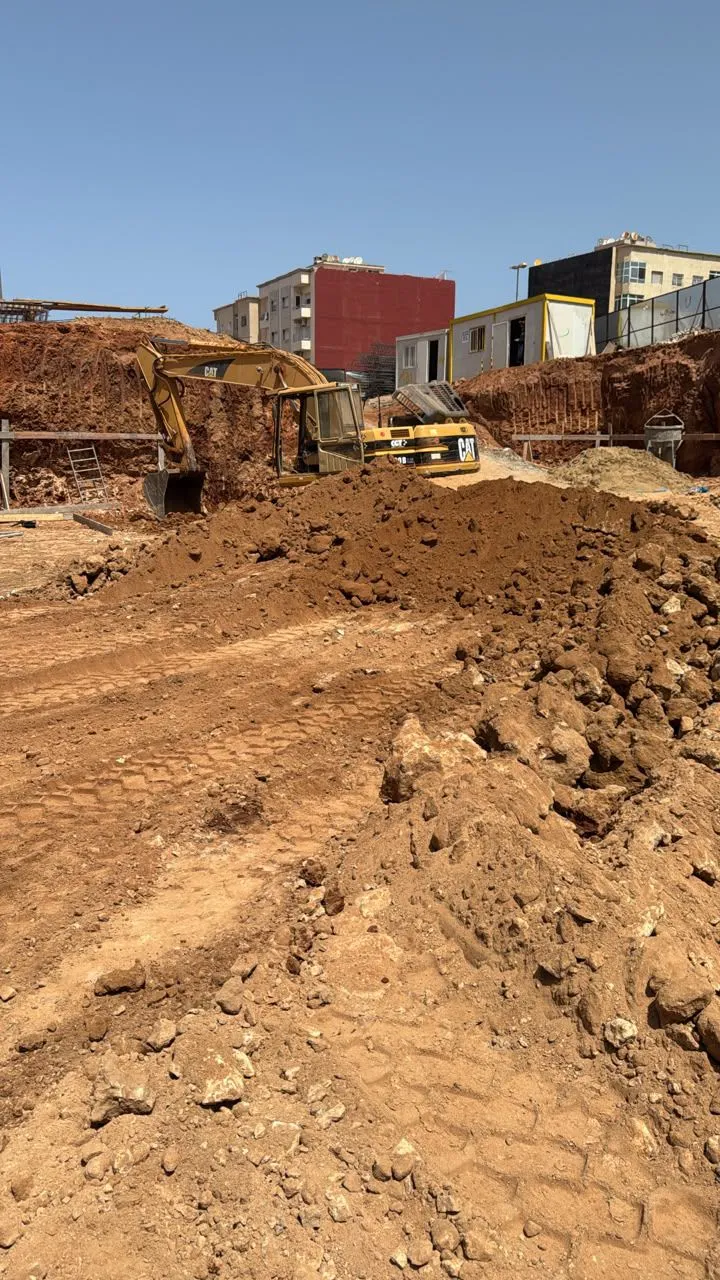
An AVNA (Attestation de Vocation Non Agricole) is an attestation required for certain eligible foreign acquisitions of agricultural land, or land with an agricultural vocation, located wholly or partly outside an urban perimeter for a non agricultural investment project; it is one condition of the transaction and does not by itself establish ownership, permit construction, or complete the purchase.
It may matter when a foreigner wants to buy a rural plot or a plot outside city limits, but it is generally not part of an ordinary purchase of an apartment, riad or villa inside an urban perimeter.
Whether it applies depends on the exact plot, its legal status, the buyer, and the intended use.
Your notary should confirm this in writing before you sign a preliminary agreement or pay a deposit.
I am Anis Chity; I am based in Marrakech and have bought four properties in Morocco.
My own purchases taught me that the notary is central, and that relying on trust instead of documents is a risk.
This guide explains the AVNA route in plain English so you know which questions to ask before you commit to land.
For the wider picture, see our guide to buying property in Morocco as a foreigner.
Already considering a property?
Get 14 days of personal buyer support, three private calls, WhatsApp support and help reviewing up to three properties before you commit money.
What Is an AVNA in Morocco?

AVNA stands for Attestation de Vocation Non Agricole, and you may also see it called a VNA.
As a general rule, agricultural land outside urban perimeters is reserved for Moroccan individuals and certain legal entities.
The AVNA route comes from Decree No. 2.04.683, which allows foreigners to acquire such land when it is intended for an investment project other than agriculture and the buyer holds the attestation.
In April 2022, three ministries issued a joint circular on issuing the AVNA to harmonise how administrations apply these rules.
That circular links the attestation to the existence of a non agricultural investment project.
So the AVNA is best understood as an authorisation route tied to a specific plot and a declared project, not as a general statement that the land has permanently stopped being agricultural.
Published procedures usually distinguish a provisional AVNA, obtained before the project, from a definitive AVNA requested after the project has been built and approved.
| English | French | Arabic |
|---|---|---|
| Certificate of non agricultural vocation | Attestation de Vocation Non Agricole (AVNA or VNA) | شهادة عدم الصبغة الفلاحية |
| Regional Investment Center | Centre Régional d’Investissement (CRI) | المركز الجهوي للاستثمار |
| Urban perimeter | Périmètre urbain | المدار الحضري |
| Agricultural land | Terrain agricole | أرض فلاحية |
Does the AVNA Apply to Your Plot?
The appearance of the land does not decide this question.
What matters is where the plot sits in relation to the urban perimeter, its legal status, how it is registered, who is buying, and what the buyer intends to do with it.
A plot inside an urban perimeter
An AVNA is generally unrelated to ordinary urban purchases such as apartments, riads, urban villas or commercial units.
That does not make an urban purchase automatically safe, because title, planning, ownership and payment checks still apply.
Our guide on whether foreigners can buy urban land in Morocco covers that situation.
Rural land outside an urban perimeter
If a plot lies wholly or partly outside an urban perimeter and is agricultural or has an agricultural vocation, a foreign buyer will normally need to look at the AVNA route.
The 2022 circular states that the attestation should not be issued in zones with high agricultural potential.
It also calls for checks that the land is not within areas governed by specific rules, such as land consolidation sectors, irrigation perimeters or land allocated under agrarian reform.
A plot in an authorised subdivision or housing group
The 2022 circular describes separate treatment for foreign buyers of property outside the urban perimeter that comes from authorised subdivisions which have been formally received and split into individually registered plots.
It gives the same treatment to property belonging to authorised housing groups.
For these cases, the circular calls for the AVNA to be issued systematically to a foreign buyer who applies.
That is not an exemption, so the buyer still needs the relevant AVNA documentation for the specific plot.
Your notary should confirm that the subdivision was authorised, that it was formally received, and that your plot has its own title.
| Situation | What usually applies | What to confirm |
|---|---|---|
| Property inside an urban perimeter | AVNA generally not relevant | Title, planning status, ownership and payment route |
| Agricultural land outside an urban perimeter | AVNA route for a non agricultural project | Agricultural potential, special zones, project eligibility |
| Plot in an authorised, received subdivision with its own title | Treatment described in the 2022 circular | Subdivision approval, reception, individual title, AVNA documents for your plot |
| Unit in an authorised housing group | Treatment described in the 2022 circular | Authorisation of the group and AVNA documents for your unit |
What Should You Check Before Paying Anything?

- Ownership: confirm who owns the land and whether every owner can sell.
- Title: check whether the plot is registered, under registration, or held under traditional documents.
- Urban perimeter: ask for the urban planning information note (note de renseignements urbanistiques) for the exact plot.
- Land status: check agricultural potential and whether the land falls inside any special zone.
- Proposed use: make sure your project is realistic and consistent with local planning rules.
- Buyer status: confirm whether you are buying as a foreign individual or through a company, because different rules may apply.
An ANCFCC property certificate shows the registered owner and registered entries for a titled plot.
For step by step title checks, see how to verify a title deed before buying.
For the full set of checks beyond AVNA, see our guide to property due diligence in Morocco.
What if you plan to buy through a company?
Law 62-19 sets out a specific route for sociétés anonymes and sociétés en commandite par actions to acquire agricultural land outside urban perimeters.
That route requires the land to be intended for agricultural investment, prior approval from the regional unified investment commission, and compliance with a sale contract and specifications.
Until the commission issues a release certificate, the property remains subject to restrictions on sale, mortgage, seizure and lease, subject to limited exceptions in the law.
This is a conditional framework for agricultural investment, not an easy way to buy a plot for a personal villa.
If a company structure is suggested to you, ask a Moroccan lawyer and notary which legal route actually applies.
Already considering a property?
Get 14 days of personal buyer support, three private calls, WhatsApp support and help reviewing up to three properties before you commit money.
Who Does What in the AVNA Process?
| Organisation | Typical role |
|---|---|
| Regional Investment Center (CRI) | Receives AVNA applications and issues the attestation in published regional procedures |
| Notary | Reviews the title and the seller’s authority, drafts the preliminary agreement and final deed, and advises on conditions |
| Urban planning agency (Agence Urbaine) | Issues the urban planning information note showing the planning status of the plot |
| ANCFCC | Issues the property certificate and cadastral documents, and registers transfers |
The file is assessed at regional level under the applicable rules, so the exact bodies involved should be confirmed with the CRI for your region.
How Does an AVNA Application Usually Work?
Procedures vary by region, project type and administration, so treat the sequence below as an example rather than a nationwide rule.
The Rabat Regional Investment Center publishes an AVNA procedure with provisional and definitive steps that follows roughly this order:
- Obtain the application form from the CRI.
- Obtain the property certificate from the land registry.
- Obtain the cadastral plan and related plot data from the cadastre.
- Obtain the urban planning information note from the urban planning agency.
- Prepare a preliminary sale agreement with a notary.
- Prepare a project file, usually with an architect.
- Submit the provisional AVNA application to the CRI.
- Obtain the provisional AVNA if the application is accepted.
- Carry out the project under the required permits.
- Obtain the certificate of conformity or occupancy permit.
- Apply for the definitive AVNA.
- Obtain the definitive AVNA if the conditions are met.
Other regions may use different forms, steps or document lists, so confirm the current local procedure with the relevant CRI and your notary.
Provisional AVNA vs Definitive AVNA

| Stage | What it relates to | What to ask |
|---|---|---|
| Provisional AVNA | The plot and the project declared before it is carried out | Whether it is enough to sign your final deed, and which conditions or obligations it carries |
| Definitive AVNA | The project after completion and conformity documents | What it establishes for your plot, and whether any entries remain on the title |
Ask your notary to read the actual attestation, because its wording, holder and conditions matter more than general descriptions.
Also ask whether the attestation can be relied on by you if it was issued to someone else, such as a seller or developer.
What neither document proves on its own
- It is not a title deed and does not prove who owns the land.
- It is not a building permit or planning permission.
- It does not guarantee that you can build what you want.
- It does not guarantee that you can later resell without restrictions.
Questions to Ask Your Notary Before a Contract or Deposit
- Is this exact plot inside or outside the urban perimeter?
- Is the land agricultural or does it have an agricultural vocation?
- Does my purchase require an AVNA, given my status and my project?
- Is the plot in a special zone such as an irrigation perimeter or land consolidation sector?
- Does an AVNA already exist, in whose name, and for which project?
- If the plot is in a subdivision, was it authorised and formally received, and does my plot have its own title?
- Can the preliminary agreement be made conditional on obtaining the AVNA?
- Who will hold the deposit, and when will it be refunded if the AVNA is refused or delayed?
- What will the final deed and the title show about the AVNA and any conditions?
A preliminary agreement or deposit is not always prohibited before approval, but the terms should be clear.
A notary can assess whether an agreement with an explicit AVNA condition, a deadline and refund terms is appropriate for your case.
Our guides to the compromis de vente and protecting a property deposit explain these terms in more detail.
Red flags
- You are asked to pay the seller directly because the AVNA is said to be in progress.
- You are told the whole subdivision is approved, but nobody shows documents for your plot.
- The AVNA exists but is in another person’s name or for another project.
- You are told the paperwork can be fixed after the purchase.
- A company structure is proposed as a simple workaround.
Why Might an AVNA Be Delayed or Refused?
The 2022 circular requires refusal decisions to be reasoned, so ask for the written reasons if an application is refused.
Based on the conditions in the circular, applications can face problems when:
- The land lies in a zone with high agricultural potential.
- The land falls inside a special zone such as an irrigation perimeter or land consolidation sector.
- There is no credible non agricultural investment project.
Delays can also come from incomplete files, title issues, planning questions or regional workload.
These are common issues to discuss with your notary, not a complete list of reasons used everywhere.
How Much Does an AVNA Cost and How Long Does It Take?
There is no single figure that applies to every AVNA file.
Costs usually come from the supporting work, such as property and cadastral documents, the planning note, architect input, notary work, and any legal help.
Timing depends on the region, the completeness of the file and the project, so do not set a completion date that assumes a quick answer.
Ask the CRI and your notary for current fees and realistic timescales for your region, and get the notary’s own fees in writing.
You can compare with our guide to buying property in Morocco through a notary.
Is Buying Inside an Urban Perimeter Simpler?
For many buyers, choosing land or property inside an urban perimeter removes the AVNA question.
Perimeters can change over time, so your notary should check the current planning documents for the exact plot.
If Marrakech is your focus, our guide to buying property in Marrakech covers urban purchases, and our guide to buying land to build a villa in Marrakech looks at plots.
Buyer Checklist Before You Commit
Before any deposit or signature
- Get the urban planning information note for the exact plot.
- Get a recent property certificate and cadastral documents.
- Confirm with the notary whether an AVNA applies to your purchase.
- Check whether an existing AVNA covers your plot, your name and your project.
- For subdivisions, confirm authorisation, formal reception and an individual title.
- Make sure the preliminary agreement includes an AVNA condition, a deadline and refund terms where appropriate.
- Pay through the notary or with clear written proof, never informally to a seller or agent.
- Confirm current fees, documents and timing with the CRI and your notary.
Already considering a property?
Get 14 days of personal buyer support, three private calls, WhatsApp support and help reviewing up to three properties before you commit money.
AVNA FAQ
What does AVNA mean in Morocco?
AVNA stands for Attestation de Vocation Non Agricole, an attestation linked to a non agricultural investment project on land outside an urban perimeter.
Is AVNA the same as VNA?
Yes, VNA is a shorter way of referring to the same attestation.
Do I need an AVNA to buy an apartment or riad in Marrakech?
An AVNA is generally not part of an ordinary urban purchase, although title, planning and ownership checks still apply.
Do I need an AVNA for a plot in a subdivision outside the city?
The 2022 circular describes separate treatment for plots from authorised, formally received subdivisions with individual titles, but the buyer still needs the relevant AVNA documentation, so ask your notary to confirm the status of your plot.
Can I sign a preliminary agreement before the AVNA is issued?
It may be possible, and some published procedures include a preliminary agreement in the application file, but the agreement should include clear AVNA conditions and deposit refund terms checked by your notary.
Does an AVNA give me the right to build?
No, construction still depends on planning rules and the required permits.
Can a company with foreign shareholders buy agricultural land?
Law 62-19 sets a conditional route for certain company forms acquiring agricultural land for agricultural investment, so the answer depends on the company form and the project and should be confirmed with a lawyer.
How long does an AVNA take?
Timing varies by region and file, so ask the CRI and your notary for a realistic estimate for your case.
This article is general information based on published sources and personal buying experience.
It is not legal, tax or financial advice, so confirm your own transaction with a Moroccan notary, lawyer, the relevant CRI, the urban planning agency and ANCFCC before committing.

Anis is the founder of Buy Property Morocco, a research-based resource created to help foreign buyers understand the real process of buying property in Morocco safely.
He focuses on the practical details most buyers only discover too late: title deed checks, notary steps, compromis de vente risks, transfer taxes, foreign banking rules, repatriating money after a sale, and avoiding common mistakes when dealing with agents or sellers.
Anis has personally bought 4 properties in Morocco and shares practical guidance based on real experience, not theory.
If you are seriously considering buying property in Morocco and want private guidance before you send money, pay a deposit, or sign anything, you can book a buyer safety call here: