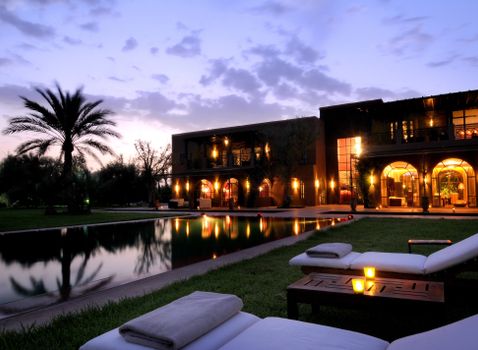
Luxury real estate in Marrakech covers several very different markets: renovated Medina riads, golf villas in Amelkis and Agdal, private estates in the Palmeraie, premium apartments in Hivernage and Guéliz, modern villas along the roads leading out of the city, and new high end developments sold off plan.
The word luxury is used loosely in Marrakech listings.
A high asking price, beautiful photographs, and expensive furniture do not prove that a property is fairly priced, legally clean, well built, or suitable for how you plan to use it.
This guide is for foreign buyers who are browsing luxury properties in Marrakech, comparing areas, questioning an asking price, or already talking to an agent about a specific villa, riad, or apartment.
I am Anis Chity, based in Marrakech. I have personally bought four properties in Morocco, and I created Buy Property Morocco to help foreign buyers avoid the mistakes I had to learn the hard way.
My own Marrakech purchases were apartments rather than luxury villas, so I will not pretend to have personally bought every property type covered here.
But the pressure points are the same at every price level: asking prices that move once you negotiate seriously, sellers who change terms, agents who push for deposits, documents that arrive late, notary steps that get rushed, and international transfers that need the correct route.
At a higher budget, those same mistakes simply cost more.
Foreign buyers can generally purchase urban residential property in Morocco, including villas, riads, and apartments in Marrakech.
Restrictions and extra complications mainly appear with agricultural or rural land, which matters for some villas and estates outside the city.
Luxury real estate in Marrakech at a glance
The luxury market here includes premium apartments in Hivernage and Guéliz, golf villas around Amelkis, private estates in the Palmeraie, renovated riads in the Medina, and modern villas outside the city centre.
Prices vary widely according to the precise location, land size, documented built area, title status, construction quality, condition, access, privacy, and intended use.
- Best for central living: Hivernage and Guéliz, if you accept city noise
- Best for privacy and larger land: the Palmeraie and selected outer villa areas, once the legal status of the parcel is verified
- Best for managed golf living: Amelkis and established golf communities, with community charges to budget
- Best for character and hospitality potential: selected Medina riads, with the most legal checking required
- Best for easier maintenance: premium apartments and managed communities
Already considering a property?
See the 14 Day Buyer Plan: $299 →Get 14 days of personal buyer support, three private calls and WhatsApp support.
Get help reviewing up to three properties before you commit money.
What counts as luxury real estate in Marrakech?
In Marrakech, luxury should be judged on measurable factors, not on the word used in the advertisement.
The factors that actually create value include:
- Exact location and surroundings
- Land size and documented built area
- Privacy and security
- Construction and renovation quality
- Legal status and clean title
- Road access and distance from the city
- Garden, pool, heating, and cooling quality
- Parking, storage, and staff accommodation
- Building management and syndic health for apartments
- Suitability for rental or hospitality use, if that is your goal
Furniture, staging, and professional photography are marketing.
They can hide cracks, damp, cheap finishes behind decorative surfaces, and expensive maintenance problems.
The safest mindset is simple: evaluate the property, not the label.
The main luxury property types in Marrakech
Each luxury property type suits a different buyer and carries a different main risk.
| Property type | Often suits | Main risk to check |
|---|---|---|
| Luxury villa near the city | Full time living, families, privacy | Construction quality and undocumented extensions |
| Palmeraie estate | Privacy, space, holiday use | Water, maintenance costs, land status |
| Golf villa (Amelkis, Agdal area resorts) | Golf lifestyle, lock and leave use | Community charges and resort rules |
| High end apartment (Hivernage, Guéliz) | Central convenience, easier maintenance | Syndic finances and rental restrictions |
| Renovated Medina riad | Character, guesthouse potential | Title status, structure, permissions |
| New luxury development | Modern finishes, staged payments | Developer reliability and delivery delays |
| Land for a custom villa | Buyers who want full control | Land classification and building authorisations |
No type is automatically better.
The right choice depends on your goal, your tolerance for maintenance, and how much legal complexity you are willing to manage.
Luxury real estate prices in Marrakech: how to read them
Here is the honest answer most pages avoid: published prices for luxury property in Marrakech are asking prices, not completed sale prices.
Actual negotiated prices are often lower, sometimes meaningfully lower.
With that warning in place, the table below shows broad advertised asking ranges observed across current listings from multiple Marrakech agencies and portals.
| Luxury category | Typical advertised asking range | What moves the price |
|---|---|---|
| Premium apartments in Guéliz | Current advertised properties commonly appear from approximately €165,000 to €340,000, with larger or exceptional apartments above this range | Building quality, floor, view, renovation, parking |
| Premium apartments in Hivernage | Current advertised properties commonly appear from approximately €180,000 to €900,000, depending heavily on size, building, terrace, finishes, parking, and exact location | Building quality, floor, terrace, finishes, parking, exact location |
| Golf villas (Amelkis and similar communities) | From roughly €300,000 for smaller golf residences to €2,500,000 and above for large front line villas | Golf frontage, plot size, community, condition |
| Modern villas near Marrakech (including outer routes) | Current listings commonly appear within roughly €450,000 to €2,500,000, with exceptional properties above that | Distance from the city, land size, build quality, legal status |
| Renovated Medina riads | Renovated luxury riads commonly appear from approximately €450,000 to €1,200,000, while larger hospitality properties and exceptional riads may be advertised considerably higher | District, car access, renovation quality, licences |
| Palmeraie villas and private estates | Contemporary villas commonly advertised around €750,000 to €1,900,000; large estates and palaces from roughly €1,800,000 to €4,500,000 and beyond, with rare prestige estates far higher | Plot size, architecture, water, privacy, condition |
Asking price ranges reviewed in July 2026 across multiple current Marrakech listings and agency market pages. These are broad advertised ranges, not confirmed completed sale prices.
The ranges overlap heavily, and that is not sloppiness.
Location, land size, built area, condition, legal status, privacy, views, access, furniture, and rental suitability can push two apparently similar properties into completely different price brackets.
What I can tell you from my own buying experience is that asking prices in Marrakech move.
In one of my own purchases, the seller started around €85,000, came down to €75,000, and we finally agreed at €70,000.
That was an ordinary apartment, not a villa, but the lesson scales: the first number is a starting point, not the value.
A practical method for checking any asking price
- Find the same property advertised by other agents and compare the prices shown
- Collect several similar properties in the same micro location
- Compare land area and built area separately, using documented figures
- Adjust for condition, renovation needs, and age
- Evaluate access, privacy, and views honestly
- Price the furniture separately, or ignore it
- Estimate the yearly maintenance cost before you fall in love
- Treat rental projections as unverified until you see documents
- Negotiate on evidence, not emotion
If the value materially affects your decision, get professional guidance on the specific property rather than relying on portal prices.
My full approach to price discussions is in the guide on how to negotiate property prices in Morocco.
Best areas for luxury real estate in Marrakech
These are the areas foreign buyers ask about most, with the practical trade offs that listings rarely mention.
Hivernage
Hivernage is the central upscale district near the big hotels, close to both Guéliz and the Medina.
Luxury here mostly means premium apartments and some villas.
It suits buyers who want walkable central living, restaurants, and easy short stays.
The trade off is less privacy, more noise near hotel zones, and building quality that varies more than the polished lobbies suggest.
Check the syndic, the neighbours, and any short term rental restrictions before assuming Airbnb use is possible.
Guéliz
Guéliz is the modern city centre, with offices, shops, cafés, and newer residential buildings.
Premium apartments here suit full time residents and buyers who value convenience over quiet.
Inspect noise, parking rights, and neighbouring commercial activity carefully, because street level businesses can change the feel of a building quickly.
The Palmeraie
The Palmeraie is the historic palm grove area outside the centre, known for large private estates and resort style villas.
It suits buyers who want land, gardens, and privacy.
The trade offs are distance from the city, dependence on car access, meaningful water and garden costs, and big differences in legal status between neighbouring parcels.
Amelkis and the golf communities
Amelkis and the golf developments around the Agdal side of the city offer villas inside managed communities, often with golf frontage.
They suit buyers who want security, maintained surroundings, and a property that can be locked and left.
The trade offs are community charges, resort rules that may limit what you can change or how you can rent, and premiums attached to the golf label itself.
Ask for the charge history and the community rules in writing.
The Medina
Luxury in the Medina means renovated riads, some operating as guesthouses.
It suits buyers who want character and possible hospitality income.
It carries the most legal complexity of any luxury segment: title status, heirs, boundaries, access lanes, renovation permissions, and commercial use rules all need verification.
Route de l’Ourika, Route de Fès, Route d’Amizmiz
The roads leading out of Marrakech host many modern villas and estates marketed as luxury.
They suit buyers who want space and newer construction at a distance from the centre.
The critical point: properties along these roads sit on parcels with very different planning and land statuses.
Verify the specific parcel, the access road, water, electricity, drainage, and every construction authorisation.
| Area | Typical luxury property | Main drawback | Inspect carefully |
|---|---|---|---|
| Hivernage | Premium apartments | Noise, less privacy | Syndic, rental rules |
| Guéliz | Modern apartments | City noise | Parking, neighbours |
| Palmeraie | Private estates | Distance, upkeep cost | Land status, water |
| Amelkis / golf | Golf villas | Charges, rules | Charge history |
| Medina | Renovated riads | Legal complexity | Title, permissions |
| Outer routes | Modern villas, land | Variable legal status | Parcel, access, utilities |
For a broader look beyond the luxury segment, see the comparison of the best neighborhoods in Marrakech for expats and foreign buyers.
How do you choose the right luxury area?
The best area depends entirely on your goal.
- Full time living: central areas or a villa with reliable access win over remote estates
- Holiday use: managed communities reduce the headache of an empty property
- Short term rental: guest access, distance from attractions, and building rules decide everything
- Long term rental: areas with resident demand matter more than tourist appeal
- Privacy: Palmeraie and the outer routes, if the legal status is clean
- Golf lifestyle: the golf communities, with eyes open on charges
- Hospitality business: the Medina, with serious legal work
- Capital preservation: titled property in established areas with clear resale demand
A beautiful property in the wrong location for your goal becomes a bad purchase.
How buyers find luxury properties in Marrakech
Luxury properties in Marrakech surface through local agencies, international agencies, property portals, developer sales teams, personal referrals, direct owner listings, and local networks.
From my own experience, some of the best opportunities never reach the portals.
My first purchases came through a local contact who knew the areas and prices, not through a website.
Local networks are real, but they are not a substitute for verification.
Expect the same luxury property to appear on several websites, sometimes with different prices, different agents, outdated photos, and vague locations.
Before spending time on any listing, confirm:
- The property is still available
- Who actually represents the seller
- Whether the agent has permission to advertise it
- Whether the asking price is consistent across listings
- Whether the photos are current
- Whether the stated land and built areas are documented
- Whether the described legal use matches reality
Be careful with the phrase off market.
Sometimes it is genuine, and sometimes it is a sales technique applied to a property that has quietly sat on portals for a year.
How to choose a Marrakech real estate agent for luxury property
A good agent does more than open the door and repeat the seller’s story.
A useful agent can clarify the seller’s position, the exact location, the price history where known, the title situation, the commission arrangement, what is included, whether the property is occupied, and whether documents are available for review.
What an agent cannot replace is independent legal verification.
The agent usually has a financial interest in completing the transaction, so the buyer should still rely on an independent notary for legal verification.
The notary, and where useful your own lawyer, are the ones who verify ownership and legal status.
I explain how to test an agent before trusting them in my guide to choosing a real estate agent in Marrakech as a foreign buyer.
Questions to ask before booking a viewing
These questions filter weak listings before you spend time or travel on a visit.
- What is the exact location?
- What is the land area, and what is the documented built area?
- Is the property titled, and who is the registered owner?
- Is the property occupied?
- What exactly is included in the asking price?
- Are furniture and equipment included, and at what value?
- Are there community or syndic charges, and how much?
- Have extensions been added, and are they documented?
- Is the property currently rented, and are rental figures documented?
- Why is the owner selling?
- How long has it been advertised?
- Is the asking price negotiable?
Not every agent will know every answer before a first viewing.
But an agent who cannot or will not answer any of them is telling you something.
What to inspect during a luxury property viewing
A luxury appearance can hide expensive problems.
Fresh paint and good staging cost far less than fixing structural damp or replacing a failing pool system.
During viewings, look beyond the decoration:
- Cracks in walls, ceilings, and around openings
- Damp marks, smells, and recently painted patches
- Roof and terrace condition, especially drainage
- Water pressure on upper floors
- Electrical systems, heating, and cooling age and condition
- Pool condition, equipment, and documentation
- Garden irrigation, and the water source that feeds it
- Well and septic documentation for properties outside the city
- Road access, noise, and neighbouring construction
- Privacy from neighbouring buildings and future building plots
- Security, parking, staff areas, and storage
- For apartments: lift condition, common areas, and how the building is managed
For a serious villa, riad, or estate, pay for a technical inspection by a qualified professional such as an architect, engineer, or surveyor.
On a high budget purchase, an inspection fee is small insurance against a very large mistake.
Already considering a property?
See the 14 Day Buyer Plan: $299 →Get 14 days of personal buyer support, three private calls and WhatsApp support.
Get help reviewing up to three properties before you commit money.
Can foreigners buy luxury property in Marrakech?
Yes, foreign buyers can generally purchase urban residential property in Marrakech, including luxury villas, riads, and apartments.
The main complications appear with agricultural or rural land, which can involve restrictions or additional procedures.
This matters for some estates and villas outside the urban perimeter, where the land classification of the specific parcel decides what applies.
Your notary should confirm the classification and the correct procedure for the exact property before you commit.
The complete process, documents, and steps are covered in the main guide to buying property in Marrakech as a foreigner.
The safest buying process for a luxury property
This section is about the order of the transaction, because most expensive mistakes come from doing the right things in the wrong sequence.
- Define your budget and intended use honestly
- Choose areas that match that use
- Shortlist properties and confirm basic information for each
- View and compare several properties, not just one
- Test the asking price against comparable properties
- Choose your own independent Moroccan notary
- Have ownership and property documents reviewed
- Clarify the offer, conditions, and what is included in writing
- Understand the deposit agreement before paying anything
- Transfer funds through the correct banking route
- Sign the final deed only after the required checks are complete
Not every transaction follows exactly this order, and your notary should guide the legal side of the specific deal.
The full legal, physical, and financial review behind steps six to eleven is covered in my checklist for property due diligence in Morocco.
Why the notary matters more at luxury prices
When I bought my first property in Marrakech, the notary was central to the whole process.
It was my first purchase, I trusted the people around me, and thank God it went well, but looking back I relied far too heavily on trust.
At luxury prices, that kind of luck is not a strategy.
The notary’s role typically includes confirming ownership, reviewing the title, identifying registered charges, preparing or reviewing agreements, handling transaction funds through the proper process, and registering the final transaction.
Understand what the notary does not guarantee:
- Construction quality
- Fair market value
- Rental returns or Airbnb performance
- The physical condition of the property
- The honesty of every claim the seller makes
Legal checks and physical checks are two different jobs, and you need both.
I describe the whole process in detail in buying property in Morocco through a notary.
Title deed and ownership checks
Titled property, held under a Titre Foncier, is generally easier for foreign buyers to verify because ownership is recorded in the land registry system managed by ANCFCC.
For any luxury property, check that:
- The registered owner matches the person selling
- No charges or restrictions block a clean transfer
- The documented land area and built area match what is advertised
- Extensions, pools, and outbuildings appear in the documentation
Never rely on a photograph of a document sent over WhatsApp.
Your notary should obtain and verify current official records.
Some properties, especially riads and rural parcels, are held under Melkia, a traditional form of ownership documentation.
Melkia is not automatically fraudulent, but it usually requires more legal work and does not suit every foreign buyer.
The step by step verification I used on my own purchase is in how to verify a title deed before buying property in Morocco.
Luxury villas outside central Marrakech: extra checks
Large villas and estates along Route de l’Ourika, Route de Fès, and Route d’Amizmiz raise questions that central apartments do not.
Before falling in love with a villa outside the city, verify:
- Land classification and urban planning status of the exact parcel
- Legal status of the access road
- Water source, including well documentation where relevant
- Electricity connection and capacity
- Drainage and septic documentation
- Construction authorisations for the house, pool, and every extension
- The documented built area against what you see
- Planned development on neighbouring land
Neighbouring properties on the same road can have completely different legal situations.
Verify the parcel, not the postcode.
Buying a luxury riad
Riads carry a different risk profile from villas and apartments.
Common issues include Melkia title status, multiple heirs with rights to the property, unclear boundaries, shared walls, access through narrow lanes, structural problems hidden by renovation, missing renovation permissions, and hospitality use that was never properly authorised.
Revenue claims for guesthouse riads deserve particular scepticism until documented.
This is a deep topic on its own, so before going further read the legal risks of buying a riad in Marrakech.
Buying a luxury apartment in Hivernage or Guéliz
Premium apartments are the simplest luxury category to maintain, but they come with a building attached.
Before buying, inspect:
- Syndic finances and unpaid community charges
- Common areas, lift condition, and building security
- Parking rights, documented, not promised
- Roof and terrace responsibilities
- Water problems in the building’s history
- Noise and neighbouring commercial activity
- Building rules on short term rental, if Airbnb is part of your plan
A beautiful apartment in a badly managed building slowly becomes a problem you cannot renovate your way out of.
Buying off plan in a new luxury development
Buying before completion adds a layer of risk: you are paying for something that does not fully exist yet.
Check the developer’s identity and track record, ownership of the land, approvals, contract terms, the payment schedule, the delivery date, specifications, delay provisions, and any resale limitations.
Renders and show units are marketing, not commitments, unless the contract makes them commitments.
Deposits and preliminary agreements: where luxury buyers get hurt
Deposit warning from my own experience
I once paid a €1,000 guarantee deposit while waiting for a seller to return from abroad.
It worked out, but it was risky, and at luxury prices that same casual approach could cost you tens of thousands.
Do not send money because an agent says another buyer is ready, the owner needs an answer today, or the documents will be checked later.
Tie any deposit to clear written terms, and preferably handle it through the notary.
Before paying a deposit or signing a reservation agreement or compromis de vente, understand:
- Who actually receives the money
- Whether it is refundable, and under exactly which conditions
- What happens if legal problems appear during checks
- What happens if the seller withdraws
- What deadline applies
- Which property, land, furniture, and equipment are included in writing
Agreement formats vary, so have yours reviewed before signing rather than after.
The details are covered in my guides on the property deposit in Morocco for foreigners and the compromis de vente for foreign buyers.
International payments and the convertible dirham route
How your money enters Morocco matters, especially at luxury purchase levels.
Foreign buyers should preserve clear evidence of the foreign currency transfer into Morocco, because that documentation generally matters later if you sell and want to transfer the proceeds abroad.
The correct banking route, often involving a convertible dirham account, should be confirmed with your Moroccan bank, your notary, and where useful the Office des Changes, because rules and procedures can vary by situation.
Do not improvise the payment route on a purchase of this size.
Start with my guide to the convertible dirham account for buying property in Morocco.
Fees, taxes, and the real cost of owning luxury property
The purchase budget is more than the asking price.
When I bought, I paid several separate costs at the notary: a registration cost, a land registry cost, and the notary’s fee.
That is why I tell buyers to calculate the full acquisition cost, not just the number agreed with the seller.
Your acquisition budget should account for registration and transaction costs, notary related costs, agent commission, and applicable taxes, with exact rates confirmed by your notary and, where relevant, the DGI.
Then there is the ownership budget, which luxury buyers underestimate most:
- Syndic or community charges
- Pool and garden maintenance
- Security and staff
- Utilities for a large property
- Insurance
- Repairs on ageing systems
- Rental management, if you rent it out
A villa that stretches your budget on purchase day will strain it every year afterwards.
Current cost breakdowns are in the guide to notary fees in Morocco.
Airbnb and rental potential: check before you believe
Beautiful photos and an agent’s projected nightly rate do not prove investment performance.
Before buying a luxury property for rental income, assess the exact location and guest access, seasonality, management and cleaning costs, staff, maintenance, platform fees, utilities, local competition, building or community rules, legal use and permissions, noise, parking, and your tax obligations.
Verify that the intended rental activity is actually permitted for that specific property before you buy, not after.
One lesson from my own purchase of a property with an existing shop tenant: rental income transfers to you only once the property is officially registered in your name.
Existing leases, guest operations, and revenue claims all need document level verification, not verbal assurance.
If short term rental is central to your plan, start with the best neighborhoods in Marrakech for Airbnb investment.
Common luxury property mistakes in Marrakech
These are the buyer decisions and assumptions that cause the most damage.
- Paying for the word luxury instead of measurable value
- Falling in love with the property before checking documents
- Comparing prices across different micro locations as if they were equal
- Ignoring what a villa costs to maintain every year
- Trusting projected rental returns without documents
- Buying too far from the city for the intended use
- Assuming a famous area makes every property in it valuable
- Failing to check the registered area against the advertised area
- Ignoring unauthorised construction because it looks finished
- Relying on the seller’s contacts instead of your own notary
- Sending a deposit before verification
- Assuming the agent has checked legal ownership
- Buying a guesthouse property without checking its permitted use
- Treating asking prices as completed sale prices
Red flags when buying luxury property in Marrakech
Slow down if you see any of these:
- Refusal to give the exact location
- Different asking prices from different agents
- Conflicting statements about who owns the property
- Pressure to pay before document checks
- Missing or unclear title information
- Unexplained differences between advertised and documented areas
- Claims that every extension is legal, with no documents
- Guaranteed rental returns or unverified Airbnb income
- Claims that the notary is unnecessary or a formality
- Requests to send money to a person unrelated to the deal
- Refusal to allow an independent inspection
- Major maintenance issues hidden behind fresh decoration
- A seller who will not confirm in writing what is included
- A price far below comparable properties with no clear reason
One red flag does not always mean fraud.
But unresolved inconsistencies should slow you down, and a seller with nothing to hide will not fight your verification.
Real cases and patterns are covered in the guide to Marrakech property scams and pitfalls for foreigners.
When should you walk away?
Walking away is for serious, unresolved conditions that make the risk unacceptable.
- Ownership cannot be verified
- The seller does not clearly have the right to sell
- Material documents remain unavailable after reasonable requests
- The legal status does not suit your intended use
- Undocumented construction creates risk you cannot price
- The property cannot realistically support your plan
- The seller refuses reasonable professional checks
- The full ownership cost is no longer comfortable
- Pressure replaces transparency
- You can no longer follow where your money is going
From my own experience, deals in Morocco collapse regularly, on both sides.
One owner changed her mind on an apartment I wanted, and another kept changing what was included until I walked away myself.
Walking away is not failure.
It is what protects your capital for the right property.
Luxury real estate in Marrakech: frequently asked questions
How much does a luxury villa cost in Marrakech?
Based on advertised asking prices reviewed in July 2026, modern luxury villas near Marrakech commonly appear between roughly €450,000 and €2,500,000, golf villas from around €300,000 to €2,500,000 and above, and Palmeraie villas and estates from around €750,000 to €4,500,000 and beyond, with rare prestige estates far higher.
These are asking prices, not completed sale prices, and negotiated prices are often lower.
Land size, exact location, construction quality, legal status, and distance from central Marrakech move the price materially in both directions.
Where do wealthy foreign buyers buy property in Marrakech?
The areas most commonly considered by foreign luxury buyers are Hivernage and Guéliz for premium apartments, the Palmeraie for private estates, Amelkis and the golf communities for managed villa living, the Medina for renovated riads, and selected villa zones along Route de l’Ourika, Route de Fès, and Route d’Amizmiz.
No area is automatically right, because each suits a different goal and carries different checks.
Is Palmeraie or Amelkis better?
The Palmeraie tends to suit buyers who want privacy, larger land, and estate style living, accepting higher maintenance, water and garden costs, and careful verification of the parcel’s legal status.
Amelkis tends to suit buyers who prefer golf, managed surroundings, community security, and easier lock and leave ownership, accepting community charges and resort rules.
Whichever you prefer, verify access, charges, and the legal status of the specific property rather than choosing on reputation alone.
Can foreigners buy luxury villas in Marrakech?
Yes, foreigners can generally buy urban residential villas in Marrakech.
Rural or agricultural land can involve restrictions or additional procedures, which matters for some villas and estates outside the urban perimeter.
Have a Moroccan notary verify the exact parcel before you commit.
Can a luxury Marrakech property work as an Airbnb?
It may, but nothing about the luxury label guarantees it.
You would need to verify the location and guest access, property management and operating costs, the legal use and required permissions, community or building rules, real local demand and seasonality, and documented income evidence rather than projections.
Confirm all of that before buying, not after.
Is luxury real estate in Marrakech a good investment?
It depends on the specific deal, not the market label.
The outcome rests on your purchase price, the exact micro location, the property’s condition and legal status, the yearly maintenance cost, your intended use, how well any rental is executed, resale demand for that property type, and how long you hold it.
A carefully verified property bought at a defensible price can work well, and a poorly checked property bought on emotion can lose money in any market.
Final luxury property buyer checklist
- My goal and intended use are defined
- The area matches that use
- The full budget covers purchase, fees, taxes, and yearly ownership costs
- I compared several similar properties, not one
- I tested the asking price against documented comparables
- The registered owner matches the seller
- The title status is verified through my notary
- Land and built areas are documented, including extensions and the pool
- Authorisations exist for all construction
- The physical condition was professionally inspected
- Access, water, electricity, and drainage are confirmed
- Syndic or community costs and rules are in writing
- Rental permissions are confirmed, if renting is the plan
- Deposit terms are written and preferably handled through the notary
- The payment route through my bank is confirmed and documented
- Future resale and repatriation of funds are planned from day one
This is not legal, tax, or valuation advice. Before you commit, confirm the exact legal, banking, and tax situation for your specific property with your own Moroccan notary, bank, and where useful a lawyer or the relevant authority.
Found a luxury property in Marrakech? Check it before you commit
If you have found a luxury villa, riad, estate, apartment, or golf property in Marrakech, do not let momentum carry you into a deposit.
Send me the listing link, the asking price, the area, the property type, the land size, the built area, photos, agent information, how you plan to use it, and anything that feels unclear.
I will help you look at the price, the area, the Airbnb potential, and the practical risks with fresh eyes.
I am not the seller of the property, so the goal is not to push you toward the deal.
The goal is to help you slow down, look at the property with fresh eyes, and ask better questions before moving forward.
Just a calm second look before you pay a deposit, sign an agreement, or transfer money.
Already considering a property?
See the 14 Day Buyer Plan: $299 →Get 14 days of personal buyer support, three private calls and WhatsApp support.
Get help reviewing up to three properties before you commit money.

Anis is the founder of Buy Property Morocco, a research-based resource created to help foreign buyers understand the real process of buying property in Morocco safely.
He focuses on the practical details most buyers only discover too late: title deed checks, notary steps, compromis de vente risks, transfer taxes, foreign banking rules, repatriating money after a sale, and avoiding common mistakes when dealing with agents or sellers.
Anis has personally bought 4 properties in Morocco and shares practical guidance based on real experience, not theory.
If you are seriously considering buying property in Morocco and want private guidance before you send money, pay a deposit, or sign anything, you can book a buyer safety call here: