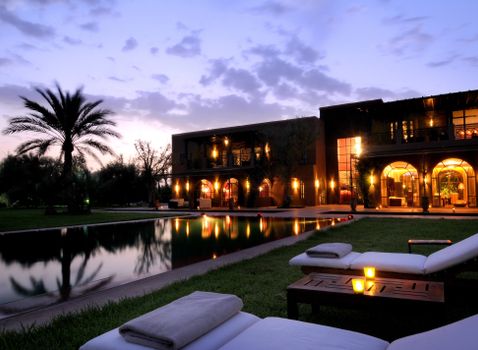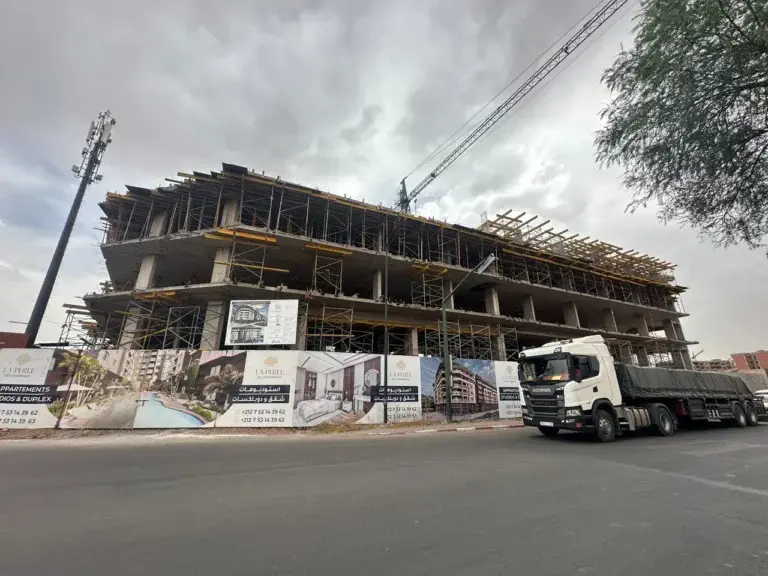
Marrakech real estate breaks down into four main segments for foreign buyers: apartments, villas, riads inside the medina, and urban building land.
Foreigners can generally acquire properly documented urban property in Morocco, although each individual property still has to be checked.
Title status and seller authority need confirming, land classification and zoning decide what you can build, and some riads carry more complicated ownership documentation.
Agricultural land follows different restrictions and a separate administrative procedure, so it should never be treated like ordinary urban property.
The practical question, then, is which segment fits your goal and whether the specific property survives verification.
Marrakech property market at a glance
- Bank Al-Maghrib and the ANCFCC recorded a 1.5% fall in the Marrakech property price index in the first quarter of 2026 compared with the previous quarter.
- Despite that quarterly dip, the Marrakech index stayed about 1.1% above the level of the first quarter of 2025.
- Total recorded Marrakech transactions fell 51.5% from the previous quarter, and residential transactions alone fell 53.3%.
- Marrakech remained Morocco’s leading tourist destination in 2025, with about 13.6 million nights recorded in classified accommodation.
- Since 1 July 2026, an additional registration duty of 2% can apply when the total price exceeds 300,000 dirhams and part of it is paid by a nonaccepted or undocumented method.
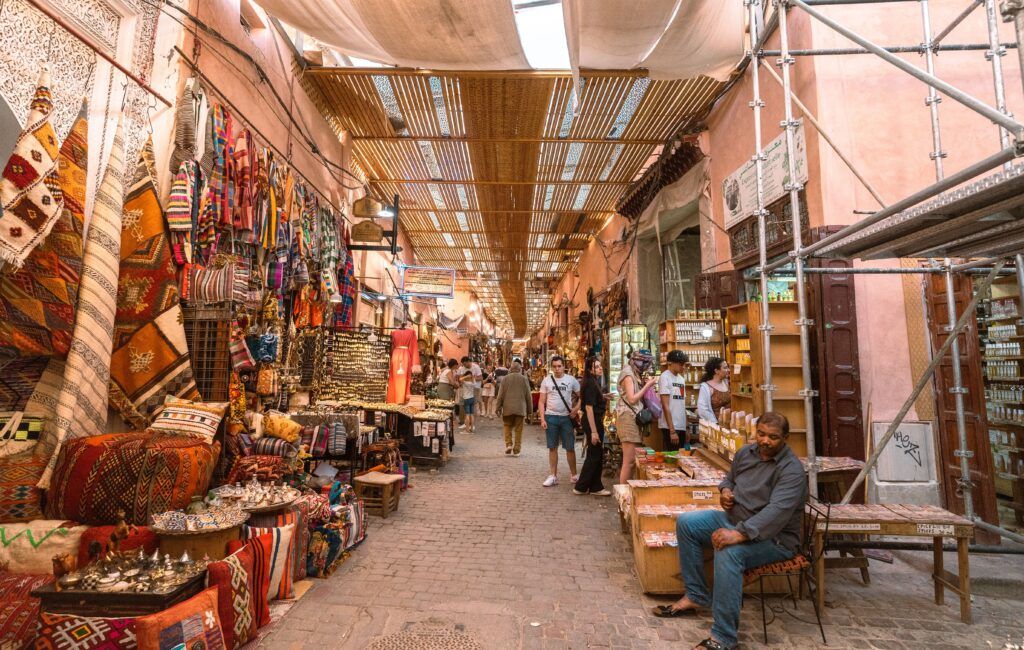
What is actually happening in the Marrakech property market?
Prices dipped slightly from one quarter to the next while completed sales slowed very sharply over the same three months.
The official price index for Moroccan property is produced jointly by Bank Al-Maghrib and the ANCFCC, using registered transactions rather than advertised prices.
In the first quarter of 2026, the Marrakech index fell 1.5% against the previous quarter, yet it remained roughly 1.1% higher than in the first quarter of 2025.
Recorded transactions tell a stronger story, because total Marrakech sales dropped 51.5% from the previous quarter and residential sales dropped 53.3%.
Those are quarterly comparisons rather than annual ones, and quarterly volumes in Morocco often swing widely between the end and the start of a year.
So the figures point to a sharp quarterly slowdown in completed transactions rather than to a market in collapse.
A quieter market may give some buyers more room to negotiate and may lengthen resale timelines, although neither outcome is automatic.
Much depends on the individual property, its title, its condition, its price and the number of buyers actually looking for that type of home.
Buyer warning on prices
Asking prices on portals and agency windows are marketing figures, while the official index reflects prices actually registered at completion, so never treat the two as the same number.
What types of real estate can you buy in Marrakech?
Each segment attracts a different buyer, carries a different level of legal complexity, and has a different resale audience.
Apartments
Apartments are the most standardised part of the Marrakech market, which often makes them easier to compare against similar units.
Most sit inside co ownership buildings, which means a syndic manages the common areas and charges a monthly or annual fee.
Because the building is shared, you inherit its condition, its unpaid charges and its maintenance backlog, so the building matters as much as the flat.
Our guide to buying an apartment in Marrakech safely covers the price ranges and legal steps in more detail.
Villas
Villas in Marrakech are found mainly in outer residential districts, gated schemes and developments along the roads leading out of the city.
Running costs are the part buyers tend to underestimate, because a pool, a garden and a larger plot need staff, water and continuous maintenance.
Depending on the location, price band and finish, a villa may also appeal to a narrower group of buyers at resale than a central apartment would.
If this is your segment, read our detailed guide to villa prices and legal checks in Marrakech before you shortlist anything.
Riads
A riad is a traditional courtyard house inside the historic walled medina, and it is often the most emotionally attractive and most technically demanding purchase in the city.
Medina property can involve shared walls, inherited ownership, heritage rules, restricted vehicle access and older construction methods.
Renovation budgets for riads are difficult to control, so the purchase price is rarely the whole cost.
Our overview of riads for sale in the Marrakech medina explains the specific checks this segment needs.
Building land and new developments
Land looks simple and is often the riskiest thing a foreign buyer can sign for in Morocco.
You need to confirm that the land is titled, that it is zoned for the construction you intend, and that it is not classified as agricultural.
New developments and off plan units add a separate layer, because you are buying a promise supported by permits, guarantees and a developer’s track record.
Already considering a property?
See the 14 Day Buyer Plan: $299 →
Get 14 days of personal buyer support, three private calls and WhatsApp support.
Get help reviewing up to three properties before you commit money.
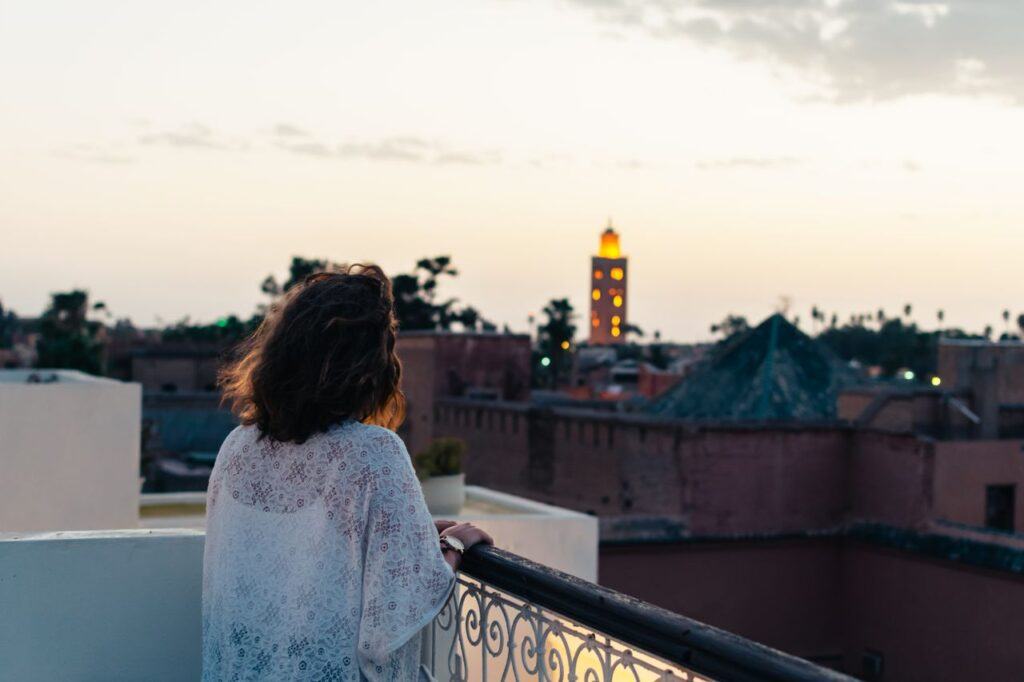
How do Marrakech areas differ for foreign buyers?
Location in Marrakech shapes your daily life, your maintenance burden, your likely tenant and the size of your resale audience.
The table below sets out the general character of the areas foreign buyers ask about most often.
| Area | General character | Main tradeoff to weigh |
|---|---|---|
| Gueliz | Modern central district with apartment blocks, shops, cafes and offices | Convenience and walkability, although traffic, noise and building age can vary a lot from street to street |
| Hivernage | Central area known for hotels, gardens and higher end residential buildings | Prestige and central access, though hotel activity, evening noise and resale demand depend on the exact street and building |
| Medina | Historic walled old town where riads and traditional houses are located | Character and tourism appeal against vehicle access, title complexity and renovation cost |
| Palmeraie | Palm grove zone outside the centre, mostly villas on larger plots | Space and privacy against car dependence and upkeep that varies with plot size and pool |
| Targa | Residential district west of the centre, mainly villas and individual houses with some apartment schemes | Quieter family living, though build quality and finishing can differ sharply between schemes |
| Agdal | Established residential area south of the historic centre, mixing older buildings with newer residential schemes | Proximity to city services, although property age, parking and outdoor space vary widely within the area |
| Routes out of the city | Villa schemes, golf developments and resort projects along roads such as the Route de l’Ourika and Route d’Amizmiz | Larger plots for the money against driving times, thinner local services and demand that depends on the individual scheme |
One factor deserves more weight than most buyers give it, and that is market depth.
An area where very few comparable properties change hands can be harder to exit, even when the property itself is attractive.
Therefore, before you commit to a specific street, try to understand how much genuine buying and selling activity that micro location actually sees.
For a closer look at daily life in each district, see our comparison of which Marrakech neighbourhoods suit expat buyers.
How should you compare asking prices in Marrakech?
Start by separating three different numbers that are often blurred together.
- The asking price, which is what the seller or agency advertises and is not proof of value.
- The agreed price, which is what the buyer and seller settle on after negotiation.
- The registered price, which appears in the deed and is used for taxes and duties.
Morocco publishes an official reference price tool that most foreign buyers never open.
The Directorate General of Taxes maintains a property price reference used for tax purposes, built with the land registry, the notaries’ body and other institutions.
It is not a valuation of your specific property, and it is not a market appraisal.
Still, it shows the price bands the administration treats as normal for a zone and property type.
That makes it a useful sanity check against an inflated asking price.
The quarterly property asset price index published by Bank Al-Maghrib is the other free reference worth knowing about.
Where to get a real view of market value
Your notary handles legal verification, title and charges, transaction documents and acquisition cost estimates, rather than market valuation.
For value itself, consider instructing a qualified independent valuer when the sum involved justifies it.
Also gather evidence from genuinely comparable properties, and ask more than one suitable agent for their view and their reasoning.
Recent local transaction evidence is more persuasive than any listing, so use it wherever you can obtain it.
Compare properties on condition, title status, location, floor level, parking, building quality and usable space rather than headline size alone.
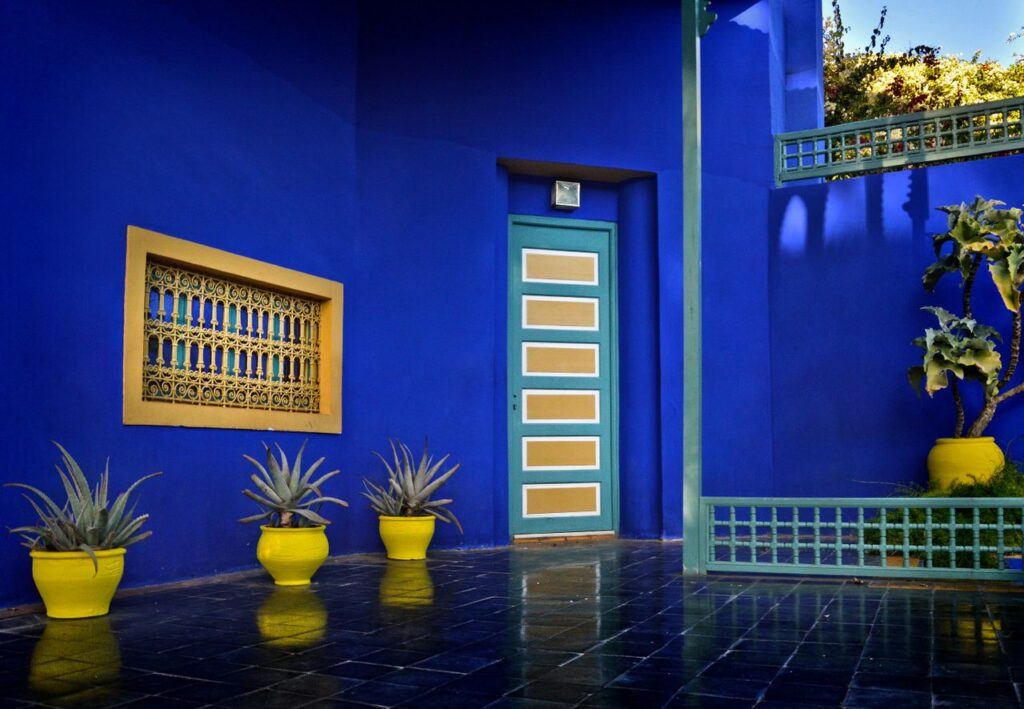
Why price per square metre can mislead you
A registered surface area may include parking, terraces, balconies or shared space that does not carry the same practical value as indoor living space.
Two apartments with the same figure on paper can therefore differ significantly in what you can actually furnish and use.
Layout, ceiling height, floor level, lift reliability and orientation all affect real value, and none of them appear in a price per square metre calculation.
Our guide to how property valuation works in Marrakech goes through this adjustment process step by step.
How do foreign buyers actually find property in Marrakech?
Most foreign buyers begin on listing portals, then move to agencies, developers and local contacts once they arrive.
Portals are useful for building a price picture, although listings can be outdated, duplicated across agencies or priced for a foreign audience.
Agencies give you access and speed, but you should assume the agent is paid on completion and is not acting as your independent adviser.
Developers sell their own stock, so their information about a scheme is commercial rather than neutral.
Local networks still surface properties that never reach a portal, which is genuinely useful and also harder to verify.
Our breakdown of nine ways to search for property in Marrakech compares these channels in detail.
From my experience
I am based in Marrakech and I have bought four properties in this city, so the process is not theory for me.
The two things that surprised me most were how many costs sit above the agreed price, and how much paperwork stands between an agreement and a completed transfer.
Because of that, I now tell foreign buyers to slow down at the document stage rather than at the viewing stage.
Already considering a property?
See the 14 Day Buyer Plan: $299 →
Get 14 days of personal buyer support, three private calls and WhatsApp support.
Get help reviewing up to three properties before you commit money.
What should you verify before you sign or pay anything?
Verification in Morocco follows a logical order, and skipping a step early tends to cost money later.
Five checks before you commit to a Marrakech property
Establish whether the property has a registered land title and obtain a recent certificate rather than a photograph of an old document.
Check the registered owner, any heirs or co owners, and the validity of any power of attorney presented on their behalf.
Ask about mortgages, liens, disputes, unpaid taxes, unpaid syndic charges and any existing tenancy.
Compare the approved plans with what has actually been built, since unauthorised extensions and conversions can create problems at resale.
Agree in writing how and when money moves, and keep every transfer traceable through the banking system.
The notary sits at the centre of a Moroccan purchase and acts impartially rather than for the buyer or the seller.
That impartiality is protective, but it does not replace your own questions, and you are entitled to instruct your own notary rather than the one the agent suggests.
A verbal understanding is not enough on its own, while a signed offer or promise of sale may already create obligations before completion.
For that reason, every document should be reviewed by your own notary or a qualified Moroccan lawyer before you sign it or pay anything.
For the practical mechanics of checking ownership, see our walkthrough on how to verify a Moroccan title deed.
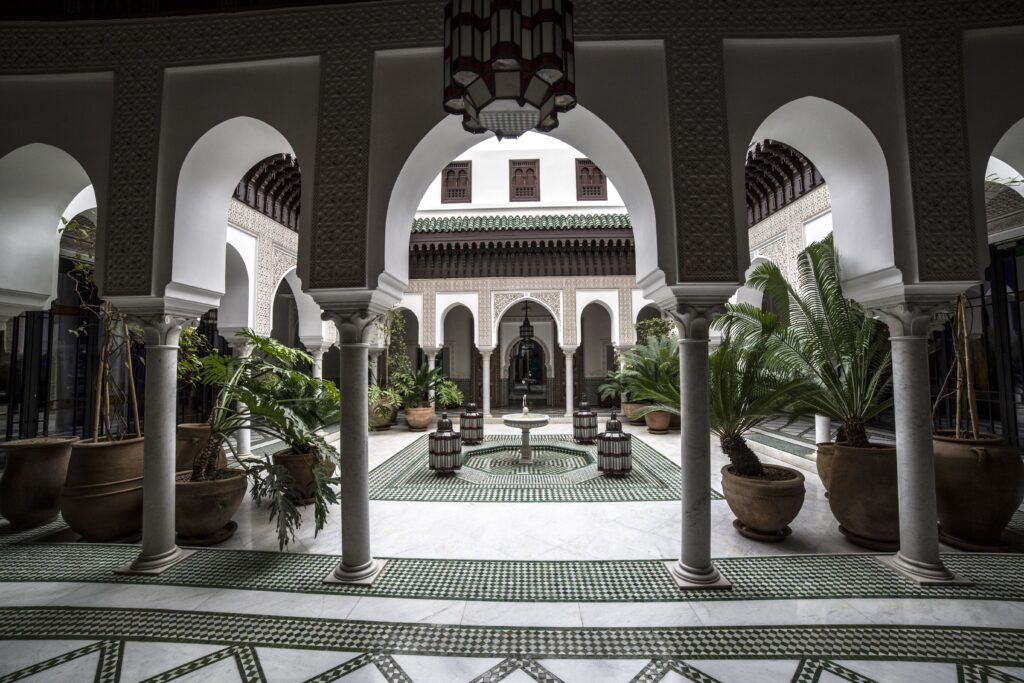
What does a Marrakech purchase cost beyond the asking price?
Your true budget includes several separate charges that arrive at different moments.
| Cost item | Who receives it | What to confirm |
|---|---|---|
| Registration duty | The tax administration | The rate applied to your property category and the registered price |
| Land registry fees | The national land registry agency | The fees for registering the transfer in your name |
| Notary fees | The notary | The fee, the disbursements and what is included in the quote |
| Agency commission | The estate agency | Whether the buyer, the seller or both pay, and whether it is written down |
| Ongoing charges | Syndic, utilities and local authorities | Annual local taxes, monthly syndic fees and any planned building works |
Rates and calculation methods can change, so ask your notary for a written estimate of total acquisition costs before you commit.
The new rule on traceable payments
From 1 July 2026, an additional registration duty of 2% can apply when the total property price exceeds 300,000 dirhams and part of the price is paid through a nonaccepted or undocumented method.
The additional 2% is calculated only on the affected portion of the price, not on the whole transaction.
Note that the noncompliant portion does not itself have to exceed 300,000 dirhams, because the threshold applies to the total price.
The deed should also set out the payment terms and the payment references clearly.
According to the 2026 tax guidance, accepted methods include bank transfer, a crossed cheque that cannot be endorsed, direct debit and bank card payment.
For a foreign buyer the practical conclusion is simple, namely that every dirham should move through documented banking channels and every record should be kept.
This article is general information rather than tax advice, so confirm your own position with your notary or a qualified Moroccan tax adviser.
What should you settle before counting on rental income or resale?
Marrakech has genuine tourist demand, and that is exactly why rental assumptions need testing rather than accepting.
Official tourism figures showed about 13.6 million nights in classified accommodation in Marrakech during 2025, with average occupancy in those establishments around 73%.
Those numbers describe hotels and classified establishments, however, and they are not a promise about what one apartment or villa will earn.
Short term letting in Morocco is regulated, so authorisation, registration and building rules must be confirmed for the specific property rather than assumed.
Co ownership rules can also restrict short stay letting inside a residential building, which is a question for the syndic and the building regulations.
Meanwhile, long term letting usually means steadier income and lower management effort, though the yield comparison depends on the property, the area and the running costs.
Resale deserves the same care, particularly in a period when quarterly transaction volumes have moved so sharply.
Ask yourself who realistically buys this property from you in five or ten years, because that answer shapes everything from the segment to the street.
Which warning signs should make you pause?
Red flags in a Marrakech deal
- Pressure to pay a deposit before anyone has produced a current ownership certificate.
- A request to send money to a personal account or an intermediary rather than through a documented channel.
- Only a photograph or photocopy of a title document, with excuses about producing the original.
- A seller who is abroad and represented by someone whose authority has not been verified.
- Refusal to put the agreed inventory, timeline and refund conditions in writing.
- Insistence on registering a price lower than the price you are actually paying.
- A property described as titled where nobody can produce the title reference.
- Rental income presented verbally, with no lease, no bank records and no accounts.
An existing tenancy is not automatically a warning sign, although it does change what you are buying.
Look at the lease, the rent, the payment history, the tenant’s rights and the moment when rent starts being paid to you.
Our guide to the most common Marrakech property scams covers these patterns in more depth.
What is the safest next step?
Work through the market in a sequence rather than falling for the first property you like.
- Define the purpose first, whether that is living, holidays, letting or a long horizon investment.
- Choose the segment that matches that purpose, then narrow to two or three areas.
- Build a price picture from portals, several agents, comparable evidence and the official reference price tool.
- Shortlist properties and ask for the title reference and ownership certificate early.
- Appoint your own notary rather than relying only on the one proposed to you.
- Request a written estimate of total acquisition costs before signing anything.
- Have every document reviewed before you sign it, including any offer or promise of sale.
- Move every payment through traceable banking channels and keep the proof.
Nobody can promise you that a Marrakech purchase will be safe or profitable, and you should be wary of anyone who does.
What you can control is the order in which you verify things, and how much you pay before you have verified them.
Already considering a property?
See the 14 Day Buyer Plan: $299 →
Get 14 days of personal buyer support, three private calls and WhatsApp support.
Get help reviewing up to three properties before you commit money.

Frequently asked questions about Marrakech real estate
Can foreigners buy property in Marrakech?
Foreigners can generally acquire properly documented urban property in Marrakech, including apartments, villas, riads and urban building land.
Agricultural land is the main restricted category and follows a separate administrative procedure.
Are Marrakech property prices rising or falling?
Bank Al-Maghrib and the ANCFCC recorded a 1.5% fall in the Marrakech index in the first quarter of 2026 against the previous quarter.
Even so, the index stayed about 1.1% above the same quarter of 2025.
Recorded transactions fell much more steeply from the previous quarter, which points to a slower period for completed sales rather than a price collapse.
Do I need to be resident in Morocco to buy in Marrakech?
Residency is not generally required to purchase property, although non resident buyers usually need specific banking arrangements for bringing funds in.
Your bank and your notary should confirm the correct account type and documentation for your situation.
Should I use the estate agent’s notary?
You are free to appoint your own notary, and many foreign buyers prefer to do so.
The notary is meant to act impartially, but choosing your own removes any doubt about who introduced whom.
Is it cheaper to pay in cash in Morocco?
Not necessarily, because since 1 July 2026 an extra registration duty of 2% can apply to certain payments.
It arises where the total price exceeds 300,000 dirhams and part of it is paid by a nonaccepted or undocumented method.
That extra duty falls only on the affected portion, and traceable payments also give you records you may need later for tax and for transferring funds abroad.
How long does a Marrakech purchase take?
Timing depends on the title status, the seller’s paperwork and any outstanding charges that must be cleared before completion.
Rather than relying on a general figure, ask your notary for a realistic timeline once the specific file has been reviewed.

Anis is the founder of Buy Property Morocco, a research-based resource created to help foreign buyers understand the real process of buying property in Morocco safely.
He focuses on the practical details most buyers only discover too late: title deed checks, notary steps, compromis de vente risks, transfer taxes, foreign banking rules, repatriating money after a sale, and avoiding common mistakes when dealing with agents or sellers.
Anis has personally bought 4 properties in Morocco and shares practical guidance based on real experience, not theory.
If you are seriously considering buying property in Morocco and want private guidance before you send money, pay a deposit, or sign anything, you can book a buyer safety call here: