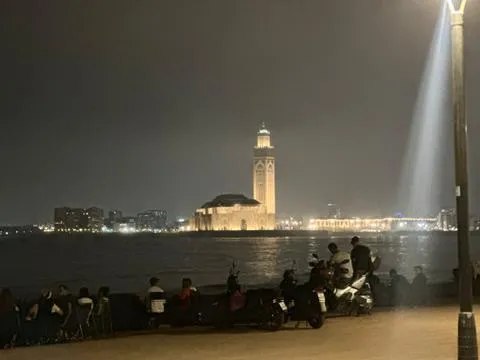

Morocco has several very different types of real estate company, and no single one is right for every foreign buyer.
Estate agencies market existing property, developers build and sell their own projects, portals publish listings from many sellers, and management firms look after a property after completion.
Your best choice depends on the city, the property type, your budget, the intended use, and the stage you have reached.
One point matters far more than the brand on the door.
A company can introduce you to a property, but it cannot give you legal certainty about that property.
Certainty comes from the land registry, from a notary, and from checks you arrange yourself.
What does the term real estate company mean in Morocco?
The phrase covers any registered business that earns money from property, which is why search results feel so mixed.
Some of those businesses never own a single square metre and simply introduce buyers and sellers.
Others own land, build on it, and sell directly to the public with no agency in the middle.
A third group never sells anything and only publishes advertisements placed by agencies, developers, and private owners.
At a glance for foreign buyers
- Match the type of company to your stage: browsing, shortlisting, buying, or owning.
- Ask in writing who the company represents and who pays its fee.
- Check the legal business, not only the trading name on the website.
- Treat every claim about ownership, title, and permissions as unverified until an official record confirms it.
- Keep the notary, and not the company, at the centre of contracts and payments.
Which types of real estate company operate in Morocco?
Five service models cover most of what a foreign buyer will meet.
Knowing which one you are dealing with tells you what that business is paid to do.
It also tells you what the business has no reason, and often no ability, to check for you.
| Company type | Typical role | Best fit |
|---|---|---|
| Estate agency | Introduces buyers to property owned by other people and usually acts on the seller side | Resale apartments, villas, riads, and land in a specific city |
| Property developer | Builds and sells its own projects, often before completion | New build apartments, gated residences, and serviced plots |
| Property portal or classifieds platform | Publishes listings uploaded by agencies, developers, and private sellers | Early research on areas, asking prices, and stock levels |
| Property or rental management firm | Runs the property after purchase, including tenants, guests, cleaning, and maintenance | Owners who live abroad and rent the property out |
| Buyer support or relocation service | Helps the buyer plan, compare, and prepare questions for qualified professionals | Foreign buyers who want guidance before committing to anything |
Notice that only the developer in this list actually owns what it sells.
Every other model earns a fee for a service, so the written scope of that service is the thing to read closely.
Already considering a property?
See the 14 Day Buyer Plan: $299 →
Get 14 days of personal buyer support, three private calls and WhatsApp support.
Get help reviewing up to three properties before you commit money.
Which real estate companies can be used as examples?
The businesses below show how different the market really is, from national developers to a small agency working one medina.
Each entry was checked against the company website, and the coverage shown reflects what that website states.
This is an illustrative sample rather than a ranking, a recommendation, or a complete list of the market.
| Company | Type of business | Coverage stated on its website |
|---|---|---|
| Avito | Classifieds platform with a large property section | Sale and rental listings across Morocco |
| BARNES Marrakech | Estate agency operating under an international brand | Riads, villas, apartments, and land in Marrakech |
| Chic Marrakech | Specialist agency combined with a design and renovation service | Medina riads and villas in Marrakech and Essaouira |
| Groupe Addoha | Private developer selling its own projects | Residential and commercial projects in cities across Morocco |
| Groupe Al Omrane | Public developer and land servicing group | Housing, plots, and commercial units through regional subsidiaries |
| Groupe Alliances | Private developer that also delivers projects for third parties | Residential and resort projects in Morocco, including Marrakech |
| Mubawab | Property portal carrying agency, developer, and private listings | Sale and rental listings across Morocco |
Services, coverage, and even ownership can change, so treat the table as a starting point and confirm current details on the company website.
Being listed here says nothing about price, service quality, or how safe any individual transaction would be.
How does a company differ from an individual agent or a portal?
Many people who show property in Morocco are not employed by a registered company at all.
Informal intermediaries, often called semsars locally, work on introductions and are paid when a deal closes.
Their local knowledge can be genuinely useful.
My own first purchases in Marrakech came through a local contact with a small office, not a branded firm.
That route worked, although looking back I relied heavily on trust at a stage when I should have been verifying documents.
The practical difference is accountability, because a registered company has a legal identity, an address, and records you can look up.
Morocco has also been discussing a dedicated professional statute for estate agents for years, and draft law 36.17 was filed with the government secretariat in 2017.
At the time of writing the text has not been adopted.
Treat any claim of an official agent licence with care and ask exactly what it refers to.
For a closer look at commissions, mandates, and agent behaviour, our guide to how foreign buyers can compare agent fees, services and risks goes into more detail.
Portals sit in a different category again, because they host advertisements and do not vet each property behind them.
Prices, photographs, and even availability on a portal come from the advertiser, which is why a listing is a lead rather than evidence.
If you are still at the search stage, our overview of nine ways to find property for sale in Marrakech compares the main channels.
Developers deserve their own caution, since buying an unfinished unit involves construction risk, delivery dates, and staged payments.
Those points are covered in our guide to what foreign buyers must check before paying for off plan property.
How can you check the business behind a real estate company?
Start with the legal identity, because a website name, a shop sign, and a registered company are three separate things.
Ask for the exact legal name, the commercial register number, and the ICE, which is the common enterprise identifier used by Moroccan administrations.
The ICE is a fifteen digit number issued through OMPIC for companies, and it has been required on official business documents since 2016.
Once you have those details, you can look the company up yourself.
Where the official records sit
OMPIC maintains the central commercial register, which records companies and individual traders carrying out commercial activity in Morocco.
Its DirectInfo service gives access to legal and financial information on businesses entered in that register.
Records there can confirm the legal form, the registered address, the stated activity, and the history of changes filed by the company.
Registration proves that a business exists on paper and nothing more, so never read it as proof of honesty, competence, or a safe property.
Checking a real estate company in Morocco
1. Identify the exact legal business
Get the registered company name, the commercial register number, and the ICE in writing.
2. Check the registration record
Look the business up through OMPIC or DirectInfo and compare the details with what you were told.
3. Confirm the role and the written fee
Establish who the company represents, what it will do, what it charges, and when the fee becomes payable.
4. Verify the property independently
Use the land registry and a notary to check the title, the owner, and any charges before you commit.
5. Pay only through the agreed traceable route
Send money to the account named in the signed document and keep an invoice in the company name.

Checks you can complete before any money moves
- Visit the office, or ask for a video call from it, and confirm the address matches the registration record.
- Establish who employs or authorises the person you are dealing with.
- Ask whether the company represents the seller, the buyer, a developer, or more than one party at once.
- Request the service scope, the commission, the tax treatment, the payment trigger, the cancellation terms, and any exclusivity in writing.
- Confirm that any invoice and bank account are in the company name rather than a personal name.
- Ask who else is involved, because a second intermediary sometimes appears only at signature.
- Agree how copies of your passport and financial documents will be stored, used, and deleted.
Any refusal to put these basics in writing is information in itself, and it costs you nothing to slow down.
Already considering a property?
See the 14 Day Buyer Plan: $299 →
Get 14 days of personal buyer support, three private calls and WhatsApp support.
Get help reviewing up to three properties before you commit money.
What can a real estate company confirm, and what cannot it confirm?
A good company saves you time, opens doors, explains a neighbourhood, and keeps a transaction moving.
None of that extends to guaranteeing the legal position of a specific property.
The table below separates the two, because confusing them is where foreign buyers usually lose money.
| Question you need answered | Who can actually answer it |
|---|---|
| Who legally owns the property and what is registered against it | ANCFCC records, read with a notary |
| Whether the seller has authority to sell, alone or with others | The notary, and a lawyer where heirs or companies are involved |
| What the contract really commits you to | The notary, or your own Moroccan lawyer |
| Whether the building work was authorised and completed correctly | The municipality, an architect, or a surveyor |
| What you will owe in taxes and registration costs | The notary and DGI, since treatment depends on your circumstances |
| How your funds enter Morocco and can later leave | Your Moroccan bank, within the Office des Changes framework |
Buy Property Morocco is an information resource for buyers and does not act as an agency, a law firm, or a notarial practice.
Our checklist on property due diligence in Morocco sets out the wider verification sequence.
For the land registry side, the guide to verifying a title deed before you buy goes step by step.
When my own purchase completed, the notary was the point where ownership genuinely changed, not the handshake in the agency office.

Which warning signs deserve a slower response?
Most problems announce themselves before the money moves, usually as pressure or vagueness.
Treat the pattern below as a prompt to pause, ask again, and involve a professional.
| Warning sign | Safer response |
|---|---|
| The company will not give its legal name, register number, or ICE | Pause the discussion until you can look the business up yourself |
| You are asked to pay a reservation amount to a personal account | Ask for the payment to be routed through the notary and documented |
| Only a photograph or screenshot of the title is offered | Request a current land registry check arranged through a notary |
| The commission and its trigger stay verbal | Ask for a written mandate or service agreement before you view more property |
| You are told the notary is a formality that can wait | Choose your own notary and let that office lead the process |
| Rental income or resale value is promised as a fixed figure | Ask for the evidence behind the number and model a weaker outcome |
None of this means Moroccan companies are generally untrustworthy, because plenty of them work properly and say so in writing without hesitation.
Deposits are the moment where these habits matter most, and our guide to what to check before paying a property deposit explains the safer sequence.
How should you work with a company from abroad?
Distance changes the risk, since you cannot drop into the office or look at the building twice in a week.
Insist on a video walkthrough that shows the street, the entrance, the neighbours, and the actual unit in one continuous recording.
Ask for the title reference early, then have a notary check it rather than accepting a summary by message.
Choose a company that answers in a language you read well, because a contract you cannot read is a risk you cannot price.
Keep every commitment in email or a signed document, since messaging apps make it easy for terms to drift quietly.
Appoint your own notary before you travel, and let the agency work around that choice rather than the other way round.
Our guide to buying property in Morocco through a notary explains what that office does and where it protects you.
If your search is centred on Marrakech, the article on choosing a Marrakech real estate agent safely adds city specific detail.
A short checklist before you share documents or send money
- Write down what you want the company to do for you, then compare it with the service it actually offers.
- Collect the legal name, register number, ICE, office address, and the name of the person handling your file.
- Look the business up through OMPIC or DirectInfo and note anything that does not match.
- Get the representation, fee, tax, trigger, cancellation, and exclusivity terms in one written document.
- Instruct your own notary and give that office the property reference for an independent check.
- Agree the payment route in writing, keeping funds traceable and invoices in the company name.
- Decide your walk away point in advance, including the price and the answers you refuse to accept.

Frequently asked questions
Do real estate agencies in Morocco need a licence?
Morocco has been working on a professional statute for estate agents for years, and draft law 36.17 has been pending since 2017.
Because the framework can change, ask what any claimed licence or registration refers to and verify the underlying company yourself.
Can a foreign buyer deal directly with a developer?
Yes, and buying directly from a developer removes an intermediary, although it also removes anyone whose interest is separate from the seller.
You still need a notary, an independent view of the contract, and clarity on payment stages and delivery.
Are property portals reliable sources of prices?
Portals show asking prices rather than agreed prices, so they indicate the market without proving it.
Use them for range and volume, then test any specific figure against comparable sales through a notary or a valuation professional.
Should I use the company that introduced the property to handle everything?
Convenience is real, but a single provider handling the search, the contract, and the payment leaves you without a second opinion.
Keeping the notary independent from the agency preserves that balance at the stage where it matters most.
Is a bigger company automatically safer?
Size brings process and visibility, although it does not confirm the legal position of the specific property you want.
A small local agency with a clear written mandate can serve you better than a large one that avoids specifics.
What should you do before contacting a company?
Decide first what stage you are at, because that single answer narrows the field faster than any list of names.
Early research is best served by portals and general reading, while a serious shortlist needs an agency or a developer in the right city.
Ownership after completion is a different service again, and the firm that sold you the property is not automatically the right one to manage it.
Whichever route you take, keep three things in your own hands: the company checks, the notary, and the payment trail.
Those three habits protect you far more reliably than any brand, office, or introduction.
Already considering a property?
See the 14 Day Buyer Plan: $299 →
Get 14 days of personal buyer support, three private calls and WhatsApp support.
Get help reviewing up to three properties before you commit money.

Anis is the founder of Buy Property Morocco, a research-based resource created to help foreign buyers understand the real process of buying property in Morocco safely.
He focuses on the practical details most buyers only discover too late: title deed checks, notary steps, compromis de vente risks, transfer taxes, foreign banking rules, repatriating money after a sale, and avoiding common mistakes when dealing with agents or sellers.
Anis has personally bought 4 properties in Morocco and shares practical guidance based on real experience, not theory.
If you are seriously considering buying property in Morocco and want private guidance before you send money, pay a deposit, or sign anything, you can book a buyer safety call here: