Yes, Australians can legally buy most urban and residential property in Morocco, including apartments, houses, villas and riads.
Before any money moves, however, you should verify the ownership record, confirm the seller’s legal identity, involve an independent Moroccan notary and plan a traceable banking route from Australia.
What Australian buyers need to know at a glance
- Australian nationality does not block a purchase of urban or residential property in Morocco.
- Agricultural land outside urban areas is restricted for foreign buyers and needs a separate authorisation.
- Owning Moroccan property does not create an automatic right to live in Morocco.
- A Moroccan notary prepares the deed, collects the taxes and registers the transfer.
- Ownership should be checked against the official land registry record rather than a photocopy.
- Funds should travel through the banking system so every payment can be traced years later.
- Your Australian tax position depends on tax residence, not on holding an Australian passport.
- Budget for notary, registration, land registry, agency and currency costs above the agreed price.
Can Australians legally buy property in Morocco?
Moroccan law does not reserve urban housing for Moroccan nationals.
An Australian buyer is therefore treated much like any other foreign buyer.
In practice, you can purchase a titled apartment without asking a government body for prior permission.
Your nationality matters far less than the legal status of the property itself.
Moroccan residence and Moroccan visas are separate questions, because neither is required to sign a purchase deed.
For the wider process explained from the beginning, see our guide on buying property in Morocco as a foreigner.
Which land and property categories are restricted?
Agricultural land situated outside urban perimeters is the main restriction that catches foreign buyers by surprise.
Foreign individuals and foreign owned companies generally cannot acquire land classified as agricultural.
Rural plots therefore need deeper investigation than a titled apartment inside a city.
Buyers in that situation usually need a non agricultural vocation certificate before the sale can proceed.
For that specific scenario, read our explanation of the AVNA certificate for foreign buyers.
Also ask your notary in writing whether the parcel sits inside or outside the urban perimeter.

Does buying property give you Moroccan residency?
Buying a home in Morocco does not, by itself, grant you a visa or a residence permit.
Smartraveller states that Australians generally do not need a visa for visits of less than 90 days.
Other situations require a visa, and entry conditions can change quickly.
Check the current Australian Government travel advice for Morocco before booking flights.
If your plan involves living in Morocco for part of the year, confirm the residence rules with the nearest Moroccan embassy or consulate.
Treat the property decision and the immigration decision as two separate projects.
What should you decide before you start searching?
Defining the purpose of the purchase before you start viewing can reduce avoidable mistakes later.
Write down whether this is a holiday base, a retirement plan, a rental property or a resale project.
Then set a total budget that includes purchase costs, currency conversion, furnishing and the first year of running costs.
Finally, decide how often you can realistically be in Morocco.
Remote ownership generally needs a manager and a maintenance budget.
How should you compare Moroccan cities and areas?
Rather than ranking cities against each other, compare each option against your own intended use.
Access matters first, including flight connections, airport distance, traffic and how you would reach the property.
Property type comes next, because an apartment, a riad and a villa create very different maintenance obligations.
Also check the local services you would actually rely on, such as shops, schools, clinics and transport.
Noise levels, parking and building condition can differ sharply between two streets in the same city.
Meanwhile, ongoing costs such as service charges, utilities and management fees deserve a written estimate.
Finally, think about the kind of buyer or tenant the property might suit in future.
Visit at different times of day, because a quiet morning street can behave differently at night.
What is the safest order for the buying process?
- Define your purpose, your budget and your ownership timeframe.
- Shortlist areas and visit them more than once.
- Appoint your own Moroccan notary before you make an offer.
- Request the ownership documents and have them checked independently.
- Agree the price and the exact terms in writing.
- Sign a preliminary agreement only after the title check is complete.
- Transfer funds through the banking system with full records.
- Sign the final deed and follow the registration through to completion.
Moving from a viewing straight to a preliminary agreement, without verification, increases your risk.
When should you involve a Moroccan notary?
Bring a notary in before you make an offer, rather than after you have paid a reservation fee.
The notary drafts the deed, verifies the documents, calculates the taxes and lodges the transfer with the land registry.
Importantly, you can choose your own notary instead of accepting the one suggested by the seller.
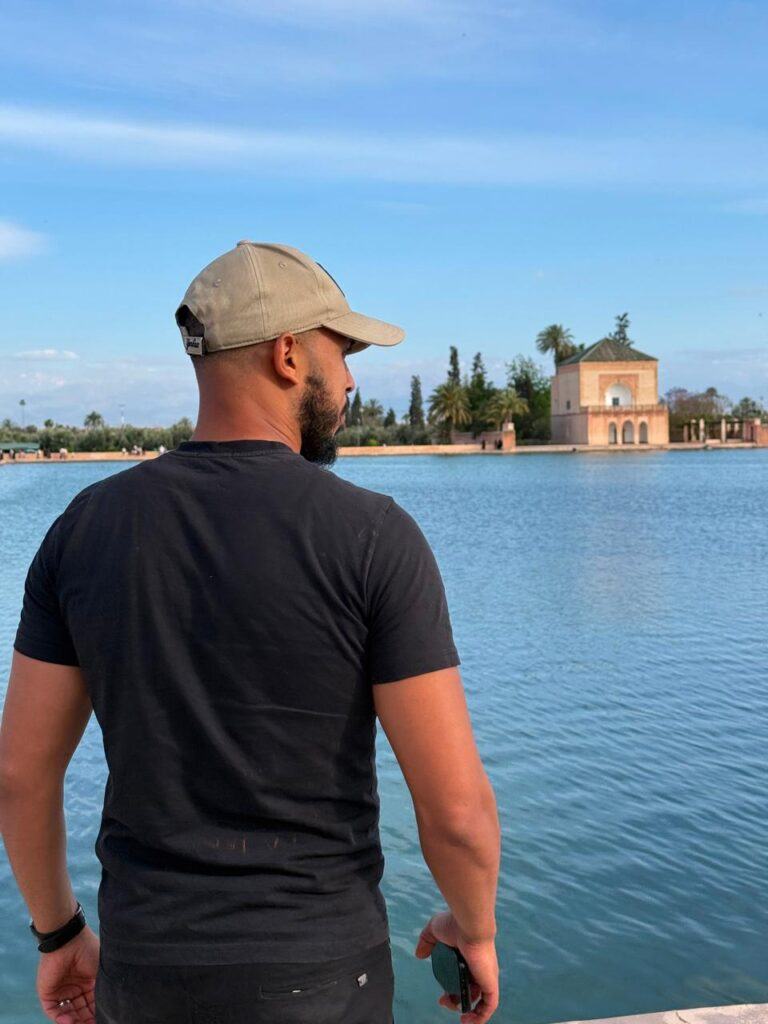
I am Anis Chity, I live in Marrakech, and I have been involved in buying four apartments here.
What I would say to any Australian buyer is simple: an agent’s reassurance is not a substitute for independent verification.
A reliable professional should allow reasonable time for document checks.
If someone resists that, treat the resistance itself as useful information.
How do you verify the title and the seller?
Moroccan property can be held under a registered land title or under older customary documents known as Melkia.
Registered titled property is generally easier for a foreign buyer to verify, finance, transfer and resell.
Melkia property is not automatically illegal.
Even so, it usually requires deeper legal investigation and can raise questions about heirs and boundaries.
Our comparison of Melkia and Titre Foncier for foreign buyers explains the difference in plain language.
Ask your notary to obtain a current ownership certificate from the land registry, which runs an official property certificate service.
Never accept a screenshot, a photocopy or a photograph of a title document as proof.

What should you check on the ownership record?
- The registered owner’s name matches the identity document of the person selling.
- Co owners, heirs or other parties who must also consent to the sale.
- Mortgages recorded against the property.
- Registered charges or other rights in favour of a third party.
- Court restrictions or notices affecting a transfer.
- The legal description of the property.
- Recorded area and boundaries.
- Any power of attorney being used, and what it actually authorises.
Which building checks sit outside the ownership record?
The ownership certificate does not tell you everything about the physical building.
Separate documents are usually needed for the practical condition of the property.
- Building permits, conformity certificates and any record of unauthorised works.
- Outstanding service charges and the syndic accounts for the building.
- Planned repairs, lift maintenance and common area obligations.
- Utility accounts and any unpaid bills attached to the unit.
- Structural condition, damp, water pressure and roof or terrace issues.
These items may come from the seller, the building management, the syndic, the municipality, an architect, a surveyor or another relevant professional.
What should you check before paying a deposit?
Paying a deposit can create financial and contractual obligations, so treat it as a legal step.
Before transferring anything, get clear written answers to a short list of questions.
- Who legally receives the money, and in whose account it is held.
- Why the payment is required at this stage of the process.
- Which exact property the payment relates to.
- Whether the amount is refundable, and under which conditions.
- The consequences if the title or seller checks fail.
- Your remedy if the seller withdraws or delays.
- Whether financing is a written condition, and what applies if the lender refuses.
- Which deadlines apply to each side.
An informal offer, a reservation agreement and a promise of sale are different documents.
They do not create the same obligations either.
Therefore, have your notary or a qualified Moroccan lawyer read the wording before you sign or pay.
Our guide to property deposits in Morocco for foreign buyers sets out the checks in more detail.

How should you send money from Australia to Morocco?
Morocco’s foreign exchange authority, the Office des Changes, treats a foreigner’s purchase of Moroccan property as a foreign investment.
Where that investment is financed in foreign currency, it benefits from a convertibility regime.
That regime covers transfers of investment income and of sale proceeds.
The same authority confirms that investors have no filing obligation with it.
However, they must keep the supporting proof of how the investment was paid.
You can read the position in the Office des Changes frequently asked questions, published in French.
As a result, the route your money takes on the way in affects how easily it can leave later.
What Australian buyers should know about currency
Smartraveller notes that the Australian dollar is not on Morocco’s approved exchange currencies list.
Australian dollar cash cannot be exchanged in Morocco as a result.
Convert into euros or United States dollars before you travel.
Meanwhile, plan the purchase transfer through your bank rather than in cash.
Amounts of foreign currency above 100,000 dirhams must be declared on arrival and on departure.
Taking Moroccan dirhams out of the country is not permitted, so convert any balance before you fly home.
Ask your Moroccan bank whether a convertible dirham account suits your situation.
That type of account is fed from foreign currency and keeps the origin of the funds clearly documented.
Why the payment method can affect your costs
Morocco’s tax authority has introduced an additional registration duty of 2 percent in certain property transfers.
It concerns transfers of immovable property where the price is above 300,000 dirhams.
It can apply when the deed does not state the payment method and the payment references.
It can also apply when the price is settled by a method that is not accepted under the relevant rule.
Bank transfers and crossed cheques that cannot be endorsed are among the accepted methods.
According to the tax authority, the measure applies to deeds established from 1 July 2026.
The detail sits in the official circular on the 2026 finance law.
Even so, ask your notary for a written explanation of how the rule applies to your own transaction.
Which records should you keep?
- Bank statements showing the funds leaving your Australian account.
- SWIFT confirmations and transfer receipts for every payment.
- Evidence of where the money came from, such as sale proceeds or savings history.
- Currency conversion records with the rate and date applied.
- The preliminary agreement, the final deed and all notary receipts.
- The registration certificate issued once the property is in your name.
Keep digital and paper copies, because these documents matter most on the day you decide to sell.
What costs should you budget above the price?
The agreed price is only part of what an Australian buyer actually spends.
- Notary fees and deed preparation costs.
- Registration duty collected on the transfer.
- Land registry fees for recording the new ownership.
- Agency commission, where an agency is involved.
- International transfer fees and the exchange rate spread on your conversion.
- Bank charges and mortgage arrangement costs, if you borrow.
- Valuation, survey or architect fees for older buildings.
- Building service charges, insurance and utility connections.
- Renovation, furnishing and ongoing maintenance.
- Property management, if you will not be there.
Rates vary by property type and can change with each finance law.
Therefore, ask your notary for a written cost estimate before you commit.
Our breakdown of Morocco property purchase costs explains how the main items fit together.
What should an Australian tax resident confirm before buying?
Australian tax obligations follow tax residence rather than citizenship.
The two are not the same thing.
An Australian resident for tax purposes must declare income earned anywhere in the world.
Rent from an overseas property is included in that requirement.
Capital gains on overseas assets are also covered, so keep proper records from the start.
Where foreign tax has been paid, a foreign income tax offset may be available if you can prove the payment.
The rules appear on the ATO page covering foreign and worldwide income.
One point is worth flagging clearly.
Morocco does not appear on the Australian Treasury’s current list of Australia’s income tax treaties.
The absence of a treaty does not automatically prevent an Australian tax resident from claiming a foreign income tax offset.
Eligibility depends on Australian tax rules and on your individual circumstances.
Therefore, confirm your own position with the Australian Taxation Office or a registered Australian tax agent.
On the Moroccan side, rental income and resale profits may also be taxable locally.
Your notary can point you to the correct Moroccan authority for that question.

Can an Australian get a mortgage in Morocco?
Moroccan banks are permitted to grant dirham loans to non resident foreign individuals buying or building a home in Morocco.
Under the published exchange rules, such loans can cover up to 80 percent of the property value.
The balance is expected to come from a contribution in foreign currency.
Banks may also require a sworn declaration that the borrower does not already own a residence in Morocco.
None of that tells you whether a lender will accept Australian salary, superannuation or rental income.
Instead, treat approval as unknown until you hold a written offer.
Never sign a deposit that assumes financing you have not secured.
Our overview of mortgages in Morocco for foreign buyers explains what lenders typically ask for.
What should you check when buying remotely from Australia?
If you complete part of the purchase remotely, a power of attorney is usually involved.
Ask the Moroccan notary to specify the exact wording and format required.
The receiving authority decides what it will accept, so its instructions come first.
In Australia, private documents are normally signed before a notary public and then legalised by the Department of Foreign Affairs and Trade.
Details of that process sit on the government page for legalising documents in Australia.
Both countries are parties to the Apostille Convention, which entered into force for Morocco in August 2016.
An apostille is therefore often the relevant certificate.
Even so, confirm the requirement in writing first, and ask whether a certified translation is needed.
Keep any power of attorney narrow by naming the property, limiting the powers and setting an expiry date.
An Australian solicitor or conveyancer cannot replace the Moroccan professional responsible for the local transaction.
For independent local review, the Australian Embassy publishes a list of lawyers practising in Morocco, which it compiles without endorsing or guaranteeing anyone on it.
What problems should make you pause or walk away?
Some warning signs are worth acting on rather than negotiating around.
| Riskier approach | Safer approach |
|---|---|
| Paying a deposit to secure the property quickly | Paying only after your notary has seen the ownership record |
| Sending funds to a personal account or an intermediary | Sending funds through the banking route your notary confirms |
| Accepting a photo of the title document | Requesting a current certificate from the land registry |
| Using the seller’s recommended notary alone | Appointing your own notary or independent lawyer |
| Agreeing a price verbally on a site visit | Recording every term in a written agreement |
| Assuming short term letting is allowed | Checking building rules and local requirements first |
Pressure to decide immediately is one reason to slow down.
Refusal to let you verify documents is another.
Any request for cash outside the deed also deserves a firm pause.
Walking away may simply be the safer option when important ownership questions remain unresolved.

Questions Australian buyers often ask
Can I take Moroccan dirhams back to Australia?
No, taking dirhams out of Morocco is not permitted, so convert any remaining balance before departure.
Do I have to use a real estate agent?
An agent is not legally required in Morocco.
However, an Australian buyer should involve an appropriately authorised Moroccan professional before signing or paying.
For many foreign buyers, a Moroccan notary is the usual and safest practical route.
Is short term letting automatically allowed in my building?
Not always, because building rules, co ownership rules and local requirements can all restrict it.
Does a better price mean a better investment?
Not on its own, since resale also depends on title clarity, location, building condition and your payment records.
What is the safest next step for an Australian buyer?
The strongest position you can be in is knowing exactly which questions still need a professional answer.
Gather your notes on the property, the seller, the ownership documents, your budget and your transfer plan.
Then work through them one by one with the right people.
If you are comparing properties, speaking with an agent or preparing to send money, book a free 15 minute Morocco Buyer Safety Call to organise your questions and identify the points that need professional verification.
The call is a conversation about your situation rather than legal, tax or financial advice.
It does not replace your Moroccan notary or your Australian adviser.

Anis is the founder of Buy Property Morocco, a research-based resource created to help foreign buyers understand the real process of buying property in Morocco safely.
He focuses on the practical details most buyers only discover too late: title deed checks, notary steps, compromis de vente risks, transfer taxes, foreign banking rules, repatriating money after a sale, and avoiding common mistakes when dealing with agents or sellers.
Anis has personally bought 4 properties in Morocco and shares practical guidance based on real experience, not theory.
If you are seriously considering buying property in Morocco and want private guidance before you send money, pay a deposit, or sign anything, you can book a buyer safety call here: