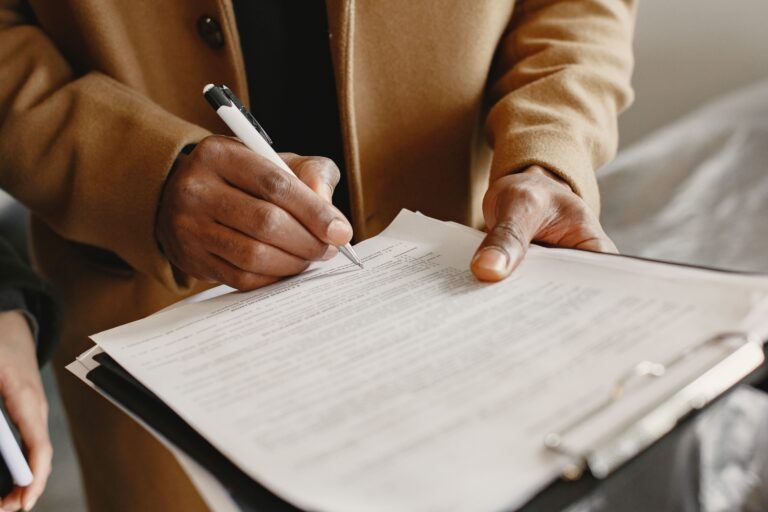

In Morocco, both a notary (notaire) and a pair of adouls can draw up the official deed that transfers a property to you.
For a foreign buyer of a titled apartment, villa or riad, the notary is usually the better fit, while adouls remain common for untitled land, family matters and many medina properties.
This guide explains what each one does, what changed in 2026, and how to choose before you sign or pay anything.
Quick answer
Since Law 41-25 was published on 16 July 2026, a property sale, a promise of sale and the related power of attorney must be in authentic form, which in practice means a deed by a notary or by adouls; the lawyer drafted option has gone. Both deeds are valid. Notaries are usually preferred for titled property, bank loans and buyers abroad, because they hold the purchase money through a regulated deposit system and register the sale on the land title. Adoul deeds need two adouls and a judge’s approval, and the adoul profession was still being reformed in October 2026. Whoever you use, check the title yourself and pay only by traceable means.
This article is general educational information based on published texts and reports, not legal advice. The rules on adouls were being reformed when it was written, so confirm the current position with the professional who will sign your deed.
What is the difference between an adoul and a notary in Morocco?
A notary is a legal professional who drafts deeds, keeps the originals, collects the taxes and arranges registration with the land registry.
Adouls belong to Morocco’s traditional notarial system, which developed from Islamic law and is still used daily for marriages, inheritance deeds and many property transactions.
The adoul profession is governed by Law 16-03, promulgated in 2006 (Law 16-03 on the adoul profession, Ministry of Justice portal).
Adouls work in pairs, write their deeds in Arabic, and the deed is recorded under the supervision of a judge in charge of notarial matters (Reaconsult, adoul vs notary, June 2026).
That judge’s approval, often called the khitab, is what gives the adoul deed its official character.
A notary’s deed does not need that extra step, and the notary keeps the original deed in their records.
| Point | Notary (notaire) | Adouls |
|---|---|---|
| Who signs | One notary | Two adouls, then a judge’s approval |
| Language of the deed | Usually French or Arabic | Arabic |
| Typical use | Titled property, bank loans, companies, buyers abroad | Untitled (melkia) property, inheritance deeds, family matters |
| Holding the purchase money | Regulated deposit system | No secure deposit system in the 2026 reform bill, according to the CESE |
| Registration on the land title | Handled by the notary | Possible, but often needs extra steps |
What changed with Law 41-25 in 2026?
Article 4 of the Code of Real Rights decides which form a property deed must take.
Law 41-25, published in the Bulletin Officiel no. 7526 of 16 July 2026, rewrote that article (Youssef Tlemcani, analysis of Law 41-25, August 2026).
Transfers of ownership, and the creation, transfer, change or ending of a real right, must now be drawn up as an authentic deed, on pain of nullity, unless a specific text says otherwise (Bladi, August 2026).
The option of a deed with a certain date drafted by a lawyer admitted to the Court of Cassation has disappeared, so the notary and the adoul are the two remaining routes.
The text also covers promises of sale and the powers of attorney used for these operations, so a promise signed privately at an agency is not enough.
If you signed something before 16 July 2026 that has not been completed yet, ask the notary or adoul who will sign the final deed to review it.
Our guide to the compromis de vente for foreign buyers explains what that preliminary agreement should contain.
Why do most foreign buyers use a notary for titled property?
The deed itself is equally valid either way, so the difference is in what happens around it.
The notary holds your money
Under Law 32-09 on the notary profession, notaries must place the funds they receive from clients with the Caisse de Dépôt et de Gestion, a state financial institution, rather than in their own accounts (Le360 on notaries’ CDG deposits).
For adouls, the Economic, Social and Environmental Council noted in March 2026 that the reform bill set no explicit, secure way for adouls to manage deposits, and recommended one (CESE opinion on bill 16-22, March 2026).
For a buyer sending money from abroad, being able to pay the professional rather than the seller is a real protection.
Registration and banks
A notary normally checks the title, signs the deed and then registers the sale with the ANCFCC, the land registry.
Banks almost always require a notarial deed when a mortgage is involved (Reaconsult).
If you need to show your purchase to a bank, a tax office or a consulate abroad, a French language notarial deed is usually easier to use.
If you prefer to work in English, our guide to finding an English speaking notary in Marrakech covers what to ask.
Already considering a property?
See the 14 Day Buyer Plan: $299 →Get 14 days of personal buyer support, three private calls and WhatsApp support.
Get help reviewing up to three properties before you commit money.
When are adouls the normal choice?
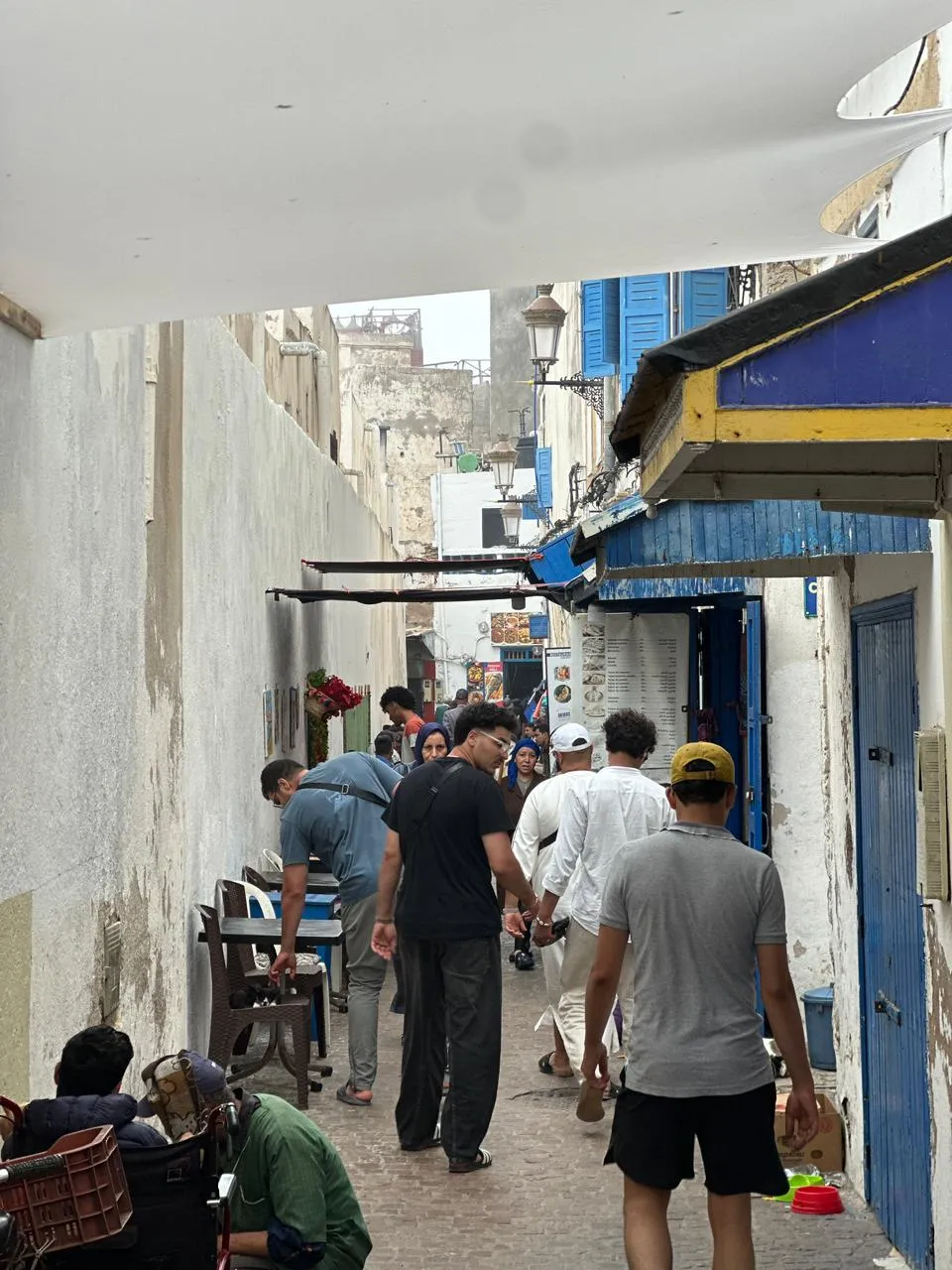
Adouls are still dominant for untitled property, rural land and many properties in the old medinas (Reaconsult).
They also draw up inheritance deeds, which list the heirs of a Moroccan, and the possession deeds (moulkia) that support many traditional ownership claims.
So even when you buy through a notary, you may see adoul documents in the property’s history, for example an inheritance deed proving that the sellers are the heirs.
That is not a warning sign by itself, but it means the chain of ownership must be checked carefully.
A deed for an untitled property is not automatically published at the land registry, which is one reason untitled property carries more risk for foreigners.
If the property has no land title, read our guide to buying untitled property in Morocco and our comparison of melkia and titre foncier before you go further.
Is the adoul profession changing?
Yes, and this is why you should confirm the rules at the time you buy.
Parliament adopted a new law on adouls, Law 16-22, and the Constitutional Court largely validated it on 15 June 2026 while striking out several provisions (Le Desk, June 2026).
The government then adopted a replacement bill, no. 51-26, on 2 July 2026 to take account of that decision (H24info, July 2026).
At the time of writing, we could not confirm that the new law had been published, so the practical rules described here may change.
How much does each option cost?
The taxes do not depend on who signs: registration duty, land registry fees and stamp duty are the same for the same sale.
The professional’s own fee is where the difference lies, and Reaconsult estimates notary fees at roughly 1% to 1.5% of the price for a titled property, generally higher than adoul fees for the same deed (Reaconsult).
Treat those figures as indicative and ask for a written quote that separates fees, taxes and disbursements.
Our breakdown of notary fees when buying property in Morocco shows how the total usually adds up.
One rule applies whoever you choose: for a sale above 300,000 dirhams, an extra 2% registration duty applies if the deed does not state the payment method, or to the part of the price paid in cash rather than by crossed cheque, bank transfer or another traceable means (Ministry for Moroccans abroad, 2026 tax guide, page 7).
What did my own purchase teach me about this choice?
On my first successful purchase in Marrakech, the local contact who found the property took me to a notary.
It was my first time buying in Morocco, I trusted the people around me, and the sale was registered in my name.
At the notary, I paid several separate costs: registration, land registration and the notary’s own fee.
Before that, I had paid a guarantee deposit of around €1,000 while the seller travelled back from America.
It worked out, but today I would want any money to go through the professional handling the deed, with a written receipt, not informally.
How should you choose?
- Titled apartment, villa or riad: use a notary, ideally one you choose yourself rather than the seller’s.
- Buying with a Moroccan mortgage: expect the bank to require a notary.
- Buying from abroad or through a power of attorney: a notary usually makes the process easier to manage remotely.
- Untitled land or melkia property: adouls are common, but get independent advice on titling before you pay.
- Inherited property: expect adoul inheritance deeds in the file, and ask the notary to check that every heir signs.
Questions to ask before you sign
- Who will draft the promise of sale and the final deed, and in which language?
- Where exactly will my money be held until the sale is registered?
- Who registers the deed with the land registry, and when will I receive the updated title?
- Can I see the draft deed a few days before signing?
- What is the written breakdown of fees, taxes and registration costs?
For the wider process, our guide to buying property in Morocco through a notary walks through each step.
Already considering a property?
See the 14 Day Buyer Plan: $299 →Get 14 days of personal buyer support, three private calls and WhatsApp support.
Get help reviewing up to three properties before you commit money.
Frequently asked questions
Is an adoul deed valid for a foreign buyer?
Yes. An adoul deed is an authentic deed under Moroccan law, just like a notarial deed. For titled property bought by a foreigner, a notary is usually more practical for holding funds, registration and use abroad.
Can a lawyer still draft a property sale in Morocco?
Not as the deed itself since Law 41-25, published on 16 July 2026, removed the lawyer drafted option from article 4 of the Code of Real Rights. A lawyer can still advise you and review documents.
Is a private promise of sale signed at an agency valid?
Promises of sale must be in authentic form, so a private agency document carries a serious risk of being void. Ask a notary or adouls to draw it up.
Do adouls register the sale on the land title?
An adoul deed can be registered, but it goes through the judge’s approval first, and untitled property deeds are not automatically published. Ask who will handle registration and how long it will take.
Are taxes lower with adouls?
No. Registration duty and land registry fees depend on the sale, not on who signs. Only the professional’s own fee may differ.
What is the safest next step?
Decide who will draft your deed before you sign any promise of sale or pay any deposit.
Then check the title, the seller’s identity and the payment route with that professional, in writing.
Already considering a property?
See the 14 Day Buyer Plan: $299 →Get 14 days of personal buyer support, three private calls and WhatsApp support.
Get help reviewing up to three properties before you commit money.

Anis is the founder of Buy Property Morocco, a research-based resource created to help foreign buyers understand the real process of buying property in Morocco safely.
He focuses on the practical details most buyers only discover too late: title deed checks, notary steps, compromis de vente risks, transfer taxes, foreign banking rules, repatriating money after a sale, and avoiding common mistakes when dealing with agents or sellers.
Anis has personally bought 4 properties in Morocco and shares practical guidance based on real experience, not theory.
If you are seriously considering buying property in Morocco and want private guidance before you send money, pay a deposit, or sign anything, you can book a buyer safety call here: