

Pre-notation, or prénotation in French, is a temporary entry on a Moroccan land title that reserves your place in the queue while your purchase is not yet registered.
It is one of the few tools that can stop a seller from selling or mortgaging the same property to someone else between the promise of sale and the final deed.
This guide explains what the law says, how long each type of pre-notation lasts, and when a foreign buyer should ask the notary about it.
Quick answer
Under article 85 of Morocco’s land registration law, anyone claiming a right on a titled property can ask the land registry to record a pre-notation, and its date fixes the rank of the later registration. A pre-notation based on a document lasts only 10 days, one based on a court claim lasts one month, and one ordered by the court president lasts three months, extendable while a case is running. It protects your rank, not the property’s condition or price. Ask your notary early whether your promise of sale can support one, and check the title for other people’s pre-notations before you pay.
This article is general educational information based on the published land registration law, not legal advice. Procedures and fees are applied by the local land registry office, so confirm the right route with your notary before you rely on it.
What is pre-notation on a Moroccan land title?
A titled property in Morocco has a land title (titre foncier) kept by the land registry, the ANCFCC, and every right that counts against third parties must be registered on it.
Between signing a promise of sale and registering the final deed, your right is real but not yet on the title.
Pre-notation fills that gap by putting a provisional entry on the title that says someone is claiming a right.
Article 85 of the dahir of 12 August 1913, as amended by Law 14-07, says that anyone claiming a right on a registered property can request a pre-notation to preserve that right provisionally (ANCFCC compilation of the land registration law, article 85).
The same article says the date of the pre-notation fixes the rank of the later registration of the right.
In plain terms, if your purchase is later registered, it is treated as ranking from the date of your pre-notation, ahead of rights registered after it.
How can a pre-notation be recorded?
The law gives three bases for asking the land registrar to record one (article 85):
- A document showing a right on the property that the registrar cannot register as it stands, for example because a formality is still missing.
- An order of the president of the court of first instance where the property is located.
- A copy of a claim on the merits filed before the competent court.
Which route fits your case depends on the document you hold and on whether the seller is cooperating.
A signed promise of sale in proper form is often the starting point, but the registrar decides whether a document qualifies, so let your notary assess it (Reaconsult, guide to pre-notation).
How long does a pre-notation last?
This is where many buyers are surprised: some pre-notations are very short (land registration law, article 86).
| Basis | How long it lasts | What happens next |
|---|---|---|
| A document (prénotation sur titre) | 10 days | No other registration based on the parties’ consent can be made during that time |
| Copy of a court claim | 1 month | Removed automatically unless the claimant produces a court president’s order |
| Order of the court president | 3 months from the order | Can be extended by order if a case on the merits is filed, until the final judgment |
The 10 day pre-notation is designed to bridge a short gap, typically while the notary finishes the file and registers the deed.
It is not a way to freeze a property for months while you look for financing.
If a seller refuses to complete, the longer protection comes through the court routes, which means a lawyer and a real dispute.
The law also says no pre-notation on a document can be requested when the law forbids the final registration of that right (article 86).
Already considering a property?
See the 14 Day Buyer Plan: $299 →Get 14 days of personal buyer support, three private calls and WhatsApp support.
Get help reviewing up to three properties before you commit money.
Why does it matter for a foreign buyer?
The risk it addresses is simple: until your deed is registered, the seller still appears as the owner on the title.
In that window, a dishonest or careless seller could sign with a second buyer or take out a loan secured on the property.
Because rank depends on the date of registration, the person who registers first is generally in the stronger position.
A pre-notation recorded in your favour puts a visible marker on the title, so anyone who checks it sees your claim.
Foreign buyers are more exposed to this gap than locals, because they often sign a promise, fly home, and wait weeks for funds, documents or a power of attorney.
If you are at that stage, read our guide to the compromis de vente in Morocco alongside this one.
What pre-notation does not protect
- The price and terms: it reserves rank, it does not enforce the deal or fix a bad contract.
- The property itself: it says nothing about the surface, the condition or the permits.
- Earlier entries: a mortgage, seizure or pre-notation already on the title still ranks ahead of yours.
- Untitled property: it works on titled property, so a Melkia or other unregistered property needs a different approach.
What changed with the authentic deed rules?
Since 2024, a promise of sale of property has had to follow a strict formal deed, and Law 41.25, published in Bulletin Officiel no. 7526 of 16 July 2026, now requires an authentic deed and removes the option of a deed drafted by an approved lawyer (analysis of Law 41.25).
In practice, that leaves notaries and adouls as the professionals who can receive your promise.
For you, this has a useful side effect: the document behind any pre-notation request is now prepared by a public officer, which makes the file cleaner from the start.
Ask the notary who receives your promise, at the same appointment, whether and when they will request a pre-notation.
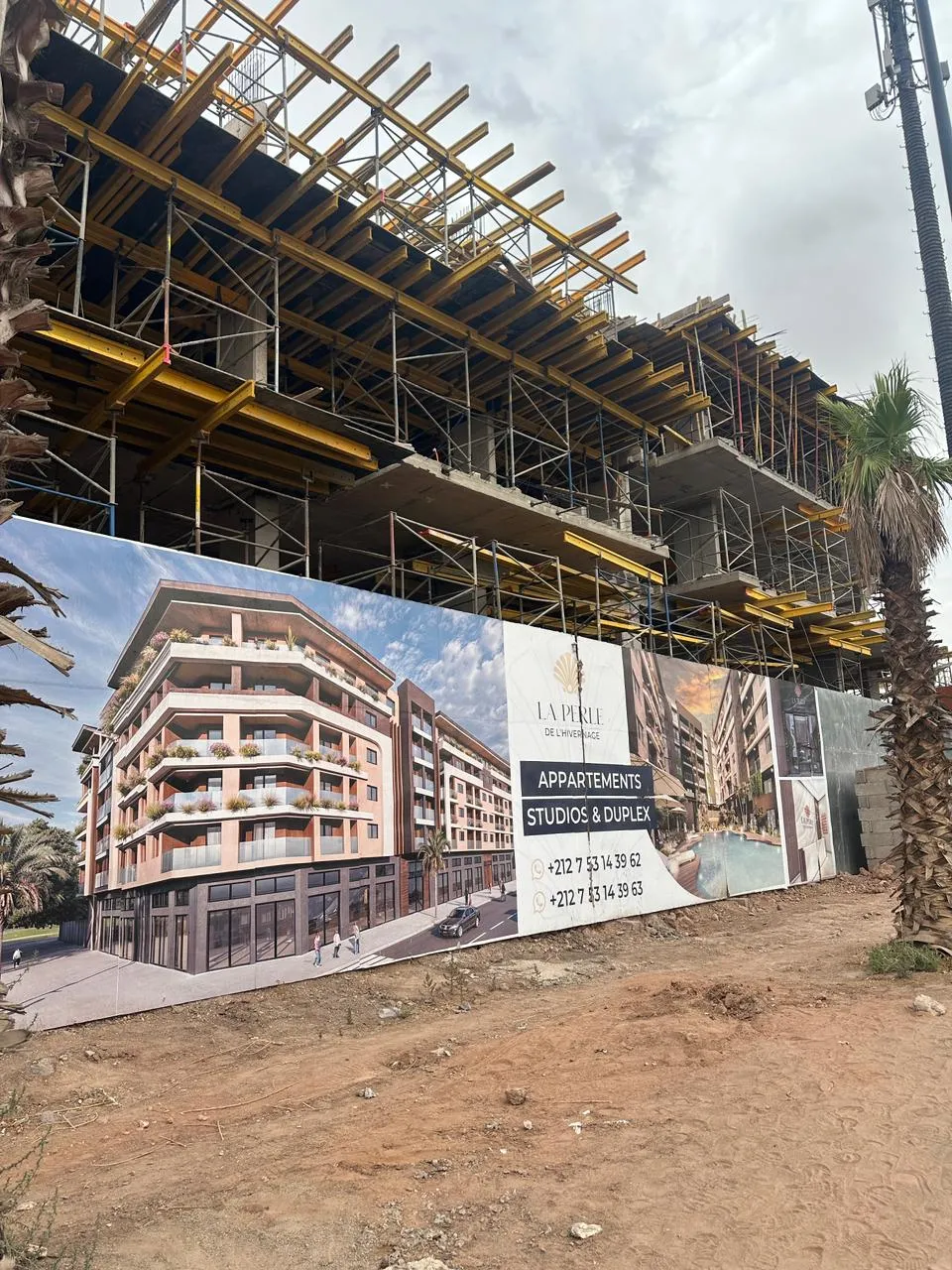
Can you pre-notate an off-plan purchase?
Off-plan sales follow their own rules, and article 85 itself says that pre-notations created by specific laws remain governed by those laws (article 85, last paragraph).
The 2016 reform of off-plan sales, Law 107-12, gave the buyer the possibility of having a pre-notation entered on the land title, which was not possible before, according to press coverage of the reform (Le360).
Conditions such as how much of the price you must have paid, and on which title the entry is made, depend on that law and on the state of the developer’s title.
Ask the notary to confirm this in writing before you pay instalments, and read our guide to buying off-plan property in Morocco for the other checks.
What did my first purchase teach me about this gap?
On my first successful purchase in Marrakech, the owner lived in America and we agreed that he would come back in about a month to sign at the notary.
I paid around €1,000 as a guarantee deposit while we waited.
It worked out, and the property was registered in my name, but my protection during that month was mostly trust.
Before that, I had also seen an owner simply change her mind on an apartment I wanted to buy, so I know how fast a deal that feels agreed can disappear.
Today I would ask the notary, before paying anything, how my right would be protected between the promise and the final deed, and pre-notation is one of the answers to look at.
Our guide to paying a property deposit in Morocco covers the money side of that same period.
Already considering a property?
See the 14 Day Buyer Plan: $299 →Get 14 days of personal buyer support, three private calls and WhatsApp support.
Get help reviewing up to three properties before you commit money.
Can a pre-notation be used against you?
Yes, which is why you should also look for other people’s pre-notations before you buy.
Press reports and notaries describe cases where people record pre-notations based on weak claims to pressure an owner or block a sale (Reaconsult).
The law pushes back on this: a court that finds a pre-notation request abusive, vexatious or in bad faith must impose a civil fine of at least 10% of the value of the property or right claimed, on top of any damages (article 86 bis).
The court president, acting in summary proceedings, can also order the removal of a pre-notation whose grounds prove unfounded or irregular (article 86).
For a buyer, the lesson is to read a fresh title certificate, not a copy supplied by the seller.
Our guide to the ANCFCC property certificate explains how to request one and what the entries mean.
What should you ask your notary?
- Does the title currently show any pre-notation, mortgage, seizure or other entry?
- Can my promise of sale support a pre-notation, and will you request it?
- How long will it last, and how does that match the date planned for the final deed?
- What does the land registry charge for it, and who pays?
- If the seller does not show up on the signing date, what is my next legal step and how quickly must I act?
- For an off-plan purchase, under which conditions can my contract be pre-notated, and on which title?
You can find more on how the notary structures the transaction in our guide to buying property in Morocco through a notary.
Frequently asked questions
What does prénotation mean in Morocco?
It is a provisional entry on a land title that preserves a right someone claims on the property. Its date fixes the rank of the later registration of that right, under article 85 of the land registration law.
How long is a pre-notation valid?
Ten days when it is based on a document, one month when it is based on a copy of a court claim, and three months when it is ordered by the court president, extendable while a case on the merits is running.
Does a pre-notation stop the seller from selling to someone else?
During the 10 day period, no other registration based on the parties’ consent can be made. Beyond that, it is the rank given by the date of the pre-notation that protects you, which is why timing with the final deed matters.
Can I request a pre-notation myself?
The request goes to the land registrar, but you need a document or court decision that supports it. In practice, ask your notary, or a lawyer if a dispute has started.
Does pre-notation work for untitled property?
No. It is a tool of the land title system. For Melkia or other unregistered property, the notary or lawyer must use other protections.
What is the safest next step?
Before you sign a promise, ask for a fresh title certificate and check it for any existing entries.
When you sign, agree with the notary how your right will be protected until the deed is registered, and keep the time between the two as short as possible.
And never pay a seller directly on the strength of a promise alone, whatever is or is not written on the title.
Already considering a property?
See the 14 Day Buyer Plan: $299 →Get 14 days of personal buyer support, three private calls and WhatsApp support.
Get help reviewing up to three properties before you commit money.

Anis is the founder of Buy Property Morocco, a research-based resource created to help foreign buyers understand the real process of buying property in Morocco safely.
He focuses on the practical details most buyers only discover too late: title deed checks, notary steps, compromis de vente risks, transfer taxes, foreign banking rules, repatriating money after a sale, and avoiding common mistakes when dealing with agents or sellers.
Anis has personally bought 4 properties in Morocco and shares practical guidance based on real experience, not theory.
If you are seriously considering buying property in Morocco and want private guidance before you send money, pay a deposit, or sign anything, you can book a buyer safety call here: