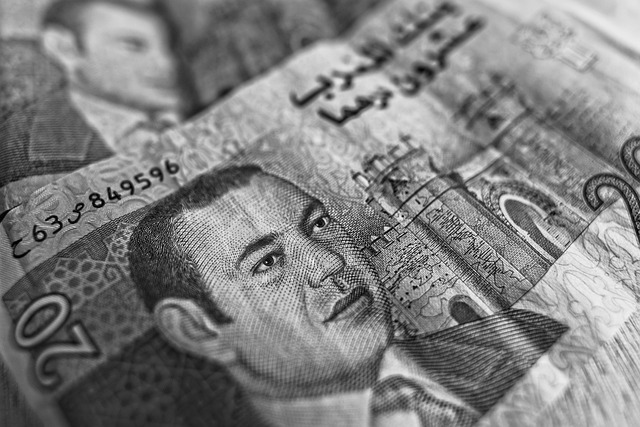
The safest way to pay for property in Morocco is through the notary, by bank transfer or crossed cheque, never in cash and never directly to the seller or the agent.
How you pay also affects your tax bill and your ability to take the money out of Morocco when you sell.
This guide explains which payment methods are accepted, who should receive the money, what to keep as proof, and how foreign buyers should bring funds from abroad.
Quick answer
Pay the purchase price to the notary, who must hold client funds at the Caisse de Dépôt et de Gestion and pays the seller after the checks and registration steps. Use a bank transfer or a crossed, non endorsable cheque made out to the notary. For a sale above 300,000 dirhams, an extra 2% registration duty applies if the deed does not state the payment method, or to any part of the price paid in cash. If you bring money from abroad, keep every bank document proving the transfer, because you will need it to repatriate the money when you sell.
This article is general educational information based on official guidance, not financial, tax or legal advice. Confirm the payment route with your notary and your bank before sending money.
Who should receive your money when you buy?
The notary who will sign the final deed, not the seller, not the agent and not a middleman.
Under Law 32-09 on the notary profession, notaries deposit the funds they hold for clients with the Caisse de Dépôt et de Gestion, a state financial institution, rather than in commercial bank accounts (Le360 on notaries’ CDG deposits).
The purpose of that rule is traceability: your money sits in a regulated account linked to your transaction (La Vie Eco on the notaries’ deposit accounts).
The notary then settles what must be paid from the price, such as a bank loan on the property and the registration costs, and releases the balance to the seller.
In my experience, the safest way to structure payment is through the notary, not directly to the seller.
The key point is not only who receives the money, but when the seller is actually paid and what checks happen before that moment.
If you are still choosing who will draft your deed, our comparison of an adoul or a notary for your property deed explains why most foreign buyers of titled property use a notary.
Which payment methods are accepted?
The 2026 tax guide from Morocco’s ministry for Moroccans living abroad lists the accepted methods: crossed non endorsable cheque, bills of exchange, card or magnetic payment, bank transfer, electronic payment or offsetting (MRE tax guide 2026, page 7).
| Method | Suitable? | What to watch |
|---|---|---|
| Bank transfer to the notary’s account | Yes, usually the best option from abroad | Use the exact account details the notary gives you in writing, and confirm them by phone |
| Crossed non endorsable bank cheque to the notary | Yes, common inside Morocco | Make it out to the notary, not the seller, and keep a copy |
| Cash | Avoid | Extra 2% duty on the cash part for sales above 300,000 dirhams, and no proof of foreign funds |
| Transfer to the seller or the agent | Avoid | No protection if the title has a problem or the sale collapses |
Keep a photocopy of any cheque you hand over, and ask for a receipt that names the property and the purpose of the payment.
What is the 2% penalty for cash payments?
For a sale of property worth more than 300,000 dirhams, an extra 2% registration duty applies when the deed does not mention the payment method and references, or when the price is not paid by one of the accepted methods (MRE tax guide 2026, page 7).
When the price is paid partly in cash and partly by an accepted method, the extra 2% applies only to the cash part.
Take a hypothetical example: on a 1,000,000 dirham apartment with 200,000 dirhams paid in cash, the extra duty would be 2% of 200,000, so 4,000 dirhams, on top of the normal costs.
Some sellers still ask for part of the price in cash to declare a lower price.
Refusing protects you twice: you avoid the penalty, and you avoid a lower declared price that increases the taxable gain when you sell later.
Our guide to property transfer taxes in Morocco shows the normal duties that come on top of the price.
Already considering a property?
See the 14 Day Buyer Plan: $299 →Get 14 days of personal buyer support, three private calls and WhatsApp support.
Get help reviewing up to three properties before you commit money.
How should you send money from abroad?
If you are a foreign non resident, the way the purchase is financed decides whether you can transfer the money back out of Morocco later.
The Office des Changes lists the accepted ways of financing foreign investment, including contributions in foreign currency or convertible dirhams and the use of convertible accounts (Office des Changes, financing arrangements for foreign investment).
In practice, this means sending foreign currency through a Moroccan bank, often into a convertible dirham account, and keeping the bank’s documents that prove the currency was exchanged.
Our guide to the convertible dirham account explains how to open one and which documents to keep.
Documents to keep from day one
- Your bank’s transfer confirmations from your home country.
- The Moroccan bank’s notices showing the currency received and converted into dirhams.
- Statements of your convertible account, if you used one.
- The notary’s receipts for each amount you paid.
- A copy of the final deed showing the price and the payment method.
When you sell, these papers support your request to repatriate the money, as explained in our guide to repatriating money after selling property in Morocco.
What about the deposit before the final deed?
The same logic applies to a reservation or deposit: pay it to the notary, against a written agreement, and keep proof.
On my first successful purchase in Marrakech, I paid a guarantee deposit of around €1,000 while the seller travelled back from America.
Thank God it worked out, but it was risky, and today I would tell a foreign buyer not to treat a deposit casually.
A deposit should be tied to clear documents and, ideally, handled through the notary.
Our guide to the property deposit in Morocco lists what to check before paying it.
Why might the seller not be paid straight away?
Because the notary may first have to settle what is owed on the property.
Unpaid local taxes, a bank mortgage or other charges can surface during the sale, and the notary deals with them before the seller receives the balance.
Our guide to buying a mortgaged property in Morocco shows how the seller’s loan is repaid from your funds and released from the title.
Depending on what needs to be resolved, this can take some time, and a seller who insists on being paid directly and immediately is a warning sign.
The buyer’s goal should be to receive a clean property in their name, without hidden taxes or unresolved obligations attached to it.
Payment warning signs
- Bank details for the notary sent by the agent or by email without confirmation.
- A request to split the price between a declared amount and cash.
- A request to pay the seller’s family member or company.
- Pressure to pay before you have seen a recent property certificate.
- No written receipt for a payment already made.
Already considering a property?
See the 14 Day Buyer Plan: $299 →Get 14 days of personal buyer support, three private calls and WhatsApp support.
Get help reviewing up to three properties before you commit money.
Frequently asked questions
Can I pay cash for a property in Morocco?
It is strongly discouraged. For a sale above 300,000 dirhams, an extra 2% registration duty applies to the part paid in cash, and cash leaves no proof that your money came from abroad.
Should I pay the seller directly?
No. Pay the notary, who holds client funds at the Caisse de Dépôt et de Gestion and pays the seller after taxes, loans and registration steps are dealt with.
Is a bank cheque or a transfer better?
Both work when they are made out to the notary. A transfer is usually easier from abroad, while a crossed non endorsable cheque is common inside Morocco. Keep a copy either way.
Do I need a convertible dirham account?
It is not the only option, but funding the purchase with foreign currency through a Moroccan bank, often via a convertible account, and keeping the proof is what supports a later repatriation. Confirm with your bank.
When does the seller get the money?
After the notary has completed the checks and paid what is owed on the property. This can take some time depending on the file.
What is the safest next step?
Before you send anything, ask the notary for written payment instructions, confirm them by phone, and open the right account with your bank.
Then pay by transfer or crossed cheque to the notary only, and keep every receipt in one folder.
Already considering a property?
See the 14 Day Buyer Plan: $299 →Get 14 days of personal buyer support, three private calls and WhatsApp support.
Get help reviewing up to three properties before you commit money.

Anis is the founder of Buy Property Morocco, a research-based resource created to help foreign buyers understand the real process of buying property in Morocco safely.
He focuses on the practical details most buyers only discover too late: title deed checks, notary steps, compromis de vente risks, transfer taxes, foreign banking rules, repatriating money after a sale, and avoiding common mistakes when dealing with agents or sellers.
Anis has personally bought 4 properties in Morocco and shares practical guidance based on real experience, not theory.
If you are seriously considering buying property in Morocco and want private guidance before you send money, pay a deposit, or sign anything, you can book a buyer safety call here: