
Renovation cost in Morocco usually ranges from about 20,000 dirhams for a single bathroom to well over 200,000 dirhams for a full apartment refresh, and old riads and houses can cost far more once the roof, damp or structure are opened up.
Before you commit, price the works job by job, check whether they need a permis de réfection or a full building permit, and never pay a contractor without a written contract and staged payments.
I’m Anis Chity, based in Marrakech, and I’ve personally bought four properties in Morocco. On my first purchase I paid several separate costs at the notary on top of the price, and works add another layer that is easy to underestimate.
Quick answer
There is no official renovation price per square metre in Morocco, so you price the works job by job. Published 2026 market prices put a kitchen at about 40,000 to 90,000 MAD and a bathroom at 20,000 to 50,000 MAD in Casablanca and Rabat, with Marrakech about 10 to 15% higher. Minor interior works use a permis de réfection (a light renovation permit), while works touching structure, facades, layout or use need a full permit. Add at least 15% for surprises, check whether quotes include VAT, pay in stages by bank transfer, and keep every invoice.
At a glance
- Price basis: published 2026 market prices, not official statistics.
- Authorisation: permis de réfection for minor works, full permit for structural or layout changes.
- VAT: building works are subject to VAT, so ask whether each quote is before or after tax.
- Contingency: 15% as a floor, more for old buildings.
- Paper trail: documented renovation spending can lower your capital gains tax when you sell.
How much does renovation cost in Morocco in 2026?
The table below shows typical prices per job published in May 2026 by a Moroccan loan comparison site, based on Casablanca and Rabat.
| Job | Typical 2026 price | Typical duration |
|---|---|---|
| Interior painting, 100 m² | 15,000 to 25,000 MAD | 5 to 10 days |
| Kitchen renovation | 40,000 to 90,000 MAD | 2 to 4 weeks |
| Bathroom | 20,000 to 50,000 MAD | 10 to 20 days |
| Tile replacement, 100 m² | 30,000 to 60,000 MAD | 1 to 2 weeks |
| Roof terrace waterproofing | 150 to 300 MAD per m² | About 1 week |
| Solar water heater | 8,000 to 18,000 MAD | 2 days |
| Central air conditioning, 100 m² | 35,000 to 70,000 MAD | 5 to 10 days |
Source: Wafir, renovation works guide, updated 17 May 2026. These are market estimates from a commercial site, not official figures.
The same source says Marrakech runs about 10 to 15% higher than Casablanca and Rabat, and inland cities about 15 to 20% lower.
It does not say whether its prices include VAT, so ask every contractor for the price both before and after tax.
For a rough euro view, Bank Al-Maghrib’s reference rate on 11 November 2026 was 1 euro for 10.8918 dirhams (Bank Al-Maghrib reference rates), so a 50,000 MAD bathroom is about €4,600.
Is there a reliable renovation price per square metre?
No official renovation price per square metre exists in Morocco.
You will see figures such as 3,000 to 8,000 MAD per m² for a complete renovation, usually with no source and no definition of what is included.
At the other extreme, a full gut renovation of an old house, with new networks, roof and finishes, can approach the cost of building new.
Floor area is a weak guide because the expensive items are hidden: the roof, damp in the walls, old wiring, old pipes and difficult access.
Even for the same flat size, budgets vary widely: in the worked example below, the high estimate is more than double the low one, so price by job and ask for written quotes.
Why does the same budget buy less in an old riad than in a modern apartment?
The type of property changes where the money goes, and how much of it you only discover after the work starts.
What drives the cost in a modern apartment?
Most of the budget goes on finishing trades: painting, tiles, kitchen, bathroom, doors and air conditioning.
The constraints come from the building: the syndic’s rules, lift access for materials, shared pipes and the neighbours, so read up on what the syndic manages and charges before you plan works.
Ask the syndic in writing which hours and which works the building allows.
What changes in a house or villa?
Houses add the envelope: roof and terrace waterproofing at around 150 to 300 MAD per m², outside walls, and old water and electrical networks.
They also tempt owners into extensions and extra rooms, which move you from a light permit into a full permit with an architect.
Why are riads and medina houses the hardest to price?
Old riads are the hardest to price, because walls, roofs and floors often hide damp and weak structure that nobody can see at the viewing.
Before you budget structural work, read what makes a building in Morocco safer in an earthquake.
Traditional walls usually need lime-based materials rather than cement, skilled craftsmen (maalem) are in high demand, and materials often have to be carried in by hand through narrow alleys (ReaConsult, renovating an older property in Morocco).
Construction projects in the old urban fabric (walled medinas, ksour and kasbahs) and on listed buildings, and modifications to existing buildings there, follow the heavier “grands projets” procedure (Decree 2-18-577, Annex 2, items 8 and 9). Ask the commune whether your works count as a simple réfection or fall under this procedure.
Before you make an offer on an old house, book a pre-purchase building inspection with an engineer or a qualified inspector.

Do you need a permit to renovate a property in Morocco?
Usually yes, but the type of permit depends on what the works touch.
Which works only need a permis de réfection?
The permis de réfection covers minor works on an existing building that change none of these: its use, the common parts, the load-bearing structure, the facades or the interior layout (Decree 2-18-577, article 20 and Annex 4).
The commune president issues it within 10 working days, and it is valid for 6 months without renewal, so file when your contractor is ready to start (articles 46 and 47 of the same decree).
The commune’s construction tax for a réfection permit is 200 to 500 DH, paid when the permit is issued, and the permit references must be displayed on site before work begins (DGCT guide to local taxes).
The decree sets no threshold below which no authorisation is needed, so ask the commune’s urbanism service in writing whether your exact works need one.
When do you need a full permit and an architect?
Modifying an existing building on the points the law regulates needs a building permit, and in urban communes such as Marrakech, an architect is mandatory for those works (Law 12-90 on urban planning, articles 40 and 50).
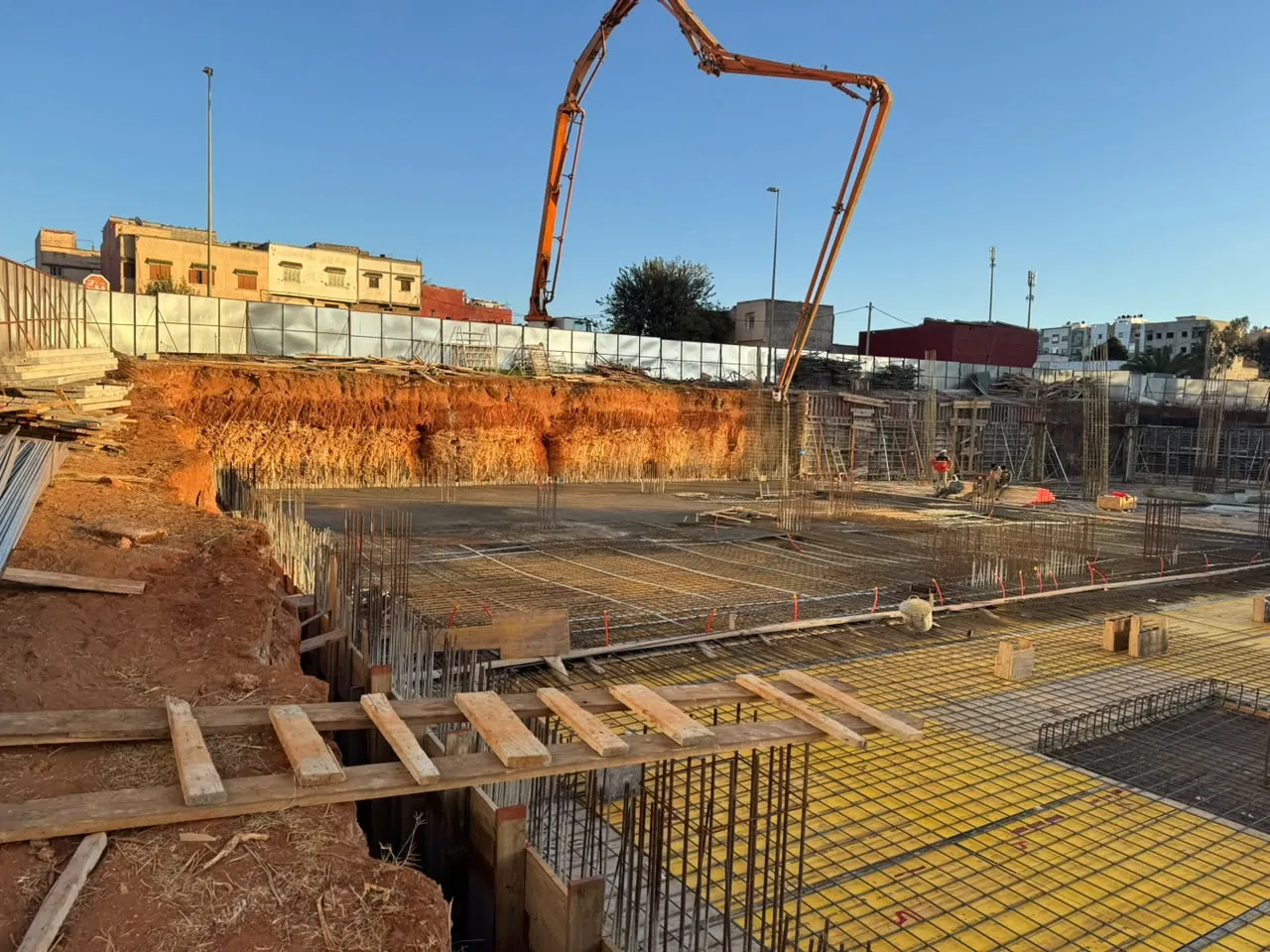
In practice that means moving or removing walls, changing the layout, touching the structure or facades, adding a floor or a terrace room, or changing the use.
For the full procedure and the sanctions, read how the building permit and permis de réfection process works.
In an apartment, what must the co-owners approve?
Under the co-ownership law, the facade, load bearing walls, structural works, walls between two units and shared pipes are common parts, and works affecting common parts or the building’s exterior need a general assembly decision (Law 18-00 as amended in 2016, articles 4 and 20).
Check your building’s own rules with the syndic before you sign anything with a contractor.
Buyer warning
A contractor telling you that no permit is needed does not move the risk to him. Moving a wall, opening a facade or adding a terrace room touches what the law regulates, and it can cause problems later, for example when you sell. Get the commune’s answer in writing before work starts.
If you are looking at a property that needs work, send me a WhatsApp message below.
Already considering a property?
Message me on WhatsApp →Send me a WhatsApp message about the property you are looking at, and I will tell you what to check before you pay anything.
How do you budget renovation into the purchase decision?
Renovation needs belong in the decision to buy, not in a plan you make after signing.
When I judge a deal, I look at title safety, seller authority, legal clarity, price, rental income, tenant situation, location, renovation needs, exit options and money transfer planning together.
Your real total is price plus buying costs plus works plus a reserve.
Renovation after buying: the safe order
1
Inspect
Engineer or inspector before the compromis.
2
Price the works
Three written quotes, before and after tax.
3
Confirm the permit
Réfection or full permit, answer in writing.
4
Sign and pay in stages
Written contract, bank transfers, retention.
5
Hand over and keep invoices
Written defects list, invoices kept for tax.
What could an 80 m² apartment refresh cost?
This is a hypothetical example using the price ranges above, not a quote for a real property.
| Item | Low | High |
|---|---|---|
| Painting, walls and ceilings (100 m² source price) | 15,000 MAD | 25,000 MAD |
| One kitchen | 40,000 MAD | 90,000 MAD |
| One bathroom | 20,000 MAD | 50,000 MAD |
| Tiles, 80 m² (pro rata) | 24,000 MAD | 48,000 MAD |
| Subtotal | 99,000 MAD | 213,000 MAD |
| With 15% contingency | 113,850 MAD | 244,950 MAD |
At the 11 November 2026 reference rate, that is roughly €10,450 to €22,490.
In Marrakech, add the 10 to 15% the source reports for the city, and add VAT if the quotes are before tax.
How much contingency, and what about resale value?
Fifteen percent is the reserve the Wafir guide recommends, and you should treat it as a floor for a modern flat.
Old buildings need more, because the real problems only appear once walls and floors are opened.
A Moroccan property consultancy gives an illustrative case of a 1.6 million dirham purchase where 300,000 dirhams of planned works grew until the total reached about 2.24 million, against a neighbourhood ceiling of about 2.05 million (ReaConsult, illustrative example).
The lesson is that a renovation only pays if the finished property can sell for more than everything you put in.
Use written quotes to adjust a valuation for the works a property needs, and only deduct works that comparable properties in the area do not need.
The first apartment I wanted in Marrakech was small but already well finished, at around €60,000, before the owner changed her mind. That is the other option: a finished flat where the work is already in the price, though it still needs an inspection.
Already considering a property?
Message me on WhatsApp →Send me a WhatsApp message about the property you are looking at, and I will tell you what to check before you pay anything.
How do you hire and pay a contractor safely in Morocco?
How many quotes should you get, and from whom?
Ask for at least three written, itemised quotes, each showing the price before and after tax.
From my experience
Living in Marrakech, I have seen prices change as soon as someone realises you are a foreigner or live abroad. That is why I would never accept the first verbal number for works. Three written, itemised quotes for the same scope tell you what the job is really worth.
Check that you are dealing with a business that can issue a proper invoice, showing its identity, tax identification number, taxe professionnelle number, the date, the nature of the works, the VAT shown separately and the payment method (General Tax Code 2026, article 145).
Building and repair works are subject to VAT (General Tax Code 2026, article 89-I, points 4° and 5°), and the 2026 code lists no reduced rate for them, so expect the standard 20% (article 99-A).
The reduced 10% rate in article 99 covers specific products such as solar water heaters and photovoltaic panels, not renovation work itself.
Some Moroccan websites mention a 10% rate for repairs to a main home; that rate does not appear in the 2026 code, so if a contractor applies it, ask which article he relies on.
What should the renovation contract say?
- Scope: the works, with the quote and any plans attached.
- Timeline: start date, end date and penalties for delay.
- Price and schedule: the total and what is paid at each stage.
- Retention: an amount held back until a written handover.
- Defects and exit: how defects are corrected, and termination and refund terms.
Morocco’s Code of Obligations and Contracts (DOC) says an agreement over 10,000 DH cannot be proved by witnesses, so a large renovation needs a written contract (Code des Obligations et des Contrats, article 443).
The same code makes void any clause that excludes or limits the contractor’s guarantee for defects (article 772), and article 769 makes the architect, engineer and contractor liable if the building collapses or threatens to collapse.
The code’s wording on how long this guarantee lasts is not consistent, but it gives only 30 days to bring a claim from the day the problem appears (article 769), so speak to a Moroccan lawyer immediately if a serious defect shows.
How should you stage the payments?
Pay in stages tied to work you have checked, not to dates on a calendar.
Do not hand over a large advance for materials before a signed contract exists.
Pay by bank transfer to an account in the same name as the quote, and keep a retention until the handover document lists any remaining defects.
Before you pay
- ☐ Itemised quote, before and after tax.
- ☐ Company identity, tax ID and taxe professionnelle number on the quote.
- ☐ Signed contract with schedule and retention.
- ☐ Permit, or a written answer from the commune.
- ☐ Bank account in the same name as the quote.
✓ Safer route
- Itemised written quote with tax ID and VAT shown.
- Contract with plans, schedule, penalties and retention.
- Bank transfer after each checked stage.
- Permit or written commune answer before work starts.
- Invoices kept for tax and money transfers.
✗ Risky route
- Verbal all-in price.
- Handshake deal with no contract.
- Large cash advance for materials.
- No permit needed, trust me.
- No invoices, so the works may not lower your taxable gain.
How do you fund the works from abroad and keep the paper trail?
The Office des Changes lists construction and fitting-out works on property as a form of foreign investment, next to buying the property itself (Office des Changes, forms of foreign investment).
So fund the works the same way as the purchase, with foreign currency brought in through a Moroccan bank, for example into a convertible dirham account.
Keep the bank’s transfer certificates and every invoice, and confirm with your bank how these amounts count when you later want to transfer sale proceeds abroad.
The paper trail also matters for tax: the acquisition cost used to calculate your gain is increased by properly documented construction, renovation and improvement spending (General Tax Code 2026, article 65).
Spending you cannot prove is not simply added: the tax administration estimates it itself (article 65-II, which refers to article 224), so cash paid without invoices can leave you with a higher taxable gain and more capital gains tax when you sell.
Do not count on a Moroccan renovation loan as a non-resident: the loans described in 2026 require the borrower to be domiciled and employed or self-employed (Wafir), so check directly with banks.
Frequently asked questions
How much does it cost to renovate a riad in Marrakech?
There is no reliable price per square metre for riads. The roof, damp, structure and access drive the bill, and works inside the medina can follow a heavier permit procedure. Get a structural check and itemised quotes before you make an offer.
Do I need a permit to renovate my apartment in Morocco?
Minor works that touch none of the use, common parts, load-bearing structure, facades or layout use a permis de réfection. Other works need a full building permit, and works on common parts or the exterior need a general assembly decision. Ask the commune in writing.
Is VAT included in Moroccan contractor quotes?
Not always. Building and repair works are subject to VAT at the standard 20% rate, and the 2026 tax code has no reduced rate for renovation works, only for some products such as solar water heaters. Ask for prices before and after tax, and for an invoice that shows VAT separately.
Can renovation costs reduce my capital gains tax when I sell?
Yes, if they are properly documented. Morocco’s tax code adds renovation and improvement spending to the acquisition cost, so keep invoices and bank proof of payment.
How long does a renovation permit stay valid?
A permis de réfection is valid for 6 months and cannot be renewed, so apply when your contractor is ready to start.
What should you do before you sign the compromis on a property to renovate?
- Get the property inspected by an engineer or a qualified inspector.
- Collect three written, itemised quotes for the works.
- Ask the commune in writing which permit the works need.
- Add up price, buying costs, works, contingency and VAT.
- Plan staged bank payments and keep every invoice.
If the numbers still work after those five steps, you can negotiate with facts instead of guesses.
If you want a second opinion on a property and its works before you commit, send me a WhatsApp message below.
Already considering a property?
Message me on WhatsApp →Send me a WhatsApp message about the property you are looking at, and I will tell you what to check before you pay anything.

Anis is the founder of Buy Property Morocco, a research-based resource created to help foreign buyers understand the real process of buying property in Morocco safely.
He focuses on the practical details most buyers only discover too late: title deed checks, notary steps, compromis de vente risks, transfer taxes, foreign banking rules, repatriating money after a sale, and avoiding common mistakes when dealing with agents or sellers.
Anis has personally bought 4 properties in Morocco and shares practical guidance based on real experience, not theory.
If you are seriously considering buying property in Morocco and want private guidance before you send money, pay a deposit, or sign anything, you can book a buyer safety call here: