

Morocco Property Capital Gains Tax, 2026 At a Glance
- TPI stands for Taxe sur les Profits Immobiliers, Morocco’s property profit tax.
- The standard rate is generally 20% of the net taxable gain.
- A minimum of 3% of the gross sale price applies regardless of actual profit.
- Foreigners, resident or non-resident, pay the same TPI rates as Moroccan sellers.
- Non-resident foreigners must pay close attention to documentation, notary withholding, and repatriation paperwork.
- TPI is typically declared and settled quickly after the sale, commonly within 30 days of signing the final deed. Always verify the exact timeline with your notary or tax adviser for your specific situation.
- Your acquisition price and eligible costs may be revalued using official coefficients. Ask your notary or tax adviser to apply the current DGI coefficient for your sale year.
- This article is educational only and reflects research and personal experience. It is not personal tax or legal advice. Always verify details with a licensed Moroccan tax adviser (conseiller fiscal) or notary before you sign anything.
I almost lost 60,000 dirhams because I assumed Morocco’s tax rules worked the same way they did back home.
That was my first mistake. And it nearly cost me a significant chunk of profit on a riad I sold in Marrakech after holding it for three years.
If you’re a foreigner who owns property in Morocco, or you’re thinking about buying with the intention of selling later, understanding capital gains tax here is not optional. It’s the difference between a profitable exit and a painful surprise at the notary’s office.
This guide is everything I’ve learned firsthand, plus what I’ve pieced together from Moroccan tax lawyers, notaires, and a few costly lessons. Moroccan tax rules can and do change, treat everything here as a starting framework, not a final answer.
What Is TPI in Morocco?
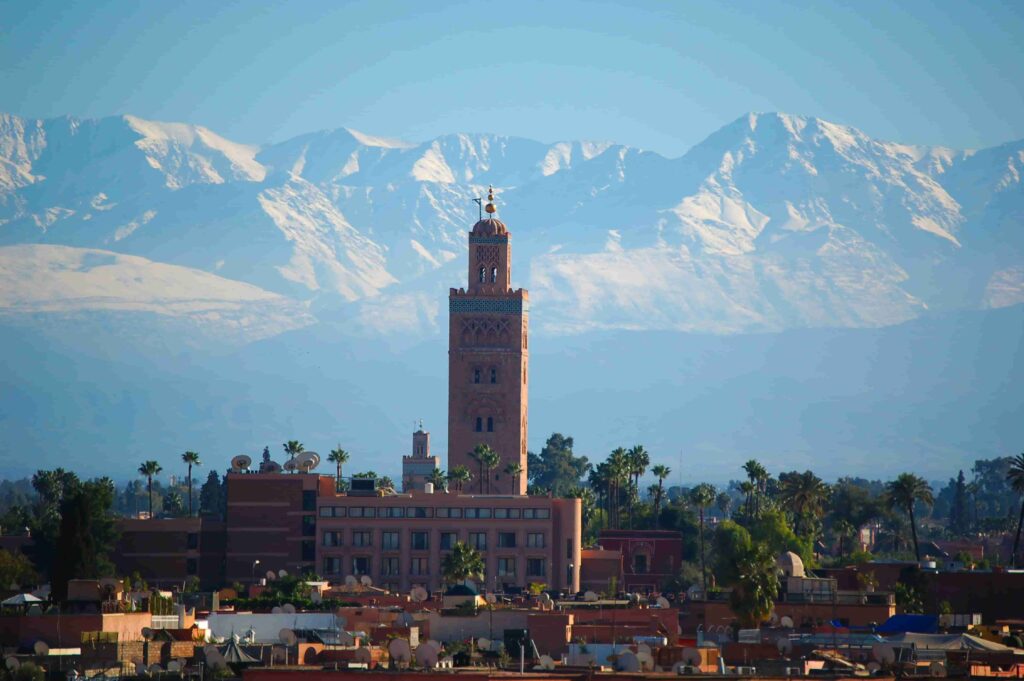
In Morocco, the tax you pay when you sell a property at a profit is called TPI, which stands for Taxe sur les Profits Immobiliers.
It applies to everyone. Moroccan citizens, foreign residents, and non-resident foreigners all fall under this tax when they sell real estate in Morocco. There is no special “foreigner exemption”, and no preferential rate. The rules are uniform.
The basic idea is simple: you bought a property for X, you sold it for Y, and the difference is your taxable profit. But the way Morocco calculates that difference is where things get interesting, and where most foreigners get confused.
You may also hear TPI referred to as IR/PF (income tax on property profits) or profit foncier in some contexts. They all refer to the same underlying tax on real estate gains.
How Much Capital Gains Tax Do Foreigners Pay in Morocco?
The standard TPI rate is 20% of the net capital gain.
However, there is a minimum tax floor of 3% of the gross sale price, regardless of your actual profit. So even if you claim expenses and reduce your net gain down to almost nothing, you still owe at least 3% of the total sale value.
This caught me off guard the first time. I thought I could offset the gain with renovation costs I had paid over the years. And yes, you can, but only if you have proper documentation (more on that below).
Here’s the rate structure in plain terms:
| Tax Element | Rate / Rule |
|---|---|
| Standard TPI rate | 20% of the net taxable gain |
| Minimum tax floor | 3% of the gross sale price (whichever is higher) |
| Revaluation coefficients | The acquisition price and eligible costs may be revalued using official coefficients published by the Moroccan tax authority. Ask your adviser to apply the correct current coefficient, and do not add any extra reduction unless your adviser verifies it in the current law. |
That last point about revaluation coefficients is something many foreign sellers miss. The official coefficient can increase your recognized acquisition price, which may reduce your taxable gain. Ask a conseiller fiscal to run the calculation using the current DGI coefficient for your specific sale year.
Is Capital Gains Tax Changing in Morocco in 2026?
As of 2026, the standard Morocco capital gains tax rule for a normal property sale remains centered around TPI: 20% of the net taxable gain, compared with the 3% minimum tax on the gross sale price.
That means if you are selling a house, apartment, villa, land, or riad in Morocco, you should not assume there is a new special lower 2026 rate unless your notary or tax adviser confirms it directly in the current Moroccan tax code, the latest Finance Law, or with the DGI.
What can change from year to year are the details around procedures, revaluation coefficients, reporting rules, registration duties, exemptions, and the treatment of more complex transactions such as company share transfers. This is why I always treat online tax information as a starting point only, not the final calculation.
If you are selling in 2026, ask your notary or conseiller fiscal to confirm three things before signing: the current TPI rate, the current 3% minimum tax rule, and the official DGI revaluation coefficient for your purchase year and sale year.
How to Calculate Property Capital Gains Tax in Morocco
This is where the real calculation happens, and getting it wrong means overpaying, or underpaying and triggering a reassessment.
The calculation follows these steps in sequence:
Step 1, Start with the sale price
This is the officially declared sale price in the notarial deed (acte de vente). It must match reality, undervaluing is fraud under Moroccan law.
Step 2, Revalue your original purchase price
Morocco applies an annual inflation coefficient published by the Direction Générale des Impôts (DGI) to your original purchase price. This adjusts your cost base for inflation and reduces your taxable gain. For example, if you bought in 2018 and sell in 2025, multiply your purchase price by the DGI coefficient for those years.
Step 3, Add deductible acquisition costs
Moroccan tax law allows acquisition costs to be calculated at a flat 15% of the purchase price if you cannot prove higher actual costs. This is a useful default for buyers who have lost receipts or paid registration and notary fees without detailed records. If your documented actual costs (notary fees, registration duties, stamp taxes) exceed 15%, you may use the higher documented amount, but you need the paperwork to prove it.
Step 4, Add documented improvement costs
Major renovations and capital improvements can be deducted, but only with official invoices from registered Moroccan businesses carrying a valid ICE number (business identifier). Cash payments with no formal receipts cannot be deducted. This is where I lost money on my first Marrakech sale.
Step 5, Calculate the net taxable gain
Net Taxable Gain = Sale Price − (Revalued Purchase Price + Allowable Costs)
Step 6, Confirm the current legal calculation
Do not add any extra reduction unless your notary or tax adviser verifies it in the latest Moroccan General Tax Code (Code Général des Impôts), the annual Finance Law, or directly with the DGI, and to apply the correct official revaluation coefficient.
Step 7, Compare 20% of net gain vs 3% of gross sale price
You pay whichever figure is higher. This is the cotisation minimale, the minimum tax guarantee that protects the Moroccan treasury even when gains are small or heavily offset by costs.
You cannot deduct routine maintenance, furnishing costs, or any work done without formal receipts from registered businesses.
20% TPI vs 3% Minimum Tax: Which One Applies?
This is the question that catches most foreign sellers off guard, so let me be direct about it.
You always pay the higher of the two calculations:
- 20% of your net taxable gain (after the revaluation, deductible costs, and any current legal adjustments), or
- 3% of the gross sale price (no deductions, no reductions, just 3% of what the buyer paid you).
In practice, the 3% minimum often wins when the property has appreciated significantly, when renovation costs can’t be fully documented, or when the sale happens relatively quickly after purchase. For a property sold at 2,000,000 MAD, the minimum floor alone is 60,000 MAD, even if your documented net gain would produce a lower 20% figure.
Plan for this floor from the beginning, not at the notary’s table.
What Costs Can You Deduct From a Moroccan Property Gain?

Morocco allows you to deduct certain costs from the gain, but the rules are strict. Here is what typically qualifies:
| Deductible Cost | Condition |
|---|---|
| Notary fees paid at purchase | Standard rate around 1%, official receipt required, or use the 15% flat allowance |
| Registration fees and stamp duties | Paid at purchase, covered by 15% flat allowance or actual documented costs |
| Capital improvements and major renovations | Only with official invoices from ICE-registered Moroccan businesses |
| Real estate agency commissions | Paid at sale, official receipt required |
| 15% flat acquisition-cost allowance | Applied automatically if actual documented costs are lower than 15% of purchase price |
The 15% Acquisition Cost Allowance, A Detail Many Foreigners Miss
Under Moroccan tax rules, if you cannot produce receipts proving your actual acquisition costs exceed 15% of the purchase price, the DGI will apply a flat 15% allowance. This is actually a useful safety net, it means that even if you’ve lost some of your purchase receipts, you won’t be completely penalized.
However, if your actual documented acquisition costs are higher than 15%, you should use those real figures instead. Every dirham of legitimate, documented cost reduces your taxable gain.
What you cannot deduct:
- Routine maintenance (painting, plumbing repairs, cleaning)
- Furniture or fittings
- Work paid in cash with no formal invoice from a registered business
- Costs you can’t back up with official documents
This is where I lost money the first time around. I had paid cash to local craftsmen for renovation work. No receipts, no registered business numbers. The tax authority rejected those costs entirely. Learn from that mistake.
Primary Residence Exemption in Morocco
Here is something that surprises almost every foreign buyer I’ve spoken to.
If the property you’re selling is your primary residence in Morocco, and you’ve lived in it continuously as your principal home for at least five years at the date of sale, you may be fully exempt from TPI.
The property must genuinely be your main residence. It should not have been rented out or used for professional purposes during the relevant period. Because Moroccan tax rules can be refined by annual Finance Laws, confirm the current exemption conditions with your notary or conseiller fiscal before relying on this rule.
Important nuances for foreigners:
- The property must genuinely be your principal residence, not a holiday home, investment property, or occasional-use apartment. The DGI can and does investigate this.
- To qualify, you typically need to demonstrate actual, continuous residency. Evidence that may be required includes: a valid carte de séjour (residency permit), utility bills in your name at that address, a Moroccan tax identification number showing the property as your declared residence, and potentially local address records.
- For high-value properties, particularly those sold above 4,000,000 MAD, the scrutiny is typically higher. Confirm with a qualified Moroccan tax adviser whether any additional thresholds or conditions apply to your specific situation under current rules.
- Part-time residents are generally not eligible. Many foreigners who spend several months a year in Morocco assume they qualify. Most don’t. The DGI looks carefully at this.
Moroccan tax law on this exemption is worth verifying with a current source, as the conditions can be refined by annual Finance Laws. Your notary or conseiller fiscal should confirm the exact requirements at the time of your sale.
Capital Gains Tax for Non-Resident Foreigners
If you don’t live in Morocco at all, and you own a property there purely as an investment, the TPI rate is the same: 20% with the 3% minimum floor. But the practical process is meaningfully different, and the documentation requirements are tighter.
How Payment Works for Non-Residents
For non-residents, the TPI is typically withheld at source by the notary at the time of the sale. The notary calculates the estimated tax, deducts it from your proceeds, and pays it directly to the Moroccan tax authority. You don’t receive your full proceeds and then pay later, the tax comes out of the transaction before you see a dirham.
This is actually useful: it removes the risk of forgetting to pay or miscalculating. But it also means you need to have your documentation ready before closing, not during it. A notary who doesn’t have your cost documentation can’t calculate a lower tax, they’ll default to the minimum, and correcting it afterward takes months.
Documents Non-Resident Sellers Should Prepare in Advance
- Original acte de vente (purchase deed) and title certificate (titre foncier)
- Moroccan tax identification number (identifiant fiscal)
- Official renovation invoices from ICE-registered contractors
- Proof that all local property taxes are paid (taxe d’habitation, taxe de services communaux)
- Proof that original purchase funds arrived through official banking channels (attestation de transfert)
- Any financing documentation if eligible costs apply
If the notary calculates the tax incorrectly, and this happens, you may need to file a correction with the DGI afterward. I have seen this take several months. Getting your documents in order before listing the property is the fastest path to a clean closing.
Non-Resident Capital Gains Tax on Indirect Transfers
An indirect transfer is different from selling the property itself. It usually means selling shares, company parts, or ownership interests in a company that owns Moroccan real estate, instead of selling the property directly.
This matters because some foreign owners do not hold Moroccan property in their personal name. They hold it through a Moroccan company, a foreign company, or another legal structure. In that situation, selling the shares may still create a Morocco tax issue if the company is considered property-rich or closely linked to Moroccan real estate.
Do not assume that selling company shares avoids Moroccan property capital gains tax. Depending on the structure, Moroccan tax rules may still treat the gain as connected to Moroccan real estate, and other taxes or registration duties may also apply.
Before any indirect transfer, a non-resident seller should ask a Moroccan tax adviser to review the company ownership, the value of the Moroccan real estate inside the company, the seller’s tax residence, the applicable double taxation treaty, and whether the transaction triggers TPI, IR/PF, registration duties, or another Moroccan tax obligation.
Worked Example: What You Actually Pay
Let me walk through a realistic example so you can model your own situation. These numbers are illustrative, use them as a framework, not a guarantee, and run your actual figures with a qualified adviser.
Scenario
- You bought a property in Rabat in 2018 for 1,500,000 MAD
- You sell it in 2025 for 2,200,000 MAD
- You have official invoices for 150,000 MAD in major renovations
- Your flat acquisition-cost allowance is 225,000 MAD, which equals 15% of the 1,500,000 MAD purchase price
Calculation
| Purchase price | 1,500,000 MAD |
| Inflation revaluation coefficient (approx. 1.15 for this period, verify current DGI figure) | × 1.15 = 1,725,000 MAD |
| 15% flat acquisition-cost allowance | + 225,000 MAD |
| Renovation invoices | + 150,000 MAD |
| Total adjusted cost base | 2,100,000 MAD |
| Net gain (2,200,000 − 2,100,000) | 100,000 MAD |
| TPI at 20% of net gain | 20,000 MAD |
| Minimum floor (3% of 2,200,000) | 66,000 MAD |
| You pay the higher: | 66,000 MAD |
This is exactly why the 3% minimum floor matters so much. Even when your net gain calculation suggests a lower tax, the floor overrides it. In this scenario, strong documentation cut the theoretical 20% bill sharply, but the 3% floor still determined the actual payment. Plan accordingly.
How Much Tax on a 70,000 MAD Capital Gain in Morocco?
If your taxable property gain in Morocco is 70,000 MAD, the first calculation is simple: 20% of 70,000 MAD equals 14,000 MAD.
But that does not automatically mean you pay 14,000 MAD. Morocco also applies the 3% minimum tax on the gross sale price, so you must compare both figures and pay whichever is higher.
Simple example
- Taxable capital gain: 70,000 MAD
- 20% TPI on the gain: 14,000 MAD
- Gross sale price: 600,000 MAD
- 3% minimum tax on the sale price: 18,000 MAD
Result: in this example, the 3% minimum tax is higher than the 20% gain calculation, so the seller would pay 18,000 MAD, not 14,000 MAD.
This is why you should never calculate Morocco property capital gains tax from the gain alone. The sale price matters just as much because of the 3% minimum floor.
Also, Morocco does not work like countries where every “long-term capital gain” automatically gets a special lower rate. For Moroccan property, the key calculation is usually TPI or IR/PF: 20% of the net taxable gain compared with the 3% minimum tax on the sale price. Holding period can matter for exemptions, primary residence rules, and revaluation coefficients, but it does not create a simple universal lower long-term CGT rate.
Avis Préalable: How to Check Your TPI Before the Final Sale
This is one of the most practical, and most underused, tools available to sellers in Morocco, especially foreign sellers.
Before the final deed is signed, sellers may be able to request a prior tax opinion or preliminary TPI calculation from the Moroccan tax administration (avis préalable). This is typically initiated after a preliminary sale agreement (compromis de vente) has been signed but before the final notarial deed.
Why this matters for foreigners:
- It gives you a documented DGI calculation before money changes hands, no surprises at closing.
- It’s especially useful for high-value properties, inherited properties, heavily renovated properties, or situations where the cost documentation is complex.
- It can help you and the notary align on the correct figure before the final deed, reducing the chance of a post-sale correction process that can drag on for months.
- For non-residents where the notary is withholding tax at source, having a pre-agreed calculation removes ambiguity.
Not every notary proactively suggests this step. Ask yours directly: “Pouvons-nous demander un avis préalable auprès de la DGI avant la signature définitive?”, and ask well before your planned closing date. The process takes time.
Can the Moroccan Tax Authority Challenge Your Sale Price?
Yes, and this happens more than sellers expect.
The DGI (Direction Générale des Impôts) has the authority to challenge a declared sale price if it appears significantly below market value for the area. This process is called a redressement fiscal, a tax reassessment.
How this can affect you:
- The DGI can substitute its own estimate of market value for the declared sale price, calculating your TPI on the higher figure.
- You may face additional tax, penalties, and interest on the underdeclared amount.
- A disputed assessment can delay the repatriation of your sale proceeds, which is a separate but equally important concern for non-resident sellers.
- In serious cases, undervaluing a declared sale price is treated as tax fraud under Moroccan law. The penalties are significant.
Some sellers have historically tried to declare a lower sale price than what actually changed hands, often to reduce TPI, sometimes to accommodate the buyer’s own tax position. The DGI has become considerably more sophisticated at detecting these discrepancies, particularly in high-demand markets like Marrakech, Casablanca, and Rabat. Don’t do it. The short-term saving is not worth the risk.
The safest approach: keep the transaction fully documented, declare the real price, and use your legitimate cost deductions to manage the tax efficiently.
Do US, UK, French, Canadian, and EU Sellers Pay Tax Twice?

Morocco taxes gains on Moroccan real estate. Your home country may also require you to report the same gain. Whether you end up taxed twice depends on your country’s rules and whether a double taxation treaty applies.
Morocco has signed double taxation agreements with a number of countries. Here’s a brief overview, but these are starting points only, not tax advice:
- France: French residents selling Moroccan property typically report the gain in France and may receive a credit for TPI already paid in Morocco. French-Moroccan sellers should engage a cross-border tax specialist, French tax rules on foreign property gains are detailed and have their own nuances.
- United Kingdom: UK residents should report the gain to HMRC. The UK-Morocco tax treaty has specific provisions around immovable property. Check with HMRC or a UK adviser familiar with overseas property transactions.
- United States: US citizens and green card holders must report worldwide income to the IRS regardless of where they live. A foreign tax credit may be available for TPI paid in Morocco, but the US-Morocco treaty has limitations. Use a US tax professional with international property experience.
- Canada: Canadian residents generally report foreign property gains on their Canadian return. Treaty provisions and foreign tax credits may reduce double taxation. Confirm with a Canadian accountant familiar with Moroccan property.
- EU residents (other than France): Rules vary significantly by country. Most EU-Morocco tax treaties follow the OECD model, which generally allows the country where the property is located (Morocco) to tax immovable property gains, with credit or exemption available in the home country.
My strong advice: do not rely on your home country’s accountant to understand Moroccan tax rules, and don’t rely on a Moroccan accountant to understand your home country’s rules. You need someone who understands both sides, or at minimum, a specialist in each jurisdiction who will communicate with each other.
What Taxes Are Payable in Morocco When You Sell a Property?
When foreigners ask about capital gains tax in Morocco, they often really mean: “What will be deducted from my sale proceeds before I receive my money?” TPI is the main tax, but it is not the only cost or obligation to check before closing.
| Tax / Cost | Who Usually Pays | Why It Matters |
|---|---|---|
| TPI / IR-PF | Seller | The main Morocco property capital gains tax on the real estate profit. |
| 3% minimum tax | Seller | Applies as a floor based on the gross sale price, even if the calculated gain is low. |
| Unpaid local property taxes | Seller | Taxe d’habitation and taxe de services communaux should be cleared before the final deed. |
| Agency commission | Depends on agreement | May be paid by the seller, buyer, or split. Get the commission agreement in writing. |
| Home-country tax reporting | Seller | Your country of tax residence may require you to report the Moroccan property gain even after TPI is paid in Morocco. |
The practical point is simple: before accepting an offer, calculate the sale price, the likely TPI, the 3% minimum floor, any unpaid local taxes, agency costs, and your repatriation position. Otherwise, the number you think you are receiving may not be the number that actually reaches your bank account.
Common Mistakes Foreigners Make (That Cost Real Money)
I’ve made some of these myself, and I’ve watched others make the rest.
1. Not keeping purchase documentation
When you buy in Morocco, you receive a signed and stamped acte de vente from the notary. Keep this forever. When you sell, this document establishes your official purchase price. Losing it creates serious problems.
2. Paying for renovations in cash with no receipts
Any improvement to the property that you want to deduct from your gain must have an official receipt from a registered Moroccan business with an ICE number (business identifier). No receipt means no deduction. Period.
3. Assuming the agent or notary handles the tax optimally
Real estate agents in Morocco are not tax advisers. Many will tell you the notary handles everything, and while the notary does withhold tax, they are not there to minimize your liability. You need a conseiller fiscal or a tax lawyer before the sale, not during it.
4. Undervaluing the property on paper
Some sellers try to declare a lower sale price than what actually changed hands. This is tax fraud under Moroccan law, the DGI has become significantly more sophisticated at detecting it, and the penalties are severe. Don’t do it.
5. Forgetting about local property taxes owed
Before a sale completes, you must have paid all outstanding taxe d’habitation and taxe de services communaux. Any unpaid amounts will block the transaction or be deducted from proceeds. Check these well before your closing date.
6. Not getting the repatriation paperwork right from day one
If you want to take your sale proceeds out of Morocco and back to your home country, you need to prove that the original purchase funds came in through official banking channels. Morocco requires an attestation de transfert from your bank at the time of purchase. If you don’t have this from when you bought, repatriating proceeds becomes extremely complicated. This is not a TPI issue per se, but it determines how useful your gain actually is.
French and Arabic Tax Terms You May Encounter
If you’re reading Moroccan tax documents, communicating with a notary, or trying to understand French or Arabic sources on this topic, these terms are the ones you’ll see most often:
| Term | Meaning |
|---|---|
| TPI | Taxe sur les Profits Immobiliers, Morocco’s property capital gains tax |
| Profit foncier | Property profit / real estate gain |
| Plus-value immobilière | Capital gain on real estate |
| IR/PF | Income tax on property profits (alternative label for TPI in some DGI documents) |
| Cotisation minimale | Minimum tax, the 3% floor on gross sale price |
| Avis préalable | Prior tax opinion or preliminary TPI calculation from the DGI |
| Redressement fiscal | Tax reassessment by the DGI |
| DGI | Direction Générale des Impôts, Morocco’s tax authority |
| الضريبة على الأرباح العقارية | Tax on real estate profits (Arabic) |
| ضريبة الربح العقاري | Property profit tax (Arabic) |
Insider Tips Most Articles Miss
Tip 1: The agréé designation matters
Always work with a notary who is officially agréé (licensed) and familiar with international transactions. Some notaries in tourist areas have far more experience with foreign sellers. Ask directly how many international property sales they handle per year.
Tip 2: Repatriating your proceeds requires a paper trail from day one
If you want to take your sale proceeds out of Morocco and back to your home country, you need to prove that the original purchase funds came in through official banking channels. Morocco requires what’s called an attestation de transfert from your bank at the time of purchase. If you don’t have this from when you bought, repatriating proceeds becomes extremely complicated. This is not a tax issue per se, but it affects how useful your gain actually is.
Tip 3: The correct DGI coefficient matters
The official revaluation coefficient can materially change your taxable gain. Before setting your sale price or accepting an offer, ask a tax adviser to calculate your TPI using the current coefficient for your purchase year and sale year.
Tip 4: Exchange rate risk is real
Your gain in MAD might look good on paper. But if the dirham has moved unfavorably against your home currency since you bought, your real-world profit is smaller than the numbers suggest. Factor this in when evaluating whether a sale makes sense.
Tip 5: Request an avis préalable
As covered above, requesting a preliminary DGI calculation before the final deed is signed can prevent expensive surprises. Ask your notary early, not the week before closing.
Before You Sell: Practical Checklist
- Locate your original acte de vente and all related purchase documents
- Gather official invoices for any renovations or improvements (ICE-registered contractors only)
- Confirm your taxe d’habitation and taxe de services communaux are fully paid
- Obtain your Moroccan tax identification number if you don’t have one
- Get a preliminary TPI calculation from a Moroccan conseiller fiscal
- Ask your notary about requesting an avis préalable before the final deed
- Check your home country’s tax treaty position with Morocco
- Confirm your original funds transfer documentation with your Moroccan bank (attestation de transfert)
- Choose a notary experienced with international sales
- Engage a home-country accountant familiar with foreign property gains
Conclusion: Don’t Let the Tax Eat Your Profit
Selling property in Morocco as a foreigner is absolutely doable, and many people make solid returns doing it.
But the Morocco property capital gains tax system has enough nuance that going in unprepared costs real money.
The 20% TPI rate is manageable. The 3% minimum floor is the part that surprises people. The inflation adjustment, official revaluation coefficient, and documented deductions can work in your favor if you plan ahead. The exemption for primary residence is genuinely valuable, if you genuinely live there and can prove it. And the DGI’s ability to challenge declared values means the clean path is always the right one.
Get the paperwork right from day one. Keep every official receipt. Request an avis préalable where possible. Hire local expertise before you need it, not during a crisis. And if you’re planning a sale in the next year or two, start the preparation now.
The profit is there. The tax is real. Knowing both clearly puts you in control.
Moroccan tax rules change regularly, often through annual Finance Laws. The information in this article is based on firsthand experience and research, and is intended as an educational guide only. Always verify current rates, thresholds, and procedures with a licensed Moroccan conseiller fiscal, your notary, or the DGI directly before proceeding with any property sale.
FAQ: Morocco Property Capital Gains Tax for Foreigners
What is TPI in Morocco?
TPI stands for Taxe sur les Profits Immobiliers, Morocco’s tax on real estate profits. It applies to any seller who makes a gain on a Moroccan property sale, including foreign residents and non-residents.
What does TP tax mean in Morocco?
Most foreign sellers are usually referring to TPI, not “TP”. TPI stands for Taxe sur les Profits Immobiliers, Morocco’s tax on real estate profits. In current tax documents, you may also see it described as IR/PF, meaning income tax on property profits.
Is there a different long-term capital gains tax rate in Morocco?
Not in the simple US-style sense. For Moroccan property, the usual rule is 20% of the net taxable gain, compared with the 3% minimum tax on the sale price. Holding period can matter for exemptions, revaluation coefficients, and primary residence rules, but there is not a simple lower “long-term CGT rate” for every property seller.
How much capital gains tax do I pay on a 70,000 MAD gain?
20% of 70,000 MAD is 14,000 MAD. But you still compare that with 3% of the gross sale price. If 3% of the sale price is higher than 14,000 MAD, the 3% minimum applies.
Is Morocco capital gains tax different for non-residents?
The rate is generally the same, but the process is stricter. Non-resident sellers need to prepare documents early because the notary may withhold the tax at closing and repatriation paperwork can become a major issue.
Does Moroccan capital gains tax apply to indirect transfers?
It can. If you sell shares, company parts, or ownership interests in a company that mainly owns Moroccan real estate, Moroccan tax treatment may still be triggered. This is a specialist area and should be reviewed by a Moroccan tax adviser before the deal is structured.
Do foreigners pay capital gains tax when selling property in Morocco?
Yes. Foreigners, whether resident in Morocco or not, are subject to TPI at the same rates as Moroccan nationals. There is no special lower rate for foreign sellers.
What is the capital gains tax rate in Morocco?
The standard TPI rate is 20% of the net taxable gain. A minimum tax of 3% of the gross sale price also applies, you pay whichever is higher.
What is the 3% minimum tax on Moroccan property sales?
This is the cotisation minimale, a floor that ensures the Moroccan tax authority receives at least 3% of the total sale price regardless of how low your net gain is. It applies even when expenses significantly reduce your calculated profit.
Can foreigners avoid TPI in Morocco?
The main legal exemption is for sellers whose property has been their genuine primary residence. Fully avoiding TPI through other means is not a realistic strategy. The best approach is efficient planning: maximizing legitimate deductions, applying the correct official revaluation coefficient, and consulting a qualified adviser before the sale.
Does the primary residence exemption apply to foreigners?
It can, but the requirements are strict. The property must genuinely be your principal residence, not a holiday home or occasional-use property, and it should not have been rented out or used professionally during the relevant period. You typically need to demonstrate continuous residency for at least five years at the date of sale, supported by a carte de séjour, utility bills, and a Moroccan tax identification number linked to that address. Part-time residents usually do not qualify.
Can I deduct renovation costs from my Moroccan property gain?
Yes, but only if you have official invoices from Moroccan businesses registered with a valid ICE number. Cash payments to unregistered workers produce no deductible costs, as I learned the hard way.
What is the 15% acquisition cost allowance?
If your actual documented acquisition costs (notary fees, registration duties, stamp taxes) are less than 15% of the purchase price, Moroccan tax law allows a flat 15% allowance instead. If your actual costs exceed 15% and are documented, you use the higher figure.
Can the DGI challenge my declared sale price?
Yes. If the declared price appears significantly below market value, the DGI can reassess and tax you on a higher figure. Undervaluing a property sale is tax fraud, the penalties are serious and the consequences extend to repatriation of proceeds.
Do I need to file a tax declaration after selling Moroccan property?
TPI is typically withheld by the notary at source. However, there may be post-sale filing requirements depending on your residency status and the specifics of the transaction. Confirm with your notary or conseiller fiscal, do not assume the notary withholding covers everything.
Can I repatriate sale proceeds after paying capital gains tax?
Repatriation is a separate process from TPI. To transfer proceeds out of Morocco, you generally need to prove that the original purchase funds entered Morocco through official banking channels (evidenced by an attestation de transfert). If you don’t have this documentation, repatriation can be blocked. Learn more about repatriating money after selling property in Morocco.
Do I pay tax in my home country too?
Possibly. Most countries require their residents to report foreign property gains. Whether you’ll be taxed twice depends on the double taxation treaty between your country and Morocco, and your home country’s rules on foreign tax credits. France, the UK, the US, Canada, and most EU countries have treaty relationships with Morocco, but the specifics vary. Get local advice in both jurisdictions.
What documents should I keep before selling?
At minimum: your original acte de vente, all official renovation invoices, proof of paid local property taxes, your Moroccan tax ID, and your original funds transfer documentation. Losing any of these increases your TPI bill and can complicate repatriation.
What is an avis préalable?
It’s a prior TPI calculation that sellers can request from the DGI before the final deed is signed. It’s especially useful for high-value, renovated, or inherited properties. Ask your notary whether it applies to your situation, ideally several weeks before your planned closing date.
What happens if I sell below my original purchase price?
If there is genuinely no gain, there is no 20% TPI. However, the 3% minimum floor on the gross sale price is a separate calculation, confirm with your adviser whether it applies in a loss scenario for your specific case. Never assume you owe nothing without a professional opinion.

Anis is the founder of Buy Property Morocco, a research-based resource created to help foreign buyers understand the real process of buying property in Morocco safely.
He focuses on the practical details most buyers only discover too late: title deed checks, notary steps, compromis de vente risks, transfer taxes, foreign banking rules, repatriating money after a sale, and avoiding common mistakes when dealing with agents or sellers.
Anis has personally bought 4 properties in Morocco and shares practical guidance based on real experience, not theory.
If you are seriously considering buying property in Morocco and want private guidance before you send money, pay a deposit, or sign anything, you can book a buyer safety call here: