Foreign individuals can generally buy and own land in Tangier when the parcel sits inside an applicable urban perimeter, or when it is otherwise classified as non agricultural land.
Foreign individuals generally do not need Moroccan residency or a local co owner to acquire suitable urban or non agricultural land, but the exact parcel and transaction still require verification.
However, the useful answer depends on the parcel rather than on the city name.
Classification, administrative location, ownership regime, title status, planning designation and intended use all shape what a buyer may legally do.
Agricultural land, and land with an agricultural vocation situated wholly or partly outside an urban perimeter, follows a separate and much stricter regime.
So the honest short answer is yes for many urban Tangier plots, and not automatically for anything else.
At a Glance: foreigners buying land in Tangier
- General position: a foreign individual can usually buy titled, non agricultural land inside an urban perimeter.
- The restricted category: agricultural or agricultural vocation land outside an urban perimeter is reserved to Moroccan natural persons and to certain Moroccan entities.
- Classification drives the outcome: nearby plots can follow different legal and planning rules.
- Ownership is not building permission: owning a parcel does not by itself create the right to divide it or build on it.
- Verify independently: confirm title through the land registry and planning status through the competent urban planning authority.
- Safest action before paying: obtain the title reference and current written planning information for that exact parcel, then let a notary and an independent lawyer review the contract.
Can foreigners buy and own land in Tangier?
Moroccan law does not ban foreign individuals from owning land in general.
Instead, it restricts one defined category of property.
Dahir portant loi n° 1-73-645 of 23 April 1975 reserves agricultural properties, and properties with an agricultural vocation situated wholly or partly outside urban perimeters, to Moroccan natural persons and to certain legal entities governed by Moroccan law.
A foreign individual can normally acquire suitable urban or non agricultural land in Tangier, subject to title, planning, banking, and parcel specific verification.
A buyer’s specific foreign nationality usually does not change the general rule, but being a foreign rather than Moroccan individual matters when the parcel falls within the restricted agricultural land category.
For that restricted category, a Moroccan individual, a qualifying Moroccan company structure and a foreign individual are not treated identically.
Meanwhile, the words used in a listing carry no legal weight.
A seller may describe a plot as residential, constructible or villa land while the official documents say something else.
Our wider guide on whether foreigners can buy urban land in Morocco explains the national framework in more depth.
| Land situation | What it usually means for a foreign individual |
|---|---|
| Titled land inside an applicable urban perimeter | Normally open to foreign buyers, subject to title, planning and physical checks. |
| A registered lot inside an authorised subdivision | Normally open to foreign buyers, provided the subdivision authorisation and the individual lot title both exist. |
| Agricultural or agricultural vocation land outside an urban perimeter | A foreign individual should not assume that the land is available to purchase, because a genuine non agricultural project may require parcel specific AVNA approval and other authorisations before acquisition. |
| Untitled land or land held under Melkia | Not illegal, but harder to verify, harder to transfer cleanly and often harder to finance or resell. |

Which types of Tangier land require different checks?
Several independent variables sit on top of every parcel.
- Legal classification: agricultural, agricultural vocation, or non agricultural.
- Planning position: inside or outside an applicable urban perimeter and an approved planning document.
- Ownership regime: registered title, registration in progress, or untitled land such as Melkia.
- Division status: a lot inside an authorised subdivision, or raw undivided land.
- Permitted use: what the planning rules allow on that specific zone.
- Buyer type: a foreign individual buying personally, or a Moroccan company with foreign participation.
Each variable can point in a different direction on the same plot.
For example, a parcel can be perfectly titled and still sit outside any urban perimeter, which changes both who may buy it and what may be built.
Why does the urban perimeter matter so much around Tangier?
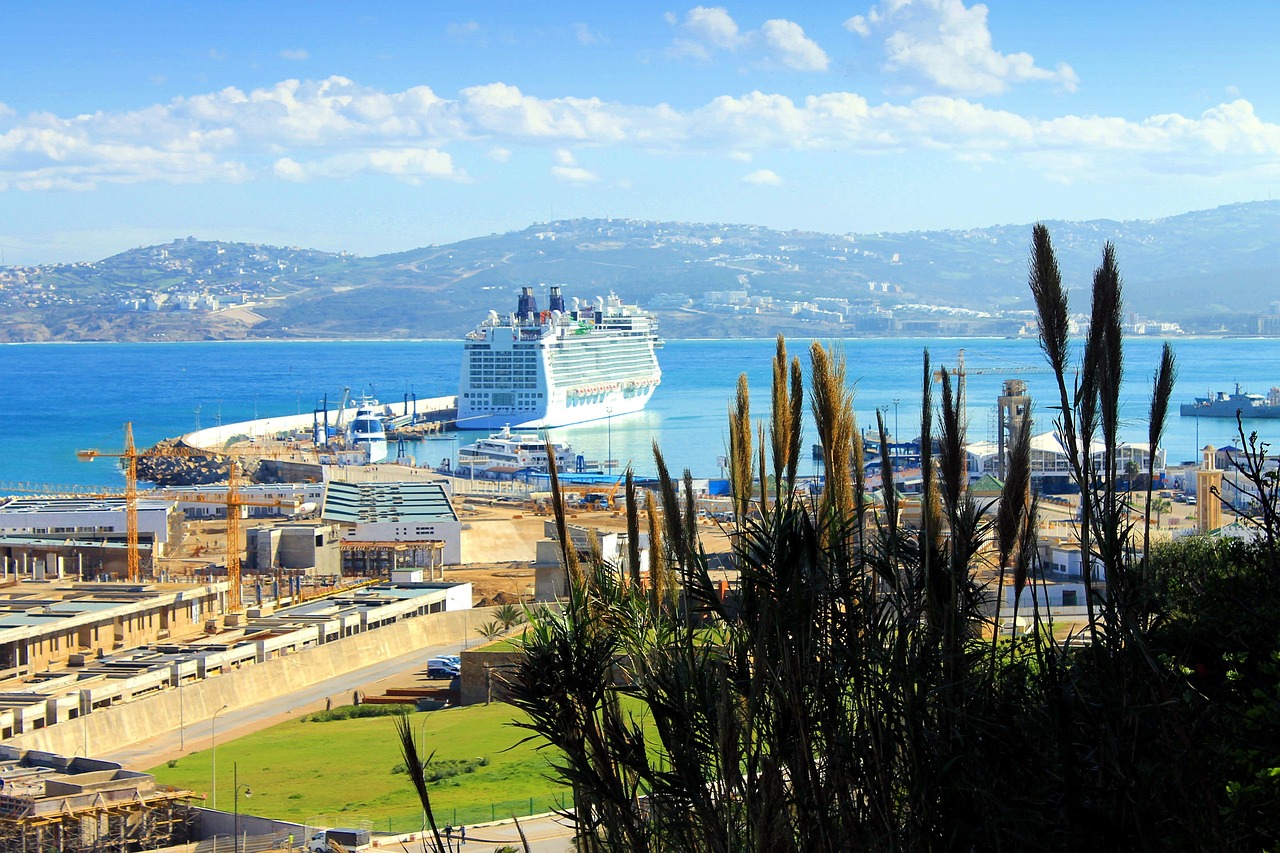
Land advertised as being in Tangier often sits well outside the city itself.
The prefecture of Tanger-Assilah contains the urban municipalities of Tanger, Assilah and Gzenaya, plus several rural communes.
Next to it, the province of Fahs-Anjra is predominantly rural and includes communes such as Ksar Sghir, Anjra, Melloussa and Jouamaa.
As a result, nearby plots can follow different legal and planning rules.
Planning documents define perimeters, zones, permitted uses and road reservations.
Those documents and their legal effects can change, so the buyer should obtain current official planning information for the exact parcel.
An older plan may give useful context, yet it should not replace current written information.
The Agence Urbaine de Tanger services page sets out how to request urban planning information for this territory.
What should you request instead of a listing description?
Ask for a current note of urban planning information covering the exact parcel, identified by its title number and cadastral references.
Also confirm the commune that governs the parcel, since the commune issues subdivision and building authorisations.
Do not rely on a map pin, a listing address or a verbal statement as proof of zoning.
Looking at a specific plot near Tangier?
Bring the parcel location, the title reference, the asking price and any documents you already received.
Book a Free 15 Minute Morocco Buyer Safety Call
This is a calm initial conversation about your situation, and it does not replace a notary, a lawyer, a surveyor, an architect, a bank or official planning information.
Can a foreigner buy agricultural land in Morocco?
Not in the simple way that many listings suggest.
The restriction under Dahir 1-73-645 applies to agricultural property, and to property with an agricultural vocation, situated wholly or partly outside an urban perimeter.
Law 62-19, promulgated by Dahir n° 1-21-70 of 14 July 2021 and published in the Bulletin Officiel, added two specific company forms to the list of permitted acquirers.
Those forms are the société anonyme, a public limited company, and the société en commandite par actions, a partnership limited by shares.
Other company forms do not gain the same access, and the amended article 2 attaches strict conditions.
- The property must be eligible for sale and either registered or in the course of registration.
- The land must serve agricultural investment.
- The company must obtain prior approval from the regional unified investment commission created under law 47-18.
- Conditions from the sale contract and the terms of reference get published against the title.
- Restrictions on sale, mortgage, seizure and letting remain until the commission issues a release certificate.
Read that list carefully, because it describes an agricultural investment route rather than a residential one.
A separate route exists for non agricultural projects.
Décret n° 2-04-683 of 29 December 2004 makes acquisition of agricultural or agricultural vocation land outside the urban perimeter, by foreign individuals or by companies with foreign capital, conditional on obtaining an Attestation de Vocation Non Agricole for a non agricultural investment project.
What that means in practice
- The process is not automatic, and the outcome depends on the parcel and on the project.
- The decision belongs to the competent authorities, so a seller or agent cannot promise it.
- A buyer should not pay against a promised future approval or a promised change of classification.
- Company formation is not a workaround for a foreign individual, because each permitted route carries its own purpose, approvals and published charges.
If a company structure genuinely fits your project, ask a qualified Moroccan lawyer to assess the structure, the shareholders, the project and the current law before you commit anything.
What does AVNA mean for a foreign land buyer?
AVNA is an administrative procedure concerning the non agricultural vocation of a specific parcel and project, and provisional and definitive attestations do not have the same effect.
The Regional Investment Centre for Tanger-Tétouan-Al Hoceïma lists the provisional AVNA and the definitive AVNA as separate authorisations, alongside subdivision and building permissions.
Keep the following distinctions clear.
- Permission to acquire: the decree conditions the purchase of that land by a foreign buyer on obtaining the attestation.
- Provisional AVNA: an earlier stage tied to a defined project, which does not settle the parcel’s position permanently.
- Definitive AVNA: a later stage that follows the actual realisation of the project.
- Planning approval: zoning and permitted use come from the planning documents and the competent urban planning authority.
- Parcel division permission: dividing land requires its own authorisation under law 25-90.
- Building permission: the commune issues the building permit after an architect prepares the project.
Do not assume that an attestation is available for your parcel, and do not assume that one obtained for another buyer or another project applies to yours.
Confirm the current procedure and the position for your exact parcel with the Regional Investment Centre and the other competent authorities before committing money.
Our detailed explanation of the AVNA certificate and rural land in Morocco covers the subject in plain English.
Does owning the land mean you can build on it?
No, and this misunderstanding can cause expensive mistakes.
Ownership answers one question: who holds the registered right to the parcel.
Building rights come from a different chain of decisions.
Law 25-90 on subdivisions, residential groups and parcel divisions treats any division of a land property into two or more lots intended for construction as a subdivision requiring prior administrative authorisation.
Because of that sequence, a titled plot can be legal to own and still impossible to build on today.
| What you need to confirm | Who normally confirms it |
|---|---|
| Registered owner, charges and registered area | The land registry, through a recent ownership certificate |
| Zone, permitted use, density, height and road reservations | The urban planning agency and the commune |
| Land classification and any AVNA position | The competent regional authorities and the Regional Investment Centre |
| Boundaries, real surface and encroachment on the ground | A qualified surveyor |
| Whether your intended project fits the rules | An architect, working with the commune |
| Contract terms, seller authority and transfer | A Moroccan notary, plus an independent lawyer where useful |

Can this Tangier plot move forward?
Use this sequence to decide whether a parcel deserves more of your time and money.
Stage 1
Identify the exact parcel
Get the title reference, the cadastral plan and the commune, not just a map pin.
Stage 2
Verify the owner and the title
Obtain a recent ownership certificate and match it against the seller’s identity.
Stage 3
Confirm the classification
Establish whether the land counts as agricultural, agricultural vocation or non agricultural.
Stage 4
Check the perimeter and AVNA position
Find out whether the parcel sits inside an urban perimeter, and whether an attestation is even available.
Stage 5
Confirm zoning and buildability
Request written planning information and ask an architect whether your project fits it.
Stage 6
Verify boundaries, access and utilities
Send a surveyor to the site, and confirm legal road access rather than an informal track.
Stage 7
Review the contract and deposit terms
Have a notary, and where useful an independent lawyer, read every clause before you sign.
Stage 8
Pay traceably and complete formally
Use documented bank transfers, complete through the proper Moroccan process and keep every record.
Do not progress until a failed early check has been resolved.
How should you verify the title and the seller?
Start with the land register rather than with the seller’s paperwork.
A recent certificate of ownership shows the registered owner, the description of the property, the registered area and the inscriptions weighing on the title.
You can request that certificate through the ANCFCC certificate of ownership service.
Order it close to the transaction, because charges and disputes can appear at any time.
| Seller or agent claim | Independent proof you should require |
|---|---|
| “The land is mine and it is clean.” | A recent ownership certificate naming the seller and showing no blocking inscriptions. |
| “It is one thousand square metres.” | The registered area on the title, plus a surveyor’s report on the ground. |
| “I sign for the family.” | Identification of every co owner or heir, and a power of attorney checked for scope and validity. |
| “The company owns it, so it is simple.” | Company registration documents and proof that the signatory holds authority to sell. |
A screenshot, an old photocopy or a photograph sent by message does not replace an official document.

What if the land is untitled or held under Melkia?
Untitled land is not automatically illegal, and many Moroccan families hold land this way legitimately.
Still, the evidence of ownership sits outside the land register, which changes the risk profile.
Boundaries, heirs, shares and historic transfers can require far deeper legal review, and resale or financing can become harder later.
Our comparison of Melkia and Titre Foncier for foreign buyers explains the practical differences.
How should you check boundaries, access and utilities?
Legal verification and physical verification are two separate jobs.
A registered title does not by itself confirm the parcel’s current physical condition, access, encroachment, or construction feasibility.
Send a qualified surveyor to mark the parcel and compare the registered area with reality.
Access deserves its own attention, because a track used for years is not the same as legal road access.
- Confirm whether water and electricity connections exist, and what connection would involve.
- Ask about drainage and wastewater arrangements for the zone.
- Check slope, soil condition and any flood exposure.
- On coastal parcels, ask about exposure, protection rules and special restrictions.
- Establish whether retaining walls or heavy site preparation would be necessary.
An architect and a surveyor together will tell you far more than any listing description.
From my experience
I am Anis Chity, I am Moroccan, I live in Morocco and I am based in Marrakech.
Buying four properties in Marrakech taught me that the property itself is only one part of the decision, because the title, the seller, the contract, the total costs and the payment route all need careful checks too.
Those purchases were in Marrakech, so a Tangier plot still needs its own local and parcel specific verification.
That is why I tell foreign buyers to slow the process down at the document stage rather than at the payment stage.
What should you check before paying a deposit?
Deposits go wrong when the paperwork stays vague.
Before any money moves, insist on written answers to a specific set of questions.
- Who receives the money, and in what capacity?
- Which exact parcel does the payment concern, identified by title or parcel reference?
- Is the payment refundable, and under exactly which conditions?
- What happens if title verification uncovers a charge, a co owner or a dispute?
- What happens if the classification or the permitted use turns out to be unsuitable?
- What happens if the surveyor finds different boundaries, area or access?
- What happens if an AVNA or another approval does not arrive?
- What happens if the seller withdraws, or if your financing fails?
- Which deadlines apply to each of these conditions?
Documents also differ in effect, since an informal offer, a reservation note, a promise of sale and a final deed do not carry the same consequences.
No single standard format applies to every Moroccan transaction, and not every deposit is refundable or held by a notary.
A Moroccan notary must act impartially for the transaction, so use a separate qualified lawyer if you want advice focused only on your interests.
Our guide to property deposits in Morocco for foreign buyers goes through the clauses in more detail.
How should you transfer the money?
Traceability protects you twice: once during the purchase, and again years later when you sell.
Use documented bank transfers rather than cash, and confirm account details directly with the receiving institution rather than from an email or message.
Avoid sending funds to an account belonging to someone unrelated to the transaction.
Keep bank statements, transfer confirmations, notary receipts and proof that the funds entered Morocco.
Payment traceability now carries a direct tax consequence as well.
According to the Ministry of Economy and Finance summary of the 2026 Finance Law, an additional registration duty of 2% applies to deeds transferring immovable property or real property rights where the price exceeds 300,000 dirhams, when the deed does not state the payment method and references or when payment does not follow a traceable route.
That measure applies to deeds established from 1 July 2026, so confirm with your notary and the DGI how the current rule affects your specific deed.
Foreign exchange treatment deserves an early conversation too.
Ask a Moroccan bank about the correct route for your funds, and about whether a convertible dirham account suits your situation.
Our explanation of the convertible dirham account for foreign property buyers covers why that documentation matters at resale.
The Office des Changes regulations set the framework, and your bank and notary should confirm how it applies to you.
Which costs should you plan for beyond the land price?
Land purchases carry a wider cost profile than most buyers expect.
The categories that apply depend on the parcel and the project.
- Notary costs, registration costs and land registry costs.
- Taxes connected to the transfer.
- Agency commission, bank charges and mortgage costs where relevant.
- Surveyor, architect and independent legal fees.
- Urban planning information and administrative document fees.
- Soil or technical studies where the project requires them.
- Parcel division costs, where division is permitted at all.
- Utility connections, access work, drainage and retaining walls.
- Construction permissions and related professional fees.
- Insurance and ongoing land maintenance.
Ask your notary for a written estimate of the transaction costs for your exact purchase.
Then build a separate development budget with your architect, because those two figures answer different questions.
Our breakdown of notary fees, registration tax and land registry costs in Morocco shows how the transaction side is usually structured.
Which warning signs should make you pause?
One warning sign does not prove fraud.
It does mean you pause, ask a direct question and hold back payment until the answer arrives in writing.
Pressure to pay, or refusal to share the title reference
Require the title reference and a recent ownership certificate before any payment.
An old title copy, or figures that differ from the site
Order a fresh ownership certificate and commission a surveyor before you negotiate.
Unclear boundaries or informal road access
Ask for written confirmation of legal access and a marked boundary survey.
Missing co owner consent, or an unverified power of attorney
Ask the notary to identify every holder and to check the mandate.
A promise that agricultural status will change, or that an AVNA is assured
Treat it as unproven and confirm the position with the competent authorities.
A claim that titled land can automatically be built on
Request current planning information and ask an architect about your exact project.
Cash only payment, or payment to an unrelated account
Stop and confirm the correct traceable route with your notary and your bank.
A contract without the parcel reference, or unclear refund conditions
Hold off signing until the parcel details and refund triggers appear in writing.
Unverified subdivision status, or utilities promised verbally
Ask the commune and the relevant utility for written confirmation.
A price justified only by future development claims
Value the parcel on its current legal position rather than on a prediction.
What should you verify before you commit?
Run through this list before you trust a listing, sign anything, pay a deposit, transfer money, complete the purchase or start a project.
- You know the exact parcel, its title reference and the commune that governs it.
- You hold a recent ownership certificate that names the seller.
- You have checked registered charges, mortgages, seizures, easements and co ownership.
- You have confirmed the identity and legal authority of everyone signing.
- You know the land classification and whether the parcel sits inside an urban perimeter.
- You hold current written planning information for the parcel.
- You know whether an AVNA is relevant and whether it is available for your project.
- An architect has confirmed that your intended project fits the applicable rules.
- A surveyor has verified boundaries, registered area and encroachment on site.
- You have confirmed legal road access, utilities and any site preparation needed.
- You hold a written estimate of transaction costs and a separate development budget.
- A notary, and where appropriate an independent lawyer, has reviewed the contract.
- Deposit conditions, refund triggers and deadlines appear clearly in writing.
- Your payment route is traceable and your records are complete.
- You have planned for future resale and for possible repatriation of funds.
Any item you cannot tick is a question, not a detail.

Questions foreign buyers still ask about Tangier land
Do I need residency in Morocco to buy land in Tangier?
Foreign individuals generally do not need Moroccan residency to acquire suitable urban or non agricultural land, although the parcel and the transaction still need verification.
Does my nationality change the answer?
A buyer’s specific foreign nationality usually does not change the general rule, but being a foreign rather than Moroccan individual matters when the parcel falls within the restricted agricultural land category.
Should I use the agent’s notary?
You may choose your own notary, and the Moroccan Order of Notaries describes the notary as an impartial officer rather than one party’s representative.
For advice focused only on your interests, add an independent Moroccan lawyer, and remember that planning, boundaries, construction feasibility and physical condition may need a surveyor or an architect.
What is your safest next step on a Tangier plot?
Decide what you actually want the land for, because that answer drives every check that follows.
Then gather the parcel identity, the ownership certificate and current planning information before you discuss price seriously.
After that, involve the professionals who can confirm what documents cannot: a surveyor on the ground and an architect on the project.
Buying land in Tangier is realistic for foreign buyers, and it becomes safer once the verification happens in the right order.
You can also read our wider guide to buying property in Tangier safely for the surrounding context.
Before you sign or send money for a Tangier plot
Bring the parcel details, the classification, the title status, your intended use, the asking price, the documents you already received and any AVNA or buildability claims you have been given.
Book a Free 15 Minute Morocco Buyer Safety Call
The call is an initial discussion about your situation and your safest next step, and it does not replace a notary, a lawyer, a bank, Office des Changes, a tax adviser, a surveyor, an architect, a soil study, an inspection, official planning information or formal document verification.

Anis is the founder of Buy Property Morocco, a research-based resource created to help foreign buyers understand the real process of buying property in Morocco safely.
He focuses on the practical details most buyers only discover too late: title deed checks, notary steps, compromis de vente risks, transfer taxes, foreign banking rules, repatriating money after a sale, and avoiding common mistakes when dealing with agents or sellers.
Anis has personally bought 4 properties in Morocco and shares practical guidance based on real experience, not theory.
If you are seriously considering buying property in Morocco and want private guidance before you send money, pay a deposit, or sign anything, you can book a buyer safety call here: