Renting a riad in Morocco can mean booking one room, reserving the entire house, or signing a long term lease.
Therefore, identify the exact arrangement before comparing prices, services or payment terms.
A room inside a managed guesthouse does not provide the same privacy as an entire private riad.
Equally, a holiday booking is different from a residential lease.
Also, a residential lease does not automatically permit a tourism business.
This guide explains those differences and shows what to confirm before paying.
What is a riad, and how does it differ from a guesthouse or hotel?
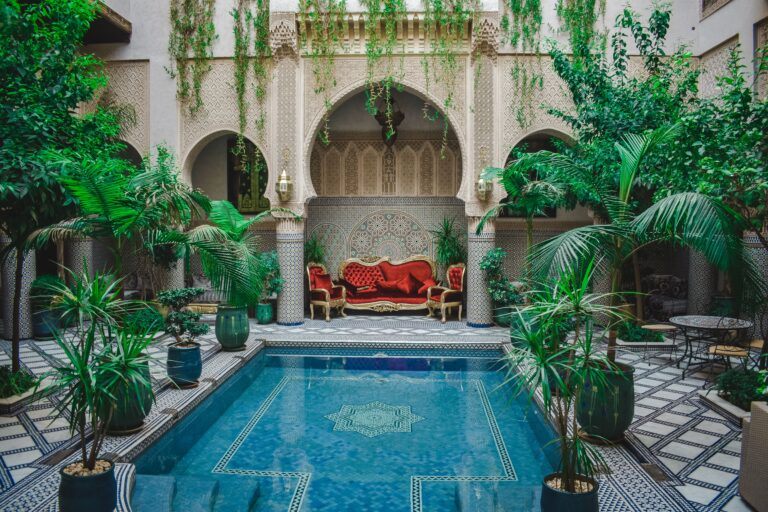
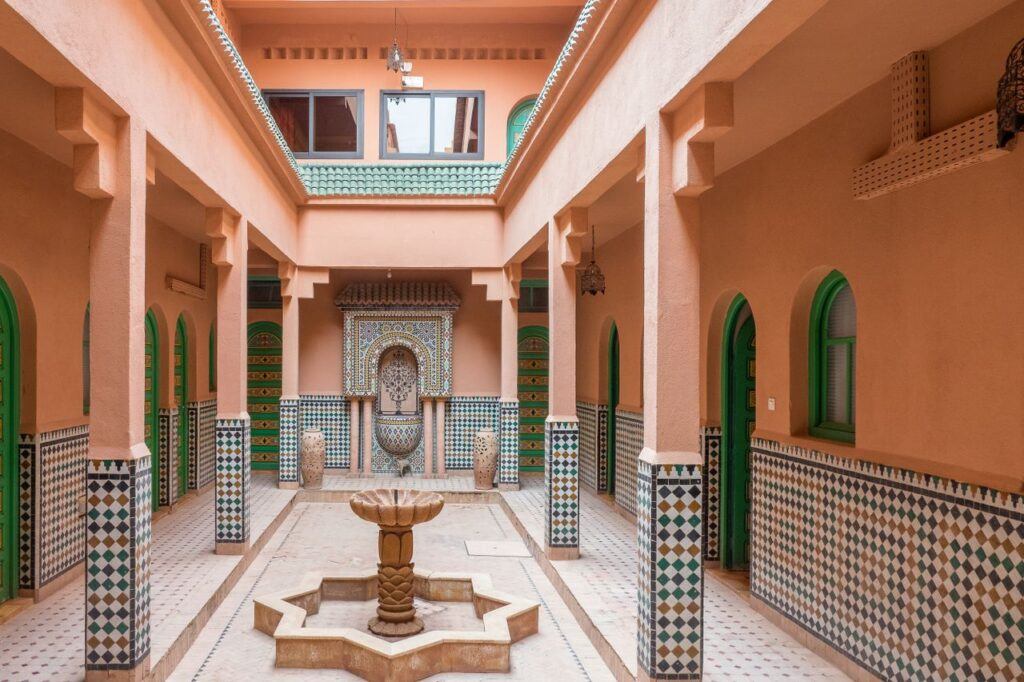
A riad is a traditional Moroccan house arranged around an interior courtyard or garden.
Many riads in historic medinas have been restored for private homes or guest accommodation.
However, the word riad describes the building, while guesthouse and hotel describe how accommodation is operated.
Morocco includes riads and guesthouses within its regulated tourist accommodation framework.
In contrast, a private house rented to one household may follow a different arrangement.
For renters, the practical differences usually concern service, privacy and shared space.
- Confirm how much service is provided each day.
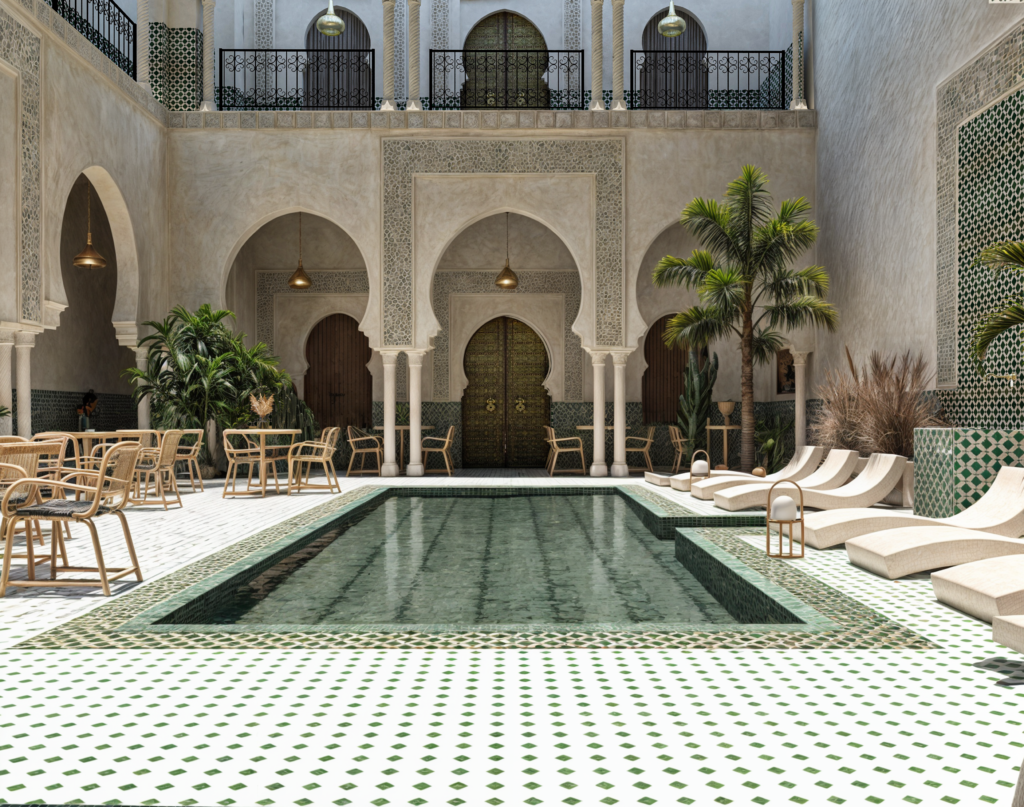
- Ask whether the courtyard, terrace and pool are shared.
- Check whether staff or other guests remain inside the property.
Should you rent one room or the entire riad?
Your choice depends on group size, budget and how much you value exclusive use.
| Rental type | Often suits | Confirm first |
|---|---|---|
| Room in a managed riad | Couples and solo travellers who want daily service | Which spaces are shared with other guests |
| Entire private riad | Families, friends and groups seeking privacy | Whether staff, meals, utilities and cleaning are included |
| Long term riad lease | People relocating or staying for several months | What the written lease says about costs, repairs and use |
Some owners offer exclusive use while keeping one locked room or a private staff area.
Therefore, ask whether the agreement covers the whole building, including the terrace and every shared space.
What is normally included in a riad rental in Morocco?
Inclusions vary by property, so confirm every service instead of relying on assumptions.
For example, a managed riad may include breakfast and daily cleaning, while a private rental may include neither.
Before comparing prices, request a written list covering the points below.
- Ask whether breakfast or other meals are included.
- Confirm how often cleaning, linen and towel changes occur.
- Check staff hours and whether anyone stays overnight.
- Confirm heating and cooling in each bedroom.
- Ask about hot water and water pressure.
- Check whether guests can use the kitchen.
- Confirm whether airport transport costs extra.
- Ask who pays utilities during a longer stay.
Also, a property may advertise a pool without explaining whether it is heated during cooler months.
Already considering a property?
See the 14 Day Buyer Plan: $299 →
Get 14 days of personal buyer support, three private calls and WhatsApp support.
Get help reviewing up to three properties before you commit money.
Which Moroccan cities offer riad rentals?
Riads can be found in several of Morocco’s historic medinas, although supply and service levels vary.
Marrakech offers a wide selection of restored riads across different budgets and service levels.
Meanwhile, Fez offers historic medina stays where vehicle access may be limited on some streets.
Essaouira combines a compact medina with a coastal setting and a different climate from inland cities.
Rabat, Tangier, Chefchaouen and Tetouan also offer traditional houses, although the available choices change over time.
Therefore, compare properties within the same destination, dates and rental type.
What affects the price of a riad rental?
Two properties in the same area can have different prices because the service and condition may differ.
- The city and position inside or outside the medina can affect the price.
- Season, holiday periods and major events can change demand.
- More bedrooms and bathrooms may increase the total cost.
- Exclusive use normally costs more than one private room.
- Restoration quality, furniture and maintenance affect value.
- Staff, meals and a private cook may cost extra.
- A pool, hammam, heating and air conditioning can affect the rate.
- Cleaning, laundry and event permission may carry separate charges.
- Weekly and monthly terms may differ from nightly prices.
- Platform charges, local taxes, utilities and deposits may change the total.
However, one advertised price does not establish the normal rate for an entire city.
Instead, compare several options for the same dates, group size, services and cancellation terms.
How can you check whether a riad listing is genuine?
Photographs can be copied, so verification should focus on the person, the property and the written terms.
First, establish whether you are dealing with an owner, manager, agency or booking platform.
Next, confirm that the property and location match what is being offered.
Finally, obtain the complete commercial terms before sending money.
The safest order before you pay
1. Identify the person
Ask whether they represent the owner, a manager, an agency or a recognised booking platform.
2. Confirm the property
Use a verified map or request a location pin, current photographs and clear access details.
3. Fix the terms
Record the dates, total price, inclusions, exclusions and cancellation terms in writing.
4. Agree the deposit
Record the amount, purpose, refund conditions and expected return process.
5. Pay through a traceable route
Verify the recipient through a separate contact method and keep every payment record.
Pause if an important step cannot be completed, because pressure to skip checks is useful information.
From my experience
I am Anis Chity, a Moroccan based in Marrakech.
I have personally been involved in buying four apartments in Marrakech.
Although those purchases involved apartments rather than riad rentals, they taught me to treat unclear terms, verbal promises and untraceable payments as reasons to pause.
My experience does not replace rental or tourism advice, so I would still confirm specialised questions with the appropriate Moroccan professional.
Already considering a property?
See the 14 Day Buyer Plan: $299 →
Get 14 days of personal buyer support, three private calls and WhatsApp support.
Get help reviewing up to three properties before you commit money.

What practical problems can a medina riad create?
Medina access can affect arrival, comfort and daily movement more than photographs suggest.
- Some streets do not allow cars to reach the property door.
- Luggage may need to be carried from a nearby meeting point.
- Some traditional riads have steep or narrow stairs.
- Courtyard layouts can carry sound between floors and bedrooms.
- Noise from streets, cafés, mosques or building work varies by location.
- Older houses may feel cool during winter without suitable heating.
- Hot water and water pressure can differ between properties.
- Internet quality should be checked when reliable access matters.
In addition, ask how the host will meet you if you arrive late.
A written arrival plan with a phone number and meeting point can prevent confusion.
Is a riad suitable for children or guests with limited mobility?
Traditional riads can contain design features that require extra safety checks.
For example, some properties have open courtyards, plunge pools, low terrace walls or steep steps.
Therefore, families should request current photographs of stairs, terrace edges and pool areas.
Guests with limited mobility should ask whether a bedroom and bathroom are available on the entrance level.
Also, many traditional houses do not have lifts or step free street access.
Above all, ask specific questions instead of accepting a general description such as family friendly or accessible.
What should long term riad tenants check before signing?
A long term stay creates responsibilities that a short holiday booking does not.
Therefore, the written agreement, property condition and payment terms require careful attention.
Moroccan residential lease rules may regulate written agreements, condition reports and deposits, depending on the arrangement.
However, holiday accommodation, residential leases, professional leases and commercial activity may follow different frameworks.
For that reason, ask a qualified Moroccan lawyer to confirm the current rules before signing an agreement you do not fully understand.
Confirm the practical points below in writing.
- Identify who pays for water, electricity, gas and internet.
- Clarify who handles plumbing, roof repairs and major maintenance.
- Record responsibility for pools, gardens and staff costs.
- Attach a clear inventory of furniture and equipment.
- Write down the notice process for both parties.
- Confirm whether subletting or paying guests are permitted.
- Record the deposit amount and agreed return conditions.
For broader budgeting, this guide explains how much rent costs in Morocco by city.
If Marrakech is your target, read the dedicated guide to renting a riad in Marrakech long term.
Meanwhile, coastal renters can compare the practical details of long term rentals in Essaouira.
Can you operate a guesthouse from a rented riad?
Renting a riad does not automatically authorise paying guests, events or online accommodation listings.
Morocco regulates tourist accommodation through Law 80.14 and implementing rules that include Decree 2.23.441.
Depending on the model, the activity may involve approvals, classification, safety, reporting, tax and insurance requirements.
Also, never assume that owner consent or a residential lease satisfies every public requirement.
Before committing, confirm the proposed use with a Moroccan lawyer, accountant, relevant tourism authority and regional investment centre.
Owners considering this model can start with this overview of operating a short stay rental in Morocco.
Never rely only on a verbal assurance that similar properties already operate nearby.
What warning signs should make you stop?
Rental problems often show warning signs before payment.
- The person refuses to explain their role or provide clear contact details.
- The listing photographs appear under unrelated property names.
- You are pressured to pay immediately without written terms.
- The payment recipient differs without a clear written explanation.
- The total price, dates or included services remain unclear.
- Cancellation and refund conditions remain vague after you ask.
- A large cash deposit is requested without a receipt.
- The offer is far cheaper than comparable options without a credible reason.
One warning sign may have an innocent explanation, while several together can justify walking away.
Frequently asked questions about riad rentals in Morocco
Can foreigners rent a riad in Morocco?
Foreign visitors can generally book holiday accommodation or agree a longer rental, although identification, payment and contract requirements depend on the arrangement.
Can you rent an entire riad privately?
Yes, but the listing or agreement should clearly confirm exclusive use, staff access, locked rooms and shared areas.
Is renting a whole riad cheaper than booking a hotel?
Neither option is always cheaper, so compare the total cost for the same dates, group size, meals, cleaning and cancellation terms.
Can you rent a riad in Morocco long term?
Yes, but a longer rental needs clear written terms covering rent, utilities, repairs, notice, inventory and permitted use.
How much deposit should you pay?
The appropriate deposit depends on the arrangement, so request the amount, purpose, deduction rules and return conditions in writing before paying.
Are riads suitable for families with children?
Some riads suit families well, but parents should check stairs, pools, terrace walls, room layout and street access.
Can you sublet a rented riad to paying guests?
Never assume that a residential lease permits subletting or paying guests, because commercial accommodation may require owner consent and official approvals.
What is the safest way to pay for a riad rental?
Use a recognised platform or another traceable method, verify the recipient through a separate contact route and keep every payment record.
What should you confirm before paying for a riad rental?
Work through this checklist in order and pause when an important answer remains unclear.
- Confirm whether you are dealing with the owner, manager, agency or platform.
- Check the exact property, map position and access arrangements.
- Agree the dates or the complete lease period.
- Confirm the total price and every excluded cost.
- List the services, meals, cleaning and utilities included.
- Record the deposit amount, purpose and return conditions.
- Read the cancellation terms before paying.
- Confirm arrival, key handover and late arrival arrangements.
- Clarify guest limits, event rules and subletting restrictions.
- Verify the payment recipient and keep a written receipt.
Renting first can also help you test a location before considering ownership.
Therefore, this guide comparing renting or buying property in Morocco may help with the wider decision.
If ownership becomes a serious plan, the process and risks change, as explained in this guide to buying a riad in Marrakech.
For now, get every important term in writing, verify the recipient and keep proof of payment.
Already considering a property?
See the 14 Day Buyer Plan: $299 →
Get 14 days of personal buyer support, three private calls and WhatsApp support.
Get help reviewing up to three properties before you commit money.

Anis is the founder of Buy Property Morocco, a research-based resource created to help foreign buyers understand the real process of buying property in Morocco safely.
He focuses on the practical details most buyers only discover too late: title deed checks, notary steps, compromis de vente risks, transfer taxes, foreign banking rules, repatriating money after a sale, and avoiding common mistakes when dealing with agents or sellers.
Anis has personally bought 4 properties in Morocco and shares practical guidance based on real experience, not theory.
If you are seriously considering buying property in Morocco and want private guidance before you send money, pay a deposit, or sign anything, you can book a buyer safety call here: