Most private foreigners who own a home in Morocco do not need a formal fiscal representative.
Morocco’s tax representation rule mainly targets non-resident businesses that sell taxable services or goods to Moroccan customers.
What a private owner really needs is a notary who handles the taxes on each purchase or sale, and a reliable person in Morocco if the property is rented or you live abroad.
Quick answer
“Fiscal representation” refers to Article 115 of Morocco’s General Tax Code, which asks non-residents carrying out taxable operations for Moroccan customers to appoint a tax representative in Morocco. It sits in the VAT part of the code. A private owner who buys, keeps or sells a home usually handles tax through the notary at purchase and sale, and must still declare any rental income.
This article is general educational information, not legal or tax advice. Tax rules change with each Finance Law, so confirm your situation with a Moroccan notary, a qualified accountant or the DGI (Direction Générale des Impôts) before acting.
What does fiscal representation mean in Morocco?
The rule comes from Article 115 of the Moroccan General Tax Code, the Code Général des Impôts or CGI (summary of Article 115 CGI).
It says that a person with no establishment in Morocco who carries out taxable operations for a customer established in Morocco must accredit a representative domiciled in Morocco with the tax administration.
If no representative is appointed, the Moroccan customer becomes responsible for declaring and paying the tax owed.
The rule was written for businesses, such as a foreign consultant invoicing a Moroccan company or an online platform selling to people in Morocco.
It is not a general rule that every foreigner with an apartment in Marrakech must hire a representative.
Do foreign property owners need a tax representative?

Usually not in the strict Article 115 sense.
You are still responsible for every tax linked to your property, and different people usually handle each stage.
| Stage | Main taxes and costs | Who usually handles it |
|---|---|---|
| Buying | Registration duties, land registry fees, notary fees | The notary, as part of the purchase |
| Owning | Local housing and municipal services taxes | You, or someone with your written mandate |
| Renting out | Tax on rental income | You, often with an accountant |
| Selling | Tax on the property profit (often called TPI) | The notary, as part of the sale |
Many people call the help they get at the owning and renting stages “fiscal representation”.
Legally, it is usually a mandate: a written authorisation for someone to act for you on specific tasks.
Who handles the taxes when you buy?
For a properly registered property, the notary is central.
The notary calculates the purchase taxes and fees, collects them, pays them and registers the sale.
From my experience
When I bought my first property in Marrakech, I paid several separate costs at the notary: a registration cost, another cost linked to the land registry, and the notary’s own fee. I do not remember the exact percentages, which is exactly why I tell buyers to ask the notary for the full breakdown in writing before signing.
Our guides to property transfer taxes for foreigners and notary fees when buying in Morocco explain what to budget.
Bring your money into Morocco in a documented way, for example through a convertible dirham account.
That paper trail can matter years later, when you sell and want to transfer the proceeds out of Morocco.
What taxes do you pay while you own the property?
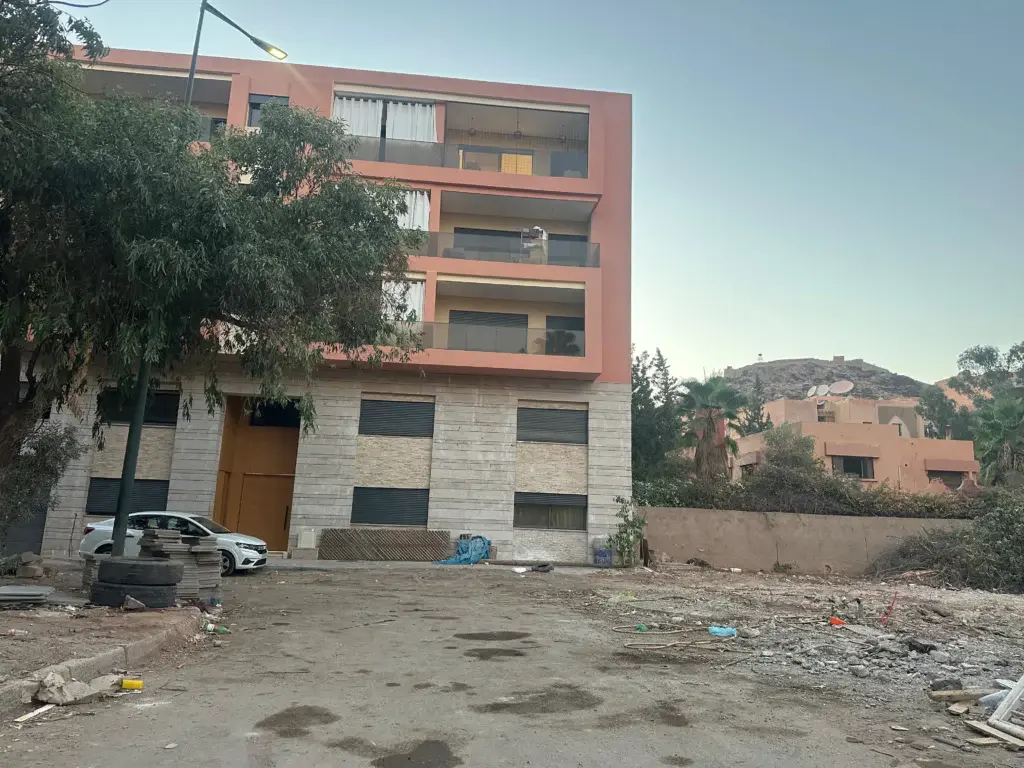
Owners usually pay local taxes linked to the property, such as the housing tax and the municipal services tax.
The amounts depend on the property and its assessed rental value, so ask the seller and the notary for recent receipts before you buy.
For non-residents, the hard part is often practical: you may never see the paper notices.
Unpaid local taxes do not always cause trouble straight away.
They often surface later, when you try to sell.
Already considering a property?
See the 14 Day Buyer Plan: $299 →Get 14 days of personal buyer support, three private calls and WhatsApp support.
Get help reviewing up to three properties before you commit money.
Do you need an accountant if you rent the property out?

This is where local help often makes sense.
Rental income from Moroccan property is generally taxable in Morocco, even if you live abroad and guests pay through a foreign platform.
The rules can differ between long term, furnished and short term rentals, so read our guide to rental income tax for foreigners and confirm your case with an accountant.
From my experience
One of my purchases came with a shop that was already rented for around €400 per month. The tenant did not want to redo the rental contract, and at first I thought something was wrong. His lawyer later explained that the existing contract should stay as it was until the property was registered in my name, and then the rent could be paid to me. The lesson: know exactly when rental income becomes yours, and declare it from that point.
Who handles the tax when you sell?
When you sell, the main tax is usually income tax on the property profit.
It is commonly reported as 20% of the net profit, with a minimum contribution of 3% of the sale price that can apply even with little or no profit (summary of articles 73 and 144 CGI).
A principal residence exemption exists under conditions, including a minimum period of occupation, so check whether it could apply to you.
The notary handling the sale normally manages the declaration and payment as part of completing the transaction.
The sale is also when old problems tend to appear, such as unpaid local taxes or charges linked to the property.
As a buyer, this works in your favour.
In a properly registered sale, the safer route is to pay through the notary, for example with a traceable bank cheque made out to the notary rather than to the seller.
The notary can then check taxes and charges before releasing money to the seller, so you receive a clean property.
Before you sell, read our guides on capital gains tax for foreign sellers and repatriating money after a sale.
When does a real tax representative or accountant make sense?

- You own the property through a company. A company has accounting and tax filing obligations, and the rules for non-resident companies are stricter. See buying property through a company.
- You run a rental activity with several units or a guesthouse, which can raise business tax and VAT questions.
- You invoice Moroccan clients from abroad, for example for property management or design work. This is exactly the case Article 115 was written for.
- You cannot follow things from abroad. A local accountant with a clear mandate is usually cheaper than penalties and delays.
How do you choose the right person?
- Check credentials: for tax work, prefer a registered accountant (expert comptable) or an established firm. For transactions, use a notary.
- Get a written mandate: list exactly what they may do, such as receiving mail, filing declarations and paying specific taxes.
- Ask for every receipt: these prove your tax history when you sell and when you transfer money out.
- Agree the fee in writing: ideally a fixed yearly fee plus a separate quote for one off tasks such as a sale.
My first purchase went well, but looking back I relied heavily on the people around me.
Today I would ask more questions and keep every document myself.
Already considering a property?
See the 14 Day Buyer Plan: $299 →Get 14 days of personal buyer support, three private calls and WhatsApp support.
Get help reviewing up to three properties before you commit money.
Which mistakes should foreign owners avoid?
| Mistake | Safer alternative |
|---|---|
| Paying for “fiscal representation” without knowing what it covers | Ask which declarations will be filed, in whose name, and get it in writing |
| Not declaring rental income paid through a foreign platform | Declare it in Morocco and keep platform statements |
| Losing purchase and transfer documents | Keep the deed, bank transfer proofs and tax receipts together |
| Ignoring local tax notices while abroad | Give someone a limited mandate to receive mail and pay, with receipts |
| Paying the seller directly when buying | Pay through the notary with a traceable payment |
Frequently asked questions
Is a fiscal representative mandatory for foreigners who own property in Morocco?
Not as a general rule for private individuals. Article 115 targets non-residents carrying out taxable operations for Moroccan customers, mainly for VAT. You remain responsible for property taxes and any rental income tax.
Who pays the tax when a foreigner sells property in Morocco?
The seller owes the tax on the property profit. In practice, the notary handling the sale usually manages the declaration and payment, and gives you the receipts you need to transfer the proceeds abroad.
Can my notary act as my fiscal representative?
Your notary handles the taxes linked to a specific purchase or sale. Ongoing obligations, such as declaring rental income, are normally handled by you or an accountant.
Do I need a Moroccan accountant if I only use the property for holidays?
Often not, as long as you do not rent it out. You still need to pay local taxes on time and keep the receipts.
What is the safest next step?
If you are a private buyer, focus on three things: a notary you trust, documented money transfers, and a simple plan for local taxes and any rental income.
Only pay for formal tax representation when your situation really needs it, such as company ownership or a rental business.
If you are new to the process, start with our guide to buying property in Morocco as a foreigner.
Already considering a property?
See the 14 Day Buyer Plan: $299 →Get 14 days of personal buyer support, three private calls and WhatsApp support.
Get help reviewing up to three properties before you commit money.

Anis is the founder of Buy Property Morocco, a research-based resource created to help foreign buyers understand the real process of buying property in Morocco safely.
He focuses on the practical details most buyers only discover too late: title deed checks, notary steps, compromis de vente risks, transfer taxes, foreign banking rules, repatriating money after a sale, and avoiding common mistakes when dealing with agents or sellers.
Anis has personally bought 4 properties in Morocco and shares practical guidance based on real experience, not theory.
If you are seriously considering buying property in Morocco and want private guidance before you send money, pay a deposit, or sign anything, you can book a buyer safety call here: