Morocco tax residency starts once your stays add up to more than 183 days in any 365 day period, but that is only one of three tests. A permanent home in Morocco, or having your centre of economic interests there, can make you resident even below 183 days.
If you own a flat here or plan long winter stays, this decides whether Morocco can tax your pension and your other income from abroad.
I’m Anis Chity, based in Marrakech, and I have bought four properties in Morocco. I am not a tax adviser, so use this guide as a map to check with one before you act.
Quick answer
Article 23 of Morocco’s General Tax Code has three alternative tests: a permanent home, a centre of economic interests, or more than 183 days in any 365. Meeting one is enough. Residents are taxed on worldwide income and non-residents only on Moroccan income, and rent from a Moroccan property is taxable in Morocco either way. A tax treaty can decide the outcome if your home country also claims you.
What does Morocco’s 183 day rule actually say?
The rule sits in article 23 of the General Tax Code, known by its French initials CGI. It says a person has a tax domicile in Morocco if they have any one of these (CGI 2026, article 23):
- A permanent home in Morocco.
- The centre of their economic interests in Morocco.
- Stays in Morocco, continuous or not, that exceed 183 days for any period of 365 days.
“Exceed” means day 183 is not the trigger. Day 184 is.
“Any” points to a rolling window, not the calendar year, so a stay from October to April can reach the limit while falling across two tax years.
“Continuous or not” means a week back home does not reset the count.
The tests are alternatives. The DGI, Morocco’s tax authority, says in its published commentary, dated April 2011, that it looks at them in order: the home first, then economic interests, and only then the days (DGI Circular 717, volume 1, pp. 233 to 234).
How are the days counted?
The DGI’s commentary starts the period on your first day of entry.
For a broken stay, it adds together your stays over the 365 days that follow that entry, and the period can straddle two calendar years.
Here is an illustration: if you arrive on 1 October 2026 and stay without leaving, day 184 falls on 2 April 2027, counting the day you arrive.
Neither the code nor the commentary says how part days are treated, such as the day you land or the day you fly out. Count them against yourself.
The commentary’s window from your first entry is only one possible period. Because the code says “any” period, a running count over every 365 days is the cautious approach.
How Morocco decides if you are tax resident
1
Permanent home?
Is your habitual, continuous home in Morocco?
2
Economic interests?
Is your main activity or main investment here?
3
More than 183 days?
Counted over any 365 day period.
4
Yes to any one
You are resident, taxed on worldwide income.
5
Claimed elsewhere too?
Where a treaty applies, its tie-break decides.
Can you become a Moroccan tax resident below 183 days?
Yes, because the first two tests do not count days at all.
Does owning a holiday home make it your permanent home?
Not by itself, on the DGI’s reading.
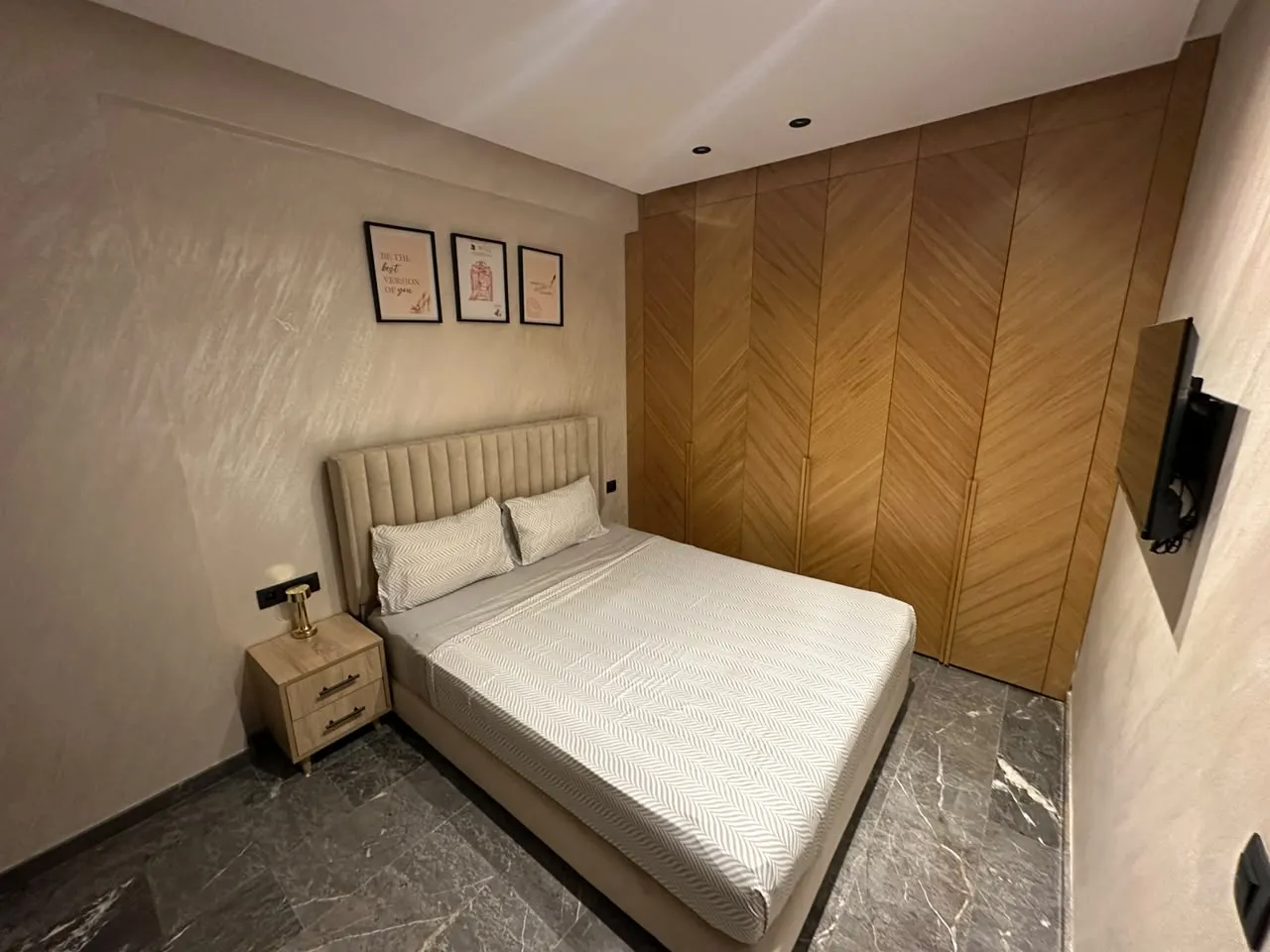
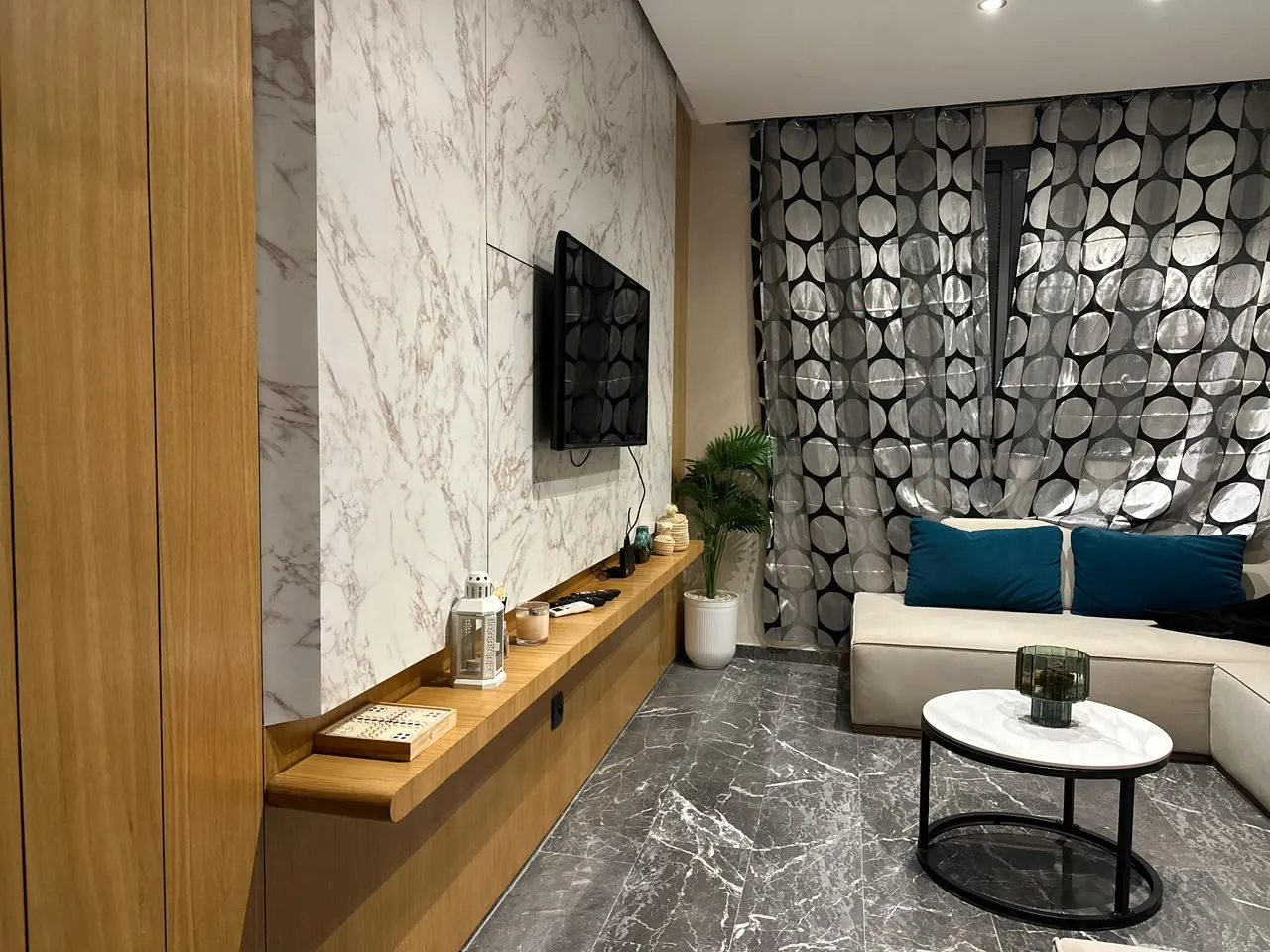
Its commentary describes a permanent home as the place where you live habitually and permanently, kept for your use or your family’s on a continuous and not occasional basis (DGI Circular 717, volume 1).
Holidays and short stays are named as occasional use.
Any form of occupancy can count, whether you are the owner, a tenant or simply living there, so buying is not the deciding factor.
A flat you only use for a few weeks should therefore be on the safe side of the line. A flat kept for your own use and lived in for long seasons, while your home abroad is let or sold, is the grey zone. Get written advice on that one.
Could your Moroccan property make Morocco your centre of economic interests?
The same commentary treats your centre of economic interests as the place of your main activity, the seat of your affairs, or the place where you made your principal investments, and it expressly mentions real estate. One of those is enough (DGI Circular 717, volume 1, pp. 233 to 234).
The DGI treats your main activity as the one taking most of your working time or, failing that, the one giving you more than half of your worldwide income.
So picture someone whose main wealth is several rented flats in Marrakech, who spends only a few months a year in the country. On that reading, Morocco may be their centre of economic interests.
This is the DGI’s interpretation from 2011 rather than the wording of the law, and each case turns on its facts. The wording of article 23 it comments on is unchanged today, but ask an adviser whether the tax office still applies it this way.
Buyer warning
If most of your wealth is Moroccan property, the DGI’s commentary can point to Morocco as your centre of economic interests even with few days here. Ask a tax adviser before you buy more, not after.
If you are weighing a purchase and this could apply to you, send me a WhatsApp message below about the property. Tax questions themselves belong with an adviser.
Already considering a property?
Message me on WhatsApp →Send me a WhatsApp message about the property you are looking at, and I will tell you what to check before you pay anything.
Which owners are likely to be caught?
These four situations are hypothetical.
| Situation | Test in play | Likely result |
|---|---|---|
| Winter flat, about 120 days a year, main home abroad | No test obviously met | Probably non-resident, but check economic interests if most of your wealth is here |
| Flat kept for your own use all year, about 150 days here, UK home let out | Permanent home | Grey zone with a real risk of residence even under 183 days, so get written advice |
| About 100 days here, most wealth in Moroccan rentals | Economic interests | A real risk of residence, so take advice |
| About 200 days here, home abroad kept | Days | Resident under Moroccan law, then go to the treaty |
What changes the moment you become a tax resident?
The main change is scope. A resident is taxed on worldwide income, while a non-resident is taxed only on Moroccan income (CGI 2026, article 23).
- First year: Moroccan income counts for the full year, and foreign income counts from the day you settle in Morocco to 31 December (article 27). The DGI’s example runs foreign income from your entry date when the stay is long, so do not assume it starts on day 184. In that example, someone still short of 183 days who intends to stay on must file for the arrival year by the normal deadline (Circular 717, p. 234).
- Foreign income: it is counted gross, subject to any treaty, with a credit for foreign tax where a treaty provides one (articles 25 and 77).
- Foreign investments: gross foreign investment income is taxed at 15% and gross profits at 20%, as final rates (article 73). Where no Moroccan intermediary has withheld the tax, a separate return and payment are due before 1 April, with a certificate from the foreign tax authority (article 84 bis, added for 2026).
- Yearly return: non-professional income other than foreign investment income is declared before 1 March (article 82). The filing exemptions in article 86 are written around Moroccan payers, so a retiree with a foreign pension should expect to file. As drafted, the 2027 bill would make this return electronic.
A residence card and tax residence are separate questions. Our guide to the 90 day and residence card rules covers the immigration side.
How does Morocco tax a foreign pension once you are resident?
Three steps apply, in this order (CGI 2026, articles 60, 73 and 76).
- Flat abatement: 70% off the first MAD 168,000 of gross pension per year, and 40% off anything above that.
- The income tax scale: 0% up to MAD 40,000, then 10%, 20%, 30%, 34% and 37%.
- The 80% reduction: the tax on the part of the pension transferred to Morocco for good in non-convertible dirhams is cut by 80%.
The 80% is a cut in the tax itself, not an allowance on income, and that makes a large difference.
This illustration assumes a gross pension of MAD 240,000, no other income and no family reduction.
| Step | Amount |
|---|---|
| Gross pension | MAD 240,000 |
| Abatement (70% of 168,000 plus 40% of 72,000) | MAD 146,400 |
| Net taxable income | MAD 93,600 |
| Tax on the 2026 scale, if nothing is transferred | MAD 10,080 |
| Tax if half is transferred | MAD 6,048 |
| Tax if all of it is transferred | MAD 2,016 |
Why does the bank account matter?
Money that lands in a convertible dirham account does not qualify for the 80% reduction (Circular 717, p. 434).
Only the amounts you actually withdraw from that account into non-convertible dirhams for use in Morocco count (Circular 717, p. 436).
Before you choose, read how a convertible dirham account works, because money converted to claim the reduction is meant to stay in Morocco.
Two documents normally go with the return: a certificate from the pension payer, and a certificate from the bank or paying body showing the currency received and its dirham value (article 82).
If you convert from a convertible account, the DGI’s commentary asks for a third certificate showing the amounts withdrawn into non-convertible dirhams (Circular 717, p. 436).
The same commentary also accepts pension money orders paid through the Moroccan post for retirees with no Moroccan bank account, and ordinary dirham withdrawals made by foreign retirees with a foreign bank card, each with its own paperwork.
The Office des Changes also lets foreign residents credit pensions received in an ordinary dirham account over the last 12 months to a foreign currency or convertible dirham account at the same bank. Money moved back that way may not count as transferred for good, so take advice first and ask your bank which route it can document.
Tax residence is also separate from residence for exchange control purposes, so ask your bank how your account should be classed.
What did the 2025 and 2026 budgets change, and what is coming in 2027?
The 2025 finance law set the current scale.
From 2026, pensions under Moroccan basic schemes and CIMR group contracts are exempt (DGI Circular 737 on the 2026 finance law). Those are Moroccan schemes, so a foreign pension stays under articles 60 and 76.
The 2027 finance bill would change the scale itself. As drafted, it raises the 0% band to MAD 60,000 from 1 January 2027 and phases in new bands and rates until a final scale in 2031, with the top rate falling to 30% from 2030.
On the example above, the 2027 scale as drafted would cut the tax from MAD 10,080 to MAD 4,720 before any 80% reduction. As of 10 November 2026 it is still a bill before Parliament and can be amended, so check what was adopted before you rely on it.
Already considering a property?
Message me on WhatsApp →Send me a WhatsApp message about the property you are looking at, and I will tell you what to check before you pay anything.
What happens to your Moroccan property?
Your tax status changes less here than you might assume, because Moroccan rent is Moroccan income in every case (CGI 2026, articles 23, 63 and 64).
When I bought my first property in Marrakech, its shop was already rented for around €400 per month. Income like that comes from Moroccan property whatever passport or country is involved.
| Item | If non-resident | If resident |
|---|---|---|
| Rent | Unfurnished rent is taxable in Morocco, with a 40% abatement (article 64). Regular furnished letting may follow business rules instead | Same income, but it can add to your pension in your total income and reach higher bands, unless you opt for the 20% final rate, available on rent subject to withholding by a company or professional tenant (articles 64-IV and 160 bis) |
| Selling | The main home exemption follows use, so a foreigner living abroad should not assume it applies (article 63) | Possible if it really was your main home for the required period. A home that has been let out does not qualify |
| Local taxes | A home that is not your main home should not expect this reduction | If it is genuinely your main home, a 75% reduction of the rental value used to calculate the tax may apply (official 2026 guide, written for Moroccans abroad). Confirm with the tax office that it applies to a foreign owner |
For rent, read how Moroccan rental income is taxed.
If you may sell, look at the 5 year main home exemption on a sale.
Budget as well for the yearly local taxes owners pay.
What if your home country also says you are its tax resident?
Both countries can claim you under their own rules at the same time. A tax treaty then applies a tie-break, and the DGI states that treaties take priority over domestic law (Circular 717, p. 235).
| Country | Tie-break order | Pensions |
|---|---|---|
| UK treaty | Permanent home, centre of vital interests, habitual abode, nationality, then mutual agreement (article 4) | Private pensions are taxed only where you are resident (article 18). Government service pensions generally stay in the UK (article 19) |
| France treaty | Permanent home, then if you have a home in both, centre of professional activities, otherwise where you stay longest (article 2) | Taxed only in the state of fiscal domicile (article 17). Article 18 bis, on public pay, excludes pensions. Check public sector pensions with an adviser |
| US treaty | Permanent home, centre of vital interests, habitual abode, citizenship, then mutual agreement (article 3) | Private pensions are generally taxed only where you are resident (article 19). Government service pensions are covered by article 17. Social Security falls outside the pension definition, so Morocco may tax it. Under the article 20 saving clause, the US generally still taxes its citizens |
For a French retiree with no professional activity and a home in both countries, the deciding test is likely to be where you stay longest.
The UK State Pension needs its own check, because article 18 covers pensions for past employment. If it falls outside article 18, article 21 gives other income to the country of residence where it is taxed there, so both routes appear to point the same way. Confirm this with HMRC, and see how UK pensions are treated in practice.
How do you prove Moroccan tax residence?
The DGI issues an attestation de résidence fiscale, a tax residence certificate, online through its SIMPL portal or on paper form AAC310 (DGI, certificates for individuals).
Online, you make the request on the portal. On paper, you provide form AAC310, anything showing a permanent home or centre of economic interests in Morocco, and passports or other proof of your stays.
The DGI’s page states no fee or delay. Ask your local tax office, and also ask whether you need a tax ID first.
Build your file as you go: passport stamps, flight records, utility bills, your lease or title deed, and bank certificates.
In France, a Moroccan certificate does not bind the tax office, which can reach its own view (Simonnet Avocat). Assume the same caution elsewhere.
✓ Safer route
- Count any rolling 365 days.
- Keep passports and flight records.
- Convert the pension to non-convertible dirhams if you want the 80%.
- Attach the required certificates to the return by the deadline.
- Ask the DGI for a residence certificate.
✗ Risky route
- Counting only the calendar year.
- Relying on memory.
- Leaving the pension in a convertible account and expecting the 80%.
- Assuming the reduction is automatic.
- Treating a residence card as tax proof.
How do you stop being a Moroccan tax resident?
You stop being resident only when none of the three tests applies any more, so cutting your days may not be enough if your permanent home or main investments stay here.
If you leave Morocco for good, article 85 requires you to file your income return at the latest 30 days before departure.
Foreign income then counts only up to the date you cease to be resident, while Moroccan income for that year still counts (article 27).
Frequently asked questions
Do I pay Moroccan tax if I stay under six months?
You can still be tax resident through a permanent home or economic interests, even with few days in the country. Moroccan income such as rent is taxable in Morocco regardless of how long you stay.
Does owning a flat make me a tax resident?
Not by itself. What counts is whether the flat is your habitual, continuous home, or whether Morocco has become your main base for investments. An adviser should look at the facts.
Does a carte de séjour make me a tax resident?
No. A residence card is an immigration status and tax residence is a separate legal test. You can have one without the other.
What should you do before you plan a long stay or buy?
Count your days on a rolling basis, and decide whether you actually want Moroccan tax residence.
Compare two calculations with an adviser: your tax if you stay resident at home, and your tax in Morocco on worldwide income, counting only the 80% reduction on pension money you will really convert and leave here. Include any foreign rent and investment income.
Before you stay past day 183 or move a pension here, get written advice from a Moroccan tax adviser or the DGI.
If the question is the property itself, write to me on WhatsApp below and I will tell you what to check on it. I cannot give tax advice.
Already considering a property?
Message me on WhatsApp →Send me a WhatsApp message about the property you are looking at, and I will tell you what to check before you pay anything.

Anis is the founder of Buy Property Morocco, a research-based resource created to help foreign buyers understand the real process of buying property in Morocco safely.
He focuses on the practical details most buyers only discover too late: title deed checks, notary steps, compromis de vente risks, transfer taxes, foreign banking rules, repatriating money after a sale, and avoiding common mistakes when dealing with agents or sellers.
Anis has personally bought 4 properties in Morocco and shares practical guidance based on real experience, not theory.
If you are seriously considering buying property in Morocco and want private guidance before you send money, pay a deposit, or sign anything, you can book a buyer safety call here: