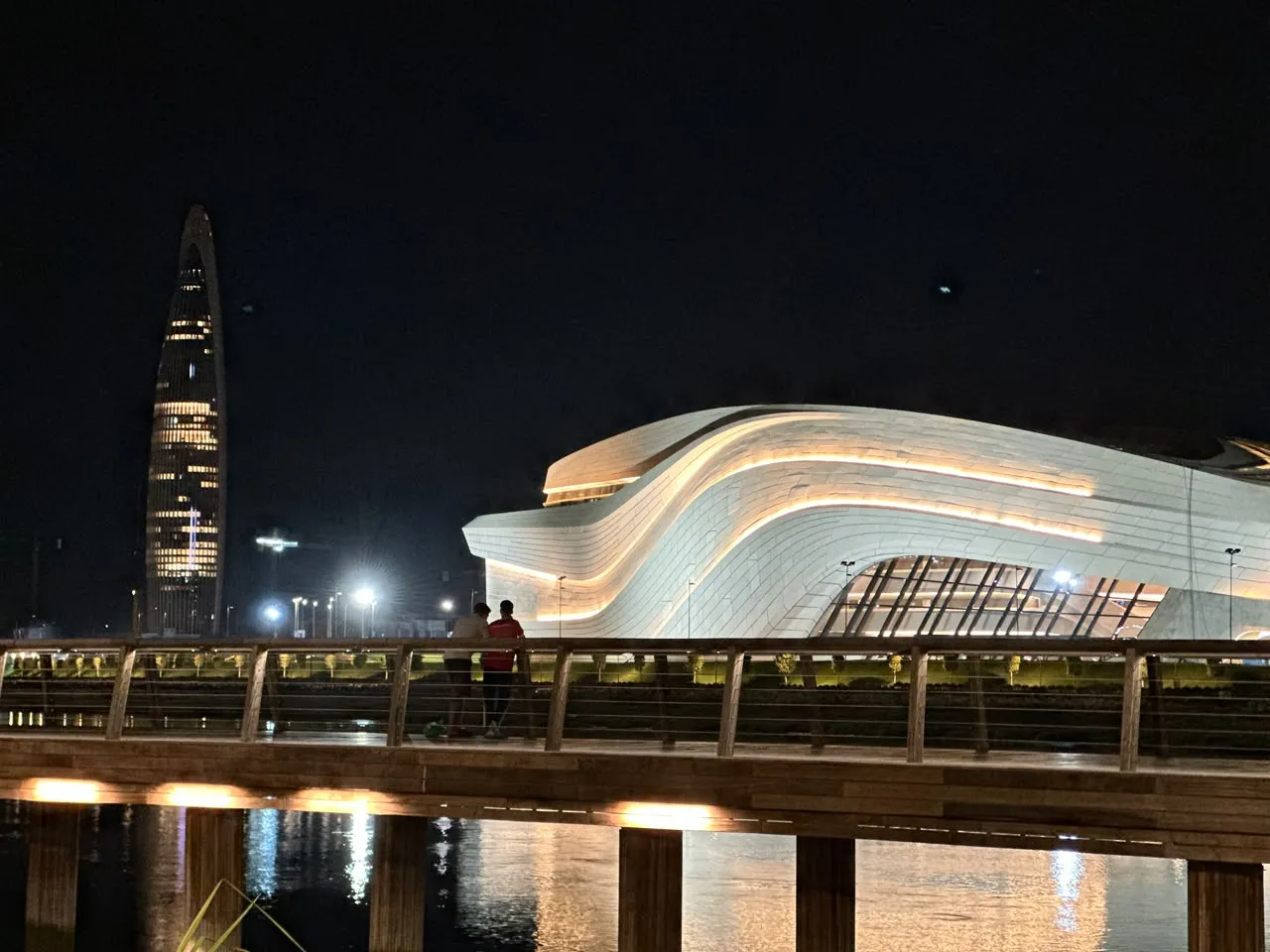
Yes, foreigners can buy property in Rabat: a titled apartment or villa in the urban area, bought through a notary and registered with the ANCFCC, the national land registry.
The harder decision is where, because Agdal, Hay Riad, Souissi, Hassan, L’Océan, Salé and Témara suit very different buyers, and Rabat’s official price index swung sharply in the first half of 2026.
I’m based in Marrakech and have bought four properties in Morocco, the first an apartment with a rented shop signed before a notary, and the checks I learned there apply just as much in the capital.
This guide is about buying property in Rabat as a foreigner: which area fits your plan, what you will really pay, who rents, and the order of the steps.
Quick answer
Foreigners can buy titled urban property in Rabat; agricultural land on the outer fringes is restricted. Budget about 5.5% on top of the price of a built property (4% registration duty and 1.5% land registry fee; 5% duty for bare land), then add notary fees, VAT and any agency fee.
Expect professional, student and diplomatic tenants rather than tourists. Choose the area by who will live in or rent the property, and check the title, the declared price and the source of your funds before any deposit.
Can foreigners buy property in Rabat, and what can’t they buy?
Foreigners can buy titled (titre foncier) apartments, villas and urban plots in Rabat on the same basis as Moroccans.
The sale is signed before a notary and registered at the ANCFCC, which then records you as the owner on the title.
The exception is agricultural land, which foreigners cannot buy without special authorisation.
If the property has no titre foncier yet, stop and ask the notary what the seller can actually prove before you go further.
That matters on the outer fringes around Témara, Skhirat and Aïn Atiq, where farmland and building land sit side by side, so confirm the land status with the notary before you look at price.
Buying a home does not give you a residence permit; that is a separate application.
On the money side, Office des Changes rules (articles 170 to 172) treat the purchase of real estate by a foreign non-resident as a foreign investment, and guarantee the transfer of sale proceeds when the purchase was funded in foreign currency.
Why buy property in Rabat rather than Casablanca or Marrakech?
Rabat is the administrative capital, so its housing demand comes from people who work there: ministries, embassies, international organisations and universities.
According to the HCP’s 2024 census monograph for Rabat, the Rabat prefecture fell from 577,827 people in 2014 to 515,619 in 2024, a drop of 10.8%, while the wider Rabat-Salé-Kénitra region grew by 12.0%.
That suggests growth is happening around the capital rather than inside it.
The same source shows that 29.5% of Rabat households rent, against 19.7% across the region, and the HCP describes this as stronger rental pressure. About 36.2% of households live in apartments.
The share is falling, though: renters were 33.8% of Rabat households in 2014, while owners rose from 54.9% to 60.4%.
For a buyer, that still means a large pool of tenants in the city, and more new stock outside it.
If you are still choosing a city, start with our comparison of the best places to buy property in Morocco, then come back here once Rabat is on your shortlist.
Which Rabat area fits your plan?
Agdal
Agdal is central, busy and popular with students and young professionals, and the Rabat Agdal station is served by the Al Boraq high-speed train.
Most of the stock is apartments, many in older buildings, so check the syndic’s accounts and the state of the lift before you fall for the location.
Hay Riad
Hay Riad is newer, greener and built around offices and family housing, with a higher entry price than most of the city.
For a newer building, check the permis d’habiter (habitation permit) and look closely at the finishing quality.
Souissi
Souissi is the villa district, home to embassy residences and the top of the Rabat budget.
Check that the property really is in Souissi: ReaConsult found listings in neighbouring El Menzeh advertised as “Souissi”, so compare the sector named on the title and the cadastral plan with the advert.
The gap is real money: on 6 November 2026 Yakeey put villas in Menzah Rabat at about 18,299 MAD per m², against about 23,927 MAD in Souissi.
Hassan and L’Océan
Hassan and L’Océan are central and close to the coast, with older buildings and prices generally below Agdal and Hay Riad.
Check for damp, the lift and the building’s condition, and if the building is near the seafront or a planned project, ask the notary to obtain the planning information from the Agence Urbaine before you sign.
Salé and Témara
Salé, across the Bouregreg river, and Témara and Harhoura to the south offer lower prices and much more new construction.
The trade-offs are the daily commute into Rabat, a thinner resale market and, on the fringes, the land status of the plot.
| Area | Best suited to | Check first |
|---|---|---|
| Agdal | Students, young professionals, central living | Syndic accounts and the lift |
| Hay Riad | Families, office workers | Permis d’habiter, finishing quality |
| Souissi | Villa buyers, embassy-level budgets | That the title sector really is Souissi |
| Hassan / L’Océan | Central living at a lower entry price | Damp, lift, building condition |
| Salé | Lower budgets, new builds | Commute and resale depth |
| Témara / Harhoura | New builds near the coast | Land status on the fringes |
How much does property in Rabat cost in 2026?
No single source gives a market price per square metre for Rabat: private tools publish estimates, the official index tracks change rather than price, and the tax administration uses reference prices of its own.
The estimate tool Yakeey put Rabat apartments at about 14,535 MAD per m² when we checked it on 6 November 2026.
Agenz’s barometer for the third quarter of 2026, published on 21 October 2026, put the Rabat apartment average much higher, at about 18,970 MAD per m², which shows how far two estimates for the same city can differ.
By area, Yakeey’s apartment estimates on 6 November 2026 were about 8,693 MAD per m² in Takadoum, 9,499 in Hay Al Fath, 12,407 in L’Océan, 14,508 in Hassan, 16,113 in Agdal and 16,713 in Riyad.
Agenz’s area figures run higher again, at about 23,533 MAD in Haut Agdal and 23,324 MAD in Hay Riad.
Yakeey shows no apartment estimate for Souissi, where villas came out at about 23,927 MAD per m².
Across the river and to the south, Yakeey’s estimates on the same day were about 7,550 MAD per m² for apartments in Salé and 7,960 MAD in Témara.
These are estimates, not sale prices.
To see how Rabat sits against other cities, read our guide to apartment prices across Moroccan cities.
What does the official index say?
The real price index published by Bank Al-Maghrib and the ANCFCC gave Rabat a rough first half of 2026.
In the first quarter 2026 bulletin, Rabat prices fell 4.7% on the previous quarter (residential down 6.2%) and the number of transactions fell 55.4%.
In the second quarter 2026 bulletin, the latest available on 6 November 2026, prices rose 1.9% (apartments also up 1.9%) and transactions rose 61.2%.
This index only follows properties sold at least twice, measured against a 2006 base, so it moves sharply from one quarter to the next and is not a price per m² (Bank Al-Maghrib index page).
Each bulletin can also revise earlier quarters.
In one of my own purchases in Marrakech, the asking price moved from about €85,000 to €75,000, and I finally agreed at €70,000.
In everyday life in Morocco, I have also seen some people triple a price when they sense you live abroad or are a foreigner, so build your offer from comparable sales in the same building or street, never from one average.
What will you pay on top of the price?
- Registration duty: 4% for built property, including its land up to five times the covered area (CGI 2026, article 133-I-F-1°); bare land, such as an urban plot, is taxed at 5% (article 133-I-G-1°).
- Land registry fee: 1.5% of the price, plus a 100 MAD fixed fee per property, with a 500 MAD minimum (ANCFCC tariff decree).
- Notary fees and VAT: agree the amount in writing; our breakdown of notary fees when buying in Morocco shows what goes into them.
- Agency fee: agree in writing who pays it, and how much, before the offer.
Here is an illustrative example on a 1,500,000 MAD apartment: 60,000 MAD of registration duty, 22,500 MAD of land registry fee and the 100 MAD fixed fee, so 82,600 MAD (about 5.5%) before notary fees, VAT and any agency fee.
Declare the real price, too: the DGI and the ANCFCC launched a common price reference grid in 2019, starting with Casablanca, and it is a reference for calculating duties, not a valuation of your property.
When you sell, the Office des Changes asks for the sale deed, proof that the taxes were paid and proof that your purchase was financed in foreign currency before the proceeds can be transferred abroad, so a price left out of the deed can leave money stuck in Morocco.
Buyer warning
If a seller asks you to declare a lower price in the deed and pay the rest in cash, say no. You lose the paper trail you will need to transfer your sale money abroad later, and your taxable gain on resale will look bigger than it is. Declare the real price, pay through the notary and keep every bank transfer proof.
If a seller in Rabat has suggested splitting the price, send me a WhatsApp message below before you agree.
Already considering a property?
Message me on WhatsApp →Send me a WhatsApp message about the property you are looking at, and I will tell you what to check before you pay anything.

Who rents in Rabat, and what changes with a diplomatic tenant?
Rabat’s renters are mostly people posted or working there: civil servants, students around Agdal, embassy staff and employees of NGOs and international organisations.
Their contracts and postings decide how long they stay, so expect turnover every few years rather than tourists every few nights.
For asking rents, our listing sample as of 9 August 2026 in how much rent costs in Morocco by city puts a one bedroom flat in Rabat at about 8,000 to 15,000 MAD a month and a two bedroom flat at about 9,000 to 18,500 MAD. These are asking rents, not signed leases.
What does diplomatic immunity mean for a landlord?
Under article 31 of the Vienna Convention on Diplomatic Relations, a diplomatic agent is immune from the civil courts of the host country, with narrow exceptions.
That protection is for diplomatic agents. Under article 37 of the same convention, administrative and technical embassy staff are protected only for acts done in their official duties, and staff of international organisations fall under separate agreements with Morocco.
How that would apply to unpaid rent in Morocco is a question for a Moroccan lawyer, not for a blog, so do not assume you can sue in the usual way.
Where you can, prefer a lease signed by the embassy or the organisation itself, and read any early exit clause tied to the end of a posting.
Diplomatic and professional tenants often want furnished flats, so write the full inventory into the lease.
I saw how fast this goes wrong when I was buying: a deal on a €54,000 apartment in a secure residence fell through because the owner kept changing what was included, starting with the television. A lease needs the same written list.
Short-term rental is a weaker plan here: Rabat’s demand is mostly professional rather than tourist, so check the building’s co-ownership rules and the national rules before you count on it.
What if the flat you want already has a tenant?
When I bought a property with a shop rented for about €400 a month, the tenant did not want to redo the contract.
His lawyer explained that the existing lease stayed as it was until the sale was registered in my name, and then the rent would be paid to me; the lawyer was right.
Before buying a rented flat in Rabat, read what happens to the lease when you buy a rented property, and ask who signed the lease.
If you are weighing a Rabat flat with a tenant already in place, send me a WhatsApp message below.
Already considering a property?
Message me on WhatsApp →Send me a WhatsApp message about the property you are looking at, and I will tell you what to check before you pay anything.
How does buying property in Rabat work, step by step?
Buying in Rabat: the safe order
1
Check the title
ANCFCC certificate, before you commit to anything.
2
Pick your notary
Your own, chosen before the offer.
3
Offer and deposit
Written offer, deposit paid to the notary, never in cash.
4
Transfer funds
Bank transfer from abroad, keep the proof.
5
Sign the deed
The notary pays the duty and the land registry fee.
6
Registration
The ANCFCC updates the title in your name.
Start with the title: request the ANCFCC certificat de propriété and check the owner’s name and any mortgage or other charges recorded against the property.
Choose your own notary early, before you sign an offer, rather than the one the seller or agent suggests.
Put the offer in writing, and pay any deposit through the notary, never in cash to an agent or seller.
I once paid a €1,000 guarantee deposit while waiting for a seller to return from America; it worked out, but today I would tie any deposit to clear documents and the notary.
Send your funds from abroad by bank transfer, and ask your Moroccan bank for the document proving the money came in foreign currency; the Office des Changes asks for it when you sell.
At signing, the notary collects the duties, pays them and registers the sale, and the ANCFCC then updates the title in your name.
Before you pay
- ☐ A recent ANCFCC certificate, with the seller’s name matching the person selling.
- ☐ The sector on the title and plan matches the advertised area (Souissi or El Menzeh?).
- ☐ Syndic arrears and planned building works confirmed in writing.
- ☐ Any lease, rent amount and signatory (a person or an embassy) checked.
- ☐ The full real price written in the deed, with no cash side payment.
- ☐ Proof of your bank transfer kept for a future resale.
New build in Hay Riad or Témara, or an older flat in Agdal or Hassan?
New builds dominate Hay Riad, Salé and Témara, while Agdal and Hassan offer older flats in established streets.
With a new build, check the permis d’habiter, the finishing, and whether the syndic is set up and actually running.
If you are buying off plan, the developer’s completion date is a promise, not a guarantee, so read the contract’s payment schedule and guarantees.
With an older flat, ask the syndic for arrears and planned works, check the lift and look for damp, especially near the coast.
In both cases, read the area on the title carefully, because it can include parking, terraces or balconies.
Value the usable indoor space separately from those extras.
What is daily life like in Rabat?
The Rabat-Salé tramway has 2 lines, 43 stations and 27 km of track, which makes life without a car realistic in the centre and across the river in Salé.
If you drive, Rabat is in my experience one of the easiest Moroccan cities, along with Agadir and Tangier, and much calmer than Marrakech or Casablanca, where I have lived.
It is also more regulated, and the police fine small mistakes: I paid a 400 MAD fine in Rabat for not stopping properly at a stop sign.
What should you do before making an offer in Rabat?
- Choose the area by who will live in or rent the property, not by the name on the advert.
- Build your price from comparable sales nearby, not from one city average.
- Pay any deposit through your own notary, after the title check.
Frequently asked questions
Can I buy an apartment in Rabat without living in Morocco?
Yes. You do not need residency to buy, and you can sign through a notarised power of attorney if you cannot travel. Buying does not give you a residence permit.
How much does an apartment in Rabat cost in 2026?
Yakeey estimated Rabat apartments at about 14,535 MAD per m² on 6 November 2026, with large gaps between areas, from about 8,700 MAD in Takadoum to about 16,700 MAD in Riyad, with Souissi villas higher. Agenz’s third quarter 2026 barometer put the city average higher, at about 18,970 MAD per m². These are estimates, so compare real sales nearby and the latest Bank Al-Maghrib and ANCFCC index bulletin.
Is Salé or Témara a better buy than Rabat itself?
They offer lower entry prices and more new builds, while the 2024 census shows the Rabat prefecture losing 10.8% of its population as the wider region grew 12.0%. In exchange, you face a longer commute, a thinner resale market and, on the fringes, land status checks.
Can I rent my Rabat apartment to an embassy or international organisation?
Yes, ideally with the embassy or organisation itself as the signatory, after a Moroccan lawyer has explained how immunity could affect a rent dispute.
Is Rabat good for Airbnb?
Demand in Rabat is mostly long-term and professional, so check the co-ownership and national short-term rental rules before counting on it.
Is Rabat the right place for your purchase?
Rabat suits buyers who want a calmer capital, long-term tenants and a market driven by work rather than tourism.
Pick the area for your plan, check the title and the real price, and let the notary handle the money.
If you have a specific Rabat property in mind, send me a WhatsApp message below.
Already considering a property?
Message me on WhatsApp →Send me a WhatsApp message about the property you are looking at, and I will tell you what to check before you pay anything.

Anis is the founder of Buy Property Morocco, a research-based resource created to help foreign buyers understand the real process of buying property in Morocco safely.
He focuses on the practical details most buyers only discover too late: title deed checks, notary steps, compromis de vente risks, transfer taxes, foreign banking rules, repatriating money after a sale, and avoiding common mistakes when dealing with agents or sellers.
Anis has personally bought 4 properties in Morocco and shares practical guidance based on real experience, not theory.
If you are seriously considering buying property in Morocco and want private guidance before you send money, pay a deposit, or sign anything, you can book a buyer safety call here: